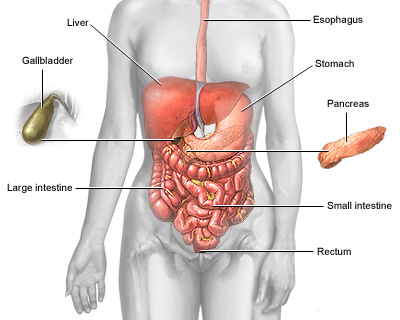
The esophagus, stomach, large and small intestine, aided by the liver, gallbladder and pancreas convert the nutritive components of food into energy and break down the non-nutritive components into waste to be excreted.
Most of the time indigestion is not a sign of a serious health problem unless it occurs with other symptoms. These may include bleeding, weight loss, or trouble swallowing.
Rarely, the discomfort of a heart attack is mistaken for indigestion.
Changing the way you eat may help your symptoms. Steps you can take include:
Allow enough time for meals.
Chew food carefully and completely.
Avoid arguments during meals.
Avoid excitement or exercise right after a meal.
Relax and get rest if indigestion is caused by stress.
Avoid aspirin and other NSAIDs. If you must take them, do so on a full stomach.
Antacids may relieve indigestion.
Medicines you can buy without a prescription, such as ranitidine (Zantac) and omeprazole (Prilosec OTC) can relieve symptoms. Your doctor may also prescribe these medicines in higher doses or for longer periods of time.
Get medical help right away if your symptoms include jaw pain, chest pain, back pain, heavy sweating, anxiety, or a feeling of impending doom. These are possible heart attack symptoms.