

Dacryocystitis
Dacryocystitis is infection of the tear (lacrimal) sac.
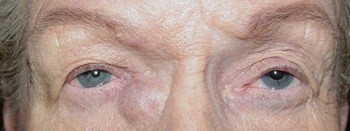
The tear sac is a small chamber into which tears drain. The usual cause of dacryocystitis is a blockage of the nasolacrimal duct, which leads from the tear sac into the nose. Dacryocystitis may occur suddenly (acute) or be longstanding (chronic). In acute infection, the area around the tear sac is painful, red, and swollen. The area around the eye may become red and watery and may ooze pus. Slight pressure applied to the tear sac may push thick material through the punctum (the opening at the inner corner of the eyelid near the nose).
Symptoms
Often the infection is mild. Sometimes, the infection is severe and can cause fever. Sometimes a collection of pus (abscess) may form, which can rupture through the skin, creating a passage for drainage.
 Acute Dacryocystitis with Fistula
Diagnosis
· Symptoms and a doctor's examination
A doctor bases the diagnosis on the symptoms and examination findings.
Treatment
· For acute dacryocystitis, antibiotics
· For chronic dacryocystitis, dacryocystorhinostomy
An acute infection is usually treated with an antibiotic taken by mouth. If a fever is present or if the infection is severe, antibiotics given by vein may be required. Applying warm compresses to the area several times a day also helps. After the acute infection resolves, doctors recommend that people have surgery to bypass the blockage (dacryocystorhinostomy [DCR]) so that infection does not recur. DCR is also the main treatment for chronic dacryocystitis.
Source: http://www.merckmanuals.com/home/eye-disorders/eyelid-and-tearing-disorders/dacryocystitis