Тендинит – сіңірдің ішіндегі және маңындағы қабыну, шаршаудан болатын қарапайым бұлшық еттің ауырсынуы секілді ауырсынуға апарады. Бірақ, қарапайым бұлшық еттің ауырсынуы – уақытша болса, тендинит тұрақты, ауырсынуы басылмайды. Алайда, егер сіңірді сол ауруды туындатқан ырғақпен жұмыс істететін болсаңыз, оны жеңу қиынға түседі. Бұл барлығына қатысты – әлемдік дәрежедегі марафонды жүгіретіндер мен терезе жуушылардан бастап хатшыларға дейін. Дегенмен, тендиниттің көрінісін азайтуға және күрделі асқынуының алдын алуға болады.
Емдеу. Тендинит физиотерапиялық әдістер, ауырсынуды басатын және қабынуға қарсы құралдардың көмегімен емделеді. Ауыр зақымдануда антибиотиктер мен хирургиялық емдеу қажет болады. емдеу барысында зақымданған байламның тұсында дене жүктемесін шектеу қажет, және ұстап тұратын таңғышты қолдану қажет.
You might not be Atlas, but your shoulders still carry a lot of weight. If it weren't for them, you wouldn't be able to pitch a game-winning home run, shovel snow off your front walk, or even comb your hair.
The shoulders' ball-and-socket design gives you great range of motion, but at the expense of stability. The shoulder socket is shaped like a golf tee, fairly flat on top, so the ball of the upper arm bone can easily slip out of it. That instability is why the shoulder joint gets dislocated more often than any other joint in the body.
When you lift weights every day or pitch every weekend, you can put a lot of wear and tear on your shoulder muscles, tendons, and joints. This is especially true if your form or technique is incorrect. Repetitive stress can lead to tears and other injuries, which can take you off the playing field and leave you in serious pain.
Here's a guide to the most common shoulder injuries -- how to spot them, and what to do about them.
What it is: Your rotator cuff is the set of four muscles that sits around the ball of the shoulder joint and allows the shoulder to move.
How it can get injured: Sports that involve lifting your hands over your head -- like pitching in baseball, swimming the freestyle or butterfly stroke, serving in tennis, and weight lifting -- can cause the top part of the shoulder blade to pinch the rotator cuff muscles. This is called shoulder impingement.
Repetitive motion in sports can also overload the tendons of the rotator cuff. Those tendons can eventually swell and get inflamed -- a condition called tendinitis. If you ignore the pain and keep swinging that golf club or tennis racket, the tendon that connects the rotator cuff muscles to the ball part of the joint can eventually tear.
What you'll feel: Pain is the main symptom of a rotator cuff injury. The pain gets worse when you raise your arm, and you might hear a click or popping sound. Eventually, the shoulder will hurt even when you're not moving it. A rotator cuff injury can limit your shoulder movement and reduce your strength.
How it's treated: Your doctor may suggest that you rest your shoulder for a few days, then begin rotator cuff stretching and mobility exercises. Avoid lifting anything above shoulder level until the injury heals. An anti-inflammatory medication or corticosteroid injection may help bring down swelling and reduce pain.
If the pain and weakness do not improve, you might need more formal physical therapy or surgery. The type of surgery done depends on the size, type, and location of the tear. It can take several weeks or even months for a rotator cuff injury to heal.
How to prevent it: Exercise your rotator cuff muscles to keep them strong and improve your range of motion. Be careful when you play sports like golf and tennis that use the same repetitive motions. Switch up your game once in a while. And stop whenever you feel pain.
AC Joint Injury
What it is: The AC (acromioclavicular) joint is located where the uppermost part of your shoulder blade -- a structure called the acromion -- meets your collarbone. When ligaments connecting the acromion and collarbone get torn, you've got a separated shoulder.
How it can get injured: Getting hit hard in the shoulder or falling on an outstretched hand can cause a separated shoulder.
What you'll feel: Pain in your shoulder. You might also see a bump on top of the shoulder where it's separated.
How it's treated: You will need to see your doctor if you suspect you have an AC joint injury. You will likely need to wear a sling to keep your shoulder still. Ice the area for about 20-30 minutes every couple of hours to reduce swelling. Take acetaminophen or a nonsteroidal anti-inflammatory drug like ibuprofen to help with the pain.
How to prevent it: Do range-of-motion and strengthening exercises. Gradually increase the weight and number of reps to strengthen your shoulder.
What it is: A dislocated shoulder happens when the top of the upper arm bone (the ball) slips out of its socket. The ball can slip forward, backward, or downward. Before you fully dislocate it, the shoulder might feel like it's starting to go out of place. That's called instability. When the shoulder slips only partway out of the socket, it's a subluxation.
How it can get injured: A strong hit to your shoulder on the football field or ice hockey rink can pop the ball out of its socket. You can also get a dislocated shoulder if you rotate your shoulder joint too far, like when you're serving in volleyball.
What you'll feel: You can feel when your shoulder pops out of place. The pop will be followed by intense pain. You might also have swelling, bruising, and weakness in the arm.
How it's treated: Sometimes, medical personnel can pull a dislocated shoulder back into place, but don't let anyone work on your shoulder unless you're sure he or she is experienced with the procedure. Otherwise, you could end up with an even worse injury. Instead see a health care provider who will give you a sedative or pain medicine before sliding your upper arm bone gently back into its socket. You'll have to keep the shoulder still for a few weeks afterward in a sling.
If the shoulder is being stubborn and it won't go back in place, you may need surgery to relocate the joint. Surgery can also repair torn ligaments or tendons in your shoulder.
How to prevent it: Check with your doctor to see when and how much you can use your shoulder. Once you've fully healed, he may suggest start exercising your shoulder to keep it flexible. Slowly add in weights and resistance bands to increase shoulder strength if OK with your doctor or physical therapist. If your shoulder has been dislocated before, ease off on the sports until it heals. That can take a few weeks. Anyone who's had a dislocation once has a good chance of it happening again. When you do start playing contact sports again, wear shoulder pads or other protective gear.
Shock is a life-threatening condition that occurs when the body is not getting enough blood flow. Lack of blood flow means that the cells and organs do not get enough oxygen and nutrients to function properly. Many organs can be damaged as a result. Shock requires immediate treatment and can get worse very rapidly. As many 1 in 5 people who suffer shock will die from it.
A person in shock has extremely low blood pressure. Depending on the specific cause and type of shock, symptoms will include one or more of the following:
Take the following steps if you think a person is in shock:
· Call 911 for immediate medical help.
· Check the person's airway, breathing, and circulation. If necessary, begin rescue breathing and CPR.
· Even if the person is able to breathe on their own, continue to check rate of breathing at least every 5 minutes until help arrives.
· If the person is conscious and does NOT have an injury to the head, leg, neck, or spine, place the person in the shock position. Lay the person on the back and elevate the legs about 12 inches (30 centimeters). Do NOT elevate the head. If raising the legs will cause pain or potential harm, leave the person lying flat.
· Give appropriate first aid for any wounds, injuries, or illnesses.
· Keep the person warm and comfortable. Loosen tight clothing.
IF THE PERSON VOMITS OR DROOLS
· Turn the head to one side to prevent choking. Do this as long as you do not suspect an injury to the spine.
· If a spinal injury is suspected, "log roll" the person instead. To do this, keep the person's head, neck, and back in line, and roll the body and head as a unit.
Learn ways to prevent heart disease, falls, injuries, dehydration, and other causes of shock. If you have a known allergy (for example, to insect bites or stings), carry an epinephrine pen. Your health care provider will teach you how and when to use it.
Your doctor will talk to you about a treatment plan to help you resume your normal activity.
Tips to relieve bursitis pain:
· Use ice 3 to 4 times a day for the first 2 or 3 days.
· Cover the painful area with a towel, and place the ice on it for 15 minutes. Do not fall asleep while applying the ice. You can get frostbite if you leave it on too long.
· When sleeping, do not lie on the side that has bursitis.
For bursitis around the hips, knees, or ankle:
· Try not to stand for long periods.
· Stand on a soft, cushioned surface, with equal weight on each leg.
· Placing a pillow between your knees when lying on your side can help decrease pain.
· Flat shoes that are cushioned and comfortable often help.
· If you are overweight, losing weight may also be helpful.
You should avoid activities that involve repetitive movements of any body part when possible.
Other treatments include:
· Nonsteroidal anti-inflammatory drugs (NSAIDs), such as ibuprofen
· Physical therapy
· Exercises you do at home to build strength and keep the joint mobile as pain goes away
· Removing fluid from the bursa and getting a shot of corticosteroid
As the pain goes away, your doctor or nurse may suggest exercises to build strength and keep movement in the painful area.
Men with asymptomatic inflammatory prostatitis do not have symptoms. A health care provider may diagnose asymptomatic inflammatory prostatitis when testing for other urinary tract or reproductive tract disorders. This type of prostatitis does not cause complications and does not need treatment.
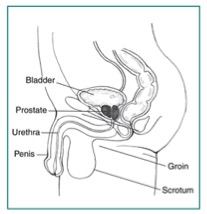
The prostate is a walnut-shaped gland that is part of the male reproductive system. The main function of the prostate is to make a fluid that goes into semen. Prostate fluid is essential for a man’s fertility. The gland surrounds the urethra at the neck of the bladder. The bladder neck is the area where the urethra joins the bladder. The bladder and urethra are parts of the lower urinary tract. The prostate has two or more lobes, or sections, enclosed by an outer layer of tissue, and it is in front of the rectum, just below the bladder. The urethra is the tube that carries urine from the bladder to the outside of the body. In men, the urethra also carries semen out through the penis.
The prostate is a walnut-shaped gland that is part of the male reproductive system.
The causes of prostatitis differ depending on the type.
Chronic prostatitis/chronic pelvic pain syndrome. The exact cause of chronic prostatitis/chronic pelvic pain syndrome is unknown. Researchers believe a microorganism, though not a bacterial infection, may cause the condition. This type of prostatitis may relate to chemicals in the urine, the immune system’s response to a previous urinary tract infection (UTI), or nerve damage in the pelvic area.
Acute and chronic bacterial prostatitis. A bacterial infection of the prostate causes bacterial prostatitis. The acute type happens suddenly and lasts a short time, while the chronic type develops slowly and lasts a long time, often years. The infection may occur when bacteria travel from the urethra into the prostate.
Prostatitis is the most common urinary tract problem for men younger than age 50 and the third most common urinary tract problem for men older than age 50.1 Prostatitis accounts for about two million visits to health care providers in the United States each year.2
Chronic prostatitis/chronic pelvic pain syndrome is the most common and least understood form of prostatitis. Chronic prostatitis/chronic pelvic pain syndrome can occur in men of any age group and affects 10 to 15 percent of the U.S. male population.3
The factors that affect a man’s chances of developing prostatitis differ depending on the type.
Chronic prostatitis/chronic pelvic pain syndrome. Men with nerve damage in the lower urinary tract due to surgery or trauma may be more likely to develop chronic prostatitis/chronic pelvic pain syndrome. Psychological stress may also increase a man’s chances of developing the condition.
Acute and chronic bacterial prostatitis. Men with lower UTIs may be more likely to develop bacterial prostatitis. UTIs that recur or are difficult to treat may lead to chronic bacterial prostatitis.
Each type of prostatitis has a range of symptoms that vary depending on the cause and may not be the same for every man. Many symptoms are similar to those of other conditions.
Chronic prostatitis/chronic pelvic pain syndrome. The main symptoms of chronic prostatitis/chronic pelvic pain syndrome can include pain or discomfort lasting 3 or more months in one or more of the following areas:
· between the scrotum and anus
· the central lower abdomen
· the penis
· the scrotum
· the lower back
Pain during or after ejaculation is another common symptom. A man with chronic prostatitis/chronic pelvic pain syndrome may have pain spread out around the pelvic area or may have pain in one or more areas at the same time. The pain may come and go and appear suddenly or gradually. Other symptoms may include
· pain in the urethra during or after urination.
· pain in the penis during or after urination.
· urinary frequency—urination eight or more times a day. The bladder begins to contract even when it contains small amounts of urine, causing more frequent urination.
· urinary urgency—the inability to delay urination.
· a weak or an interrupted urine stream.
Acute bacterial prostatitis. The symptoms of acute bacterial prostatitis come on suddenly and are severe. Men should seek immediate medical care. Symptoms of acute bacterial prostatitis may include
· urinary frequency
· urinary urgency
· fever
· chills
· a burning feeling or pain during urination
· pain in the genital area, groin, lower abdomen, or lower back
· noctur
· ia—frequent urination during periods of sleep
· nausea and vomiting
· body aches
· urinary retention—the inability to empty the bladder completely
· trouble starting a urine stream
· a weak or an interrupted urine stream
· urinary blockage—the complete inability to urinate
· a UTI—as shown by bacteria and infection-fighting cells in the urine
Chronic bacterial prostatitis. The symptoms of chronic bacterial prostatitis are similar to those of acute bacterial prostatitis, though not as severe. This type of prostatitis often develops slowly and can last 3 or more months. The symptoms may come and go, or they may be mild all the time. Chronic bacterial prostatitis may occur after previous treatment of acute bacterial prostatitis or a UTI. The symptoms of chronic bacterial prostatitis may include
· urinary frequency
· urinary urgency
· a burning feeling or pain during urination
· pain in the genital area, groin, lower abdomen, or lower back
A person may have urinary symptoms unrelated to prostatitis that are caused by bladder problems, UTIs, or benign prostatic hyperplasia. Symptoms of prostatitis also can signal more serious conditions, including prostate cancer.
Men with symptoms of prostatitis should see a health care provider.
Men with the following symptoms should seek immediate medical care:
· complete inability to urinate
· painful, frequent, and urgent need to urinate, with fever and chills
· blood in the urine
· great discomfort or pain in the lower abdomen and urinary tract
A physical exam may help diagnose prostatitis. During a physical exam, a health care provider usually
· examines a patient’s body, which can include checking for
o discharge from the urethra
o enlarged or tender lymph nodes in the groin
o a swollen or tender scrotum
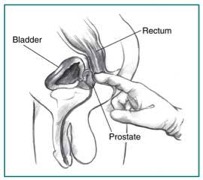
· performs a digital rectal exam
A digital rectal exam, or rectal exam, is a physical exam of the prostate. To perform the exam, the health care provider asks the man to bend over a table or lie on his side while holding his knees close to his chest. The health care provider slides a gloved, lubricated finger into the rectum and feels the part of the prostate that lies next to the rectum. The man may feel slight, brief discomfort during the rectal exam. A health care provider usually performs a rectal exam during an office visit, and the man does not need anesthesia. The exam helps the health care provider see if the prostate is enlarged or tender or has any abnormalities that require more testing.
Many health care providers perform a rectal exam as part of a routine physical exam for men age 40 or older, whether or not they have urinary problems.
A health care provider may refer men to a urologist—a doctor who specializes in the urinary tract and male reproductive system. A urologist uses medical tests to help diagnose lower urinary tract problems related to prostatitis and recommend treatment. Medical tests may include
· urinalysis
· blood tests
· urodynamic tests
· cystoscopy
· transre
· ctal ultrasound
· biopsy
· semen analysis
Urinalysis. Urinalysis involves testing a urine sample. The patient collects a urine sample in a special container in a health care provider’s office or a commercial facility. A health care provider tests the sample during an office visit or sends it to a lab for analysis. For the test, a nurse or technician places a strip of chemically treated paper, called a dipstick, into the urine. Patches on the dipstick change color to indicate signs of infection in urine.
The health care provider can diagnose the bacterial forms of prostatitis by examining the urine sample with a microscope. The health care provider may also send the sample to a lab to perform a culture. In a urine culture, a lab technician places some of the urine sample in a tube or dish with a substance that encourages any bacteria present to grow; once the bacteria have multiplied, a technician can identify them.
Blood tests. Blood tests involve a health care provider drawing blood during an office visit or in a commercial facility and sending the sample to a lab for analysis. Blood tests can show signs of infection and other prostate problems, such as prostate cancer.
Urodynamic tests. Urodynamic tests include a variety of procedures that look at how well the bladder and urethra store and release urine. A health care provider performs urodynamic tests during an office visit or in an outpatient center or a hospital. Some urodynamic tests do not require anesthesia; others may require local anesthesia. Most urodynamic tests focus on the bladder’s ability to hold urine and empty steadily and completely and may include the following:
· uroflowmetry, which measures how rapidly the bladder releases urine
· postvoid residual measurement, which evaluates how much urine remains in the bladder after urination
More information is provided in the NIDDK health topic, Urodynamic Testing.
Cystoscopy. Cystoscopy is a procedure that uses a tubelike instrument, called a cystoscope, to look inside the urethra and bladder. A urologist inserts the cystoscope through the opening at the tip of the penis and into the lower urinary tract. He or she performs cystoscopy during an office visit or in an outpatient center or a hospital. He or she will give the patient local anesthesia. In some cases, the patient may require sedation and regional or general anesthesia. A urologist may use cystoscopy to look for narrowing, blockage, or stones in the urinary tract.
Transrectal ultrasound. Transrectal ultrasound uses a device, called a transducer, that bounces safe, painless sound waves off organs to create an image of their structure. The health care provider can move the transducer to different angles to make it possible to examine different organs. A specially trained technician performs the procedure in a health care provider’s office, an outpatient center, or a hospital, and a radiologist—a doctor who specializes in medical imaging—interprets the images; the patient does not require anesthesia. Urologists most often use transrectal ultrasound to examine the prostate. In a transrectal ultrasound, the technician inserts a transducer slightly larger than a pen into the man’s rectum next to the prostate. The ultrasound image shows the size of the prostate and any abnormalities, such as tumors. Transrectal ultrasound cannot reliably diagnose prostate cancer.
Biopsy. Biopsy is a procedure that involves taking a small piece of prostate tissue for examination with a microscope. A urologist performs the biopsy in an outpatient center or a hospital. He or she will give the patient light sedation and local anesthetic; however, in some cases, the patient will require general anesthesia. The urologist uses imaging techniques such as ultrasound, a computerized tomography scan, or magnetic resonance imaging to guide the biopsy needle into the prostate. A pathologist—a doctor who specializes in examining tissues to diagnose diseases—examines the prostate tissue in a lab. The test can show whether prostate cancer is present.
Semen analysis. Semen analysis is a test to measure the amount and quality of a man’s semen and sperm. The man collects a semen sample in a special container at home, a health care provider’s office, or a commercial facility. A health care provider analyzes the sample during an office visit or sends it to a lab for analysis. A semen sample can show blood and signs of infection.
Chronic prostatitis/chronic pelvic pain syndrome. Treatment for chronic prostatitis/chronic pelvic pain syndrome aims to decrease pain, discomfort, and inflammation. A wide range of symptoms exists and no single treatment works for every man. Although antibiotics will not help treat nonbacterial prostatitis, a urologist may prescribe them, at least initially, until the urologist can rule out a bacterial infection. A urologist may prescribe other medications:
· silodo
· sin (Rapaflo)
· 5-alpha reductase inhibitors such as finasteride (Proscar) and dutasteride (Avodart)
· nonsteroidal anti-inflammatory drugs—also called NSAIDs—such as aspirin, ibuprofen, and naproxen sodium
· glycosaminogly
· cans such as chondroitin sulfate
· muscle relaxants such as cyclobenzaprine (Amrix, Flexeril) and clonazepam (Klonopin)
· neuromodulators such as amitriptyline, nortriptyline (Aventyl, Pamelor), and pregabalin (Lyrica)
Alternative treatments may include
· warm baths, called sitz baths
· local heat therapy with hot water bottles or heating pads
· physical therapy, such as
o Kegel exercises—tightening and relaxing the muscles that hold urine in the bladder and hold the bladder in its proper position. Also called pelvic muscle exercises.
o myofascial release—pressing and stretching, sometimes with cooling and warming, of the muscles and soft tissues in the lower back, pelvic region, and upper legs. Also known as myofascial trigger point release.
· relaxation exercises
· biofeedback
· phytotherapy with plant extracts such as quercetin, bee pollen, and saw palmetto
· acupuncture
To help ensure coordinated and safe care, people should discuss their use of complementary and alternative medical practices, including their use of dietary supplements, with their health care provider. Read more at www.nccam.nih.gov .
For men whose chronic prostatitis/chronic pelvic pain syndrome symptoms are affected by psychological stress, appropriate psychiatric treatment and stress reduction may reduce the recurrence of symptoms.
To help measure the effectiveness of treatment, a urologist may ask a series of questions from a standard questionnaire called the National Institutes of Health (NIH) Chronic Prostatitis Symptom Index. The questionnaire helps a urologist assess the severity of symptoms and how they affect the man’s quality of life. A urologist may ask questions several times, such as before, during, and after treatment.
Acute bacterial prostatitis. A urologist treats acute bacterial prostatitis with antibiotics. The antibiotic prescribed may depend on the type of bacteria causing the infection. Urologists usually prescribe oral antibiotics for at least 2 weeks. The infection may come back; therefore, some urologists recommend taking oral antibiotics for 6 to 8 weeks. Severe cases of acute prostatitis may require a short hospital stay so men can receive fluids and antibiotics through an intravenous (IV) tube. After the IV treatment, the man will need to take oral antibiotics for 2 to 4 weeks. Most cases of acute bacterial prostatitis clear up completely with medication and slight changes to diet. The urologist may recommend
· avoiding or reducing intake of substances that irritate the bladder, such as alcohol, caffeinated beverages, and acidic and spicy foods
· increasing intake of liquids—64 to 128 ounces per day—to urinate often and help flush bacteria from the bladder
Chronic bacterial prostatitis. A urologist treats chronic bacterial prostatitis with antibiotics; however, treatment requires a longer course of therapy. The urologist may prescribe a low dose of antibiotics for up to 6 months to prevent recurrent infection. The urologist may also prescribe a different antibiotic or use a combination of antibiotics if the infection keeps coming back. The urologist may recommend increasing intake of liquids and avoiding or reducing intake of substances that irritate the bladder.
A urologist may use alpha blockers that treat chronic prostatitis/chronic pelvic pain syndrome to treat urinary retention caused by chronic bacterial prostatitis. These medications help relax the bladder muscles near the prostate and lessen symptoms such as painful urination. Men may require surgery to treat urinary retention caused by chronic bacterial prostatitis. Surgically removing scar tissue in the urethra often improves urine flow and reduces urinary retention.
Researchers have not found that eating, diet, and nutrition play a role in causing or preventing prostatitis. During treatment of bacterial prostatitis, urologists may recommend increasing intake of liquids and avoiding or reducing intake of substances that irritate the bladder. Men should talk with a health care provider or dietitian about what diet is right for them.
· Prostatitis is a frequently painful condition that involves inflammation of the prostate and sometimes the areas around the prostate.
· Scientists have identified four types of prostatitis:
o chronic prostatitis/chronic pelvic pain syndrome
o acute bacterial prostatitis
o chronic bacterial prostatitis
o asymptomatic inflammatory prostatitis
· The prostate is a walnut-shaped gland that is part of the male reproductive system.
· The causes of prostatitis differ depending on the type.
· Prostatitis is the most common urinary tract problem for men younger than age 50 and the third most common urinary tract problem for men older than age 50.
· Each type of prostatitis has a range of symptoms that vary depending on the cause and may not be the same for every man. Many symptoms are similar to those of other conditions.
· The complications of prostatitis may include
o bacterial infection in the bloodstream
o prostatic abscess—a pus-filled cavity in the prostate
o sexual dysfunction
o inflammation of reproductive organs near the prostate
· A health care provider diagnoses prostatitis based on
o a personal and family history
o a physical exam
o medical tests
· A health care provider may have to rule out other conditions that cause similar signs and symptoms before diagnosing prostatitis.
· Treatment depends on the type of prostatitis.
· Treatment for chronic prostatitis/chronic pelvic pain syndrome aims to decrease pain, discomfort, and inflammation.
· A urologist treats acute bacterial prostatitis with antibiotics.
· A urologist treats chronic bacterial prostatitis with antibiotics; however, treatment requires a longer course of therapy.