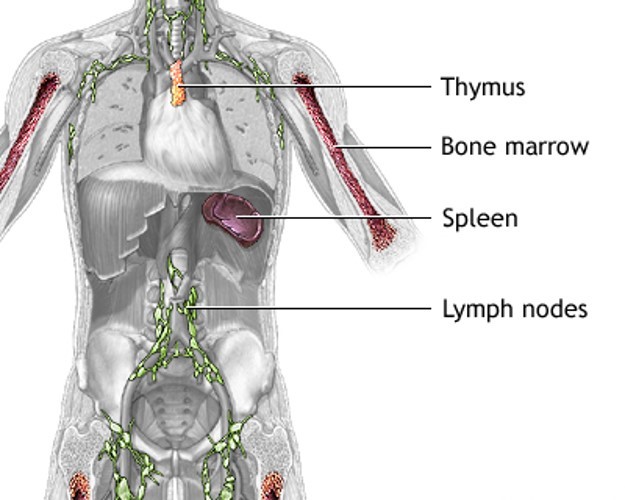
The human immunodeficiency virus (HIV) attacks the body's immune system. A healthy immune system is what keeps you from getting sick.
Because HIV damages your immune system, you are more likely to get sick from bacteria and viruses. It is also harder for your body to fight off these infections when you do get them, so you may have trouble getting better. HIV is the condition that leads to acquired immunodeficiency syndrome (AIDS).
What is AIDS?
AIDS is a progression of HIV. When HIV moves into its final stages, it is considered to be AIDS. People who have AIDS are at an even higher risk of getting sick, and their bodies are even less able to fight off infections than people who have HIV. They usually die of an infection or cancer.
What is HIV syndrome?
HIV syndrome is a name for the early stage of HIV infection, when a person is first infected with HIV.
What happens after a person gets HIV?
After being infected with HIV, your body works hard to attack the virus. With your body fighting, the virus can't make as many copies of itself. Even though you still have HIV, you'll begin to look well and feel well again. The usual blood tests will be normal.
However, during this time, the virus is still attacking your lymph nodes. Lymph nodes are the centers of your body's immune system. The virus may also attack your brain tissue and slowly cause damage there.
Over 10 to 15 years, HIV kills so many CD4 cells that your body can no longer fight off infections. When your CD4 cell count is 200 or less per mL, you have AIDS (a normal count is 600 to 1000). Once you have AIDS, you can easily catch many serious infections.
Symptoms
What are the symptoms of HIV syndrome?
When first infected with HIV, a person may not experience any symptoms. However, often a person will developflu-like symptoms that last several weeks. These include:
If you have recently been infected with HIV, you might not realize it. The person you caught HIV from may not look or feel sick. And the signs and symptoms of HIV infection are similar to other illnesses, such as mononucleosis (mono), tonsillitis or the flu.
What are the symptoms of HIV?
As the disease progresses, symptoms may appear and/or get worse. This may take time. Some people who have HIV do not begin experiencing symptoms for up to 10 years. When symptoms do appear, they can include:
HIV infection is mostly the same for men and women. For a long time after becoming infected, the person seems healthy. Over many years, the person's immune system gradually becomes weaker until it is unable to fight off other infections.
The difference between men and women is that HIV-infected women often have additional problems such as repeated vaginal yeast infections, especially as the immune system becomes weaker. More serious infections, such as pelvic inflammatory disease (an infection of a woman's internal reproductive organs), can be harder to treat. Diseases of the cervix, such as precancer (dysplasia) and cancer, progress faster. They can be harder to treat if a woman has HIV.
Causes & Risk Factors
How can I get HIV?
HIV can only be passed from person to person through body fluids, such as blood, semen and vaginal fluid. Children born to infected mothers can also become infected during pregnancy. The most common ways HIV is passed are:
By having unprotected anal, vaginal or oral sex with an infected person.
By sharing needles and syringes for injecting drugs with an infected person.
More than half of women who have HIV got the infection from sexual partners. A woman can be infected by contact with a man or contact with another woman. When a woman has sex with an infected man, she has a high risk of getting HIV if a condom is not used properly.
Who is at risk for HIV infection?
In the early days of the AIDS epidemic, HIV infection appeared to be confined to certain groups, including intravenous drug users, men who have sex with other men and persons who have hemophilia (a blood-clotting disease that requires treatment with frequent blood transfusions). People who have hemophilia got HIV from receiving blood transfusions with donated blood that contained HIV. Blood donations are now tested for HIV, and HIV-infected blood donations are destroyed.
These days, HIV infection is much more widespread. Here is a list of people who are at high risk of HIV infection:
Men who have sex with other men.
Anyone who has multiple sex partners.
Anyone who has sex with a prostitute.
Anyone who shares needles using illegal injected drugs.
Anyone who exchanges sex for drugs or money.
Anyone who has a sexually transmitted disease.
Anyone who has had or currently has a sexual partner with any of the above risk factors.
How do babies get HIV from their mothers?
Babies can get HIV infection from their mothers during pregnancy, during the birth process and during breastfeeding.
It is now possible to prevent many cases of HIV in children by giving medicines to the pregnant mother and to her newborn baby. This protection cannot be offered if a pregnant woman does not know she is infected. Many people who have HIV infection feel perfectly healthy at first. The only way to know if you are infected is to have an HIV test. If you are pregnant, ask your doctor for an HIV test as part of your prenatal care. Better yet, if you are thinking about getting pregnant, talk to your doctor about HIV tests for you and your partner.
What contact is safe?
HIV can't live very long outside the body, so you can't get it through casual contact. You can't get the virus by touching, shaking hands, hugging, swimming in a public pool, giving blood, or using hot tubs, public toilets, telephones, doorknobs or water fountains. You also can't get it from food, mosquitoes or other insects.
Diagnosis & Tests
What should I do if I think I may be infected?
If you think you may be infected with HIV, contact your doctor immediately. Even though there is no cure for the disease, early diagnosis and treatment with medicines can be started to slow the progression of the disease. Your doctor will be able to give you more advice about how to take care of yourself if tests show that you have HIV.
Since most people who are infected with HIV appear healthy, a blood test for the virus is necessary to see who has the infection. People who have a positive blood test for HIV are called HIV-positive. Ask your doctor how to obtain confidential testing for HIV. Your doctor can help you understand what the test results mean.
Should I be tested for HIV?
The American Academy of Family Physicians (AAFP) encourages all sexually active people between 18 years and 65 years of age to get tested. Children younger than 18 and adults older than 65 should be tested if they are at an increased risk of getting the virus. The AAFP also recommends that pregnant women be tested for HIV. Most HIV antibody tests done by your doctor are accurate if they are done 2 to 3 months or longer after you think you may have been infected. It takes this long for the antibodies to show up in the blood.
How can my doctor tell that I have HIV?
When HIV enters your body, it moves inside white blood cells called "CD4 lymphocytes." HIV takes over the CD4 cells and makes billions of copies of itself each day. The new cells spread through your body.
Your body tries to defend itself against HIV by making the following:
Antibodies (these attach to the virus and keep it from making new virus).
Special cells called macrophages and natural killer T-cells. These cells help you to get rid of some of the new virus. If antibodies against HIV show up in your blood, you know your body is trying to protect you from the HIV infection you have picked up. However, it's usually several months before your body makes enough antibodies to measure.
So at the time you are infected with HIV, you won't have enough HIV antibodies in your blood to measure, so this test can't give you a diagnosis.
However, when you are experiencing symptoms of HIV, you do have a high level of HIV RNA in your blood (RNA is the short name for "ribonucleic acid." RNA is made when the virus is active). A test of your "viral load" can measure this. This test tells your doctor the reason that you're feeling sick is because you have HIV.
First your doctor tests to see if you have HIV infection. Your blood is tested with an ELISA (enzyme-linked immunosorbent assay) test. If this test is positive for HIV, your blood is tested again with the Western blot test. If both tests are positive, you are diagnosed with HIV infection.
Three things show that a person who has HIV infection has developed AIDS. If any one or more of the following are present, the person has AIDS:
A CD4 cell count (discussed below) of less than 200
A CD4 cell percentage of less than 14%
An AIDS-indicator illness
An AIDS-indicator illness is a physician-diagnosed medical problem that occurs in people who have advanced HIV infection. About 25 medical problems are considered AIDS-indicator illnesses. They include conditions like Pneumocystis pneumonia, Kaposi's sarcoma and wasting syndrome. If a person who is infected with HIV gets an AIDS-indicator illness, that person has AIDS.
Does it help me to find out I have HIV at an early stage?
Yes. Right now, there is no cure for HIV. Your body can make antibodies and CD4 cells to slow down the progress of HIV, but they can't totally get rid of the virus. In fact, the very act of attacking the HIV infection may wear out your immune system in a short time.
However, treatment with HIV medicines (usually a combination of medicines called anti-retroviral drugs) can hold down the virus and keep your body's immune system strong for a longer time. That's why the U.S. Centers for Disease Control and Prevention (CDC) recommends early treatment of people who have HIV.
Are there HIV tests I can do at home?
Yes. The Home Access HIV-1 Test System is a collection kit that is used to collect a blood sample that is then mailed to a laboratory for testing. This test offers the advantage of privacy and anonymity. Another option is the OraQuick In-Home HIV test. This test involves swabbing the inside of your mouth. You do not have to collect your blood. Your results are ready within 20 minutes.
Should I use the home test or see my doctor?
Your doctor is concerned about you, your health and your privacy. If you want to be tested for HIV, you should see your doctor. He or she will help you decide whether you should be tested and will give you the support you need before and after the test. You don't get this type of support with home tests.
However, if you are afraid to talk with your doctor about HIV or to be tested, then the home collection test may be a good idea. If the test result is positive, you should see your doctor right away.
Remember, one negative test is not a guarantee that you don't have HIV or won't get it in the future. You should talk with your doctor and learn about ways to protect yourself from getting infected.
Treatment
What medicines are used for HIV infection?
Several kinds of medicines are used to fight HIV infection. The medicines are often used together (in combination) to reduce the amount of HIV in the body. When different drugs are combined with the purpose of reducing the amount of HIV in your blood to very low levels, the resulting treatment regimen is called highly active antiretroviral therapy (HAART). Your doctor must watch you closely when you are being treated with these drugs to see how well they lower the amount of virus in your body. Your doctor also wants to make sure you aren't having side effects like nausea, vomiting, fatigue, anemia or peripheral neuropathy (a numb feeling in your hands or feet). Medicines typically used during HAART include the following:
Nucleoside reverse transcriptase inhibitors (also called "nukes"): When HIV infects a healthy cell, it needs the cell's DNA, or genetic instructions, to build copies of itself. These drugs act by blocking the HIV's ability to copy a cell's DNA. Without complete DNA, HIV can't make new virus copies.
Non-nucleoside reverse transcriptase inhibitor: These drugs also prevent HIV from using a healthy cell's DNA to make copies of itself, but in a slightly different way.
Protease (say pro-tee-ase) inhibitors: These medicines work by preventing infected cells from releasing HIV into the body.
Fusion inhibitor: This medicine works by preventing the entry of the HIV virus into your body's healthy cells. This medicine is injected by a doctor.
Integrase inhibitor: This medicine works by disabling integrase. Integrase is a protein that
What is the best time to start taking these medicines?
Almost all experts agree that medicines for HIV should be started before the person's CD4 cell count falls under 200. Most doctors want their patients to start taking medicines even earlier, when the CD4 cell count is between 200 and 500. You and your doctor should talk about which medicines to take and when to start taking them.
How does the doctor tell if the medicines are working?
Three tests can measure the amount of the virus in your blood. Your doctor can use this information to find out how your body is responding to the medicine.
The CD4 cell count: CD4 cells are a kind of white blood cell (sometimes called T-lymphocytes, or T-cells) in your blood. CD4 cells are important because they help your body fight infections. Unfortunately, these cells are also the main target of the virus that causes HIV infection. This virus cripples the CD4 cells. In people who don't have HIV, the CD4 level is between 500 and 1,200 cells per mm3 (cubic millimeter). Your doctor will probably give you medicine to fight HIV when your CD4 cell count drops below a certain level. One goal of treatment for HIV infection is to keep your CD4 cell count as high as possible.
Viral load: The viral load is the number of copies of HIV in your blood. A person who doesn't have HIV infection has a viral load of 0. Medicine that lowers the amount of HIV in the body is usually given when your viral load measures more than 10,000 to 30,000 viral copies per mL (milliliter) of blood. A second goal of treatment is to make the viral load as low as possible.
CBC: The complete blood count (also called the CBC) measures the number of red and white cells in your blood. Red blood cells carry oxygen from your lungs to all the tissues of your body. White blood cells fight infections. They keep your body's immune system strong. A large drop in red blood cells and a large drop in white blood cells can occur when HIV infection is getting worse. This drop can also be caused by the same medicines that you take to fight HIV. Your doctor uses the CBC to help decide when to change your medicines. Your doctor wants to keep your red and white blood cell counts high enough to keep you healthy.
What happens during a routine office visit?
Your doctor will check several things to find out how strong your HIV infection has become. Your doctor will ask you about your symptoms. He or she will look for any signs that the HIV infection is getting worse. Your doctor will also do a blood test to check your CD4 cell count and your viral load. Some of the things that might tell your doctor that your HIV infection has gotten worse since your last visit are the following:
New symptoms of nausea, vomiting, fatigue, fever, headache, chills, night sweats, cough, shortness of breath or diarrhea.
Signs of weight loss, mouth sores (such as thrush, which is a yeast infection) or bigger lymph nodes (glands located in your neck, armpits and hip area).
A drop in the CD4 cell count in your blood.
A rise in the viral load in your blood.
How often will my doctor want to see me?
Your doctor will probably want to see you every 6 months as long as your CD4 cell count is higher than 500. Your doctor will probably want to see you every 3 months if your CD4 cell counts are below 500. However, if you take a new medicine, your doctor will want to see you more often, to check your response to the medicine or to see if your HIV infection is getting worse.
What else can help me?
Some medicines can help prevent the other infections and complications that come when HIV lowers your body's resistance (makes your immune system weak). Here are some things that can help people with HIV:
A shot every 5 to 7 years can prevent pneumonia caused by the bacteria called Streptococcus pneumoniae. It's easier for people who have HIV to get this kind of pneumonia.
A tuberculosis (TB) skin test every year can tell if you have TB. TB is a very serious illness, especially in people who have HIV.
A Pap test for women to check for dysplasia (a pre-cancer condition) and for cancer of the cervix. Both of these conditions occur more often in women who have HIV infection. At first, Pap tests are done every 6 months. After 2 Pap tests in a row are normal, you might only have to get them once a year.
A hepatitis B test for people who are at risk for hepatitis B infection. You're at risk for this infection if you inject drugs. If the test shows you don't have hepatitis B infection, your doctor might want you to have the hepatitis B vaccine to protect you from getting the infection.
A medicine called TMP-SMZ can help. This antibiotic would be given to you if your CD4 cell count was less than 200. It helps prevent pneumonia caused by the fungusPneumocystis jiroveci (previously called Pneumocystis carinii). This antibiotic also helps prevent another infection, called toxoplasmosis.
Azithromycin, clarithromycin and rifabutin can help when your CD4 cell count is lower than 50 to 75. They keep you from getting an infection caused by a bacteria calledMycobacterium avium.
A note about vaccines
Sometimes the amount of a certain vaccine cannot keep up with the number of people who need it.
What's in the future?
Combination drug therapy has changed HIV disease from the leading killer of young adults to a chronic disease that can be controlled for decades. However, even though you can take HIV medicines and feel okay, you could still give the virus to others through unsafe sex or blood exchanges. The medicines don't kill the virus -- they just keep your immune system strong enough to prevent AIDS or slow it down.
New medicines are being developed and tested that can be taken less often and that are more powerful in holding back the virus. However, it may be a few years before these new drugs become available.
Complications
How can I avoid complications from HIV?
If you are HIV positive, you need to take very good care of yourself. Be sure to eat a balanced diet, exercise regularly and get plenty of rest. Make sure you follow your doctor's instructions and take all of your medicines exactly as directed. You can also take steps to keep yourself from getting infections or diseases that are more common in people who have HIV.
How do I practice “safe sex”?
Use a condom every time you have sex. A latex condom will help reduce the risk of you and your partner getting a sexually transmitted infection (STI), such as herpes, human papillomavirus (HPV) or a new strain of HIV that might be resistant to antiretroviral drugs. To reduce your risk of getting intestinal infections, avoid sex that results in oral exposure to feces (oral-anal contact).
What about my job and leisure time activities?
Certain activities or jobs (such as working in homeless shelters, hospitals, clinics, nursing homes or prisons) can increase your risk of exposure to tuberculosis (TB) and other infectious diseases. Talk with your doctor about where you work. Your doctor can decide if you should be tested for TB and how often.
Parents of children in day care and people who provide child care are at increased risk of catching cytomegalovirus (CMV) infection, cryptosporidiosis, hepatitis A and giardiasis from the children. The risk can be reduced through good hygiene practices, such as always washing your hands after changing diapers, after touching urine or saliva, after going to the bathroom and before a meal. If your child has HIV, inform the people who help care for your child.
If you work with animals (for example, veterinary work or at a pet store, farm or slaughterhouse), you may be at higher risk for infections such as cryptosporidiosis, toxoplasmosis, salmonellosis, campylobacteriosis or Bartonella infection. The risk of catching these infections probably is not high enough for you to give up your job, but you should take the following special precautions:
Avoid contact with young farm animals, especially those that have diarrhea.
Wash your hands after gardening or other contact with soil.
If you live where histoplasmosis is common, avoid activities such as cleaning chicken coops, exploring caves or disturbing the soil.
If you live where coccidioidomycosis is common, avoid exposure to disturbed soil, such as excavation sites or dust storms.
Is it safe for me to have a pet?
Although owning a pet may have risks for people who have HIV, many of the risks can be avoided. Pets provide emotional benefits, so don't be hasty about deciding to give up your pet. The following are some steps to keep you and your pet healthy:
Keep your pet up to date on all its vaccinations (shots) to prevent disease.
Take your pet to the vet right away if it gets diarrhea. Your vet will want to find out if the diarrhea is caused by a germ that might be harmful to you. If possible, have a friend take care of your pet when it has diarrhea.
Always wash your hands after handling your pet, especially before you eat. Avoid contact with your pet's feces. If your child has HIV, make sure your child washes his or her hands after playing with the pet.
If you want to get a new dog or cat, the animal should be at least 6 months old and it shouldn't have diarrhea. This reduces your risk of cryptosporidiosis.
Be careful about where you get your pet. Some pet-breeding facilities, animal shelters or pet stores have better hygiene than others.
Avoid stray animals. If you decide to adopt a puppy or kitten, your vet should check the pet to be sure it doesn't have a germ that could give you an infection.
If you have a cat, the litter box should be cleaned every day, preferably by someone who does not have HIV and is not pregnant. This helps prevent toxoplasmosis. Keep your cat inside, and don't let it hunt other animals (such as mice or rats). Do not feed it raw or undercooked meat. Avoid the kind of play that may result in cat scratches or bites. If you do get bitten or scratched, wash the wound site right away. Never let your cat lick an open scratch or wound on your body.
Flea control is an effective way to help keep you and your cat or dog healthy.
Limit your contact with reptiles (such as snakes, lizards, iguanas and turtles) to reduce your risk of salmonellosis. Wear rubber gloves if you must clean an aquarium or a birdcage. Avoid contact with exotic pets such as monkeys.
How can I avoid diseases from food and water?
The following are some things that you can do to avoid getting sick from food or drinking water:
Avoid eating raw or undercooked eggs (including foods that may contain raw eggs, such as cookie dough, some preparations of hollandaise sauce, Caesar salad dressing and mayonnaise).
Avoid raw or undercooked poultry, meat and seafood. Also avoid dairy products that haven't been pasteurized. Cook poultry and meat until it is well-done or has no trace of pink in the middle. The internal temperature of cooked beef should be at least 170°F. For poultry, the internal temperature should be at least 180°F.
Wash fruits and vegetables carefully before you eat them.
Wash your hands, cutting boards, counters and knives with soap and water after they come in contact with uncooked foods, especially uncooked meat.
If you are severely immunosuppressed and want to reduce your risk of listeriosis (an uncommon disease transmitted through food contaminated with the Listeria monocytogene bacteria), be careful about soft cheeses and ready-to-eat foods, such as hot dogs and cold cuts from the deli. Before you eat hot dogs and cold cuts, reheat them until they are steaming to kill any germs.
Never drink water directly from lakes and rivers. Avoid swimming in water that might have human or animal feces in it. Avoid swallowing water while swimming or during other recreational water activities.
If your city has an outbreak of waterborne disease or issues a "boil water" advisory, boil your water for 1 minute before you use it for drinking or brushing your teeth. Or use personal-use water filters or bottled water.
Although it isn't necessary to boil tap water if there is no "boil water" advisory in effect, you may want to in order to further reduce your risk of infection. Talk with your doctor about this, since avoiding tap water completely can be inconvenient and expensive.
If you choose to avoid tap water completely, remember that ice made from contaminated water may also cause infection, as can fountain beverages served in public places.
Bottled or canned carbonated soft drinks are safe to drink. Noncarbonated soft drinks and fruit juices that do not require refrigeration until after they are opened also are safe. Frozen fruit juice concentrate is safe if you prepare the juice with water from a safe source.
If you drink fruit juice that is sold refrigerated (not frozen) drink only juices that are labeled "pasteurized." Make sure you keep them refrigerated, also. Other pasteurized beverages and beer are also considered safe to drink, although no data are available about the safety of wine.
How can I be safe while I travel?
Travel may be riskier for HIV-infected people, especially if their immunosuppression is severe. Travel to developing countries may put you at higher risk of food-borne and water-borne illnesses than traveling in the United States. Talk with your doctor before you travel.
Remember to be very careful with food and drinks. Avoid ice, raw vegetables and fruits, tap water, raw or undercooked seafood or meat, milk and dairy products and food bought from street vendors.
Items that are generally safe include steaming-hot foods, fruits that you peel yourself, bottled (especially carbonated) beverages, hot coffee or tea, beer and water that has been boiled for 1 minute.
Although some studies have shown that medicine to prevent traveler's diarrhea may reduce the risk, none of the studies have specifically included HIV-positive patients.
It isn't generally recommended that you take medicine to prevent an upset stomach or diarrhea before traveling, but you may want to talk with your doctor about this. You should bring an antibiotic with you in case you do get diarrhea. See a doctor right away if your diarrhea is severe and doesn't get better with medicine, if you have blood in your stool, if you get dehydrated or if you have a fever (with or without chills).
Avoid direct skin contact with soil or sand, especially if it's likely the soil may be contaminated with animal feces. Wear shoes and protective clothing. Sit on a towel if you go to a beach.
Talk with your doctor about the vaccinations you need before your trip. Many vaccinations are okay for people who have HIV, but some common vaccinations shouldn't be given to people who have HIV. If you can't have certain vaccinations, your doctor may need to give you special instructions. Your doctor will also want to talk with you about avoiding exposure to fungal infections and protozoal infections, depending on where you will be traveling.
Prevention
How can I avoid getting HIV?
The best ways to protect yourself from getting infected with HIV are to:
Not have sex with a person who is infected or is having sex with others.
Practice “safer” sex if you do have sex.
Not share needles and syringes.
You can’t tell who’s infected with HIV by how they look. It takes an average of 8 years for symptoms of AIDS to develop after a person is infected with HIV. So even people who don’t look or feel sick can give you AIDS.
The only 100% sure way to keep from getting the AIDS virus is to not have sex at all or to have sex only with a partner who does not have HIV infection. It is also important to avoid contact with human blood and other body.
What is “safer” sex?
The “safest” sex is no sex. If you are having sex, “safer” sex is sex between 2 people who don’t have HIV infection, only have sex with each other and don’t abuse injectable drugs.
Safer sex also means using condoms if you have any doubts about whether your partner is infected or whether he or she is having sex with someone else. Use male latex condoms every time you have sex.
If a man doesn’t want to use a male condom, use a female condom. Female condoms may not be as effective as male condoms, but they offer some protection.
Never let someone else’s blood, semen, urine, vaginal fluid or feces get into your anus, vagina or mouth.
What’s the right way to use condoms?
Using condoms the right way is important to make sure you are protected. Latex condoms should be used during all sex acts, including anal, vaginal and oral sex. If you are allergic to latex, use a polyurethane condom. For oral sex on a woman, she can use a condom split lengthwise to place between her body and her partner’s mouth.
If you are thinking about using a spermicide, be aware that research has shown that spermicides containing nonoxynol-9 can cause genital irritation and increase your risk of catching an STI. However, using a condom with nonoxynol-9 is better than not using a condom at all.
Use only water-based lubricants (such as K-Y jelly) with condoms. Oil-based lubricants, such as petroleum jelly (such as Vaseline), baby oil or lotions, cause the rubber in condoms to break.
How to use male condoms
Use a latex or polyurethane condom. Condoms made from natural membranes, such as sheep gut, aren’t as good because the virus that causes AIDS is small enough to get through the tiny pores in these condoms.
Put the condom on before any contact is made.
Unroll the condom over an erect penis. The unrolled ring should be on the outside. Unroll the condom to the base of the penis. Leave about a half-inch of space in the tip so semen can collect there.
Squeeze the tip of the condom to get the air out.
Pull out after ejaculating ("coming") and before the penis gets soft. Hold the condom against the base of the penis so it doesn't slip off.
Throw away the condom. Don't reuse condoms.
What if I share needles?
The best decision for your health is to get help for your drug abuse. If you do share needles and syringes, clean them twice with bleach and water to help kill HIV. Draw bleach into the syringe and needle then squirt it out. Do the same with water. Do both steps again.
Questions to Ask Your Doctor
Is there any sure way to avoid getting HIV infection?
What is the best treatment for me?
How can I avoid getting any infections that will make me very sick?
How can I find support groups in my community?
What diagnostic tests will you run?
How often will I need to see my doctor?
Will there be any side effects to my treatment?
Is it safe for me to breastfeed my baby?
Will using a condom keep my girlfriend/boyfriend from getting infected with HIV?
Should I follow a special diet?
What is HIV?
The human immunodeficiency virus (HIV) attacks the body's immune system. A healthy immune system is what keeps you from getting sick.
Because HIV damages your immune system, you are more likely to get sick from bacteria and viruses. It is also harder for your body to fight off these infections when you do get them, so you may have trouble getting better. HIV is the condition that leads to acquired immunodeficiency syndrome (AIDS).
What is AIDS?
AIDS is a progression of HIV. When HIV moves into its final stages, it is considered to be AIDS. People who have AIDS are at an even higher risk of getting sick, and their bodies are even less able to fight off infections than people who have HIV. They usually die of an infection or cancer.
What is HIV syndrome?
HIV syndrome is a name for the early stage of HIV infection, when a person is first infected with HIV.
What happens after a person gets HIV?
After being infected with HIV, your body works hard to attack the virus. With your body fighting, the virus can't make as many copies of itself. Even though you still have HIV, you'll begin to look well and feel well again. The usual blood tests will be normal.
However, during this time, the virus is still attacking your lymph nodes. Lymph nodes are the centers of your body's immune system. The virus may also attack your brain tissue and slowly cause damage there.
Over 10 to 15 years, HIV kills so many CD4 cells that your body can no longer fight off infections. When your CD4 cell count is 200 or less per mL, you have AIDS (a normal count is 600 to 1000). Once you have AIDS, you can easily catch many serious infections.
Symptoms
What are the symptoms of HIV syndrome?
When first infected with HIV, a person may not experience any symptoms. However, often a person will develop flu-like symptoms that last several weeks. These include:
Fever
Headache
Fatigue
Swollen lymph nodes (lymph glands)
Sore throat
Rash
If you have recently been infected with HIV, you might not realize it. The person you caught HIV from may not look or feel sick. And the signs and symptoms of HIV infection are similar to other illnesses, such as mononucleosis (mono), tonsillitis or the flu.
What are the symptoms of HIV?
As the disease progresses, symptoms may appear and/or get worse. This may take time. Some people who have HIV do not begin experiencing symptoms for up to 10 years. When symptoms do appear, they can include:
Swollen lymph nodes (lymph glands)
Diarrhea
Fever
Cough
Shortness of breath
Unintended weight loss
Is HIV infection different in women and men?
HIV infection is mostly the same for men and women. For a long time after becoming infected, the person seems healthy. Over many years, the person's immune system gradually becomes weaker until it is unable to fight off other infections.
The difference between men and women is that HIV-infected women often have additional problems such as repeated vaginal yeast infections, especially as the immune system becomes weaker. More serious infections, such as pelvic inflammatory disease (an infection of a woman's internal reproductive organs), can be harder to treat. Diseases of the cervix, such as precancer (dysplasia) and cancer, progress faster. They can be harder to treat if a woman has HIV.
Causes & Risk Factors
How can I get HIV?
HIV can only be passed from person to person through body fluids, such as blood, semen and vaginal fluid. Children born to infected mothers can also become infected during pregnancy. The most common ways HIV is passed are:
By having unprotected anal, vaginal or oral sex with an infected person.
By sharing needles and syringes for injecting drugs with an infected person.
More than half of women who have HIV got the infection from sexual partners. A woman can be infected by contact with a man or contact with another woman. When a woman has sex with an infected man, she has a high risk of getting HIV if a condom is not used properly.
Who is at risk for HIV infection?
In the early days of the AIDS epidemic, HIV infection appeared to be confined to certain groups, including intravenous drug users, men who have sex with other men and persons who have hemophilia (a blood-clotting disease that requires treatment with frequent blood transfusions). People who have hemophilia got HIV from receiving blood transfusions with donated blood that contained HIV. Blood donations are now tested for HIV, and HIV-infected blood donations are destroyed.
These days, HIV infection is much more widespread. Here is a list of people who are at high risk of HIV infection:
Men who have sex with other men.
Anyone who has multiple sex partners.
Anyone who has sex with a prostitute.
Anyone who shares needles using illegal injected drugs.
Anyone who exchanges sex for drugs or money.
Anyone who has a sexually transmitted disease.
Anyone who has had or currently has a sexual partner with any of the above risk factors.
How do babies get HIV from their mothers?
Babies can get HIV infection from their mothers during pregnancy, during the birth process and during breastfeeding.
It is now possible to prevent many cases of HIV in children by giving medicines to the pregnant mother and to her newborn baby. This protection cannot be offered if a pregnant woman does not know she is infected. Many people who have HIV infection feel perfectly healthy at first. The only way to know if you are infected is to have an HIV test. If you are pregnant, ask your doctor for an HIV test as part of your prenatal care. Better yet, if you are thinking about getting pregnant, talk to your doctor about HIV tests for you and your partner.
What contact is safe?
HIV can't live very long outside the body, so you can't get it through casual contact. You can't get the virus by touching, shaking hands, hugging, swimming in a public pool, giving blood, or using hot tubs, public toilets, telephones, doorknobs or water fountains. You also can't get it from food, mosquitoes or other insects.
Diagnosis & Tests
What should I do if I think I may be infected?
If you think you may be infected with HIV, contact your doctor immediately. Even though there is no cure for the disease, early diagnosis and treatment with medicines can be started to slow the progression of the disease. Your doctor will be able to give you more advice about how to take care of yourself if tests show that you have HIV.
Since most people who are infected with HIV appear healthy, a blood test for the virus is necessary to see who has the infection. People who have a positive blood test for HIV are called HIV-positive. Ask your doctor how to obtain confidential testing for HIV. Your doctor can help you understand what the test results mean.
Should I be tested for HIV?
The American Academy of Family Physicians (AAFP) encourages all sexually active people between 18 years and 65 years of age to get tested. Children younger than 18 and adults older than 65 should be tested if they are at an increased risk of getting the virus. The AAFP also recommends that pregnant women be tested for HIV. Most HIV antibody tests done by your doctor are accurate if they are done 2 to 3 months or longer after you think you may have been infected. It takes this long for the antibodies to show up in the blood.
How can my doctor tell that I have HIV?
When HIV enters your body, it moves inside white blood cells called "CD4 lymphocytes." HIV takes over the CD4 cells and makes billions of copies of itself each day. The new cells spread through your body.
Your body tries to defend itself against HIV by making the following:
Antibodies (these attach to the virus and keep it from making new virus).
Special cells called macrophages and natural killer T-cells. These cells help you to get rid of some of the new virus. If antibodies against HIV show up in your blood, you know your body is trying to protect you from the HIV infection you have picked up. However, it's usually several months before your body makes enough antibodies to measure.
So at the time you are infected with HIV, you won't have enough HIV antibodies in your blood to measure, so this test can't give you a diagnosis.
However, when you are experiencing symptoms of HIV, you do have a high level of HIV RNA in your blood (RNA is the short name for "ribonucleic acid." RNA is made when the virus is active). A test of your "viral load" can measure this. This test tells your doctor the reason that you're feeling sick is because you have HIV.
First your doctor tests to see if you have HIV infection. Your blood is tested with an ELISA (enzyme-linked immunosorbent assay) test. If this test is positive for HIV, your blood is tested again with the Western blot test. If both tests are positive, you are diagnosed with HIV infection.
Three things show that a person who has HIV infection has developed AIDS. If any one or more of the following are present, the person has AIDS:
A CD4 cell count (discussed below) of less than 200
A CD4 cell percentage of less than 14%
An AIDS-indicator illness
An AIDS-indicator illness is a physician-diagnosed medical problem that occurs in people who have advanced HIV infection. About 25 medical problems are considered AIDS-indicator illnesses. They include conditions like Pneumocystis pneumonia, Kaposi's sarcoma and wasting syndrome. If a person who is infected with HIV gets an AIDS-indicator illness, that person has AIDS.
Does it help me to find out I have HIV at an early stage?
Yes. Right now, there is no cure for HIV. Your body can make antibodies and CD4 cells to slow down the progress of HIV, but they can't totally get rid of the virus. In fact, the very act of attacking the HIV infection may wear out your immune system in a short time.
However, treatment with HIV medicines (usually a combination of medicines called anti-retroviral drugs) can hold down the virus and keep your body's immune system strong for a longer time. That's why the U.S. Centers for Disease Control and Prevention (CDC) recommends early treatment of people who have HIV.
Are there HIV tests I can do at home?
Yes. The Home Access HIV-1 Test System is a collection kit that is used to collect a blood sample that is then mailed to a laboratory for testing. This test offers the advantage of privacy and anonymity. Another option is the OraQuick In-Home HIV test. This test involves swabbing the inside of your mouth. You do not have to collect your blood. Your results are ready within 20 minutes.
Should I use the home test or see my doctor?
Your doctor is concerned about you, your health and your privacy. If you want to be tested for HIV, you should see your doctor. He or she will help you decide whether you should be tested and will give you the support you need before and after the test. You don't get this type of support with home tests.
However, if you are afraid to talk with your doctor about HIV or to be tested, then the home collection test may be a good idea. If the test result is positive, you should see your doctor right away.
Remember, one negative test is not a guarantee that you don't have HIV or won't get it in the future. You should talk with your doctor and learn about ways to protect yourself from getting infected.
Treatment
What medicines are used for HIV infection?
Several kinds of medicines are used to fight HIV infection. The medicines are often used together (in combination) to reduce the amount of HIV in the body. When different drugs are combined with the purpose of reducing the amount of HIV in your blood to very low levels, the resulting treatment regimen is called highly active antiretroviral therapy (HAART). Your doctor must watch you closely when you are being treated with these drugs to see how well they lower the amount of virus in your body. Your doctor also wants to make sure you aren't having side effects like nausea, vomiting, fatigue, anemia or peripheral neuropathy (a numb feeling in your hands or feet). Medicines typically used during HAART include the following:
Nucleoside reverse transcriptase inhibitors (also called "nukes"): When HIV infects a healthy cell, it needs the cell's DNA, or genetic instructions, to build copies of itself. These drugs act by blocking the HIV's ability to copy a cell's DNA. Without complete DNA, HIV can't make new virus copies.
Non-nucleoside reverse transcriptase inhibitor: These drugs also prevent HIV from using a healthy cell's DNA to make copies of itself, but in a slightly different way.
Protease (say pro-tee-ase) inhibitors: These medicines work by preventing infected cells from releasing HIV into the body.
Fusion inhibitor: This medicine works by preventing the entry of the HIV virus into your body's healthy cells. This medicine is injected by a doctor.
Integrase inhibitor: This medicine works by disabling integrase. Integrase is a protein that
What is the best time to start taking these medicines?
Almost all experts agree that medicines for HIV should be started before the person's CD4 cell count falls under 200. Most doctors want their patients to start taking medicines even earlier, when the CD4 cell count is between 200 and 500. You and your doctor should talk about which medicines to take and when to start taking them.
How does the doctor tell if the medicines are working?
Three tests can measure the amount of the virus in your blood. Your doctor can use this information to find out how your body is responding to the medicine.
The CD4 cell count: CD4 cells are a kind of white blood cell (sometimes called T-lymphocytes, or T-cells) in your blood. CD4 cells are important because they help your body fight infections. Unfortunately, these cells are also the main target of the virus that causes HIV infection. This virus cripples the CD4 cells. In people who don't have HIV, the CD4 level is between 500 and 1,200 cells per mm3 (cubic millimeter). Your doctor will probably give you medicine to fight HIV when your CD4 cell count drops below a certain level. One goal of treatment for HIV infection is to keep your CD4 cell count as high as possible.
Viral load: The viral load is the number of copies of HIV in your blood. A person who doesn't have HIV infection has a viral load of 0. Medicine that lowers the amount of HIV in the body is usually given when your viral load measures more than 10,000 to 30,000 viral copies per mL (milliliter) of blood. A second goal of treatment is to make the viral load as low as possible.
CBC: The complete blood count (also called the CBC) measures the number of red and white cells in your blood. Red blood cells carry oxygen from your lungs to all the tissues of your body. White blood cells fight infections. They keep your body's immune system strong. A large drop in red blood cells and a large drop in white blood cells can occur when HIV infection is getting worse. This drop can also be caused by the same medicines that you take to fight HIV. Your doctor uses the CBC to help decide when to change your medicines. Your doctor wants to keep your red and white blood cell counts high enough to keep you healthy.
What happens during a routine office visit?
Your doctor will check several things to find out how strong your HIV infection has become. Your doctor will ask you about your symptoms. He or she will look for any signs that the HIV infection is getting worse. Your doctor will also do a blood test to check your CD4 cell count and your viral load. Some of the things that might tell your doctor that your HIV infection has gotten worse since your last visit are the following:
New symptoms of nausea, vomiting, fatigue, fever, headache, chills, night sweats, cough, shortness of breath or diarrhea.
Signs of weight loss, mouth sores (such as thrush, which is a yeast infection) or bigger lymph nodes (glands located in your neck, armpits and hip area).
A drop in the CD4 cell count in your blood.
A rise in the viral load in your blood.
How often will my doctor want to see me?
Your doctor will probably want to see you every 6 months as long as your CD4 cell count is higher than 500. Your doctor will probably want to see you every 3 months if your CD4 cell counts are below 500. However, if you take a new medicine, your doctor will want to see you more often, to check your response to the medicine or to see if your HIV infection is getting worse.
What else can help me?
Some medicines can help prevent the other infections and complications that come when HIV lowers your body's resistance (makes your immune system weak). Here are some things that can help people with HIV:
A shot every 5 to 7 years can prevent pneumonia caused by the bacteria called Streptococcus pneumoniae. It's easier for people who have HIV to get this kind of pneumonia.
A tuberculosis (TB) skin test every year can tell if you have TB. TB is a very serious illness, especially in people who have HIV.
A Pap test for women to check for dysplasia (a pre-cancer condition) and for cancer of the cervix. Both of these conditions occur more often in women who have HIV infection. At first, Pap tests are done every 6 months. After 2 Pap tests in a row are normal, you might only have to get them once a year.
A hepatitis B test for people who are at risk for hepatitis B infection. You're at risk for this infection if you inject drugs. If the test shows you don't have hepatitis B infection, your doctor might want you to have the hepatitis B vaccine to protect you from getting the infection.
A medicine called TMP-SMZ can help. This antibiotic would be given to you if your CD4 cell count was less than 200. It helps prevent pneumonia caused by the fungusPneumocystis jiroveci (previously called Pneumocystis carinii). This antibiotic also helps prevent another infection, called toxoplasmosis.
Azithromycin, clarithromycin and rifabutin can help when your CD4 cell count is lower than 50 to 75. They keep you from getting an infection caused by a bacteria calledMycobacterium avium.
A note about vaccines
Sometimes the amount of a certain vaccine cannot keep up with the number of people who need it.
What's in the future?
Combination drug therapy has changed HIV disease from the leading killer of young adults to a chronic disease that can be controlled for decades. However, even though you can take HIV medicines and feel okay, you could still give the virus to others through unsafe sex or blood exchanges. The medicines don't kill the virus -- they just keep your immune system strong enough to prevent AIDS or slow it down.
New medicines are being developed and tested that can be taken less often and that are more powerful in holding back the virus. However, it may be a few years before these new drugs become available.
Complications
How can I avoid complications from HIV?
If you are HIV positive, you need to take very good care of yourself. Be sure to eat a balanced diet, exercise regularly and get plenty of rest. Make sure you follow your doctor's instructions and take all of your medicines exactly as directed. You can also take steps to keep yourself from getting infections or diseases that are more common in people who have HIV.
How do I practice “safe sex”?
Use a condom every time you have sex. A latex condom will help reduce the risk of you and your partner getting a sexually transmitted infection (STI), such as herpes, human papillomavirus (HPV) or a new strain of HIV that might be resistant to antiretroviral drugs. To reduce your risk of getting intestinal infections, avoid sex that results in oral exposure to feces (oral-anal contact).
What about my job and leisure time activities?
Certain activities or jobs (such as working in homeless shelters, hospitals, clinics, nursing homes or prisons) can increase your risk of exposure to tuberculosis (TB) and other infectious diseases. Talk with your doctor about where you work. Your doctor can decide if you should be tested for TB and how often.
Parents of children in day care and people who provide child care are at increased risk of catching cytomegalovirus (CMV) infection, cryptosporidiosis, hepatitis A and giardiasis from the children. The risk can be reduced through good hygiene practices, such as always washing your hands after changing diapers, after touching urine or saliva, after going to the bathroom and before a meal. If your child has HIV, inform the people who help care for your child.
If you work with animals (for example, veterinary work or at a pet store, farm or slaughterhouse), you may be at higher risk for infections such as cryptosporidiosis, toxoplasmosis, salmonellosis, campylobacteriosis or Bartonella infection. The risk of catching these infections probably is not high enough for you to give up your job, but you should take the following special precautions:
Avoid contact with young farm animals, especially those that have diarrhea.
Wash your hands after gardening or other contact with soil.
If you live where histoplasmosis is common, avoid activities such as cleaning chicken coops, exploring caves or disturbing the soil.
If you live where coccidioidomycosis is common, avoid exposure to disturbed soil, such as excavation sites or dust storms.
Is it safe for me to have a pet?
Although owning a pet may have risks for people who have HIV, many of the risks can be avoided. Pets provide emotional benefits, so don't be hasty about deciding to give up your pet. The following are some steps to keep you and your pet healthy:
Keep your pet up to date on all its vaccinations (shots) to prevent disease.
Take your pet to the vet right away if it gets diarrhea. Your vet will want to find out if the diarrhea is caused by a germ that might be harmful to you. If possible, have a friend take care of your pet when it has diarrhea.
Always wash your hands after handling your pet, especially before you eat. Avoid contact with your pet's feces. If your child has HIV, make sure your child washes his or her hands after playing with the pet.
If you want to get a new dog or cat, the animal should be at least 6 months old and it shouldn't have diarrhea. This reduces your risk of cryptosporidiosis.
Be careful about where you get your pet. Some pet-breeding facilities, animal shelters or pet stores have better hygiene than others.
Avoid stray animals. If you decide to adopt a puppy or kitten, your vet should check the pet to be sure it doesn't have a germ that could give you an infection.
If you have a cat, the litter box should be cleaned every day, preferably by someone who does not have HIV and is not pregnant. This helps prevent toxoplasmosis. Keep your cat inside, and don't let it hunt other animals (such as mice or rats). Do not feed it raw or undercooked meat. Avoid the kind of play that may result in cat scratches or bites. If you do get bitten or scratched, wash the wound site right away. Never let your cat lick an open scratch or wound on your body.
Flea control is an effective way to help keep you and your cat or dog healthy.
Limit your contact with reptiles (such as snakes, lizards, iguanas and turtles) to reduce your risk of salmonellosis. Wear rubber gloves if you must clean an aquarium or a birdcage. Avoid contact with exotic pets such as monkeys.
How can I avoid diseases from food and water?
The following are some things that you can do to avoid getting sick from food or drinking water:
Avoid eating raw or undercooked eggs (including foods that may contain raw eggs, such as cookie dough, some preparations of hollandaise sauce, Caesar salad dressing and mayonnaise).
Avoid raw or undercooked poultry, meat and seafood. Also avoid dairy products that haven't been pasteurized. Cook poultry and meat until it is well-done or has no trace of pink in the middle. The internal temperature of cooked beef should be at least 170°F. For poultry, the internal temperature should be at least 180°F.
Wash fruits and vegetables carefully before you eat them.
Wash your hands, cutting boards, counters and knives with soap and water after they come in contact with uncooked foods, especially uncooked meat.
If you are severely immunosuppressed and want to reduce your risk of listeriosis (an uncommon disease transmitted through food contaminated with the Listeria monocytogene bacteria), be careful about soft cheeses and ready-to-eat foods, such as hot dogs and cold cuts from the deli. Before you eat hot dogs and cold cuts, reheat them until they are steaming to kill any germs.
Never drink water directly from lakes and rivers. Avoid swimming in water that might have human or animal feces in it. Avoid swallowing water while swimming or during other recreational water activities.
If your city has an outbreak of waterborne disease or issues a "boil water" advisory, boil your water for 1 minute before you use it for drinking or brushing your teeth. Or use personal-use water filters or bottled water.
Although it isn't necessary to boil tap water if there is no "boil water" advisory in effect, you may want to in order to further reduce your risk of infection. Talk with your doctor about this, since avoiding tap water completely can be inconvenient and expensive.
If you choose to avoid tap water completely, remember that ice made from contaminated water may also cause infection, as can fountain beverages served in public places.
Bottled or canned carbonated soft drinks are safe to drink. Noncarbonated soft drinks and fruit juices that do not require refrigeration until after they are opened also are safe. Frozen fruit juice concentrate is safe if you prepare the juice with water from a safe source.
If you drink fruit juice that is sold refrigerated (not frozen) drink only juices that are labeled "pasteurized." Make sure you keep them refrigerated, also. Other pasteurized beverages and beer are also considered safe to drink, although no data are available about the safety of wine.
How can I be safe while I travel?
Travel may be riskier for HIV-infected people, especially if their immunosuppression is severe. Travel to developing countries may put you at higher risk of food-borne and water-borne illnesses than traveling in the United States. Talk with your doctor before you travel.
Remember to be very careful with food and drinks. Avoid ice, raw vegetables and fruits, tap water, raw or undercooked seafood or meat, milk and dairy products and food bought from street vendors.
Items that are generally safe include steaming-hot foods, fruits that you peel yourself, bottled (especially carbonated) beverages, hot coffee or tea, beer and water that has been boiled for 1 minute.
Although some studies have shown that medicine to prevent traveler's diarrhea may reduce the risk, none of the studies have specifically included HIV-positive patients.
It isn't generally recommended that you take medicine to prevent an upset stomach or diarrhea before traveling, but you may want to talk with your doctor about this. You should bring an antibiotic with you in case you do get diarrhea. See a doctor right away if your diarrhea is severe and doesn't get better with medicine, if you have blood in your stool, if you get dehydrated or if you have a fever (with or without chills).
Avoid direct skin contact with soil or sand, especially if it's likely the soil may be contaminated with animal feces. Wear shoes and protective clothing. Sit on a towel if you go to a beach.
Talk with your doctor about the vaccinations you need before your trip. Many vaccinations are okay for people who have HIV, but some common vaccinations shouldn't be given to people who have HIV. If you can't have certain vaccinations, your doctor may need to give you special instructions. Your doctor will also want to talk with you about avoiding exposure to fungal infections and protozoal infections, depending on where you will be traveling.
Prevention
How can I avoid getting HIV?
The best ways to protect yourself from getting infected with HIV are to:
Not have sex with a person who is infected or is having sex with others.
Practice “safer” sex if you do have sex.
Not share needles and syringes.
You can’t tell who’s infected with HIV by how they look. It takes an average of 8 years for symptoms of AIDS to develop after a person is infected with HIV. So even people who don’t look or feel sick can give you AIDS.
The only 100% sure way to keep from getting the AIDS virus is to not have sex at all or to have sex only with a partner who does not have HIV infection. It is also important to avoid contact with human blood and other body.
What is “safer” sex?
The “safest” sex is no sex. If you are having sex, “safer” sex is sex between 2 people who don’t have HIV infection, only have sex with each other and don’t abuse injectable drugs.
Safer sex also means using condoms if you have any doubts about whether your partner is infected or whether he or she is having sex with someone else. Use male latex condoms every time you have sex.
If a man doesn’t want to use a male condom, use a female condom. Female condoms may not be as effective as male condoms, but they offer some protection.
Never let someone else’s blood, semen, urine, vaginal fluid or feces get into your anus, vagina or mouth.
What’s the right way to use condoms?
Using condoms the right way is important to make sure you are protected. Latex condoms should be used during all sex acts, including anal, vaginal and oral sex. If you are allergic to latex, use a polyurethane condom. For oral sex on a woman, she can use a condom split lengthwise to place between her body and her partner’s mouth.
If you are thinking about using a spermicide, be aware that research has shown that spermicides containing nonoxynol-9 can cause genital irritation and increase your risk of catching an STI. However, using a condom with nonoxynol-9 is better than not using a condom at all.
Use only water-based lubricants (such as K-Y jelly) with condoms. Oil-based lubricants, such as petroleum jelly (such as Vaseline), baby oil or lotions, cause the rubber in condoms to break.
How to use male condoms
Use a latex or polyurethane condom. Condoms made from natural membranes, such as sheep gut, aren’t as good because the virus that causes AIDS is small enough to get through the tiny pores in these condoms.
Put the condom on before any contact is made.
Unroll the condom over an erect penis. The unrolled ring should be on the outside. Unroll the condom to the base of the penis. Leave about a half-inch of space in the tip so semen can collect there.
Squeeze the tip of the condom to get the air out.
Pull out after ejaculating ("coming") and before the penis gets soft. Hold the condom against the base of the penis so it doesn't slip off.
Throw away the condom. Don't reuse condoms.
What if I share needles?
The best decision for your health is to get help for your drug abuse. If you do share needles and syringes, clean them twice with bleach and water to help kill HIV. Draw bleach into the syringe and needle then squirt it out. Do the same with water. Do both steps again.
Questions to Ask Your Doctor
Is there any sure way to avoid getting HIV infection?
What is the best treatment for me?
How can I avoid getting any infections that will make me very sick?
How can I find support groups in my community?
What diagnostic tests will you run?
How often will I need to see my doctor?
Will there be any side effects to my treatment?
Is it safe for me to breastfeed my baby?
Will using a condom keep my girlfriend/boyfriend from getting infected with HIV?
Данное Интернет издание монографии профессора Алмаза Шармана под названием «Синдром приобретенного иммунодефицита» публикуется впервые. Данная ссылка (Синдром приобретенного иммунодефицита) позволяет «скачать» полную версию монографии в формате pdf, объемом 6,02 MB. Ниже вы также можете «скачать» публикацию по отдельным разделам. Актуальность проблемы ВИЧ-инфекции и СПИДа обусловлена новыми серьезными угрозами для человека, даже человечества, отсутствием на сегодняшнем этапе эффективных средств специфической профилактики (вакцины) и лекарственных средств, позволяющих излечить больного СПИДом. Очевидная актуальность проблемы для Казахстана отчетливо проявилась и в последнее время, трагическим примером чему явились недавние события в Южно-Казахстанской области. Лишь за 20 лет со времени открытия вирус иммунодефицита человека, вызывающий ВИЧ-инфекцию и СПИД, унес жизни более 20 миллионов людей. Причина возникновения данного вируса, а также механизмы его действия до сих пор остаются одной из самых больших загадок, с которыми сталкивалось человечество. Несмотря на то, что в настоящее время созданы эффективные методы диагностики и терапии ВИЧ инфекции, болезнь до сих пор остается неизлечимой.
Автор книги, Алмаз Шарман – американский ученый, доктор медицинских наук, профессор, многие годы занимавшийся иммунологией, на основе анализа современной научной литературы дает описание механизмов патогенетического действия вируса и иммунологической защиты против него, всесторонне рассматривает клиническое развитие СПИДа и оппортунистических инфекций, диагностику, современные принципы антиретровирусной терапии и профилактики ВИЧ-инфекции. Это второе дополненное издание книги, вышедшее спустя четыре года после первого издания.
Книга предназначена, прежде всего, для тех, кто занимает "передовую линию обороны в войне против эпидемии ВИЧ" – специалистов занимающихся непосредственно диагностикой, профилактикой и лечением болезни. Публикацию могут найти полезной сотрудники международных донорских организаций, вовлеченных в программы по контролю и профилактике ВИЧ-инфекции, а также ученые-медики и студенты медицинских и других ВУЗов, которых может заинтересовать данная проблема, которую назвали «чумой XXI века».
Печатное издание книги можно приобрести в компании GTNet, тел в Алмате: 8 3272 42-86-14, 83272 637432.
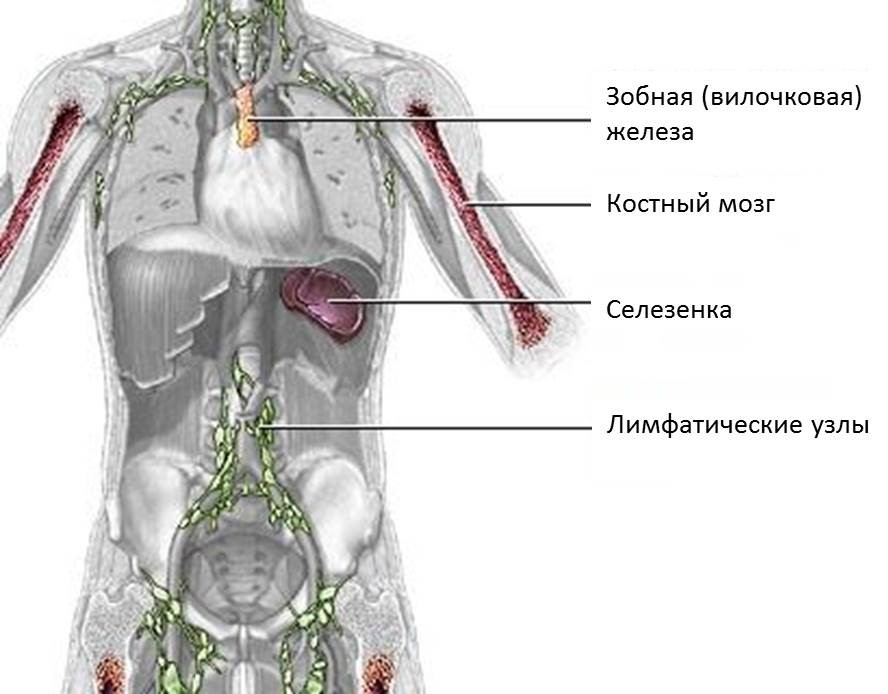
Вирус иммунодефицита человека (ВИЧ) атакует иммунную систему человека. В норме иммунная система защищает нас от заболеваний.
Рисунок: Иммунная система человека
В связи с тем, что ВИЧ разрушает иммунную систему, инфицированный вирусом ВИЧ пациент становится подверженным бактериальным и вирусным инфекциям. При возникновении данных заболеваний организму становится сложно с ними справиться, поэтому замедляется процесс выздоровления. ВИЧ – это состояние, приводящее к развитию синдрома приобретенного иммунодефицита (СПИД).
Что такое СПИД?
СПИД – это результат прогрессирующего течения ВИЧ инфекции. Когда ВИЧ протекает на финальных стадиях, считается, что он трансформировался в СПИД. Люди со СПИД наиболее подвержены заболеваниям, их организму сложнее бороться с инфекциями, по сравнению с людьми с ВИЧ. Они обычно умирают от инфекции или рака.
Что такое синдром ВИЧ?
Синдром ВИЧ - это начальная стадия ВИЧ инфекции, когда происходит первичное инфицирование ВИЧ.
Что происходит после заражения ВИЧ?
После инфицирования ВИЧ иммунная система начинает атаковать вирус, пытаясь убрать его из организма. Пока организм борется с инфекцией, вирус не может создавать копии самого себя. Даже если у вас имеется ВИЧ, вы можете выглядеть и чувствовать себя хорошо. В анализах крови может быть не выявлено никаких изменений.
Тем не менее, в это время вирус может по-прежнему атаковать лимфатические узлы. Лимфатические узлы являются центральным звеном иммунной системы организма. Также вирус может атаковать ткани головного мозга и медленно вызывать его разрушение.
В течение 10-15 лет ВИЧ может уничтожить столько иммунных клеток, что организм больше не может бороться с инфекциями. В основном вирус поражает так называемые иммунные клетки, которые называются CD4 (см. описание ниже). Если количество клеток CD4 иммунных клеток становится меньше 200 в мл, говорят о том, что ВИЧ трансформировался в СПИД (в норме количество клеток CD4 составляет 600-1000). При наличии СПИД пациент заболевает различными серьезными инфекциями.
При первичном инфицировании ВИЧ заболевание не проявляется никакими симптомами. Иногда лица с ВИЧ могут испытывать гриппоподобные симптомы, сохраняющиеся в течение нескольких недель. К ним относятся:
Если вы были недавно инфицированы ВИЧ, вы можете этого не знать. Человек, от которого вы заразились ВИЧ, может выглядеть хорошо и не чувствовать себя больным. Симптомы ВИЧ инфекции похожи на симптомы таких заболеваний, как мононуклеоз, тонзиллит грипп.
Каковы симптомы инфекции ВИЧ в развитой фазе?
По мере прогрессирования заболевания симптомы могут проявляться или прогрессировать. Это может занять определенное время. У некоторых лиц с ВИЧ симптомы могут начать проявляться только через 10 лет. К симптомам ВИЧ относятся:
ВИЧ у мужчин и женщин протекает практически одинаково. В течение длительного времени после инфицирования человек выглядит и чувствует себя здоровым. В течение нескольких лет постепенно происходит ослабление иммунной системы, затем организм становится неспособен бороться с другими инфекциями.
Различие в проявлении ВИЧ инфекции у мужчин и женщин заключается в том, что у ВИЧ-инфицированных женщин по мере ослабления иммунной системы часто развиваются дополнительные заболевания, такие как рецидивирующие вагинальные грибковые инфекции. Более серьезные инфекции, такие как воспалительные заболевания органов малого таза (инфекционные заболевания органов репродуктивной системы) хуже поддаются лечению. Ускоряется прогрессирование заболеваний шейки матки, таких как предрак (дисплазия) и рак. Их сложнее лечить, если у женщины имеется ВИЧ.
ВИЧ может передаваться от человека к человеку только через биологические жидкости, такие как кровь, сперма и вагинальная жидкость. Дети, рождающиеся от инфицированных матерей могут быть инфицированы во время беременности. К наиболее частым путям распространения ВИЧ относятся:
· Незащищенный анальный, вагинальный или оральный половой акт с инфицированным лицом
· Совместное использование игл и шприцев для инъекций с инфицированным человеком.
Более половины инфицированных женщин заражаются ВИЧ от сексуальных партнеров. Женщина может заразиться как при контакте с мужчиной, так и с другой женщиной. При неправильном использовании презерватива во время полового акта с инфицированным партнером у женщины возникает очень высокий риск заражения ВИЧ.
Кто находится в группе риска заражения ВИЧ?
В самом начале эпидемии СПИДа ВИЧ-инфекция ограничивалась определенными группами населения, к ним относились потребители инъекционных наркотиков, гомосексуалисты и пациенты с гемофилией (нарушение свертываемости крови, при котором с лечебной целью требуются частые переливания крови). Лица с гемофилией заражались при переливании донорской крови, инфицированной ВИЧ. В настоящее время доноры крови проверяются на ВИЧ, а кровь, инфицированная ВИЧ, уничтожается.
Теперь ВИЧ-инфекция широко распространена. Существует множество групп лиц, подверженных риску инфицирования ВИЧ:
· Гомосексуалисты
· Любой, у кого есть несколько сексуальных партнеров
· Любой, вступающий в половой контакт с проститутками
· Лица, совместно использующие иглы при употреблении наркотиков
· Любые лица, обменивающие секс на наркотики или деньги
· Лица с заболеваниями, передающимися половым путем
· Любой, у кого есть или был сексуальный партнер, относящийся к одной из вышеуказанных групп риска
Как дети заражаются ВИЧ от своих матерей?
Младенцы могут заразиться ВИЧ от своих матерей во время беременности, во время родов или при грудном вскармливании.
В настоящее время стало возможным предотвратить множество случаев ВИЧ у детей путем назначения лекарственных препаратов беременной женщине и новорожденному ребенку. Данный метод защиты не может быть предложен, если беременная женщина не знает, что она инфицирована. Многие лица с ВИЧ на начальных этапах заболевания чувствуют себя здоровыми. Единственным методом подтверждения инфицирования является тест на ВИЧ. Если вы беременны, попросите врача назначить вам анализ на ВИЧ в качестве пренатального скрининга. Если вы планируете беременность, лучше всего заранее проверить вас и вашего партнера на ВИЧ.
Какие контакты считаются безопасными?
ВИЧ не может длительно существовать вне организма, поэтому вы не можете заразиться им при повседневных контактах. Вы не можете инфицироваться при прикосновении, рукопожатии, объятьях, плавании в общественном бассейне, при сдаче крови, при принятии горячей ванны, пользовании общественными туалетами, через телефоны, дверные ручки или фонтаны. Также ВИЧ не передается через пищу, при укусе комаров и других насекомых.
Что мне делать, если я подозреваю, что мог быть инфицирован?
Если вы подозреваете, что можете быть инфицированы ВИЧ, незамедлительно обратитесь к врачу. Ранняя диагностика и начало приема лекарственных препаратов могут замедлить прогрессирование заболевания. Врач может дать вам советы об уходе за собой, если по результатам обследования у вас будет выявлен ВИЧ.
Поскольку многие люди инфицированные ВИЧ выглядят здоровыми, с целью выявления инфицированных лиц необходимо проводить анализы крови на ВИЧ. Лиц с положительным результатом анализов на ВИЧ называют ВИЧ-позитивными. Уточните у врача, как пройти обследование на ВИЧ конфиденциально. Врач поможет вам интерпретировать результаты обследования.
Необходимо ли мне пройти обследование на ВИЧ?
Медики рекомендует всем сексуально активным лицам в возрасте 18-65 лет пройти обследование. Дети младше 18 лет и взрослые старше 65 лет должны быть обследованы, если они находятся в группе высокого риска инфицирования. Также рекомендуется пройти обследование беременным женщинам. Большинство обследований на наличие антител к ВИЧ наиболее информативно через 2-3 месяца от момента предполагаемого инфицирования. Это время необходимо для появления антител в крови.
На основании чего врач может предположить наличие у меня ВИЧ?
При проникновении вируса ВИЧ в организм он проникает в белые клетки крови, называемые «CD4 лимфоцитами». Вирус ВИЧ захватывает CD4 клетки и ежедневно производит в них миллиарды собственных копий. Новые инфицированные клетки распространяются по всему организму.
Организм пытается защитить себя от ВИЧ следующими путями:
1. Путем выработки антител (они прикрепляются к вирусу и не дают ему производить собственные копии)
2. Выработкой специальных клеток, называемых макрофагами и натуральными киллерами Т-клетками. Эти клетки помогают организму избавляться от некоторых новых вирусов. Если в вашей крови выявляются антитела к ВИЧ, знайте, что организм пытается защитить вас от ВИЧ-инфекции. Однако, накопление необходимого количества антител, при котором возможно их обнаружение в крови, происходит в течение нескольких месяцев.
Таким образом, на момент инфицирования ВИЧ в организме может быть недостаточное количество антител, при котором возможно их обнаружение в крови, поэтому анализ может не подтвердить диагноз.
Однако, при наличии симптомов заболевания уровень РНК ВИЧ в крови может быть высоким (РНК – это сокращенное название «рибонуклеиновой кислоты». РНК продуцируется при активации вируса). Чтобы это установить, можно провести тест на «вирусную нагрузку». Этот тест подскажет врачу, что вы больны из-за инфицирования ВИЧ.
Сначала врач проверит, имеется ли у вас ВИЧ-инфекция. Ваша кровь будет проверена методом ИФА (иммуноферментный анализ). При положительном результате данного анализа кровь будет повторно проверена методом белкового иммуноблоттинга. При положительном результате обоих тестов вам диагностируют ВИЧ-инфекцию.
На то, что у человека с ВИЧ развился СПИД, могут указывать три критерия. При наличии хотя бы одного из трех критериев говорят о наличии СПИД:
· Количество CD4 клеток (будет обсуждаться ниже) менее 200
· Процентное содержание CD4 клеток менее 14%
· Наличие СПИД-ассоциированного заболевания
СПИД-ассоциированное заболевание – это болезнь, диагностируемая врачом у лиц с наличием ВИЧ-инфекции. Около 25 заболеваний считаются СПИД-ассоциированными. К ним относятся пневмоцистная пневмония, саркома Капоши и синдром истощения. Если у человека с ВИЧ диагностируется СПИД-ассоциированное заболевание, ему выставляется диагноз СПИД.
Поможет ли мне диагностирование ВИЧ на ранней стадии?
Да. В настоящее время не существует метода излечения от ВИЧ. Организм может вырабатывать антитела и CD4 клетки с целью замедления прогрессирования ВИЧ, но это не поможет полностью избавиться от вируса. Фактически, сам акт атаки на ВИЧ-инфекцию может нанести кратковременный урон вашей иммунной системе.
Тем не менее, лечение препаратами от ВИЧ (обычно это комбинация препаратов, называемых антиретровирусными) может замедлить развитие вируса и поддержать работу иммунной системы организма на высоком уровне в течение длительного времени. Вот почему медики рекомендуют ранее начало лечения лиц с ВИЧ.
Следует ли мне обратиться к врачу для диагностики ВИЧ?
Врач беспокоится о вас, вашем здоровье и конфиденциальности информации. Если вы хотите обследоваться на ВИЧ, вам следует обратиться к врачу. Он поможет вам решить следует ли вам проходить обследование и окажет вам поддержку до и после обследования.
Запомните, один отрицательный результат теста не является гарантией того, что у вас нет ВИЧ, и вы не сможете заразиться им в будущем. Вы должны обсудить с врачом методы профилактики инфицирования ВИЧ.
Какие лекарственные препараты применяются при ВИЧ инфекции?
Для борьбы с ВИЧ инфекцией используется несколько видов лекарственных препаратов. С целью снижения количества ВИЧ в организме лекарственные препараты часто назначаются в комбинации. Терапия, при которой комбинируется нескольких лекарственных препаратов с целью уменьшения количества ВИЧ в крови, называется высокоактивной антиретровирусной терапией (ВААР). Врач должен наблюдать ваше состояние при приеме данных лекарственных препаратов, чтобы он мог контролировать уровень снижения вирусной нагрузки в крови под действием терапии. Также врач должен быть уверен в том, что у вас нет побочных эффектов, таких как тошнота, рвота, усталость, анемия или периферическая нейропатия (чувство онемения в кистях и стопах). К лекарственным препаратам, обычно применяемым при ВААР, относятся:
· Нуклеозидные ингибиторы обратной транскриптазы (НИОТ): Когда ВИЧ внедряется в здоровую клетку, ему необходимо использование ДНК или генетического материала данной клети для создания собственных копий. Данные лекарственные препараты блокируют способность ВИЧ копировать ДНК здоровых клеток. Без построения ДНК вирус не может создавать собственные копии.
· Ненуклеозидные ингибиторы обратной транскриптазы: Действие данной группы препаратов также направлено на предотвращение использования ДНК здоровых клеток ВИЧ для создания собственных копий, но осуществление данного механизма происходит несколько другим путем.
· Ингибиторы протеаз: Данная группа препаратов предотвращает распространение клеток, инфицированных ВИЧ, по организму.
· Ингибиторы слияния: Данные препараты предотвращают проникновение ВИЧ в здоровые клетки организма. Инъекции данных препаратов проводятся врачом.
· Ингибиторы интегразы: Данные препараты блокируют интегразу– это вирусный белок ВИЧ, который участвует во встраивании генетического материала ВИЧ в здоровую клетку.
Когда лучше начать лечение данными препаратами?
Большинство экспертов считает, что необходимо начинать прием препаратов для лечения ВИЧ инфекции до того как количество CD4 клеток не снизится ниже 200. Некоторые врачи стараются назначить своим пациентам данные препараты как можно раньше, когда уровень клеток CD4 составляет от 200 до 500. Вы должны обсудить с врачом наиболее подходящие для вас лекарственные препараты и наилучшее время для начала терапии.
Как врач может определить, что лекарственные препараты работают?
Ниже представлены обследования, позволяющие определить количество вируса в крови. Врач может использовать эту информацию для оценки ответа вашего организма на терапию.
· Количество клеток CD4: CD4 клетки – это одна из разновидностей белых клеток крови (иногда их называют Т – лимфоцитами или Т-клетками). Клетки CD4 очень важны, так как они помогают вашему организму бороться с инфекциями. К сожалению, данные клетки являются основной мишенью вируса, вызывающего ВИЧ инфекцию. Этот вирус повреждает CD4 клетки. У лиц, не инфицированных ВИЧ, уровень клеток CD4 составляет от 500 до 1,200 клеток на мм3 (кубический миллиметр). При снижении количества клеток CD4 ниже определенного уровня врач может назначить вам лекарственные препараты для борьбы с ВИЧ. Одной из целей терапии ВИЧ инфекции является сохранение количества CD4 клеток на максимально возможном уровне.
· Вирусная нагрузка: Вирусная нагрузка – это число копий ВИЧ в крови. У лиц, не инфицированных ВИЧ, вирусная нагрузка равна 0. Лекарственные препараты, снижающие количество ВИЧ в организме, обычно назначаются при уровне вирусной нагрузке от 10,000 до 30,000 вирусных копий в мл (миллилитр) крови. Второй целью лечения является максимально возможное снижение уровня вирусной нагрузки.
· ОАК: Общий анализ крови (также называемый ОАК) позволяет определить количество красных и белых клеток в крови. Красные клетки крови (эритроциты) транспортируют кислород из легких ко всем тканям организма. Белые клетки крови (лейкоциты) борются с инфекциями. Они поддерживают работу иммунной системы организма. По мере прогрессирования ВИЧ инфекции количество эритроцитов и лейкоцитов может значительно снизиться. Также это может произойти при приеме лекарственных препаратов для борьбы с ВИЧ инфекцией. Врач ориентируется на результаты ОАК, чтобы вовремя принять решение о замене лекарственного препарата. Врач заинтересован в том, чтобы сохранить максимально возможное количество эритроцитов и лейкоцитов и поддержать ваше состояние здоровья.
Что происходит при обычном посещении врача?
С целью уточнения степени прогрессирования ВИЧ инфекции врач проверит несколько вещей. Он опросит вас о ваших симптомах. Потом будет искать признаки, указывающие на прогрессирование инфекции. Также он проведет анализы крови для определения количества CD4 клеток и вирусной нагрузки. К признакам, указывающим врачу на прогрессирование заболевания со времени последнего визита, относятся следующие:
· Появление новых симптомов, таких как тошнота, рвота, усталость, лихорадка, головная боль, озноб, ночная потливость, одышка или диарея.
· Симптомы потери веса, появление язв в полости рта (например, афтозный стоматит, относящийся к грибковым инфекциям) или увеличение лимфатических узлов (в области шеи, в подмышечных впадинах, в паховой области).
· Снижение уровня CD4 клеток в крови.
· Рост вирусной нагрузки в крови
Как часто мне следует обращаться к врачу?
Врач может назначать вам визиты каждые 6 месяцев, пока ваш уровень клеток CD4 выше 500. При снижении уровня клеток CD4 ниже 500, визиты к врачу могут назначаться каждые 3 месяца. Тем не менее, при назначении нового лекарственного препарата, врач может проводить обследования чаще, чтобы посмотреть, как ваш организм реагирует на терапию, убедиться, нет ли признаков прогрессирования ВИЧ инфекции.
Что еще может мне помочь?
Некоторые лекарственные препараты могут помочь предотвратить другие инфекции и осложнения, которые возникают при снижении резистентности организма (ослабление иммунитета) под действием ВИЧ. Ниже представлены некоторые рекомендации, которые могут помочь лицам с ВИЧ:
· Прививка от гриппа каждый сезон с целью профилактики заболеваемости
· Прививка от пневмонии каждые 5-7 лет может предотвратить заболеваемость пневмонией, вызванной бактерией Streptococcuspneumoniae. К данному виду пневмонии особо восприимчивы лица с ВИЧ инфекцией.
· Кожный туберкулиновый тест, проводимый 1 раз в год, может указывать на наличие туберкулеза, являющимся очень серьезным заболеванием, особенно для людей с ВИЧ.
· Пап тест для женщин с целью проверки на наличие дисплазии (предраковое состояние) и рака шейки матки. Оба этих заболевания наиболее часто встречаются среди женщин с наличием ВИЧ инфекции. Поначалу ПАП тест проводится каждые 6 месяцев. После получения двух нормальных результатов ПАП теста, вы можете проходить их 1 раз в год.
· Обследование на гепатит В лиц, находящихся в группе риска по заболеванию. Вы находитесь в группе риска заражения гепатитом В, если употребляете инъекционные препараты. Если по результатам обследования у вас не будет выявлен гепатит В, врач может порекомендовать вам вакцину от вируса гепатита В, чтобы защитить вас от инфицирования.
· Также может помочь сочетание лекарственных препаратов сульфаметоксазол + триметоприм. Данное сочетание препаратов назначается при снижении количества CD4 клеток ниже 200. Они помогают предотвратить пневмонию, вызванную грибками Pneumocystis jiroveci (ранее называемые Pneumocystis carinii). Также данные антибиотики помогают предотвратить другую инфекцию, называемую токсоплазмозом.
· Азитромицин, кларитромицин и рифампицин могут помочь при снижении количества CD4 клеток от 50 до 75. Они помогают предотвратить инфицирование бактерией Mycobacterium avium.
Примечание о вакцинах
Иногда количество доступных вакцин может быть не соизмеримо с количеством нуждающихся в ней людей.
Чего ожидать в будущем?
Комбинированная лекарственная терапия превратила ВИЧ инфекцию из лидирующей причины смертности среди лиц молодого возраста в хроническое заболевание, течение которого можно контролировать десятилетиями. Тем не менее, пока вы принимаете препараты от ВИЧ и чувствуете себя хорошо, вы можете передавать вирус другим лицам при незащищенном половом акте или при переливании крови. Данные препараты не убивают вирус, они только поддерживают работу иммунной системы на уровне, позволяющем предотвратить развитие СПИД или замедлить его течение.
В настоящее время разрабатываются и тестируются новые лекарственные препараты, способные задерживать развитие вируса, при этом частота их приема будет реже. Но процесс их широкого распространения может занять несколько лет.
Если вы ВИЧ - положительны, вам необходимо хорошо о себе заботиться. Придерживайтесь сбалансированного питания, регулярно занимайтесь физическими упражнениями, уделяйте достаточное внимание отдыху. Точно следуйте всем рекомендациям врача и принимайте все препараты согласно назначению. Также вы можете предпринять меры по защите от инфекционных заболеваний, которые чаще встречаются у лиц с ВИЧ.
Как мне следует практиковать «безопасный секс»?
При каждом половом акте используйте презерватив. Латексные презервативы способствуют снижению риска заражения инфекциями, передающимися половым путем (ИППП), такими как герпес, вирус папилломы человека (ВПЧ) или новыми штаммами ВИЧ, устойчивыми к антиретровирусным препаратам. Чтобы снизить риск заражения кишечными инфекциями избегайте орально - анальных контактов.
Как насчет моей работы и досуга?
При некоторых видах деятельности или работы (например, работа в приютах для бездомных, больницах, клиниках, домах престарелых или тюрьмах) может повышаться риск заражения туберкулезом или другими инфекционными заболеваниями. Проконсультируйтесь с врачом о месте своей работы. Врач решит, следует ли вам проходить обследование на туберкулез, и как часто необходимо это делать.
Родители детей, находящихся в детском саду, лица, обеспечивающие уход за детьми, подвергаются повышенному риску заражения от детей цитомегаловирусной (ЦМВ) инфекцией, криптоспиридозом, гепатитом А и лямблиозом. Риск заражения можно снизить путем соблюдения правил личной гигиены, к ним относятся постоянное мытье рук после смены подгузников, контакта с мочой или слюной, после приема ванны и перед едой. Если у вашего ребенка ВИЧ, проинформируйте об этом лиц, помогающих в уходе за ребенком.
Если вы работаете с животными (например, работа ветеринаром, работа в зоомагазине, на ферме или бойне), вы можете находиться в зоне повышенного риска заражения такими инфекциями, как криптоспиридоз, токсоплазмоз, сальмонеллез, кампилобактериоз или бартонеллез. Риск заражения этими инфекциями недостаточно высок, чтобы отказываться от своей работы, но вам следует предпринимать специальные меры предосторожности.
· Избегайте контакта с молодыми животными на ферме, особенно если у них диарея.
· Мойте руки после работы в саду или другого контакта с почвой.
· Если вы проживаете в зоне распространения гистоплазмоза, избегайте таких видов деятельности, как чистка курятников, исследование пещер или обработка почвы.
· Если вы проживаете в зоне распространения кокцидомикоза, избегайте видов деятельности, связанных с экскавацией почвы, наличием пыльных бурь.
Безопасно ли мне иметь домашнее животное?
Несмотря на то, что наличие домашнего питомца для лиц с ВИЧ может быть сопряжено с множеством рисков, их можно избежать. Домашние животные приносят эмоциональную пользу, поэтому не спешите от них отказываться. Ниже представлены советы, которые помогут вам и вашему питомцу оставаться здоровыми.
· Своевременно вакцинируйте вашего питомца, чтобы предотвратить развитие заболеваний.
· При наличии у питомца диареи вам следует незамедлительно обратиться в ветеринарную клинику. Ветеринар может определить обусловлена ли диарея микробами, представляющими опасность для вас. Если это возможно, попросите друга позаботиться о вашем питомце, пока у него сохраняется диарея.
· Обязательно мойте руки после того, как вы гладили своего питомца, особенно перед едой. Избегайте контакта с фекалиями. Если у вашего ребенка ВИЧ, убедитесь, что ребенок моет руки после контакта с домашним животным.
· Если вы хотите завести собаку или кошку, убедитесь, что животному исполнилось как минимум 6 месяцев, и у него нет диареи. Это поможет снизить риск заражения криптоспиридозом.
· Аккуратно выбирайте место, откуда вы собираетесь взять питомца. Некоторые животноводческие хозяйства, приюты для животных и зоомагазины славятся более хорошим соблюдением гигиены по сравнению с другими.
· Избегайте бродячих животных. Если вы хотите приютить щенка или котенка, ветеринар должен обследовать животное, чтобы убедиться, что у него нет микробов, которые могли бы вызвать у вас развитие инфекции.
· Если у вас есть кошка, коробку с наполнителем для кошачьего туалета необходимо чистить каждый день, предпочтительно чтобы этим не занимался человек с наличием ВИЧ или беременные женщины. Это поможет избежать токсоплазмоза. Держите кошку в помещении и не позволяйте ей охотиться на других животных (например, на крыс или мышей). Не кормите ее сырым или недоваренным мясом. Избегайте игр, в ходе которых кошка может нанести вам царапины или укусы. Если вы все же получили царапину или укус, незамедлительно промойте рану водой. Никогда не позволяйте кошке лизать открытую царапину или рану на вашем теле.
· Контроль над появлением блох – это эффективный способ поддерживать ваше здоровье, а также здоровье вашей собаки или кошки.
· С целью снижения риска инфицирования сальмонеллезом ограничьте контакт с рептилиями (такими как змеи, ящерицы, игуаны или черепахи). Если вам необходимо почистить аквариум или клетку для птиц, надевайте резиновые перчатки. Избегайте контакта с экзотическими животными, такими как обезьяны.
Как я могу избежать заражения через пищу и воду?
Ниже представлено несколько советов, соблюдая которые вы можете оградить себя от инфекций, передающихся через воду и продукты питания. Более подробно о безопасности пищевых продуктов читайте здесь: «Безопасность пищевых продуктов»
· Избегайте употребления в пищу сырых или недоваренных яиц (включая продукты, в состав которых входят сырые яйца, например, тесто для выпечки, заправка для салата Цезарь и майонез).
· Избегайте употребления в пищу сырой или недоваренной птицы, мяса или морепродуктов. Также не стоит употреблять в пищу непастеризованные молочные продукты. Готовьте птицу и мясо до полной готовности или до исчезновения розовой окраски. Средняя температура приготовления говядины должна составлять 170°F. Для домашней птицы средняя температура приготовления составляет 180°F.
· Тщательно мойте фрукты и овощи перед употреблением в пищу.
· Тщательно мойте руки, разделочные доски, рабочие поверхности и ножи водой с мылом после их контакта с сырыми продуктами, особенно с сырым мясом.
· Если у вас сильно ослаблен иммунитет, и вы хотите снизить риск инфицирования листериозом (редкое заболевание, передающееся через продукты питания, контаминированные бактерией Listeriamonocytogene), избегайте употребления в пищу мягких сыров, продуктов, готовых к употреблению, таких как колбасные изделия. Перед употреблением в пищу колбасных изделий их следует повторно разогреть до температуры, при которой погибают все бактерии.
· Никогда не пейте воду прямо из озер и рек. Не плавайте в воде, в которой могут содержаться человеческие или животные экскременты. Старайтесь не заглатывать воду при плавании или при других водных процедурах.
· Если в вашем городе вспышка заболевания, передача которого связана с водой, или поступает рекомендация «кипятить воду», вам следует кипятить воду в течение 1 минуты, прежде чем использовать ее для питья или чистки зубов. В качестве альтернативного варианта допускается использование фильтров для воды или воды в бутылках.
· Если нет необходимости кипятить воду в связи со вспышкой какого-либо заболевания, вы можете продолжать это делать, чтобы снизить риск возникновения инфекции. Обсудите этот вопрос с врачом, так как полное исключение водопроводной воды может быть неудобным и обходиться дорого.
· Если вы решите полностью избегать водопроводной воды, помните, что лед, содержащий загрязненную воду, тоже может оказаться источником инфекции, также как и газированные напитки, продающиеся в киосках в общественных местах.
· Газированные безалкогольные напитки в бутылках безопасны для питья. Негазированные безалкогольные напитки и соки, не требующие охлаждения в закрытом виде, также безопасны. Концентрат замороженных фруктовых соков также безопасен, если вы готовите сок с водой из безопасных источников.
· Если вы пьете охлажденный (не замороженный) фруктовый сок, проследите, чтобы на этикетке было написано «пастеризованный». Также убедитесь в том, что он охлажденный. Другие пастеризованные напитки и пиво также считаются безопасными для питья, тем не менее, отсутствуют какие-либо данные о безопасности вина.
Как я могу обезопасить себя во время путешествий?
Путешествия могут быть опасны для ВИЧ-инфицированных лиц, особенно при наличии тяжелой иммуносупрессии. Путешествия в развивающиеся страны опасны риском развития инфекций, передающихся с пищей и водой, по сравнению с путешествием в европейские, североамериканские и развитые страны Азии. Перед путешествием стоит проконсультироваться с врачом.
· Помните, что нужно быть осторожным с напитками и едой. Избегайте употребления в пищу замороженных, сырых овощей и фруктов, водопроводной воды, сырых или недостаточно термически обработанных морепродуктов или мяса, молока и молочных продуктов и продуктов, купленных у уличных торговцев.
· К продуктам, которые в целом считаются безопасными, относятся горячая пища, фрукты, которые вы очищаете самостоятельно, напитки в бутылках (особенно газированные), горячий чай или кофе, пиво и вода, кипятившаяся в течение 1 минуты.
Несмотря на то, что некоторые исследования утверждают, что лекарственные препараты для профилактики диареи помогают снизить риск, не существует каких-либо исследований, в которые специально включаются ВИЧ - положительные пациенты.
Обычно рекомендуется принимать лекарственный препарат перед путешествиями с целью профилактики расстройства желудка или диареи, но предварительно вы можете проконсультироваться об этом с врачом. На случай возникновения диареи вы можете захватить с собой антибиотики. Незамедлительно обратитесь к врачу при сильной диарее, не купирующейся приемом лекарственных препаратов, при наличии крови в стуле, при развитии обезвоживания или появлении лихорадки (с ознобом или без него).
Избегайте прямого контакта кожи с почвой или песком, особенно если почва могла быть загрязнена фекалиями животных. Надевайте обувь и защитную одежду. Сидите на полотенце, если вы идете на пляж.
Обсудите с врачом, требуется ли вам сделать какие-либо прививки перед путешествием. Некоторые прививки хорошо переносятся пациентами с ВИЧ, но некоторые из них им противопоказаны. Если вы не можете получить некоторые прививки, врач может дать вам специальные инструкции. Врач также может обсудить с вами меры по профилактике грибковых и протозойных инфекций, в зависимости от того, куда вы отправляетесь в путешествие.
· Не вступайте в половой контакт с инфицированными ВИЧ лицами, или теми, кто занимается сексом с другими
· Практикуйте «безопасный» секс, если вы живете половой жизнью
· Не пользуйтесь общими иглами или шприцами
Вы не можете распознать человека, инфицированного ВИЧ, по внешнему виду. Симптомы СПИД начинают проявляться спустя как минимум 8 лет после инфицирования ВИЧ. Так что люди, которые и не выглядят и не чувствуют себя больными, могут передать вам СПИД.
Единственный метод, позволяющий на 100% оградить себя от СПИДа – вообще не заниматься сексом или вступать в половой контакт только с человеком, не инфицированным ВИЧ. Также необходимо избегать контактов с кожей и кровью других людей.
Что такое «безопасный секс»?
Самый «безопасный» секс – это его отсутствие. Если вы живете половой жизнью, «безопасный» секс – это половой контакт между 2 людьми, не инфицированными ВИЧ, занимающимися сексом только друг с другом и не употребляющими инъекционные наркотики.
Безопасный секс также подразумевает использование презервативов, если у вас имеются какие-либо опасения относительно того, инфицирован ли ваш партнер, или имеются ли у него половые связи с другими лицами. Используйте мужские латексные презервативы каждый раз, когда вы занимаетесь сексом.
Если мужчина отказывается использовать мужской презерватив, воспользуйтесь женским. Женские презервативы могут быть не так эффективны, как мужские, но, тем не менее, они дают вам защиту.
Никогда не допускайте, чтобы чужая кровь, сперма, моча, влагалищная жидкость или фекалии попадали в ваш анус, влагалище или рот.
Как правильно использовать презервативы?
Чтобы быть уверенным в своей защите, важно правильно пользоваться презервативами. Латексные презервативы могут использоваться при всех видах половых контактов, в том числе при анальном, вагинальном и оральном сексе. Если у вас аллергия на латекс, используйте презервативы из полиуретана. При оральном сексе с женщиной, она может использовать презерватив, расположив его между своим телом и ртом партнера.
Если вы собираетесь использовать спермициды, имейте в виду, что исследования показывают, что спермициды, содержащие ноноксинол-9, могут вызывать раздражение в области половых органов и повышают риск заражения ИППП. Тем не менее, использование презерватива с ноноксиноном-9 – это лучше, чем отсутствие презерватива.
С презервативами стоит использовать только лубриканты на водной основе. Лубриканты на масляной основе, вазелин, детские масла и лосьоны могут вызвать повреждение презерватива.
Как использовать мужской презерватив
Используйте презервативы из латекса или полиуретана. Презервативы из натуральных мембран, например, из кишки ягнят, не так хороши, потому что вирус СПИД достаточно мал, чтобы пройти через небольшие поры в данных презервативах.
· Наденьте презерватив до какого-либо контакта
· Разверните презерватив над эрегированным пенисом. Развернутое кольцо должно быть снаружи. Разворачивайте презерватив по направлению к основанию пениса. Оставьте примерно 3,5 - 4 сантиметра на кончике, чтобы там могла собираться сперма.
· Сожмите кончик презерватива, чтобы выпустить воздух
· Снимите презерватив после эякуляции. Держите презерватив у основания пениса, чтобы он не соскользнул.
· Выбросьте презерватив, не используйте повторно.
Что делать, если я использую иглы совместно с кем-либо?
Наилучшим решением для вашего здоровья является обращение за медицинской помощью по поводу злоупотребления наркотиками. Если вы используете шприцы и иглы совместно с кем-либо, дважды очистите их при помощи воды и дезинфицирующего раствора, чтобы убить ВИЧ. Залейте дезинфицирующий раствор в шприц с иглой, а затем вылейте его. Проделайте то же самое с водой. Повторите оба шага еще раз.
Вопросы, которые вы можете задать врачу
· Существует ли какой-либо надежный способ защиты от ВИЧ инфекции?
· Какое лечение является для меня наиболее подходящим?
· Как я могу защитить себя от серьезных инфекций?
· Как я могу найти пункты обмена шприцев в своем районе?
· Какие диагностические тесты вы будете проводить?
· Как часто мне следует обращаться к врачу?
· Имеются ли какие-либо побочные эффекты моей терапии?
· Безопасно ли мне кормить ребенка грудью?
· Необходимо ли мне пользоваться презервативом, чтобы защитить свою девушку / парня от инфицирования ВИЧ?
· Следует ли мне придерживаться специальной диеты?
Более подробно о ВИЧ/СПИДе можно прочитать в монографии профессора Алмаза Шармана «Синдром иммунодефицита человека»: http://www.zdrav.kz/node/8567