.

облысение | zdrav.kz
X

Электрондық поштаңызға соңғы жаңалықтарды алыңыз

X

Получайте самые последние новости на свой e-mail

облысение

Contents

Considerations

Causes

Home Care

When to Contact a Medical Professional

What to Expect at Your Office Visit


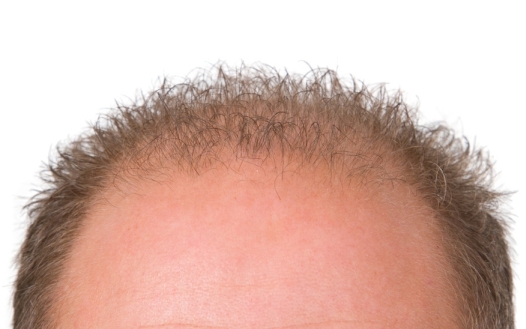
Partial or complete loss of hair is called alopecia.

Considerations

Hair loss usually develops gradually. It may be patchy or all over (diffuse). You lose roughly 100 hairs from your head every day. The scalp contains about 100,000 hairs.

Causes

HEREDITY

Both men and women tend to lose hair thickness and amount as they age. This type of baldness is not usually caused by a disease. It is related to aging, heredity, and changes in the hormone testosterone. Inherited, or pattern baldness, affects many more men than women. Male pattern baldness can occur anytime after puberty. About 80% of men show signs of male pattern baldness by age 70.

PHYSICAL OR EMOTIONAL STRESS

Physical or emotional stress may cause one-half to three-quarters of scalp hair to shed. This kind of hair loss is called telogen effluvium. Hair tends to come out in handfuls while you shampoo, comb, or run your hands through your hair. You may not notice this for weeks to months after the episode of stress. Hair shedding decreases over 6 to 8 months. Telogen effluvium is usually temporary. But it can become long-term (chronic).

Causes of this type of hair loss are:

·         High fever or severe infection

·         Childbirth

·         Major surgery, major illness, sudden blood loss

·         Severe emotional stress

·         Crash diets, especially those that do not contain enough protein

·         Drugs, including retinoids, birth control pills, beta-blockers, calcium channel blockers, certain antidepressants, NSAIDs (including ibuprofen).

Some women ages 30 to 60 may notice a thinning of the hair that affects the entire scalp. The hair loss may be heavier at first, and then gradually slow or stop. There is no known cause for this type of telogen effluvium.

OTHER CAUSES

Other causes of hair loss, especially if it is in an unusual pattern, include:

·         Alopecia areata (bald patches on the scalp, beard, and, possibly, eyebrows; eyelashes may fall out).

·         Anemia

·         Autoimmune conditions such as lupus

·         Burns

·         Certain infectious diseases such as syphilis

·         Excessive shampooing and blow-drying

·         Hormone changes

·         Thyroid diseases

·         Nervous habits such as continual hair pulling or scalp rubbing

·         Radiation therapy

·         Tinea capitis (ringworm of the scalp)

·         Tumor of the ovary or adrenal glands

·         Hair styles that put too much tension on the hair follicles.

Home Care

Hair loss from menopause or childbirth often goes away after 6 months to 2 years.

For hair loss due to illness (such as fever), radiation therapy, medicine use, or other causes, no treatment is needed. Hair usually grows back when the illness ends or the therapy is finished. You may want to wear a wig, hat, or other covering until the hair grows back.

Hair weaves, hair pieces, or changes of hair style may disguise hair loss. This is generally the least expensive and safest approach to hair loss. Hair pieces should not be sutured (sewn) to the scalp because of the risk of scars and infection.

When to Contact a Medical Professional

Call your health care provider if you have any of the following:

·         Losing hair in an unusual pattern

·         Losing hair rapidly or at an early age (for example, in your teens or twenties)

·         Pain or itching with the hair loss

·         The skin on your scalp under the involved area is red, scaly, or otherwise abnormal

·         Acne, facial hair, or an abnormal menstrual cycle

·         You are a woman and have male pattern baldness

·         Bald spots on your beard or eyebrows

·         Weight gain or muscle weakness, intolerance to cold temperatures, or fatigue

·         Areas of infection on your scalp

What to Expect at Your Office Visit

A careful medical history and examination of the hair and scalp are usually enough to diagnose the cause of your hair loss.

Your provider will ask detailed questions about:

·         Symptoms of your hair loss. If there is a pattern to your hair loss or if you are losing hair from other parts of your body as well, if other family members have hair loss.

·         How you care for your hair. How often you shampoo and blow dry or if you use hair products.

·         Your emotional well-being and if you are under a lot of stress

·         Your diet, if you have made recent changes

·         Recent illnesses such as a high fever

Tests that may be performed (but are rarely needed) include:

·         Blood tests to rule out disease

·         Microscopic examination of a plucked hair

·         Skin biopsy

If you have ringworm on the scalp, you may be prescribed an antifungal shampoo and oral medicine for you to take. Applying creams and lotions may not get into the hair follicles to kill the fungus.

Your provider may prescribe a solution, such as Minoxidil that is applied to the scalp to stimulate hair growth. Other medicines, such as hormones, may be prescribed to decrease hair loss and promote hair growth. Drugs such as finasteride and dutasteride can be taken by men to decrease hair loss and grow new hair.

Hair transplant may also be recommended.


Source: https://medlineplus.gov/ency/article/003246.htm

Ученые приблизились к созданию лекарства от облысения

Команда исследователей из Колумбийского университета города Нью-Йорка впервые в истории медицины разработала способ возобновления роста волос.

Как уверяют ученые, благодаря открытию, в будущем медики смогут спровоцировать процесс роста собственных волос у любого человека.

Препарат от облысения сокращает риск возникновения рака простаты

Препарат от облысения Finasteride (Propecia) также эффективно предупреждает некоторые формы (Low Grade) рака простаты.

Волосы не имеют какого-либо физиологического значения для организма человека. Однако многие системные заболевания отрицательным образом влияют на рост волос, иногда вызывая их выпадение. Острая белковая недостаточность ведет к остановке роста волос с последующим их выпадением. Хроническая белковая недостаточность ведет к диффузному выпадению волос  - алопеции. Также выпадение волос может быть вызвано действием цитотоксических лекарств, обычно применяемых при химиотерапии рака.

У некоторых людей, увлекающихся диетами с исключением белка, или людей с нарушениями питания  может развиться дистрофия (нарушение питания). Когда это происходит, организм начинает экономить белок, что может отразиться на росте волос. Через 2-3- месяца после начала таких диет и нарушения питания может начаться усиленное выпадение волос.

Это состояние обратимо и его можно предупредить, если потреблять достаточное количество белка. Если человек все же решает придерживаться строгой диеты, он должен поддерживать поступление в организм достаточного количества белка. Белок содержится в мясе, курице, рыбе, яйцах, некоторых видах сыра, сушеных бобах, бобовом твороге, зернах и орехах.

После восстановления нормального поступления белка с пищей рост волос восстанавливается. Однако фолликулы волос могут воспаляться, оставляя островки с отсутствующими волосами.


Алопеция (облысение) - это патологическое выпадение волос и серьезная психологическая проблема для человека. Ведь волосы всегда считались символом жизненной силы и энергии.

Термин алопеция, применим ко всем видам облысения:

  • очаговая алопеция (гнездная алопеция / плешивость)
  • послеродовое выпадение волос
  • поредение волос в результате механического повреждения (некоторые виды причесок, химическая завивка, частое окрашивание)
  • симптоматическое облысение
  • к женскому типу облысения, к мужскому типу облысения и другим.

Алопецию можно разделить на две большие группы:

  • рубцовая (протекает с образованием рубца, волосяные луковицы атрофируются)
  • нерубцовая (диффузная, очаговая, андрогенная).

При очаговой алопеции волосы выпадают в определенных местах, образуя проплешины.

При диффузной алопеции волосы выпадают по всей голове.

Кроме этого алопеция бывает себорейная и андрогенная. Себорейная возникает на фоне повышенного выделения кожного сала, а андрогенная – из-за гормональных нарушений и, чаще всего, передается по наследству. Андрогенную алопецию еще называют «мужской», так как причина этого недуга - действие мужских гормонов на волосяные фолликулы. Только треть мужчин болеют андрогенной алопецией, и это люди, у которых есть генетическая предрасположенность. Иногда «мужской» алопецией болеют женщины.

Трихограмма - это методика микроскопического обследования, которая определяет соотношение волос и фазу роста волоса, в которой он сейчас пребывает. Результаты трихограммы позволяют выявить тип алопеции и назначить эффективное лечение.

Все виды алопеций поддаются лечению. Главное вовремя обратится к специалисту.