Strep throat is an infection caused by bacteria. It is called "strep" because the bacteria that causes the infection is called streptococcus.
Can other people catch my strep throat?
Yes. You can pass the strep infection to other people until you have been treated with an antibiotic for 1 to 3 days. Children who have strep throat should not go back to school or day care until their fever has gone away and they have taken an antibiotic for at least 24 hours.
You can also prevent the spread of strep throat by frequently washing your hands, covering your mouth when you cough or sneeze and avoiding sharing food utensils (such as drinking glasses) while you are sick.
Can people get strep throat from their pets?
This could happen, but it is very rare.
What are the symptoms of strep throat?
The symptoms of strep throat include the following:
Sore throat
Fever
Swollen, sore neck glands
Red and swollen tonsils
White patches in the throat or on the tonsils
Headache
In addition to the symptoms listed above, children may also have the following symptoms:
Abdominal pain
Vomiting
Red rash with small spots that is worse under the arms and in skin creases
What tests can tell I have strep throat?
Your doctor may use a test called the rapid strep test. For this test, the doctor uses a long cotton swab to take some of the mucus from the back of your throat. The results of this test can be ready in about 15 minutes.
Your doctor may also do a culture of the mucus. A sample of the mucus is sent to a laboratory. This test is called a throat culture. It can take up to 2 days to learn the results of a strep culture.
The rapid strep test and the culture can tell your doctor if you have strep throat. If something else is causing your sore throat, these tests do not tell what it is.
How is strep throat treated?
Strep throat is treated with antibiotics. Antibiotics kill bacteria, which helps ease the symptoms of strep throat and helps it go away a little faster. It can also prevent a few rare but serious conditions that people who have strep throat might develop, such as rheumatic fever or kidney inflammation.
It is important to take all of the antibiotics your doctor prescribes. This reduces the risk that your symptoms will return and also helps prevent antibiotic resistance.
Should all sore throats be treated with antibiotics?
No. Not every sore throat is strep throat. Bacteria only cause a small portion of all sore throats. The rest are caused by viruses or other problems that antibiotics do not help. Your doctor can do a test to check for strep throat.
What can make my sore throat feel better?
Here are some things that might help you feel better:
Take ibuprofen (some brand names: Advil, Motrin) or acetaminophen (one brand name: Tylenol) to relieve pain and reduce fever. Children should not take aspirin. Aspirin can cause a serious illness called Reye's syndrome when it is given to children younger than 18 years of age.
Gargle with warm salt water (1/4 teaspoon of salt in 1 cup [8 ounces] of warm water).
Adults and older children can suck on throat lozenges, hard candy, pieces of ice or popsicles.
Eat soft foods (such as yogurt and applesauce) and drink cool drinks or warm liquids (such as broths, soups and tea).
Get plenty of rest. Sleep helps your body fight infection.
Drink plenty of water. This helps keep your throat lubricated and helps prevent dehydration.
Avoid acidic or spicy foods and drinks (such as orange juice and peppers).
Questions to Ask Your Doctor
If I have a sore throat and a fever, should I go to the doctor?
How long will it be before my test results come back?
What kind of antibiotic should I take?
What should I do to make my child more comfortable while he/she has strep throat?
My child seems to get strep throat a lot. Could this be a problem with his/her tonsils?
Should I stay away from my family members while I have strep throat?
The common cold usually causes a runny nose, nasal congestion, and sneezing. You may also have a sore throat, cough, headache, or other symptoms.
Causes
It is called the “common cold” for good reason. There are over one billion colds in the United States each year. You and your children will probably have more colds than any other type of illness.
Colds are the most common reason that children miss school and parents miss work. Parents often get colds from their children.
Children can get many colds every year. They usually get them from other children. A cold can spread quickly through schools or daycares.
Colds can occur at any time of the year, but they are most common in the winter or rainy seasons.
A cold virus spreads through tiny, air droplets that are released when the sick person sneezes, coughs, or blows their nose.
You can catch a cold if:
A person with a cold sneezes, coughs, or blows their nose near you
You touch your nose, eyes, or mouth after you have touched something contaminated by the virus, such as a toy or doorknob.
People are most contagious for the first 2 to 3 days of a cold. A cold is usually not contagious after the first week.
Symptoms
Cold symptoms usually start about 2 or 3 days after you came in contact with the virus, although it could take up to a week. Symptoms mostly affect the nose.
Over-the-counter cold and cough medicines may help ease symptoms in adults and older children. They do not make your cold go away faster, but can help you feel better. Over-the-counter (OTC) cough and cold medicines are not recommended for children under age 4.
Antibiotics should not be used to treat a common cold.
Many alternative treatments have been tried for colds, such as vitamin C, zinc supplements, and echinacea. Talk to your doctor before trying any herbs or supplements.
Outlook (Prognosis)
The fluid from your runny nose will become thicker and may turn yellow or green within a few days. This is normal, and not a reason for antibiotics.
Most cold symptoms usually go away within a week. If you still feel sick after 7 days, see your health care provider to rule out a sinus infection, allergies, or other medical problem.
Possible Complications
Colds are the most common trigger of wheezing in children with asthma.
Try treating your cold at home first. Call your health care provider if:
You have problems breathing.
Your symptoms get worse or do not improve after 7 to 10 days.
Prevention
To lower your chances of getting sick:
Always wash your hands. Children and adults should wash hands after nose-wiping, diapering, and using the bathroom, and before eating and preparing food.
Disinfect your environment. Clean commonly touched surfaces (such as sink handles, door knobs, and sleeping mats) with an EPA-approved disinfectant.
Choose smaller daycare classes for your children.
Use instant hand sanitizers to stop the spread of germs.
Use paper towels instead of sharing cloth towels.
The immune system helps your body fight off infection. Here are ways to support the immune system:
Avoid secondhand smoke. It is responsible for many health problems, including colds.
Do not use antibiotics if they are not needed.
Breastfeed infants if possible. Breast milk is known to protect against respiratory tract infections in children, even years after you stop breastfeeding.
Drink plenty of fluids to help your immune system work properly.
Eat yogurt that contains "active cultures." These may help prevent colds. Probiotics may help prevent colds in children.
Gonorrhea is caused by the bacteria Neisseria gonorrhoeae. Any type of sex can spread gonorrhea. You can get it through contact with the mouth, vagina, penis, or anus.
The bacteria grow in warm, moist areas of the body. This can include the tube that carries urine out of the body (urethra). In women, the bacteria may be found in the reproductive tract (which includes the fallopian tubes, uterus, and cervix). The bacteria can also grow in the eyes.
Health care providers are required by law to tell the State Board of Health about all cases of gonorrhea. The goal of this law is make sure the patient gets proper follow-up care. Sexual partners also need to be found and tested.
You are more likely to develop this infection if:
You have many sex partners.
You have a partner with a past history of any STI.
You do not use a condom during sex.
You abuse alcohol or illegal substances.
Symptoms
Symptoms of gonorrhea usually appear 2 - 5 days after infection. However, it may take up to a month for symptoms to appear in men.
Some people do not have symptoms. They may not know that they have caught the infection, so do not seek treatment. This increases the risk of complications and the chances of passing the infection on to another person.
Symptoms in men include:
Burning and pain while urinating
Need to urinate urgently or more often
Discharge from the penis (white, yellow, or green in color)
Gonorrhea can be quickly detected by looked at a sample of discharge or tissue under the microscope. This is called a gram stain. This method is fast, but it is not the most certain.
Cultures (cells that grow in a lab dish) provide proof of gonorrhea.
Samples for a culture are most often taken from the cervix, vagina, urethra, anus, or throat.
Rarely they taken from joint fluid or blood
Cultures can often provide an early diagnosis within 24 hours. A confirmed diagnosis is available within 72 hours.
DNA tests are useful for screening. The ligase chain reaction (LCR) testis one of the tests. DNA tests are quicker than cultures. These tests can be performed on urine samples, which are easier to collect than samples from the genital area.
If you have gonorrhea, you should ask to be tested for other sexually transmitted infections, including chlamydia, syphilis, and HIV. If you are a woman age 21 or older, you should be sure you have had a recent Pap smear.
Treatment
A number of different antibiotics may be used for treating this type of infection.
You may receive one large dose of oral antibiotics or take a smaller dose for seven days.
You may be given an antibiotic injection or shot, and then perhaps be sent home with antibiotic pills.
More severe cases of PID may require you to stay in the hospital. Antibiotics are first given by IV.
Never treat yourself without being seen by your doctor first. Your health care provider will determine the best treatment.
About half of the women with gonorrhea are also infected with chlamydia. Chlamydia is treated at the same time as a gonorrhea infection.
You will need a follow-up visit 7 days after if your symptoms included joint pain, skin rash, or more severe pelvic or belly pain is present. Tests will be done to make sure the infection is gone.
Sexual partners must be tested and treated to prevent passing the infection back and forth. You and your partner must finish all of the antibiotics. Use condoms until you both have finished taking your antibiotics.
All sexual contacts of the person with gonorrhea should be contacted and tested. This helps prevent further spread of the infection.
In some places you may be able to take information and medicines to your sexual partner yourself.
In other places, the health department will contact your partner.
Outlook (Prognosis)
A gonorrhea infection that has not spread can almost always be cured with antibiotics. Gonorrhea that has spread is a more serious infection. Most of the time, it gets better with treatment.
Possible Complications
Complications in women may include:
Infections that spread to the fallopian tubes can cause scarring. This can cause problems getting pregnant at a later time.
Pregnant women with severe gonorrhea may pass the disease to their baby while in the womb or during delivery.
Call your health care provider right away if you have symptoms of gonorrhea. Most state-sponsored clinics will diagnose and treat STIs without charge.
Prevention
Avoiding sexual contact is the only sure way to prevent gonorrhea. If you and your partner do not have sex with any other persons, this can greatly reduce your chance also.
Safe sex means taking steps before and during sex that can prevent you from getting an infection, or from giving one to your partner.
Ash your healthcare provider if you should receive the hepatitis B vaccine-link and the HPV vaccine-link.
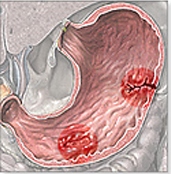
Helicobacter pylori (H. pylori) is a type of bacteria that causes infection in the stomach. It is found in about two-thirds of the world's population. It may be spread by unclean food and water, but researchers aren't sure. It causes Peptic ulcers and can also cause stomach cancer.
If you have symptoms of a peptic ulcer, your doctor will test your blood, breath or stool to see if it contains H. pylori. The best treatment is a combination of antibiotics and acid-reducing medicines. You will need to be tested after treatment to make sure the infection is gone.
To help prevent an H. pylori infection, you should
Wash your hands after using the bathroom and before eating
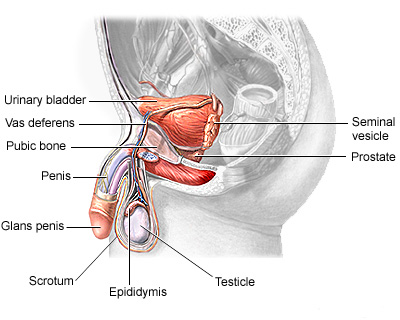
In an uncircumcised male, the head of the penis is covered by a sheath of skin known as the foreskin. Phimosis is a condition in which the foreskin is tightly stretched around the head of the penis and cannot be pulled back freely. Phimosis can occur naturally. For example, in boys younger than age 4, it is normally hard to pull back the foreskin. However, in older boys and men, phimosis often is triggered by an infection under the foreskin (balanitis) or by other medical conditions such as diabetes.
Paraphimosis occurs when a tight foreskin is pulled back behind the head of the penis and then becomes stuck. It cannot be placed forward again to its usual position covering the tip of the penis. This can cause swelling, pain and loss of blood flow to the tip of the penis. If the foreskin cannot be pushed back into its natural position, serious harm can occur.
Phimosis is usually painless. However, a very tight foreskin may interfere with urination or sexual function. In addition, phimosis may make it difficult for a man to clean under the foreskin, which can make infection of the skin more likely.
Paraphimosis usually results in painful swelling of the foreskin and head of the penis. Severe loss of blood flow to the head of the penis may be signaled by a deep purple color, which usually indicates a medical emergency.
Phimosis may be prevented by good hygiene. This includes fully pulling back the foreskin, so you can clean under it during bathing.
Paraphimosis can be prevented by carefully replacing the foreskin every time it is pulled back. If paraphimosis occurs, circumcision may be recommended to prevent it from happening again.
Phimosis without any symptoms does not require treatment. This is especially true in children. If a boy does not outgrow phimosis or there are problems with urination or hygiene, treatment with certain medicated creams, such as hydrocortisone, may be effective.
In some older boys and men with phimosis, good hygiene and prompt treatment of infections may be all that is needed to prevent problems. In other men, persistent symptoms occur, and corrective surgery (circumcision) needs to be done.
It is an emergency if paraphimosis occurs and the foreskin cannot be pushed back into its normal position. A physician may need to do an emergency procedure to create a slit in the foreskin, or do circumcision.
In most men, phimosis is not a serious problem and will not require treatment. However, it is not expected to improve on its own.
As noted above, paraphimosis is sometimes a medical emergency, and the penis may become permanently damaged if you do not seek immediate medical attention
Mastoiditis is usually caused by a middle ear infection (acute otitis media). The infection may spread from the ear to the mastoid bone of the skull. The mastoid bone fills with infected materials and its honeycomb-like structure may deteriorate.
Mastoiditis usually affects children. Before antibiotics, mastoiditis was one of the leading causes of death in children. Now it is a relatively uncommon and much less dangerous condition.
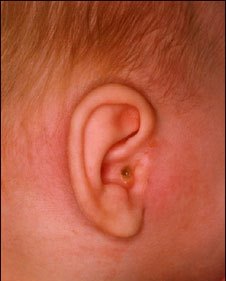
Mastoiditis is an infection of the bony air cells in the mastoid bone, located just behind the ear. It is rarely seen today because of the use of antibiotics to treat ear infections. This child has drainage from the ear and redness (erythema) behind the ear over the mastoid bone.
Mastoiditis may be difficult to treat because medications may not reach deep enough into the mastoid bone. It may require repeated or long-term treatment. The infection is treated with antibiotics by injection, then antibiotics by mouth.
Surgery to remove part of the bone and drain the mastoid (mastoidectomy) may be needed if antibiotic therapy is not successful. Surgery to drain the middle ear through the eardrum (myringotomy) may be needed to treat the middle ear infection.
Sinusitis means your sinuses are infected or inflamed. Your sinuses are hollow air spaces within the bones surrounding the nose. They produce mucus, which drains into the nose. If your nose is swollen, this can block the sinuses and cause pain and infection.
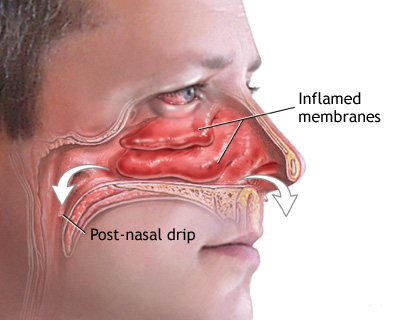
A runny or stuffy nose can be due to colds, allergies, sinus infections or the flu. When there is an excess of mucus secretions the nose is runny. The additional secretions drain from the front of the nose, or down the back (post-nasal drip). The sensation of a stuffy nose occurs when the membranes that line the nose become swollen from inflamed blood vessels.
Sinusitis can be acute, lasting for less than four weeks, or chronic, lasting much longer. Acute sinusitis often starts as a cold, which then turns into a bacterial infection. Allergies, pollutants, nasal problems and certain diseases can also cause sinusitis.
Symptoms of sinusitis can include fever, weakness, fatigue, cough and congestion. There may also be mucus drainage in the back of the throat, called postnasal drip. Treatments include antibiotics, decongestants and pain relievers. Using heat pads on the inflamed area, saline nasal sprays and vaporizers can also help.
Mycoplasma pneumonia is an infection of the lungs by the bacteria Mycoplasma pneumoniae (M. pneumoniae).
Mycoplasma pneumonia usually affects people younger than 40.
People at highest risk for mycoplasma pneumonia include those living or working in crowded areas such as schools and homeless shelters, although many people with it have no identifiable risk factor.
The symptoms are generally mild and appear over a period of 1 to 3 weeks. They may become more severe in some people.
Common symptoms include the following:
Chest pain
Chills
Cough, usually dry and not bloody
Excessive sweating
Fever (may be high)
Headache
Sore throat
Less common symptoms include:
Ear pain
Eye pain or soreness
Muscle aches and joint stiffness
Neck lump
Rapid breathing
Skin lesions or rash
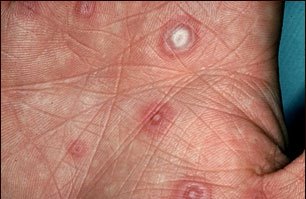
Erythema multiforme lesions are often referred to as target lesions because of the concentric rings the lesions produce. The "target" appearance is well demonstrated in this photograph.
Persons with suspected pneumonia should have a complete medical evaluation, including a thorough physical exam and a chest x-ray -- especially because the physical exam may not always be able to tell pneumonia apart from acute bronchitis or other respiratory infections.
Depending on the severity of illness, other tests may be done, including:
Complete blood count (CBC)
Blood cultures
Blood tests for signs of mycoplasma infection
Bronchoscopy
CT scan of the chest
Open lung biopsy (only done in very serious illnesses when the diagnosis cannot be made from other sources)
Antibiotics that work against Mycoplasma include macrolides, fluroquinolones, and tetracyclines. You can take these steps at home:
Control your fever with aspirin, nonsteroidal anti-inflammatory drugs (NSAIDs, such as ibuprofen or naproxen), or acetaminophen. DO NOT give aspirin to children.
Do not take cough medicines without first talking to your doctor. Cough medicines may make it harder for your body to cough up the extra sputum.
Drink plenty of fluids to help loosen secretions and bring up phlegm.
Get a lot of rest. Have someone else do household chores.
Most people recover completely even without antibiotics, although antibiotics may speed recovery. In untreated adults, cough and weakness can persist for up to a month. The disease can be more serious in the elderly and those with a weakened immune system.
Call for an appointment with your health care provider if you develop a fever, cough, or shortness of breath. While there are numerous causes for these symptoms, you will need to be checked for pneumonia.
Also, call if you have been diagnosed with this type of pneumonia and your symptoms become worse.
Azithromycin can reduce the risk of developing mycoplasma pneumonia in close contacts of patients with the disease. However, this is not often used, and avoiding people who have the infection may also help reduce yourrisk.
Infants, and persons in poor health, especially those with weakened immune systems due to HIV, organ transplants, or other conditions should avoid contact with people who have mycoplasma pneumonia.