The adenoids are lymph tissue that sit in your upper airway between your nose and the back of your throat. They are similar to the tonsils.
Enlarged adenoids means this tissue is swollen.
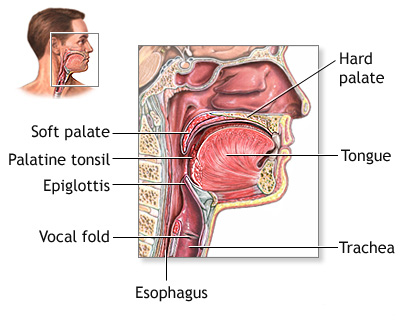
Structures of the throat include the esophagus, trachea, epiglottis and tonsils.
Causes
Enlarged adenoids may be normal. They may grow bigger when the baby grows in the womb. The adenoids help the body prevent or fight infections by removing bacteria and germs.
Infections can cause the adenoids to become swollen. The adenoids may stay enlarged even when you are not sick.
Symptoms
Children with enlarged adenoids often breathe through their mouth because their nose is blocked. Mouth breathing occurs mostly at night, but may be present during the day.
Mouth breathing may lead to the following symptoms:
Enlarged adenoids may also cause sleep problems. A child may:
Be restless while sleeping
Snore a lot
Have episodes of not breathing during sleep (sleep apnea)
Children with enlarged adenoids may also have more frequent ear infections.
Exams and Tests
The adenoids cannot be seen by looking in the mouth directly. The health care provider can see them by using a special mirror in the mouth your mouth or by inserting a flexible tube (called an endoscope) placed through the nose.