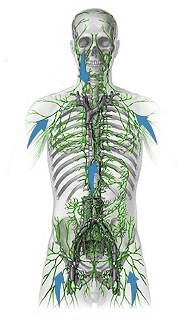
The lymph system is a network of lymph nodes, lymph ducts, lymph vessels, and organs that produce and move a fluid called lymph from tissues to the bloodstream.
The lymph glands, or nodes, are small structures that filter the lymph fluid. There are many white blood cells in the lymph nodes to help fight infection.
Lymphadenitis occurs when the glands become enlarged by swelling (inflammation), often in response to bacteria, viruses, or fungi. The swollen glands are usually found near the site of an infection, tumor, or inflammation.
Lymphadenitis may occur after skin infections or other infections caused by bacteria such as Streptococcus orStaphylococcus. Sometimes it is caused by rare infections such as tuberculosis or cat scratch disease(Bartonella).
Symptoms
Red, tender skin over lymph node
Swollen, tender, or hard lymph nodes
Lymph nodes may feel rubbery if an abscess has formed or they have become inflamed.
Exams and Tests
The health care provider will perform a physical exam. This includes feeling your lymph nodes and looking for signs of injury or infection around any swollen lymph nodes.
A biopsy and culture of the affected area or node may reveal the cause of the inflammation. Blood cultures may reveal spread of infection to the bloodstream.
Treatment
Lymphadenitis may spread within hours. Treatment should begin promptly.