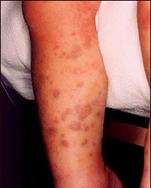
Аурудың көптеген пайда болу себептері бар. Негізгі себептерінің ішінде инфекциялар, дәрілерді көтере алмау, тұқым қуалау факторы, тағамдық, ауа арқылы, т.б. аллергия түрлері бар. Сирек жағдайда тамырлық қанталау бөртпесі жәндіктің шағуынан пайда болады. Шенлейн-Генох қанталау бөртпесінің дамуына ықпал ететін факторларға жататындар – қатерлі ісіктер, бауырдың жіті және созылмалы аурулары.
Ауруға көбінесе, балалар бейім, әсіресе, ұлдар. Көбінесе, бұл бөртпе жоғарғы тыныс алу жолдарының ауруларынан кейін пайда болады.
Емдеу ауруды туындатқан себебіне байланысты. Көпшілік жағдайда симптомдар өздігінше өтеді. Егер симптомдар қалса, дәрігер кортикостероидтармен (гормондық емдеу), антикоагулянттармен (қанды сұйылтатын), қабынуға қарсы препараттармен емдеуді тағайындайды.
Өткізілген емдеуден кейін науқаста ремиссия (аурудың симптомдарының басылуы) орын алады. Емдеуді уақытынан бұрын тоқтату асқынудың дамуына апаруы мүмкін.
Аурудың асқынуының алдын алуда созылмалы жұқпаның асқынуының алдын алу, антибиотиктерді және басқа препараттарды негізделген көрсетімдерсіз қабылдауға жол бермеу, аллергендермен жанасудан алшақ болу маңызды. Науқастарға бактериалдық антигендерді (мысалы, туберкулиндік) және сынамаларды егуге болмайды, себебі, олар көбінесе, ауыр қайталануды туындатады. Аурудың қайталануына суық тию, дене жүктемелері, тамақтанудың бұзылысы, алкоголь апаруы мүмкін.
Ақпарат көзі: АҚШ Ұлттық денсаулық институттарының мәліметтер қоры:
Scabies is found among people of all groups and ages around the world.
· Scabies spread by skin-to-skin contact with another person who has scabies.
· Scabies is easily spread among people who are in close contact. Whole families are often affected.
Outbreaks of scabies are more common in nursing homes, nursing facilities, college dorms, and child care centers.
The mites that cause scabies burrow into the skin and lay their eggs. This forms a burrow that looks like a pencil mark. Eggs hatch in 21 days. The itchy rash is an allergic response to the mite.
Pets and animals usually do not spread human scabies. It is also not very likely for scabies to be spread through swimming pools.
A type of scabies called crusted (Norwegian) scabies is a severe infestation with very large numbers of mites. People whose immune systems are weakened are most affected.
· Before treatment, wash clothes and underwear, towels, bedding and sleepwear in hot water and dry at 140°F (60°C) or higher. Dry cleaning also works. If washing or dry cleaning can't be done, keep these items away from the body for at least 72 hours. Away from the body, the mites will die.
· Vacuum carpets and upholstered furniture.
· Use calamine lotion and soak in a cool bath to ease itching.
· Take an oral antihistamine if your provider recommends it for very bad itching.
MEDICINES FROM YOUR HEALTH CARE PROVIDER
The whole family or sexual partners of infected people should be treated, even if they do not have symptoms.
Creams prescribed by your provider are needed to treat scabies.
· The cream most often used is permethrin 5%.
· Other creams include benzyl benzoate, sulfur in petrolatum, and crotamiton.
Apply the medicine all over your body. Creams may be used as a one-time treatment or they may be repeated in 1 week.
For hard to treat cases, the provider may also prescribe a pill known as ivermectin as a one-time dose.
Itching may continue for 2 weeks or more after treatment begins. It will disappear if you follow the provider's treatment plan.
Most cases of scabies can be cured without any long-term problems. A severe case with a lot of scaling or crusting may be a sign that the person has a weakened immune system.
A rash is an area of irritated or swollen skin. Many rashes are itchy, red, painful, and irritated. Some rashes can also lead to blisters or patches of raw skin. Rashes are a symptom of many different medical problems. Other causes include irritating substances and allergies. Certain genes can make people more likely to get rashes.
Contact dermatitis is a common type of rash. It causes redness, itching, and sometimes small bumps. You get the rash where you have touched an irritant, such as a chemical, or something you are allergic to, like poison ivy.
Shingles (herpes zoster) is a painful, blistering skin rash. It is caused by the varicella-zoster virus. This is the virus that also causes chickenpox.
After you get chickenpox, the virus remains inactive (becomes dormant) in certain nerves in the body. Shingles occurs after the virus becomes active again in these nerves after many years. Many people had such a mild case of chickenpox that they do not realize they have had the infection.
The reason the virus suddenly becomes active again is not clear. Often only one attack occurs.
Shingles can develop in any age group. You are more likely to develop the condition if:
· You are older than age 60
· You had chickenpox before age 1
· Your immune system is weakened by medications or disease
If an adult or child has direct contact with the shingles rash and did not have chickenpox as a child or get the chickenpox vaccine, they can develop chickenpox, not shingles.
The first symptom is usually pain, tingling, or burning that occurs on one side of the body. The pain and burning may be severe and are usually present before any rash appears.
Red patches on the skin, followed by small blisters, form in most people:
· The blisters break, forming small sores that begin to dry and form crusts. The crusts fall off in 2 to 3 weeks. Scarring is rare.
· The rash usually involves a narrow area from the spine around to the front of the abdomen or chest.
· The rash may involve the face, eyes, mouth, and ears.
Other symptoms may include:
· Fever and chills
· General ill feeling
· Headache
· Joint pain
· Swollen glands (lymph nodes)
You may also have pain, muscle weakness, and a rash involving different parts of your face if shingles affects a nerve in your face. The symptoms may include:
· Difficulty moving some of the muscles in the face
Your health care provider can make the diagnosis by looking at your skin and asking about your medical history.
Tests are rarely needed, but may include taking a skin sample to see if the skin is infected with the virus.
Blood tests may show an increase in white blood cells and antibodies to the chickenpox virus. But the tests cannot confirm that the rash is due to shingles.
Your health care provider may prescribe a medicine that fights the virus, called an antiviral drug. This drug helps reduce pain, prevent complications, and shorten the course of the disease.
The medicines should be started within 72 hours of when you first feel pain or burning. It is best to start taking them before the blisters appear. The medicines are usually given in pill form. Some people may need to receive the medicine through a vein (by IV).
Strong anti-inflammatory medicines called corticosteroids, such as prednisone, may be used to reduce swelling and pain. These medicines do not work in all patients.
Other medicines may include:
· Antihistamines to reduce itching (taken by mouth or applied to the skin)
· Pain medicines
· Zostrix, a cream containing capsaicin (an extract of pepper) to reduce pain
Follow your health care provider's instructions about how to care for yourself at home.
Other measures may include:
· Caring for your skin by applying cool, wet compresses to reduce pain, and taking soothing baths
· Resting in bed until the fever goes down
Stay away from people while your sores are oozing to avoid infecting those who have never had chickenpox -- especially pregnant women.
Herpes zoster usually clears in 2 to 3 weeks and rarely returns. If the virus affects the nerves that control movement (the motor nerves), you may have temporary or permanent weakness or paralysis.
Sometimes the pain in the area where the shingles occurred may last from months to years. This pain is called postherpetic neuralgia.
It occurs when the nerves have been damaged after an outbreak of shingles. Pain ranges from mild to very severe. Postherpetic neuralgia is more likely to occur in persons over age 60.
Call your health care provider if you have symptoms of shingles, particularly if you have a weakened immune system or if your symptoms persist or worsen. Shingles that affects the eye may lead to permanent blindness if you do not receive emergency medical care.
Do not touch the rash and blisters on persons with shingles or chickenpox if you have never had chickenpox or the chickenpox vaccine.
A herpes zoster vaccine is available. It is different than the chickenpox vaccine. Older adults who receive the herpes zoster vaccine are less likely to have complications from shingles.
Eczema is a general term for rash-like skin conditions. The most common type of eczema is called atopic dermatitis, which is an allergic reaction. Eczema is often very itchy and when you scratch it, the skin becomes red and inflamed. Eczema affects adults and children, but it is most common in babies.
What is atopic dermatitis?
Atopic dermatitis is a chronic skin condition. "Atopic" describes an inherited tendency to develop dermatitis, asthma and hay fever. "Dermatitis" means that the skin is red and itchy.
When does atopic dermatitis start and how long does it last?
Atopic dermatitis usually starts during infancy and continues into childhood. There are times when the condition gets worse (called flare-ups). Flare-ups are followed by times when the skin will heal and there may be no signs of atopic dermatitis (called remission). Remission can last for weeks, months or even years. Some children will outgrow atopic dermatitis, and others will still have it when they are adults. Flare-ups in adults tend to be less severe.
What are the symptoms?
Atopic dermatitis and eczema may start out as dry, extremely itchy skin. The rash may become very red, swollen and sore. The more you scratch it, the worse it generally gets. A clear fluid may leak from the rash. Eventually, the rash will crust over and start to scale. Common places for the rash are in the elbow creases, behind the knees, on the cheeks, and on the buttocks.
What causes eczema and atopic dermatitis?
You are more likely to have atopic dermatitis or eczema if a family member has it. They aren’t contagious, which means you can't catch them from other people. The exact cause of eczema and atopic dermatitis is unknown.
What can I do if I have eczema or atopic dermatitis?
Your doctor may prescribe a corticosteroid cream or ointment to apply to the rash. This will help reduce itching and calm inflammation. Use it right after bathing. Follow your doctor's directions for using this medicine or check the label for proper use. Call your doctor if your skin does not get better after 3 weeks of using the medicine.
Antihistamines like hydroxyzine that reduce itching can also help make it easier not to scratch. A new class of drugs, called immunomodulators, works well if you have a severe rash. Two drugs in this class are tacrolimus and pimecrolimus. These drugs keep your immune system from overreacting when stimulated by an allergen. Because they affect your immune system, the Food and Drug Administration recommends that these drugs only be used when other treatments won't work.
Avoid scratching or rubbing the itchy area.
Try not to scratch the irritated area on your skin even if it itches. Scratching can break the skin. Bacteria can enter these breaks and cause infection. Moisturizing your skin will help prevent itchiness.
What can I do about eczema and atopic dermatitis?
Eczema and atopic dermatitis can’t be cured, but they can be managed, and you can learn to avoid the things that trigger them.
Limit your contact with things that can irritate your skin.
Some things that may irritate your skin include household cleansers, detergents, aftershave lotions, soap, gasoline, turpentine and other solvents. Try to avoid contact with things that make you break out with eczema. Soaps and wetness can cause skin irritation. Wash your hands only when necessary and use a mild unscented soap such as Dove, Basis or Oil of Olay, especially if you have eczema on your hands. Dry your hands completely after you wash them.
Wear gloves to protect the skin on your hands.
Wear vinyl or plastic gloves for work that requires you to have your hands in water. Also, wear gloves when your hands will be exposed to anything that can irritate your skin. Wear cotton gloves under plastic gloves to soak up sweat from your hands. Take occasional breaks and remove your gloves to prevent a buildup of sweat inside your gloves.
Wear gloves when you go outside during the winter. Cold air and low humidity can dry your skin, and dryness can make your eczema worse.
Wear clothes made of cotton or a cotton blend.
Wool and some synthetic fabrics can irritate your skin.
Care for your skin in the bath or shower.
Bathe only with a mild unscented soap, such as Dove, Basis or Oil of Olay. Use a small amount of soap. Keep the water temperature cool or warm, not hot. Soaking in the tub for a short time can be good for your skin because the skin's outer layer can absorb water and become less dry. Soak for 15 to 20 minutes. Then use a soft towel to pat your skin dry without rubbing. Immediately after drying, apply a moisturizer to your skin. This helps seal in the moisture.
Use a moisturizer on your skin every day.
Moisturizers help keep your skin soft and flexible. They prevent skin cracks. A plain moisturizer is best. Avoid moisturizers with fragrances (perfume) and a lot of extra ingredients. A good, cheap moisturizer is plain petroleum jelly (such as Vaseline). Use moisturizers that are more greasy than creamy, because creams usually have more preservatives in them.
Regular use of a moisturizer can help prevent the dry skin that is common in winter.
Avoid getting too hot and sweaty.
Too much heat and sweat can make your skin more irritated and itchy. Try to avoid activities that make you hot and sweaty.
Learn how to manage stress in your life.
Eczema can flare up when you are under stress. Learn how to recognize and cope with stress. Stress reduction techniques can help. Changing your activities to reduce daily stress can also be helpful.
Continue skin care even after your skin has healed.
The area where you had the eczema may easily get irritated again, so it needs special care. Continue to follow the tips in this handout even after your skin has healed.
Questions to Ask Your Doctor
What treatment is best for me?
Should I use a steroid cream or ointment?
What are the side effects from the steroid cream or ointment?
Do I need to take any other medicines?
What is the best way to prevent flare-ups from eczema and atopic dermatitis?
Is there a certain type of soap I should use?
My child has eczema. What kind of moisturizer is best for him/her?
How can I keep my child from scratching the rash?
I have eczema. Will my children have it?
How should I care for the rash if I have a flare-up?
Viral hemorrhagic fevers (VHFs) are a group of illnesses caused by four families of viruses. These include the Ebola and Marburg, Lassa fever, and yellow fever viruses. VHFs have common features: they affect many organs, they damage the blood vessels, and they affect the body's ability to regulate itself. Some VHFs cause mild disease, but some, like Ebola or Marburg, cause severe disease and death.
VHFs are found around the world. Specific diseases are usually limited to areas where the animals that carry them live. For example, Lassa fever is limited to rural areas of West Africa where rats and mice carry the virus.
The risk for travelers is low, but you should avoid visiting areas where there are disease outbreaks. Because there are no effective treatments for some of these viral infections, there is concern about their use in bioterrorism.
Leukoplakia are patches on the tongue, in the mouth, or on the inside of the cheek.
Causes
Leukoplakia affects the mucus membranes of the mouth. The exact cause is not known. Doctors think it may be due to irritation such as:
· Rough teeth
· Rough places on dentures, fillings, and crowns
· Smoking or other tobacco use (smoker's keratosis), especially pipes
· Holding chewing tobacco or snuff in the mouth for a long period of time
· Drinking a lot of alcohol
The disorder is most common in elderly persons.
A type of leukoplakia of the mouth called hairy leukoplakia is caused by the Epstein-Barr virus. It is seen mostly in persons with HIV/AIDS. It may be one of the first signs of HIV infection. Hairy leukoplakia can also appear in other people whose immune system is not working well, such as after a bone marrow transplant.
Symptoms
Patches in the mouth usually develop on the tongue (sides of the tongue with hairy leukoplakia)and on the insides of the cheeks.
Leukoplakia patches appear:
· Usually white or gray
· Uneven in shape
· Fuzzy (hairy leukoplakia)
· Slightly raised with a hard surface
· Unable to be scraped off
· Painful when the mouth patches come into contact with acidic or spicy food
Exams and Tests
A biopsy of the lesion confirms the diagnosis. Examination of the biopsy may find changes that indicate oral cancer.
Treatment
The goal of treatment is to get rid of the leukoplakia patch. Removing the source of irritation may cause the patch to disappear.
· Treat dental causes such as rough teeth, irregular denture surface, or fillings as soon as possible.
· Stop smoking or using other tobacco products.
· Do not drink alcohol.
If removing the source of the irritation does not work, the doctor may suggest applying medicine to the patch or using surgery to remove it.
For hairy leukoplakia, taking antiviral medicine usually causes the patch to disappear. The doctor may also suggest applying medicine to the patch.
Outlook (Prognosis)
Leukoplakia is usually harmless. Patches in the mouth often clear up in a few weeks or months after the source of irritation is removed.
In some cases, the patches may be an early sign of cancer.
When to Contact a Medical Professional
Call for an appointment with your health care provider if you have any patches that look like leukoplakia or hairy leukoplakia.
Prevention
Stop smoking or using other tobacco products. Do not drink alcohol, or limit how many drinks you have. Have rough teeth treated and dental appliances repaired promptly.
При лейкоплакие поражается слизистая оболочка полости рта. Точная причина возникновения заболевания не известна. Врачи полагают, что это может быть связано с постоянным раздражением:
Об острые края зубов
Грубые поверхности на зубных протезах, пломбах и коронках
При курении или ином виде употребления табака (кератоз курильщика)
При жевании табака или нахождении его в ротовой полости в течение длительного времени
При приеме алкоголя в большом количестве
Это заболевание распространено среди пожилых людей.
Возбудителем волосистой лейкоплакии полости рта является вирус Эпштейна-Барра. Это может быть одним из первых признаков ВИЧ-инфекции. Волосистая лейкоплакия также может встречаться у лиц с ослабленной иммунной системой, например, на фоне трансплантации костного мозга.
Целью лечения является избавление от налета. Для этого, как правило, необходимо устранить причину раздражения.
Как можно раньше необходимо устранить стоматологические причины, такие как острые зубные края, грубые поверхности зубных протезов или пломб.
Необходим отказ от курения и использования других табачных изделий.
Рекомендуется отказаться от употребления алкоголя.
Если удаление источника раздражения не помогает, врач может предложить вам нанесение на налет лекарственных препаратов или удаление его хирургическим путем.
При волосистой лейкоплакии налет обычно проходит при приеме противовирусных лекарственных препаратов. Также врач может порекомендовать вам нанесение лекарств на поверхность налета.
Лейкоплакия, как правило, безвредна. В большинстве случаев налет полости рта исчезает через нескольких недель или месяцев после устранения источника раздражения.
В некоторых случаях налет может быть ранним признаком рака.
Обратитесь за консультацией врача, если вы заметили в полости рта налет, по своему внешнему виду напоминающий обычную лейкоплакию или волосистый тип лейкоплакии.
Бросьте курить или использовать другие табачные изделия. Не употребляйте алкоголь или сократите его количество. Своевременно лечите зубы и другие стоматологические проблемы.
Вирусные геморрагические лихорадки (ВГЛ) представляют собой группу заболеваний, вызванных четырьмя семействами вирусов. К ВГЛ относятся лихорадки Эбола, Марбург, Ласса и Желтая лихорадка. ВГЛ имеют общие черты: они влияют на многие органы, повреждая при этом кровеносные сосуды, также они нарушают способность организма к саморегулированию. Некоторые ВГЛ протекают легко, но некоторые из них, такие как лихорадка Эбола или Марбург, протекают тяжело и могут привести к смерти.
ВГЛ распространены по всему миру. Конкретные заболевания, как правило, ограничиваются районами обитания определенных животных. Например, лихорадки Ласса ограничивается сельскими районами Западной Африки, где обитают крысы и мыши, являющиеся носителями вируса.
Риск для путешественников низкий, но вы должны избегать посещения районов, известных своими вспышками данных заболеваний. Так как не существует эффективных методов лечения некоторых из этих вирусных инфекций, существует настороженность по поводу их возможного использования в биотерроризме.
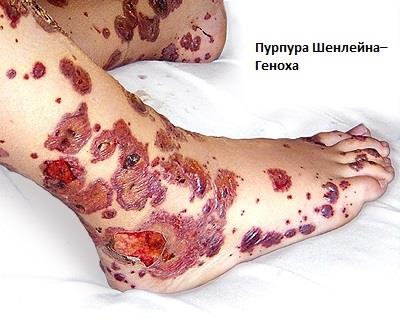
Пурпура Шенлейна-Геноха (геморрагический васкулит, сосудистая пурпура) - это заболевание, которое сопровождается появлением фиолетовых пятен на коже (пурпура), болей в суставах, желудочно-кишечных расстройств и гломерулонефрита (воспаление клубочков (скопление микрососудов) почек).
Заболевание имеет множество причин возникновения. Среди основных причин обычно называют инфекции, непереносимость лекарств, наследственный фактор, пищевые, аэрозольные и другие виды аллергии. В единичных случаях сосудистая пурпура возникает после укуса насекомого. К факторам, способствующим развитию пурпуры Шенлейна-Геноха, относят злокачественные новообразования, острые и хронические заболевания печени.
Болезни обычно подвержены дети, чаще мальчики. Зачастую пурпура появляется после перенесенного заболевания верхних дыхательных путей.
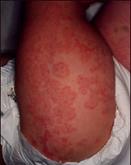
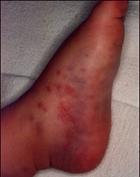
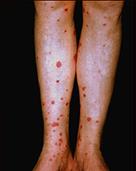
Для постановки диагноза врачу важно осмотреть кожную поверхность пациента, где отмечаются двусторонние фиолетовые высыпания (пурпура).
Специфических лабораторных тестов при пурпуре Шенлейна—Геноха не существует.
Проводят стандартные лабораторные исследования:
Общий анализ крови – обнаруживается малокровие (анемия), тромбоцитопения (снижение числа кровяных пластинок), признаки воспаления (лейкоцитоз, повышение СОЭ)
Биохимический анализ крови – могут быть признаки нарушения функции печени и почек
Оценка свертывающей системы крови (коагулограмма)
Анализ мочи – гематурия (кровь в моче)
Анализ кала – необходимо исследовать на скрытую кровь.
Исследования иммунной (защитной) системы организма, включая определение С-реактивного белка (СРБ), ревматоидного фактора, иммуноглобулинов (защитные белки крови)
Лечение проводят в зависимости от причины, вызвавшей заболевание. В большинстве случаев симптомы проходят самостоятельно. Если симптомы сохраняются, врач может назначить лечение кортикостероидами (гормональная терапия), антикоагулянтами (кроворазжижающие средства), противовоспалительными препаратами.
После проведенного лечения у пациента наступает ремиссия (затихание симптомов заболевания). Следует помнить о том, что преждевременная отмена лечения может привести к развитию обострения.
В профилактике обострений болезни важную роль играет предупреждение обострений хронической инфекции, отказ от приема антибиотиков и других препаратов без веских показаний, исключение контакта с аллергенами. Больным противопоказаны прививки и пробы с бактериальными антигенами (например, туберкулиновые), поскольку они нередко вызывают тяжелые рецидивы (возобновление) болезни. Повторное развитие болезни (рецидивы) могут провоцировать также охлаждение, физические нагрузки, нарушения питания, алкоголь.


.png)
.png)
.png)
