A headache is pain or discomfort in the head, scalp, or neck. Serious causes of headaches are rare. Most people with headaches can feel much better by making lifestyle changes, learning ways to relax, and sometimes by taking medications.
The most common type of headache is likely caused by tight muscles in your shoulders, neck, scalp, and jaw. This type of headache is called tension headache:
It may be related to stress, depression, anxiety, a head injury, or holding your head and neck in an abnormal position.
It tends to be on both sides of your head. It often starts at the back of the head and spreads forward. The pain may feel dull or squeezing, like a tight band or vice. Your shoulders, neck, or jaw may feel tight or sore.
A migraine headache involves severe pain. It usually occurs with other symptoms, such as vision changes, sensitivity to sound or light, or nausea. With a migraine:
The pain may be throbbing, pounding, or pulsating. It tends to begin on one side of your head. It may spread to both sides.
You may have an aura. This is a group of warning symptoms that start before your headache. The pain usually gets worse as you try to move around.
Migraines may be triggered by foods such as chocolate, certain cheeses, or monosodium glutamate (MSG). Caffeine withdrawal, lack of sleep, and alcohol may also be triggers.
Rebound headaches are headaches that keep coming back. They often occur from overuse of pain medicines. For this reason, these headaches are also called medication overuse headaches. Persons who take pain medicine more than 3 days a week on a regular basis can develop this type of headache.
Other types of headaches:
Cluster headache is a sharp, very painful headache that occurs up to several times a day for months. It then goes away for a similar period of time. The headache usually lasts less than an hour. It tends to occur at the same times every day.
Sinus headache causes pain in the front of the head and face. It is due to swelling in the sinus passages behind the cheeks, nose, and eyes. The pain is worse when you bend forward and when you first wake up in the morning.
Headache due to a disorder called temporal arteritis. This is a swollen, inflamed artery that supplies blood to part of the head, temple, and neck area.
In rare cases, a headache can be a sign of something more serious such as:
Bleeding in the area between the brain and the thin tissue that covers the brain (subarachnoid hemorrhage)
There are things you can do to manage headaches at home, especially migraines or tension headaches. Try to treat the symptoms right away.
When migraine symptoms begin:
Drink water to avoid getting dehydrated, especially if you have vomited.
Rest in a quiet, dark room.
Place a cool cloth on your head.
Use any relaxation techniques you have learned.
A headache diary can help you identify your headache triggers. When you get a headache, write down the following:
Day and time the pain began
What you ate and drank over the past 24 hours
How much you slept
What you were doing and where you were right before the pain started
How long the headache lasted and what made it stop
Review your diary with your doctor to identify triggers or a pattern to your headaches. This can help you and your doctor create a treatment plan. Knowing your triggers can help you avoid them.
Your doctor may have already prescribed medicine to treat your type of headache. If so, take the medicine as instructed.
For tension headaches, try acetaminophen, aspirin, or ibuprofen. Talk to your doctor if you are taking pain medicines 3 or more days a week.
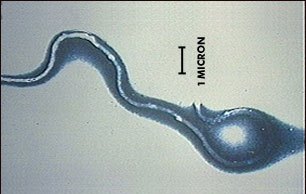
Lyme disease is caused by bacteria called Borrelia burgdorferi (B. burgdorferi).
Fig 1:Borrelia burgdorferi is a spirochete bacteria that causes Lyme disease. It is similar in shape to the spirochetes that cause other diseases, such as relapsing fever and syphilis
Blacklegged ticks and other species of ticks can carry these bacteria. The ticks pick up the bacteria when they bite mice or deer that are infected with B. burgdorferi. You can get the disease if you are bitten by an infected tick.
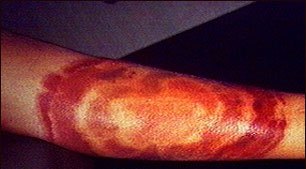
Fig: Erythema chronicum migrans is the initial lesion of Lyme disease, and often appears at the site of the infecting tick bite. It is a red, enlarging rash, flat or slightly raised, and may reach from 4 to 20 inches across
There are 3 stages of Lyme disease.
Stage 1 is called early localized Lyme disease. The infection has not yet spread throughout the body.
Stage 2 is called early disseminated Lyme disease. The bacteria have begun to spread throughout the body.
Stage 3 is called late disseminated Lyme disease. The bacteria have spread throughout the body.
Risk factors for Lyme disease include:
Doing outside activities that increase tick exposure (for example, gardening, hunting, or hiking) in an area where Lyme disease is known to occur
Having a pet that may carry ticks home
Walking in high grasses
Important facts about tick bites and Lyme disease:
In most cases., a tick must be attached to your body within 36 hours to spread the bacteria to your blood.
Blacklegged ticks can be so small that they are almost impossible to see. Many people with Lyme disease never even see or feel a tick on their body.
Most people who are bitten by a tick do not get Lyme disease.
There may be a "bull's eye" rash, a flat or slightly raised red spot at the site of the tick bite. Often there is a clear area in the center. It can be large and expanding in size. This rash is called erythema migrans. Without treatment, it can last 4 weeks or longer.
Symptoms may come and go. Untreated, Lyme disease can spread to the brain, heart, and joints.
Symptoms of early disseminated Lyme disease (stage 2) may occur weeks to months after the tick bite, and may include:
Numbness or pain in the nerve area
Paralysis or weakness in the muscles of the face
Heart problems, such as skipped heartbeats (palpitations), chest pain, or shortness of breath
Symptoms of late disseminated Lyme disease (stage 3) can occur months or years after the infection. The most common symptoms are muscle and joint pain. Other symptoms may include:
A blood test can be done to check for antibodies to the bacteria that cause Lyme disease. The most commonly used is the ELISA for Lyme disease test. An immunoblot test is done to confirm ELISA results. Be aware, though, in the early stage of infection, blood tests may be normal.
In areas where Lyme disease is more common, your health care provider may be able to diagnose early disseminated Lyme disease (Stage 2) without doing any lab tests.
Other tests that may be done when the infection has spread include:
Persons bitten by a tick should be watched closely for at least 30 days to see if a rash or symptoms develop.
A single dose of the antibiotic doxycycline may be given to someone soon after being bitten by a tick, when all of these conditions are true:
The person has a tick that can carry Lyme disease attached to his or her body. This usually means that a nurse or doctor has looked at and identified the tick.
The tick is thought to have been attached to the person for at least 36 hours.
The person is able to start taking the antibiotic within 72 hours of removing the tick.
The person is 8 years or older and is not pregnant or breastfeeding.
Local rate of ticks carrying B. burgdorferi is 20 percent or higher.
A 10 day to 4-week course of antibiotics is used to treat people who are diagnosed with Lyme disease, depending on the choice of drug:
The choice of antibiotic depends on the stage of the disease and the symptoms.
Common choices include doxycycline, amoxicillin, azithromycin, cefuroxime, and ceftriaxone.
Pain medicines, such as ibuprofen, are sometimes prescribed for joint stiffness.
If diagnosed in the early stages, Lyme disease can be cured with antibiotics. Without treatment, complications involving the joints, heart, and nervous system can occur. But these symptoms are still treatable and curable.
In rare cases, a person keeps having symptoms that interfere with daily life after they have been treated with antibiotics. This is also known as post-Lyme disease syndrome. The cause of this syndrome is unknown.
Symptoms that occur after antibiotics are stopped may not be signs of active infection and may not respond to antibiotic treatment.
Stage 3, or late disseminated, Lyme disease can cause long-term joint inflammation (Lyme arthritis) and heart rhythm problems. Brain and nervous system problems are also possible, and may include:
Take precautions to avoid tick bites. Be extra careful during warmer months. When possible, avoid walking or hiking in the woods and areas with high grass.
If you do walk or hike in these areas, take measures to prevent tick bites:
Wear light-colored clothing so that if ticks land on you, they can be spotted and removed.
Wear long sleeves and long pants with pant legs tucked into your socks.
After returning home, remove your clothes and thoroughly inspect all skin surface areas, including your scalp. Shower as soon as possible to wash off any unseen ticks.
If a tick is attached to you, follow these steps to remove it:
Grasp the tick close to its head or mouth with tweezers. Do not use your bare fingers. If needed, use a tissue or paper towel.
Pull it straight out with a slow and steady motion. Avoid squeezing or crushing the tick. Be careful not to leave the head embedded in the skin.
Clean the area thoroughly with soap and water. Also wash your hands thoroughly.
Save the tick in a jar.
Watch carefully for the next week or two for signs of Lyme disease.
If all parts of the tick cannot be removed, get medical help. Bring the tick in the jar to your doctor appointment.
Mycoplasma pneumonia is an infection of the lungs by the bacteria Mycoplasma pneumoniae (M. pneumoniae).
Mycoplasma pneumonia usually affects people younger than 40.
People at highest risk for mycoplasma pneumonia include those living or working in crowded areas such as schools and homeless shelters, although many people with it have no identifiable risk factor.
The symptoms are generally mild and appear over a period of 1 to 3 weeks. They may become more severe in some people.
Common symptoms include the following:
Chest pain
Chills
Cough, usually dry and not bloody
Excessive sweating
Fever (may be high)
Headache
Sore throat
Less common symptoms include:
Ear pain
Eye pain or soreness
Muscle aches and joint stiffness
Neck lump
Rapid breathing
Skin lesions or rash
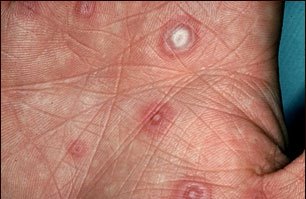
Erythema multiforme lesions are often referred to as target lesions because of the concentric rings the lesions produce. The "target" appearance is well demonstrated in this photograph.
Persons with suspected pneumonia should have a complete medical evaluation, including a thorough physical exam and a chest x-ray -- especially because the physical exam may not always be able to tell pneumonia apart from acute bronchitis or other respiratory infections.
Depending on the severity of illness, other tests may be done, including:
Complete blood count (CBC)
Blood cultures
Blood tests for signs of mycoplasma infection
Bronchoscopy
CT scan of the chest
Open lung biopsy (only done in very serious illnesses when the diagnosis cannot be made from other sources)
Antibiotics that work against Mycoplasma include macrolides, fluroquinolones, and tetracyclines. You can take these steps at home:
Control your fever with aspirin, nonsteroidal anti-inflammatory drugs (NSAIDs, such as ibuprofen or naproxen), or acetaminophen. DO NOT give aspirin to children.
Do not take cough medicines without first talking to your doctor. Cough medicines may make it harder for your body to cough up the extra sputum.
Drink plenty of fluids to help loosen secretions and bring up phlegm.
Get a lot of rest. Have someone else do household chores.
Most people recover completely even without antibiotics, although antibiotics may speed recovery. In untreated adults, cough and weakness can persist for up to a month. The disease can be more serious in the elderly and those with a weakened immune system.
Call for an appointment with your health care provider if you develop a fever, cough, or shortness of breath. While there are numerous causes for these symptoms, you will need to be checked for pneumonia.
Also, call if you have been diagnosed with this type of pneumonia and your symptoms become worse.
Azithromycin can reduce the risk of developing mycoplasma pneumonia in close contacts of patients with the disease. However, this is not often used, and avoiding people who have the infection may also help reduce yourrisk.
Infants, and persons in poor health, especially those with weakened immune systems due to HIV, organ transplants, or other conditions should avoid contact with people who have mycoplasma pneumonia.