Pneumonia is an infection that inflames the air sacs in one or both lungs. The air sacs may fill with fluid or pus, causing cough with phlegm or pus, fever, chills and difficulty breathing.
A variety of organisms, including bacteria, viruses and fungi, can cause pneumonia.
Pneumonia can range in seriousness from mild to life-threatening. It is most serious for infants and young children, people older than age 65, and people with underlying health problems or weakened immune systems.
Antibiotics and antiviral medications can treat many common forms of pneumonia.
Symptoms
The signs and symptoms of pneumonia vary from mild to severe, depending upon factors such as the type of germ causing the infection and your age and overall health. Mild signs and symptoms often are similar to those of a cold or flu, but they last longer.
Newborns and infants may not show any sign of the infection. Or they may vomit, have a fever and cough, appear restless or tired and without energy, or have difficulty breathing and eating.
Older people who have pneumonia sometimes have sudden changes in mental awareness.
WHEN TO SEE A DOCTOR See your doctor if you have difficulty breathing, chest pain, persistent fever of 39 C or higher or persistent cough, especially if you are coughing up pus.
It's especially important to see a doctor if:
A child with signs and symptoms is younger than age 2
You are older than age 65
You have an underlying health condition or weakened immune system
You're having chemotherapy or taking medication that suppresses your immune system
For some older adults and people with heart failure or lung ailments, pneumonia can quickly become a life-threatening condition.
Causes
Pneumonia has many possible causes. The most common are bacteria and viruses in the air we breathe. Your body usually prevents these germs from infecting your lungs. But sometimes these germs can overpower your immune system, even if your health is generally good.
Pneumonia is classified according to the types of germs that cause it, and where you acquired the infection.
Community-acquired pneumonia Community-acquired pneumonia is the most common type of pneumonia. It occurs outside of hospitals and other health care facilities, and may be caused by:
Bacteria, such as Streptococcus pneumoniae. Bacterial community-acquired pneumonia can occur on its own or after you have a cold or respiratory flu. This type of pneumonia often affects one area (lobe) of the lung, a condition called lobar pneumonia.
Bacteria-like organisms, such as Mycoplasma pneumoniae, which typically produce milder signs and symptoms than do other types of pneumonia. "Walking pneumonia," a term used to describe pneumonia that isn't severe enough to require bed rest, may result from Mycoplasma pneumoniae.
Viruses, including some that are the same type of viruses that cause colds and flu. Viruses are the most common cause of pneumonia in children younger than 2 years. Viral pneumonia is usually mild. But viral pneumonia caused by certain influenza viruses, such as sudden acute respiratory syndrome (SARS), can become very serious.
Fungi, which can be found in soil and in bird droppings. This type of pneumonia is most common in people with an underlying health problem or weakened immune system and in people who have inhaled a large dose of the organisms.
Hospital-acquired pneumonia
Hospital-acquired pneumonia is a bacterial infection that occurs in people 48 hours or more after being hospitalized for another condition. Hospital-acquired pneumonia can be serious because the bacteria causing it may be more resistant to antibiotics.
People who are on a breathing machine (ventilator), often used in intensive care units, are at higher risk of this type of pneumonia.
Health care-acquired pneumonia Health care-acquired pneumonia is a bacterial infection that occurs in people who are living in long-term care facilities or have been treated in outpatient clinics, including kidney dialysis centers. Like hospital-acquired pneumonia, health care-acquired pneumonia can be caused by bacteria more resistant to antibiotics.
Aspiration pneumonia Aspiration pneumonia occurs when you inhale food, drink, vomit or saliva into your lungs. This aspiration may happen if something disturbs your normal gag reflex, such as a brain injury, swallowing problem, or excessive use of alcohol or drugs.
Risk factors
Pneumonia can affect anyone. But the two age groups at highest risk are:
Infants and children younger than age 2 years, because their immune systems are still developing
People older than age 65
Other risk factors include:
Certain chronic diseases, such as asthma, chronic obstructive pulmonary disease and heart disease
Weakened or suppressed immune system, due to factors such as HIV/AIDS, organ transplant, chemotherapy for cancer or long-term steroid use
Smoking, which damages your body's natural defenses against the bacteria and viruses that cause pneumonia
Being placed on a ventilator while hospitalized
Complications
Often, people who have pneumonia can be treated successfully with medication. But some people, especially those in high-risk groups, may experience complications, including:
Bacteria in the bloodstream (bacteremia). Bacteria that enter the bloodstream from your lungs can spread the infection to other organs, potentially causing organ failure.
Lung abscess. An abscess occurs if pus forms in a cavity in the lung. An abscess is usually treated with antibiotics. Sometimes, surgery or drainage with a long needle or tube placed into the abscess is needed to remove the pus.
Fluid accumulation around your lungs (pleural effusion). Pneumonia may cause fluid to build up in the thin space between layers of tissue that line the lungs and chest cavity (pleura). If the fluid becomes infected, you may need to have it drained through a chest tube or removed with surgery.
Difficulty breathing. If your pneumonia is severe or you have chronic underlying lung diseases, you may have trouble breathing in enough oxygen. You may need to be hospitalized and use a mechanical ventilator while your lung heals.
Tests and diagnosis
Your doctor will start by asking about your medical history and doing a physical exam, including listening to your lungs with a stethoscope to check for abnormal bubbling or crackling sounds that indicate the presence of thick liquid.
If pneumonia is suspected, your doctor may recommend:
Chest X-rays, to confirm the presence of pneumonia and determine the extent and location of the infection.
Blood tests, to confirm the presence of infection and to try to identify the type of organism causing the infection. Precise identification occurs in only about half of people with pneumonia.
Pulse oximetry, to measure the oxygen level in your blood. Pneumonia can prevent your lungs from moving enough oxygen into your bloodstream.
Sputum test. A sample of fluid from yours lungs (sputum) is taken after a deep cough, and analyzed to pinpoint the type of infection.
If you are older than age 65, are in the hospital or have serious symptoms or an underlying health condition, your doctor may recommend:
Pleural fluid culture. A fluid sample is taken from the pleural area and analyzed to help determine the type of infection.
Bronchoscopy. A thin, flexible tube with a camera is inserted down your throat and through your airways to check whether something is blocking the airways or whether something else is contributing to your pneumonia.
If your pneumonia isn't clearing as quickly as expected, your doctor may recommend a chest CT scan to obtain a more detailed image of your lungs.
Treatments and drugs
Treatment for pneumonia involves curing the infection and preventing any complications.
People who have community-acquired pneumonia usually can be treated at home with medication. Although your symptoms may ease in a few days or weeks, tiredness can persist for a month or more.
Your doctor will likely recommend a follow-up chest X-ray to check that the infection is clearing. It may be safe to stop treatment even if your X-ray isn't completely normal. Only about half of chest X-rays in people with community-acquired pneumonia are normal after 28 days of treatment.
Specific treatments depend on the type and severity of your pneumonia, and your age and overall health. The options include:
Antibiotics, to treat bacterial pneumonia. It may take time to identify the type of bacteria causing your pneumonia and to choose the best antibiotic to treat it. Symptoms often improve within three days, although improvement usually takes twice as long in smokers. If your symptoms don't improve, your doctor may recommend a different antibiotic.
Antiviral medications, to treat viral pneumonia. Symptoms generally improve in one to three weeks.
Fever reducers, such as aspirin or ibuprofen.
Cough medicine, to calm your cough so you can rest. Because coughing helps loosen and move fluid from your lungs, it's a good idea not to eliminate your cough completely.
If you need to be placed on a ventilator or your symptoms are severe, you may need to be admitted to an intensive care unit.
Children may be hospitalized if they:
Are younger than age 3 months
Are excessively sleepy
Have trouble breathing
Have low blood oxygen levels
Appear dehydrated
Have a lower than normal temperature
Lifestyle and home remedies
To help you recover more quickly and decrease your risk of complications:
Get plenty of rest. Even when you start to feel better, be careful not to overdo it.
Stay home from school or work until after your temperature returns to normal and you stop coughing up mucus. Because pneumonia can recur, it's better not to return to a full workload until you're sure you're well. Ask your doctor if you're not sure.
Drink plenty of fluids, especially water, to help loosen mucus in your lungs.
Take the entire course of any prescribed medications. If you stop medication too soon, your lungs may continue to harbor bacteria that can multiply and cause your pneumonia to recur.
Prevention
To help prevent pneumonia:
Get a seasonal flu shot. The influenza virus can be a direct cause of viral pneumonia. Bacterial pneumonia is also a common complication of the flu. A yearly flu shot provides significant protection.
Link to the Vaccination
Get a pneumonia vaccination. Doctors recommend a one-time vaccine against Streptococcus pneumoniae bacteria (pneumococcus) for everyone older than age 65, as well as for people of any age residing in nursing homes and long-term care facilities, and for smokers. The vaccine is especially recommended for anyone at high risk of pneumococcal pneumonia. Some doctors recommend a booster shot five years after the first dose.
Have your child vaccinated. Doctors recommend a different pneumonia vaccine for all children younger than age 2 and for children ages 2 to 5 years who are at particular risk of pneumococcal disease. Children who attend a group day care center should also get the vaccine. Doctors also recommend seasonal flu shots for children older than six months.
Practice good hygiene. To protect yourself against ordinary respiratory infections that sometimes lead to pneumonia, wash your hands regularly or use an alcohol-based hand sanitizer.
Don't smoke. Smoking damages your lungs' natural defenses against respiratory infections.
Stay rested and fit. Proper rest, a healthy diet and moderate exercise can help keep your immune system strong.
Set an example. Stay home when you're sick. When you're in public and have a cold, catch your coughs and sneezes in the inner crook of your elbow.
Mastoiditis is usually caused by a middle ear infection (acute otitis media). The infection may spread from the ear to the mastoid bone of the skull. The mastoid bone fills with infected materials and its honeycomb-like structure may deteriorate.
Mastoiditis usually affects children. Before antibiotics, mastoiditis was one of the leading causes of death in children. Now it is a relatively uncommon and much less dangerous condition.
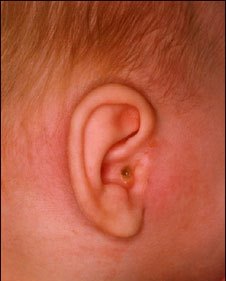
Mastoiditis is an infection of the bony air cells in the mastoid bone, located just behind the ear. It is rarely seen today because of the use of antibiotics to treat ear infections. This child has drainage from the ear and redness (erythema) behind the ear over the mastoid bone.
Mastoiditis may be difficult to treat because medications may not reach deep enough into the mastoid bone. It may require repeated or long-term treatment. The infection is treated with antibiotics by injection, then antibiotics by mouth.
Surgery to remove part of the bone and drain the mastoid (mastoidectomy) may be needed if antibiotic therapy is not successful. Surgery to drain the middle ear through the eardrum (myringotomy) may be needed to treat the middle ear infection.
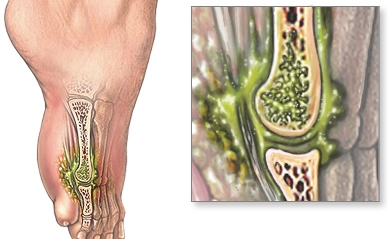
Osteomyelitis is a bone infection caused by bacteria or other germs.
Osteomyelitis is infection in the bones. Often, the original site of infection is elsewhere in the body, and spreads to the bone by the blood. Bacteria or fungus may sometimes be responsible for osteomyelitis.
Bone infection is most often caused by bacteria, but it can also be caused by fungi or other germs.
Bacteria may spread to a bone from infected skin, muscles, or tendons next to the bone. This may occur under a skin sore.
The infection can also start in another part of the body and spread to the bone through the blood.
A bone infection can also start after bone surgery. This problem is more likely if the surgery is done after an injury or if metal rods or plates are placed in the bone.
In children, the long bones of the arms or legs are most often involved. In adults, the feet, spine bones (vertebrae), and hips (pelvis) are most commonly affected.
The goal of treatment is to get rid of the infection and reduce damage to the bone and surrounding tissues.
Antibiotics are given to destroy the bacteria causing the infection.
You may receive more than one antibiotic at a time.
Often, the antibiotics are given through an IV (intravenously, meaning through a vein) rather than by mouth.
Antibiotics are taken for at least 4 - 6 weeks, often through an IV at home.
Surgery may be needed to remove dead bone tissue if you have an infection that does not go away.
If there are metal plates near the infection, they may need to be removed.
The open space left by the removed bone tissue may be filled with bone graft or packing material. Doing this promotes the growth of new bone tissue.
Infection that occurs after joint replacement may need surgery to remove the replaced joint and infected tissue around the area. A new prosthesis may be implanted in the same operation. More often, doctors wait until the infection has gone away.
If you have diabetes, it will need to be well controlled. If there are problems with blood supply to the infected area, such as the foot, surgery to improve blood flow may be needed to treat the infection.
With treatment, the outcome for acute osteomyelitis is usually good.
The outlook is worse for those with long-term (chronic) osteomyelitis. Symptoms may come and go for years, even with surgery. Amputation may be needed, especially in those with diabetes or poor blood circulation.
The outlook for those with an infection of the prosthesis depends, in part, on:
The patient's health
The type of infection
Whether the infected prosthesis can be safely removed
Mycoplasma pneumonia is an infection of the lungs by the bacteria Mycoplasma pneumoniae (M. pneumoniae).
Mycoplasma pneumonia usually affects people younger than 40.
People at highest risk for mycoplasma pneumonia include those living or working in crowded areas such as schools and homeless shelters, although many people with it have no identifiable risk factor.
The symptoms are generally mild and appear over a period of 1 to 3 weeks. They may become more severe in some people.
Common symptoms include the following:
Chest pain
Chills
Cough, usually dry and not bloody
Excessive sweating
Fever (may be high)
Headache
Sore throat
Less common symptoms include:
Ear pain
Eye pain or soreness
Muscle aches and joint stiffness
Neck lump
Rapid breathing
Skin lesions or rash
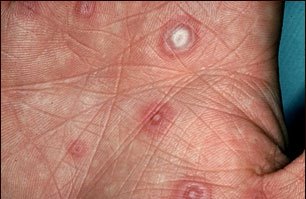
Erythema multiforme lesions are often referred to as target lesions because of the concentric rings the lesions produce. The "target" appearance is well demonstrated in this photograph.
Persons with suspected pneumonia should have a complete medical evaluation, including a thorough physical exam and a chest x-ray -- especially because the physical exam may not always be able to tell pneumonia apart from acute bronchitis or other respiratory infections.
Depending on the severity of illness, other tests may be done, including:
Complete blood count (CBC)
Blood cultures
Blood tests for signs of mycoplasma infection
Bronchoscopy
CT scan of the chest
Open lung biopsy (only done in very serious illnesses when the diagnosis cannot be made from other sources)
Antibiotics that work against Mycoplasma include macrolides, fluroquinolones, and tetracyclines. You can take these steps at home:
Control your fever with aspirin, nonsteroidal anti-inflammatory drugs (NSAIDs, such as ibuprofen or naproxen), or acetaminophen. DO NOT give aspirin to children.
Do not take cough medicines without first talking to your doctor. Cough medicines may make it harder for your body to cough up the extra sputum.
Drink plenty of fluids to help loosen secretions and bring up phlegm.
Get a lot of rest. Have someone else do household chores.
Most people recover completely even without antibiotics, although antibiotics may speed recovery. In untreated adults, cough and weakness can persist for up to a month. The disease can be more serious in the elderly and those with a weakened immune system.
Call for an appointment with your health care provider if you develop a fever, cough, or shortness of breath. While there are numerous causes for these symptoms, you will need to be checked for pneumonia.
Also, call if you have been diagnosed with this type of pneumonia and your symptoms become worse.
Azithromycin can reduce the risk of developing mycoplasma pneumonia in close contacts of patients with the disease. However, this is not often used, and avoiding people who have the infection may also help reduce yourrisk.
Infants, and persons in poor health, especially those with weakened immune systems due to HIV, organ transplants, or other conditions should avoid contact with people who have mycoplasma pneumonia.