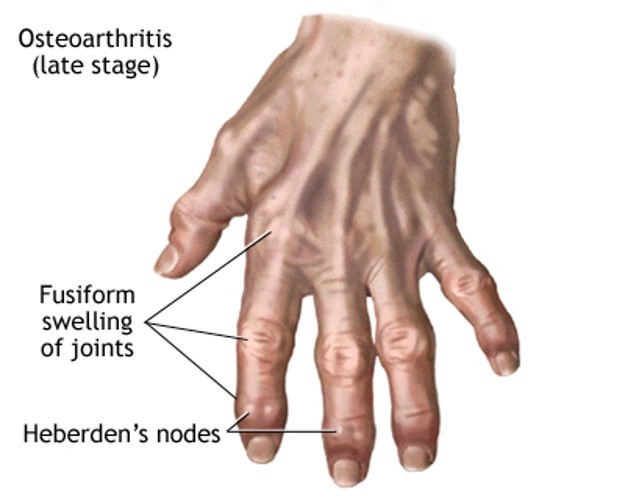
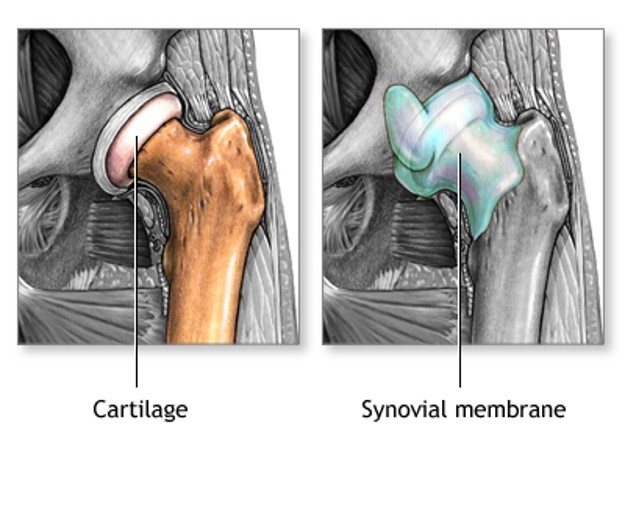
Arthritis involves the breakdown of cartilage. Normal cartilage protects a joint and allows it to move smoothly. Cartilage also absorbs shock when pressure is placed on the joint, such as when you walk. Without the normal amount of cartilage, the bones rub together. This causes swelling (inflammation), and stiffness.
Joint inflammation and damage may result from:
An autoimmune disease (the body's immune system mistakenly attacks healthy tissue)
Broken bone
General "wear and tear" on joints
Infection, most often by bacteria or virus
Crystals such as uric acid or calcium pyrophosphate dihydrate
In most cases, the joint inflammation goes away after the cause goes away or is treated. Sometimes, it does not. When this happens, you have long-term (chronic) arthritis.
Arthritis may occur in men or women. Osteoarthritis is the most common type.
Other, more common types of inflammatory arthritis include:
The goal of treatment is to reduce pain, improve function, and prevent further joint damage. The underlying cause often cannot be cured.
LIFESTYLE CHANGES
Lifestyle changes are the preferred treatment for osteoarthritis and other types of joint swelling. Exercise can help relieve stiffness, reduce pain and fatigue, and improve muscle and bone strength. Your health care team can help you design an exercise program that is best for you.
Exercise programs may include:
Low-impact aerobic activity (also called endurance exercise). Walking is a good example.
Range of motion exercises for flexibility.
Strength training for muscle tone.
Your provider may suggest physical therapy. This might include:
Heat or ice
Splints or orthotics to support joints and help improve their position; this is often needed for rheumatoid arthritis
Water therapy
Massage
Other things you can do include:
Get plenty of sleep. Sleeping 8 to 10 hours a night and taking naps during the day can help you recover from a flare-up more quickly, and may even help prevent flare-ups.
Avoid staying in one position for too long.
Avoid positions or movements that place extra stress on your sore joints.
Change your home to make activities easier. For example, install grab bars in the shower, the tub, and near the toilet.
Try stress-reducing activities, such as meditation, yoga, or tai chi.
Eat a healthy diet full of fruits and vegetables, which contain important vitamins and minerals, especially vitamin E.
Eat foods rich in omega-3 fatty acids, such as cold water fish (salmon, mackerel, and herring), flaxseed, rapeseed (canola) oil, soybeans, soybean oil, pumpkin seeds, and walnuts.
Avoid excessive alcohol and smoking.
Apply capsaicin cream over your painful joints. You may feel improvement after applying the cream for 3 to 7 days.
Lose weight, if you are overweight. Weight loss can greatly improve joint pain in the legs and feet.
MEDICINES
Medicines may be prescribed along with lifestyle changes. All medicines have some risks. You should be closely followed by a doctor when taking arthritis medicines.
Over-the-counter medicines:
Acetaminophen (Tylenol) is often the first medicine tried. Take up to 3,000 mg a day (2 arthritis-strength Tylenol every 8 hours). To prevent damage to your liver, do not take more than the recommended dose. Since multiple medicines are available without a prescription that also contain acetaminophen, you will need to include them in the 3,000 mg per day maximum. Also, avoid alcohol when taking acetaminophen.
Aspirin, ibuprofen, or naproxen are nonsteroidal anti-inflammatory drugs (NSAIDs) that can relieve arthritis pain. However, they can carry risks when used for a long time. Possible side effects include heart attack, stroke, stomach ulcers, bleeding from the digestive tract, and kidney damage.
Prescription medicines:
Corticosteroids ("steroids") help reduce inflammation. They may be injected into painful joints or given by mouth.
Disease-modifying anti-rheumatic drugs (DMARDs) are used to treat autoimmune arthritis. They include methotrexate, sulfasalazine, hydroxychloroquine, and leflunomide.
Biologics are used for the treatment of autoimmune arthritis especially rheumatoid arthritis (RA). They include etanercept (Enbrel), infliximab (Remicade), adalimumab (Humira), abatacept (Orencia), rituximab (Rituxan), golimumab (Simponi), certolizumab (Cimzia), and tocilizumab (Actemra). These drugs can improve the quality of life for many people, but can have serious side effects.
Other drugs for RA -- Janus kinase inhibitor: Tofacitinib (Xeljanz). This is a medicine taken by mouth that is now approved for treating RA.
For gout, allopurinol (Zyloprim), febuxostat (Uloric) or probenecid (Benemid) may be used to lower uric acid.
It is very important to take your medicines as directed by your provider. If you are having problems doing so (for example, because of side effects), you should talk to your provider. Also make sure your provider knows about your all the medicines you are taking, including vitamins and supplements bought without a prescription.
SURGERY AND OTHER TREATMENTS
In some cases, surgery may be done if other treatments have not worked. This may include:
Early diagnosis and treatment can help prevent joint damage. If you have a family history of arthritis, tell your provider , even if you do not have joint pain.
Avoiding excessive, repeated motions may help protect you against osteoarthritis.
Артрит - поражение суставов воспалительного характера. Поражение одного из суставов называют моноартритом, нескольких или многих – полиартритом. По происхождению артриты могут быть самостоятельным заболеванием (ревматоидный артрит), одним из проявлений различных болезней, осложнением многих патологических процессов (инфекционных, аллергических, инфекционио-аллергических) и травм. Независимо от природы и причин артрита начальный его период практически одинаков - нарастающая в течение 1 - 2 суток боль в суставе, усиливающаяся даже при небольших движениях, ограничение подвижности в суставе, покраснение кожи над ним, его отек и деформация, общее недомогание, лихорадка. Дальнейшее течение артрита зависит от его происхождения. Например, при ревматизме и подагре артрит протекает остро с относительно быстрым (до нескольких недель) восстановлением функций суставов, в других случаях поражения суставов прогрессируют - нарастают их деформация и тугоподвижность.
Артрит может начаться сразу и сопровождаться сильными болями в суставе (острый артрит) или развиваться постепенно (хронический артрит). У некоторых людей наблюдается острая ноющая или тупая боль. Эта боль сравнима с зубной болью. Движение в этом суставе обычно нарушено, хотя иногда наблюдается тугоподвижность. Причины артритов: инфекция, травма, аллергия, нарушение обмена веществ, заболевания нервной системы, недостаток витаминов.
Виды артрита
В зависимости от характера поражения основные типы артритов объединяют в два класса: воспалительный артрит и дегенеративный артрит.
Эти заболевания связаны с повреждением суставного хряща, покрывающего концы костей в месте их сочленения.
Существует свыше 100 видов артрита. Три наиболее частых вида – это остеоартрит, ревматоидный артрит и подагра.
Ревматоидный артрит– это воспаление оболочек или тканей, выстилающих сустав. Со временем ревматоидный артрит может привести к разрушению тканей сустава, в том числе хряща, связок, сухожилий и костей. Ревматоидный артрит приблизительно в три раза чаще встречается среди женщин, чем мужчин. Он также чаще наблюдается в возрасте от 30 до 50 лет, но также может встречаться у детей и подростков.
Остеоартрит – это заболевание, при котором хрящ, который защищает и амортизирует сустав, со временем разрушается. В конечном счете, кости, разделенные прежде хрящем, начинают тереться друг об друга, что приводит к повреждению ткани и подлежащей кости с развитием болезненных суставных симптомов. В отличие от ревматоидного артрита, остеоартрит не сопровождается воспалением тканей. Это наиболее распространенное заболевание суставов, поражающее более 80 процентов людей в возрасте старше 70 лет. Наиболее частыми зонами поражения являются позвоночник, коленный и бедренный суставы. (более подробно смотрите «Остеоартрит»).
Подагрический артрит (подагра) – это наследственное заболевание суставов, сопровождающееся острой болью и отеком, связанное с нарушением обмена веществ. В частности, подагра возникает в результате образования кристалликов мочевой кислоты в суставах и в окружающих их тканях и поражает в основном сустав большого пальцы на ноге (этот симптом называют подагрой). У людей с подагрой может быть очень болезненный приступ в одном или двух суставах с последующим полным исчезновением всех симптомов до следующего приступа. Хотя подагра – это наследственное заболевание, начальные атаки подагры характерны для более позднего возраста – 40 – 50 лет. Подагра чаще поражает мужчин, чем женщин – в соотношении 20:1.