Scarring from sexually transmitted infections, injury, or surgery
Smoking
Toxins in the environment
Vasectomy or failure of vasectomy reversal
Healthy couples under age 30 who have sex regularly will have a 25% to 30% per month chance of getting pregnant each month.
A woman is most fertile in her early 20s. The chance a woman can get pregnant drops greatly after age 35 (and especially after age 40). The age when fertility starts to decline varies from woman to woman.
Infertility problems and miscarriage rates increase significantly after 35 year of age. There are now options for early egg retrieval and storage for women in their 20's. This will help ensure a successful pregnancy if childbearing is delayed until after age 35. This is an expensive option, but for women who know they will need to delay childbearing, it may be worth considering.
Exams and Tests
Deciding when to get treated for infertility depends on your age. Health care providers often suggest that women under 30 try to get pregnant on their own for 1 year before getting tested.
Many experts recommend that women over 35 attempt conception for only 6 months. If a pregnancy does not occur within that time, they should talk to their provider.
Infertility testing involves a medical history and physical exam for both partners.
Blood and imaging tests are most often needed. In women, these may include:
Blood tests to check hormone levels, including progesterone and follicle stimulating hormone (FSH)
Home urine ovulation detection kits
Measurement of body temperature every morning to see if the ovaries are releasing eggs
Treatment depends on the cause of infertility. It may involve:
Education and counseling about the condition
Fertility treatments such as intrauterine insemination (IUI) and in vitro fertilization (IVF)
Medicines to treat infections and clotting disorders
Medicines that help the growth and release of eggs from the ovaries
Couples can increase the chances of becoming pregnant each month by having sex at least every 3 days before and during ovulation.
Ovulation occurs about 2 weeks before the next menstrual cycle (period) starts. Therefore, if a woman gets her period every 28 days the couple should have sex at least every 3 days between the 10th and 18th day after her period starts.
Having sex before ovulation occurs is especially helpful.
Sperm can live inside a woman's body for at least 3 days.
However, a woman's egg can only be fertilized by the sperm for a few hours after it is released.
Women who are under or overweight may increase their chances of becoming pregnant by getting to a healthier weight.
Support Groups
Many people find it helpful to take part in support groups for people with similar concerns. You can ask your provider to recommend local groups.
Outlook (Prognosis)
As many as 1 in 5 couples diagnosed with infertility eventually become pregnant without treatment.
More than half of couples with infertility become pregnant after treatment. This figure does not include advanced techniques such as in vitro fertilization (IVF).
When to Contact a Medical Professional
Call your provider if you are unable to get pregnant.
Prevention
Preventing sexually transmitted infections (STIs), such as gonorrhea and chlamydia, may reduce your risk of infertility.
Maintaining a healthy diet, weight, and lifestyle may increase your chance of getting pregnant and having a healthy pregnancy.
Uterine fibroids are tumors that grow in a woman's womb (uterus). These growths are not cancer (benign).
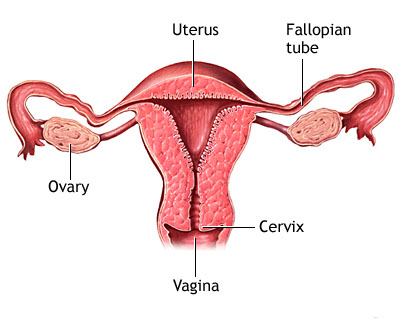
Uterine diseases The uterus, or womb, is the place where a baby grows when a woman is pregnant. The first sign of a problem with the uterus may be bleeding between periods or after sex. Causes can include hormones, thyroid problems, fibroids, polyps, cancer, infection, or pregnancy.
Treatment depends on the cause. Sometimes birth control pills treat hormonal imbalances. If a thyroid problem is the cause, treating it may also stop the bleeding. If you have cancer or hyperplasia, an overgrowth of normal cells in the uterus, you may need surgery.
With two other uterine problems, tissue that normally lines the uterus grows where it is not supposed to. In endometriosis, it grows outside the uterus. In adenomyosis, it grows in the uterus's outside walls. Pain medicine may help. Other treatments include hormones and surgery.
Uterine fibroids are common. As many as 1 in 5 women may have fibroids during their childbearing years. Half of all women have fibroids by age 50.
Fibroids are rare in women under age 20. They are more common in African-Americans than Caucasians.
No one knows exactly what causes fibroids. They are thought to be caused by:
Hormones in the body
Genes (may run in families)
Fibroids can be so tiny that you need a microscope to see them. They can also grow very large. They may fill the entire uterus and may weigh several pounds. Although it is possible for just one fibroid to develop, usually there are more than one.
Fibroids can grow:
In the muscle wall of the uterus (myometrial)
Just under the surface of the uterine lining (submucosal)
Just under the outside lining of the uterus (subserosal)
On a long stalk on the outside the uterus or inside the uterus (pedunculated)
Heavy bleeding during your period, sometimes with blood clots
Periods that may last longer than normal
Needing to urinate more often
Pelvic cramping or pain with periods
Feeling fullness or pressure in your lower belly
Pain during intercourse
Often, you can have fibroids and not have any symptoms. Your health care provider may find them during a physical exam or other test. Fibroids often shrink and cause no symptoms in women who have gone through menopause. A recent study also showed that some small fibroids shrink in premenopausal women.
Treatment for the symptoms of fibroids may include:
Birth control pills to help control heavy periods
Intrauterine devices (IUDs) that release hormones to help reduce heavy bleeding and pain
Iron supplements to prevent or treat anemia due to heavy periods
Pain relievers such as ibuprofen or naprosyn for cramps or pain
Hormone therapy shots to help shrink fibroids (done only for a short time)
Watchful waiting: You may have pelvic exams or ultrasounds every once in a while to check the fibroid's growth
Surgery and procedures used to treat fibroids include:
Hysteroscopy. This procedure can remove fibroids growing inside the uterus.
Uterine artery embolization.This procedure stops the blood supply to the fibroid, causing it to shrink and die. This may be a good option if you want to have children in the future.
Myomectomy. This surgery removes the fibroids from the uterus. This also may be a good choice if you want to have children. It won't prevent fibroids from growing again.
Hysterectomy. This surgery removes the uterus completely. It may be an option if you don't want children, medicines do not work, and you cannot have any other procedures.
If you have fibroids without symptoms, you may not need treatment.
If you have fibroids, they may grow if you become pregnant. This is due to the increased blood flow and higher estrogen levels. The fibroids usually return to their original size after your baby is born.




 Исследователи из Стэндфордского университета сообщают, что бесплодие у мужчин может повысить вероятность возникновения