Abdominal pain is pain that you feel anywhere between your chest and groin. This is often referred to as the stomach region or belly.
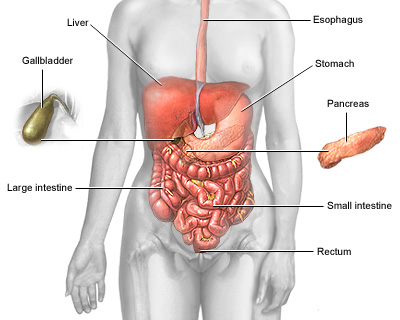
The esophagus, stomach, large and small intestine, aided by the liver, gallbladder and pancreas convert the nutritive components of food into energy and break down the non-nutritive components into waste to be excreted.
Almost everyone has pain in the abdomen at one time or another. Most of the time, it is not caused by a serious medical problem.
How bad your pain is does not always reflect the seriousness of the condition causing the pain.
For example, you might feel severe abdominal pain if you have gas or stomach cramps due to a viral gastroenteritis.
Sometimes, life-threatening conditions such as colon cancer or early appendicitis may only cause mild pain or no pain.
Other ways of describing pain in your abdomen include:
Pain may be generalized, meaning that you feel it in more than half of your belly. This is more typical for a stomach virus, indigestion, or gas. If the pain becomes more severe, it may be caused by a blockage of the intestines.
Pain that is localized is found in only one area of your belly. This type of pain is more likely to be a sign of a problem in an organ, such as the appendix, gallbladder, or stomach.
Cramp-like pain is usually not serious, and is more likely to be due to gas and bloating. It is often followed by diarrhea. More worrisome signs include pain that occurs more often, lasts than 24 hours, or occurs with a fever.
Colicky pain is pain that comes in waves. It usually starts and ends suddenly, and is often severe. Kidney stones and gallstones are common causes of this type of belly pain.
Many different conditions can cause abdominal pain. The key is to know when you need to get immediate medical care. Sometimes you may only need to call a doctor if your symptoms continue.
Pancreatitis (swelling or infection of the pancreas)
Ulcers
Sometimes, abdominal pain may be due from a problem somewhere else in your body, such as your chest or pelvic area. For example, you may have abdominal pain if you have:
If you have mild abdominal pain, the following tips might be helpful:
Sip water or other clear fluids.
Avoid solid food for the first few hours.
If you have been vomiting, wait 6 hours, and then eat small amounts of mild foods such as rice, applesauce, or crackers. Avoid dairy products.
If the pain is high up in your abdomen and occurs after meals, antacids may help, especially if you feel heartburn or indigestion. Avoid citrus, high-fat foods, fried or greasy foods, tomato products, caffeine, alcohol, and carbonated beverages.
Avoid aspirin, ibuprofen or other anti-inflammatory medications, and narcotic pain medications unless your health care provider prescribes them. If you know that your pain is not related to your liver, you can try acetaminophen (Tylenol).
Are unable to pass stool, especially if you are also vomiting
Are vomiting blood or have blood in your stool (especially if maroon or dark, tarry black)
Have chest, neck, or shoulder pain
Have sudden, sharp abdominal pain
Have pain in, or between, your shoulder blades with nausea
Have tenderness in your belly, or your belly is rigid and hard to the touch
Are pregnant or could be pregnant
Had a recent injury to your abdomen
Have difficulty breathing
Call your doctor if you have:
Abdominal discomfort that lasts 1 week or longer
Abdominal pain that does not improve in 24 - 48 hours, or becomes more severe and frequent and occurs with nausea and vomiting
Bloating that persists for more than 2 days
Burning sensation when you urinate or frequent urination
Diarrhea for more than 5 days
Fever (over 100°F for adults or 100.4°F for children) with your pain
Prolonged poor appetite
Prolonged vaginal bleeding
Unexplained weight loss
What to Expect at Your Office Visit
Your health care provider will perform a physical exam and ask questions about your symptoms and medical history. Your specific symptoms, the location of pain and when it occurs will help your health care provider diagnosis the cause.
You may be asked the following questions:
Where do you feel the pain?
Is the pain all over or in a specific location?
Does the pain move into your back, groin, or down your legs?
Is the pain severe, sharp, or cramping?
Do you have it all the time or does it come and go?
Does the pain wake you up at night?
Have you had similar pain in the past? How long has each episode lasted?
When does the pain occur? For example, after meals or during menstruation?
What makes the pain worse? For example, eating, stress, or lying down?
What makes the pain better? For example, drinking milk, having a bowel movement, or taking an antacid?
Dehydration means your body does not have as much water and fluids as it should.
Dehydration can be mild, moderate, or severe based on how much of the body's fluid is lost or not replenished. When it is severe, dehydration is a life-threatening emergency.
Dehydration in sick children is often a combination of refusing to eat or drink anything and losing fluid from vomiting, diarrhea, or fever.
Infants and children are more likely to become dehydrated than adults because they weigh less and their bodies turn over water and electrolytes more quickly. The elderly and people with illnesses are also at higher risk.
You may also have vomiting, diarrhea, or the feeling that you "can't keep anything down." All of these can be causing the dehydration.
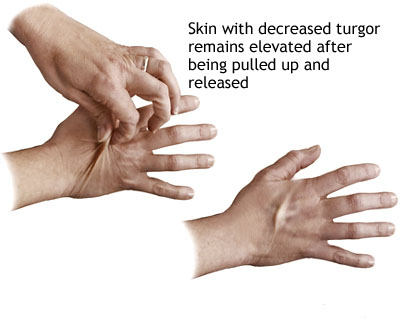
A decrease in skin turgor is indicated when the skin (on the back of the hand for an adult or on the abdomen for a child) is pulled up for a few seconds and does not return to its original state. A decrease in skin turgor is a late sign of dehydration.
Poor skin turgor -- the skin may not be as elastic as normal and sag back into position slowly when the health care provider pinches it up into a fold (normally, skin springs right back into place)
Drinking fluids is usually enough for mild dehydration. It is better to drink small amounts of fluid often (using a teaspoon or syringe for an infant or child), instead of trying to force large amounts of fluid at one time. Drinking too much fluid at once can bring on more vomiting.
Electrolyte solutions or freezer pops are very effective. These are available at pharmacies. Sports drinks contain a lot of sugar and can cause or worsen diarrhea. In infants and children, avoid using water as the primary replacement fluid.
Intravenous fluids and a hospital stay may be needed for moderate to severe dehydration. The health care provider will try to identify and then treat the cause of the dehydration.
Most cases of stomach viruses (also called viral gastroenteritis) tend to get better on their own after a few days. See also: Diarrhea
Even when you are healthy, drink plenty of fluids every day. Drink more when the weather is hot or you are exercising.
Carefully monitor someone who is ill, especially an infant, child, or older adult. If you believe that the person is getting dehydrated, call your health care provider before the person becomes dehydrated. Begin fluid replacement as soon as vomiting and diarrhea start -- DO NOT wait for signs of dehydration.
Always encourage a person who is sick to drink fluids. Remember that fluid needs are greater with a fever, vomiting, or diarrhea. The easiest signs to monitor are urine output (there should be frequent wet diapers or trips to the bathroom), saliva in the mouth, and tears when crying.
Viral gastroenteritis is present when a virus causes an infection of the stomach and intestine. The infection can lead to diarrhea and vomiting. It is sometimes called the "stomach flu."
Gastroenteritis can affect one person or a group of people who all ate the same food or drank the same water. The germs may get into your system in many ways:
· Directly from food or water
· By way of objects such as plates and eating utensils
· Passed from person to person by way of close contact
Many types of viruses can cause gastroenteritis. The most common viruses are:
· Norovirus (Norwalk-like virus) is common among school-age children. It may also cause outbreaks in hospitals and on cruise ships.
· Rotavirus is the leading cause in children. It can also infect adults who are exposed to children with the virus, and people living in nursing homes.
· Astrovirus.
· Enteric adenovirus.
People with the highest risk for a severe infection include young children, older adults, and people who have a suppressed immune system.
The health care provider will look for signs of dehydration, including:
· Dry or sticky mouth
· Lethargy or coma (severe dehydration)
· Low blood pressure
· Low or no urine output, concentrated urine that looks dark yellow
· Sunken soft spots (fontanelles) on the top of an infant's head
· No tears
· Sunken eyes
Tests of stool samples may be used to identify the virus that is causing the sickness. Most of the time, this test is not needed. A stool culture may be done to find out if the problem is being caused by bacteria.
The goal of treatment is to make sure the body has enough water and fluids. Fluids and electrolytes (salt and minerals) that are lost through diarrhea or vomiting must be replaced by drinking extra fluids. Even if you are able to eat, you should still drink extra fluids between meals.
· Older children and adults can drink sports beverages such as Gatorade, but these should not be used for younger children. Instead, use the electrolyte and fluid replacement solutions or freezer pops available in food and drug stores.
· Do NOT use fruit juice (including apple juice), sodas or cola (flat or bubbly), Jell-O, or broth. These liquids do not replace lost minerals and can make diarrhea worse.
· Drink small amounts of fluid (2 to 4 oz. or 60 to 120 mL) every 30 to 60 minutes. Do not try to force down large amounts of fluid at one time, which can cause vomiting. Use a teaspoon (5 milliliters) or syringe for an infant or small child.
· Babies can continue to drink breast milk or formula along with extra fluids. You do NOT need to switch to a soy formula.
Try eating small amounts of food frequently. Foods to try include:
· Cereals, bread, potatoes, lean meats
· Plain yogurt, bananas, fresh apples
· Vegetables
If you have diarrhea and are unable to drink or keep down fluids because of nausea or vomiting, you may need fluids through a vein (IV). Infants and young children are more likely to need IV fluids.
Parents should closely monitor the number of wet diapers an infant or young child has. Fewer wet diapers is a sign that the infant needs more fluids.
People taking water pills (diuretics) who develop diarrhea may be told by their provider to stop taking them until symptoms improve. However, DO NOT stop taking any prescription medicine without first talking to your provider.
Antibiotics do not work for viruses.
You can buy medicines at the drugstore that can help stop or slow diarrhea.
· Do not use these medicines without talking to your provider if you have bloody diarrhea, a fever, or if the diarrhea is severe.
Call your provider if diarrhea lasts for more than several days or if dehydration occurs. You should also contact your provider if you or your child has these symptoms:
Most viruses and bacteria are passed from person to person by unwashed hands. The best way to prevent stomach flu is to handle food properly and wash your hands thoroughly after using the toilet.
A vaccine to prevent rotavirus infection is recommended for infants starting at age 2 months.
People get traveler's diarrhea by eating food and drinking water that contain germs. People can get this illness in areas of the world where the drinking water is not clean.
People who live these areas often drink tap water that contains these germs, but they do not get diarrhea. This is because their bodies are used to the germs. In the same way, cooks and food handlers may have the germs that cause traveler's diarrhea on their hands, but they may not get sick themselves. When people travel to a new place, they are more likely to become sick, because they lack protective antibodies (infection-fighting agents in the blood) that attack these germs.
How can I tell if I have traveler's diarrhea?
You may have traveler's diarrhea if you have at least 3 loose stools in 24 hours. You may also have one or more of the following symptoms:
Even if you don't treat traveler's diarrhea, it will usually go away in 4 to 5 days. You should drink plenty of clear liquids to replace lost fluids due to the diarrhea. Taking medicine to treat traveler's diarrhea may make you feel better more quickly. It often is treated with antibiotics (medicines that kill bacteria). To get antibiotics, you need a prescription from your doctor.
You also can take a medicine called loperamide (brand name: Imodium). However, if you have bloody diarrhea, you should not take this medicine without also taking an antibiotic.
Children, pregnant women, older adults and other people who get dehydrated easily should drink rehydration solutions. Rehydration solutions help replace the fluid you lose while you are sick. You can buy packets of rehydration salts (to be mixed with safe water) at camping/outdoor stores or drug stores.
When should I contact my doctor?
If your child has a fever higher than 102°F, is dehydrated, has blood in the stool or vomits several times, he or she should see a doctor right away.
If treating your traveler's diarrhea isn't helping you to feel better, talk to your doctor.
How can I avoid traveler's diarrhea?
When you will be traveling to an area where the water may not be clean, see your doctor 4 to 6 weeks before your trip. Your doctor may want to give you some medicines, such as antibiotics or shots, to protect you from illness while you are away. During your trip, be careful about the following things:
Do not drink tap water and do not use it to brush your teeth.
Do not drink bottled water if the seal on the bottle has been broken.
Do not use ice unless you're sure it's made from purified water.
Do not drink milk or eat dairy products that have not been pasteurized (heated to a temperature that kills all germs).
Do not eat raw fruits or vegetables unless they can be peeled and you are the one who peels them.
Do not eat cut-up fruit salad.
Do not eat lettuce or other leafy raw vegetables (such as spinach).
Do not eat raw or rare (slightly cooked) meat or fish.
Do not eat food from people who sell it on the street.
Boiling water will kill the germs that cause diarrhea, making the water safe to drink. Boil water vigorously for 1 minute and allow it to cool to room temperature (do not add ice). When traveling in high altitudes (6,562 feet or higher), boil water for 3 minutes.
What is safe to eat or drink?
When you are in a place where you could get traveler's diarrhea, it is probably safe to eat or drink the following:
Soft drinks that are carbonated (such as cola).
Hot drinks, such as tea or coffee.
Carbonated or noncarbonated bottled water, as long as you are the one who breaks the seal on the bottle.
Raw fruits or vegetables that can be peeled, as long as you are the one who peels them.
Food that is served hot.
Meat that is well cooked.
Questions to Ask Your Doctor
Is there medicine I can take to prevent traveler’s diarrhea?
Is traveler’s diarrhea common in the country I’m traveling to?
If I get traveler’s diarrhea, who should I contact and when?
Bacterial gastroenteritis can affect one person or a group of people who all ate the same food. It more commonly occurs after eating at picnics, school cafeterias, large social functions, or restaurants.
The germs may get into your food (called contamination) in different ways:
Meat or poultry may come into contact with bacteria from the intestines of an animal being processed
Water that is used during growing or shipping may contain animal or human waste
Improper food handling or preparation in grocery stores, restaurants, or homes
Food poisoning often occurs from eating or drinking:
Any food prepared by someone who did not wash their hands properly
Any food prepared using unclean cooking utensils, cutting boards, or other tools
Dairy products or food containing mayonnaise (such as coleslaw or potato salad) that have been out of the refrigerator too long
Frozen or refrigerated foods that are not stored at the proper temperature or are not reheated properly
Raw fruits or vegetables that have not been washed well
Raw vegetable or fruit juices and dairy products (look for the word "pasteurized" to make sure the food is safe to eat or drink)
Undercooked meats or eggs
Water from a well or stream, or city or town water that has not been treated
Many different types of bacteria can cause bacterial gastroenteritis, including:
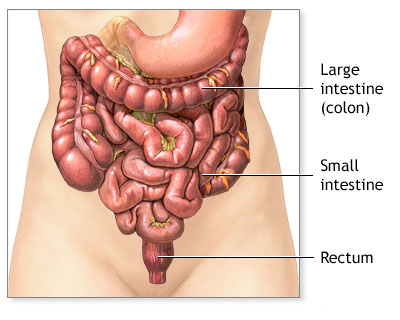
Figure: Your small intestine is the longest part of your digestive system - about twenty feet long! It connects your stomach to your large intestine (or colon) and folds many times to fit inside your abdomen. Your small intestine does most of the digesting of the foods you eat. It has three areas called the duodenum, the ileum, and the jejunum.
Your health care provider will examine you for signs of food poisoning, such as pain in the stomach and signs your body does not have as much water and fluids as it should. This is called dehydration.
Laboratory tests may be done on the food or a stool sample to determine what germ is causing your symptoms. However, these tests do not always show the cause of the diarrhea.
Tests may also be done to look for white blood cells in the stool, a sign of infection.
You will usually recover from the most common types of bacterial gastroenteritis in a couple of days. The goal is to make you feel better and avoid dehydration.
Drinking enough fluids and learning what to eat will help keep you or your child comfortable. You may need to:
If you have diarrhea and are unable to drink or keep down fluids because of nausea or vomiting, you may need fluids through a vein (IV). This is especially true for young children.
If you take diuretics ("water pills"), talk to your health care provider. You may need to stop taking the diuretic while you have diarrhea. Never stop or change medications without first talking to your health care provider.
Antibiotics are usually not prescribed for most common types of bacterial gastroenteritis, unless the diarrhea is very severe.
You can buy medicines at the drugstore that can help stop or slow diarrhea.
Do not use these medicines without talking to your health care provider if you have bloody diarrhea, a fever, or the diarrhea is severe.
Crohn's disease is an IBD that causes ulcers to form in the gastrointestinal (GI) tract anywhere from the mouth to the anus. Crohn’s disease can have “skip” areas that are normal, in between areas that are affected. Some people who have Crohn's disease have severe symptoms, while others have less severe symptoms. Some people who have the disease have long periods without symptoms, even without getting treatment. Others with more severe disease will need long-term treatment or even surgery.
Symptoms
What are the symptoms of Crohn’s disease?
The symptoms of Crohn’s disease vary, depending on which part or parts of the gastrointestinal (GI) tract is affected. Common symptoms include the following:
Other less common symptoms may include fever, joint pain, eye problems, skin problems, and feeling tired (called fatigue). The symptoms of Crohn’s disease may be mild or severe. Symptoms may also come and go. They can start suddenly or gradually.
What are the symptoms of ulcerative colitis?
Symptoms of ulcerative colitis vary depending on how severe your case is and how much of your large intestine is affected. Common symptoms include the following:
In most people who have ulcerative colitis, these symptoms tend to come and go. You may have periods where you have no symptoms, followed by periods where you do have symptoms.
Causes & Risk Factors
What causes Crohn's disease and ulcerative colitis?
It is not yet known exactly what causes these inflammatory bowel diseases. These diseases seem to run in families, which means that genetics may play a role. Many researchers believe that inflammatory bowel diseases are caused by a problem with the immune system. Normally, the immune system protects your body from infection. In people who have an inflammatory bowel disease, the immune system mistakes food, healthy bacteria, and other substances for an infection. This causes the immune system to attack the cells of the intestine, which leads to inflammation.
Diagnosis & Tests
How is inflammatory bowel disease diagnosed?
Your doctor will give you a physical exam and listen to you describe your symptoms. To help diagnose your problem your doctor may order a number of tests, including blood tests and stool samples. Your doctor may also order one or more procedures to help him or her view your colon. In lower GI endoscopy procedures such as colonoscopy and flexible sigmoidoscopy, your doctor uses a narrow, flexible tube to look directly inside your large intestine. Upper GI endoscopy allows a look at your stomach and small intestine for ulcers. For this type of endoscopy, you either swallow a small camera (called capsule endoscopy) or your doctor inserts scope into your GI tract through your mouth.
Your doctor may also order other imaging tests such as X-rays, a CT scan or an MRI.
Treatment
How is inflammatory bowel disease treated?
The goal of treatment is to get rid of the inflammation that causes your symptoms. Many types of medicine can help reduce inflammation, including anti-inflammatory drugs and drugs that suppress the immune system. Depending on your symptoms, your doctor may also recommend an antibiotic, anti-diarrheal, laxative, pain reliever or vitamin supplements. In severe cases of inflammatory bowel disease, you may need to go to the hospital for intravenous (IV) fluids or surgery.
During your treatment, you will most likely be treated by a team of doctors. This team may include your family physician, a gastroenterologist (a specialist in stomach and intestinal disorders) and, possibly, a surgeon.
What can I do to help relieve my symptoms?
The best thing you can do is to take good care of yourself. It's important to eat a healthy diet. Depending on your symptoms, your doctor may ask you to cut down on the amount of fiber or dairy products in your diet. It also may be necessary to limit or avoid caffeine, alcohol, and carbonated beverages. In addition to eating well, you need to get enough rest and exercise regularly. It's also important that you learn to manage the stress in your life. When you become overly upset by things that happen at home or at work, your intestinal problems can get worse.
How can I get more information?
By asking questions, reading informational materials and discussing your treatments with your doctor, you'll be able to understand your illness and manage it better. Patient support groups are helpful, especially if you have severe disease.
Complications
Am I at risk for other problems due to inflammatory bowel disease?
If you have inflammatory bowel disease, you are at an increased risk of colon cancer. Talk to your doctor about when to start screening for colon cancer and how often to have screening.
Because Crohn's disease and ulcerative colitis keep coming back and their symptoms cannot be predicted ahead of time, patients who have these illnesses can become depressed. If you feel depressed, talk with your family doctor. An antidepressant medicine could help you feel better.
Other Organizations
Crohn's and Colitis Foundation of America
National Digestive Diseases Information Clearinghouse
Questions to Ask Your Doctor
How will my inflammatory bowel disease be treated?
Will I need surgery? Are there other options?
What lifestyle changes can I make to help inflammatory bowel disease?
What are some medicines used to treat inflammatory bowel disease and what are the possible side effects?
Are my children at risk of inflammatory bowel disease?
Your liver helps your body digest food, store energy and remove poisons. Hepatitis is a swelling of the liver that makes it stop working well. It can lead to scarring, called cirrhosis, or to cancer.
Viruses cause most cases of hepatitis. The type of hepatitis is named for the virus that causes it; for example, hepatitis A, hepatitis B or hepatitis C. Drug or alcohol use can also lead to hepatitis. In other cases, your body mistakenly attacks its own tissues. You can help prevent some viral forms by getting a vaccine. Sometimes hepatitis goes away by itself. If it does not, it can be treated with drugs. Sometimes hepatitis lasts a lifetime.
Some people who have hepatitis have no symptoms. Others may have
Печень помогает организму переварить пищу, преобразует и сохраняет энергию и обезвреживает (нейтрализует) вредные вещества. Гепатит - это заболевание, которое вызывает нарушения в работе печени. Заболевание приводит к образованию рубцовой ткани на печени, это называется циррозом. Иногда гепатиты и цирроз печени переходят в рак.
Обычно причиной возникновения гепатита являются вирусы. В зависимости от того какой тип вируса стал возбудителем заболевания различают несколько видов вирусных гепатитов: гепатит А, гепатит В и гепатит C. Злоупотребление наркотическими препаратами или алкоголем также может быть причиной возникновения гепатита. А иногда организм может ошибочно атаковать собственные здоровые клетки. С помощью вакцины (прививки), вы можете обезопасить себя от некоторых вирусных форм. Иногда, гепатит проходит сам по себе. Если этого не произошло, лечение проводят с помощью лекарственных препаратов. Иногда гепатит длится всю жизнь.
Рвота и диарея (понос) могут быть опасны, потому что они могут привести к обезвоживанию организма. Обезвоживание развивается при потере организмом большого количества жидкости. У маленьких детей обезвоживание развивается быстро, но оно может возникнуть в любом возрасте.
Рвота и понос могут быть симптомом вирусных, бактериальных, паразитарных заболеваний, быть следствием приема некоторых лекарственных препаратов и некоторых заболеваний. Нарушение переваривания некоторых продуктов (например, большого количества сладостей) и недоваренного мяса или рыбы также может вызвать рвоту и диарею.
Любому человеку с приступами рвоты или диареи необходимо возместить потерянную жидкость и электролиты.
· Для грудных детей: Если вы кормите грудью, продолжайте давать ребенку грудное молоко. В грудном молоке содержится жидкость и электролиты, необходимые для предотвращения обезвоживания. Также врач может назначить ребенку прием растворов для пероральной регидратации (ДАТЬ ССЫЛКУ). Если вы кормите ребенка молочной смесью, попробуйте на время перейти на смесь, не содержащую лактозу. Лактоза может ухудшить диарею. Врач может посоветовать на 12-24 часа переключиться с молочных смесей на прием пероральных растворов для регидратации.
· Для маленьких детей: Используйте растворы для пероральной регидратации (ДАТЬ ССЫЛКУ), содержащие соль, сахар, калий и другие питательные вещества для возмещения потерянной жидкости. Детям старше 1 года для предотвращения обезвоживания также можно давать супы, сок, наполовину смешанный с водой. Не стоит давать ребенку воду и напитки. В воде не содержится необходимого количества соли и питательных веществ для борьбы с обезвоживанием. В напитках, как правило, содержится много сахара, который может раздражать желудок вашего ребенка.
Обычно нет. Как правило, рвота и понос проходят быстро. При инфекциях рвота и диарея являются защитной реакцией организма, направленной на выведение инфекционного агента из организма. Прием лекарств, останавливающих рвоту и понос, может препятствовать самовосстановлению организма. В антибиотиках, как правило, также нет необходимости. Обратитесь к врачу, если вы считаете, что вам или вашему ребенку необходимы лекарственные препараты.
Очень сложно сказать, развилось ли у ребенка обезвоживание. Как правило, ко времени появления симптомов обезвоживания, оно уже успевает перейти в тяжелую степень. Обратитесь к врачу, если вы заметили любой из нижеследующих симптомов обезвоживания, особенно у младенцев и детей раннего возраста. В случае тяжелого обезвоживания для возмещения потерянной при рвоте и диареи жидкости пациенту может потребоваться внутривенное вливание жидкостей.