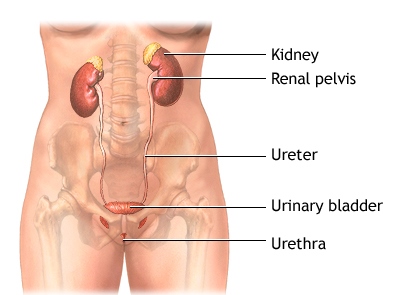
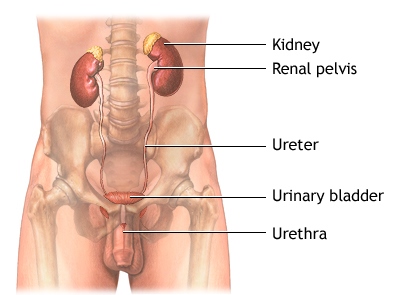
The urinary system is the body's drainage system for removing wastes and extra water. It includes two kidneys, two ureters, a bladder, and a urethra. Urinary tract infections (UTIs) such as cystitis and urethritis are the second most common type of infection in the body.
Female urinary tract Male urinary tract
You may have a UTI if you notice
Pain or burning when you urinate
Fever, tiredness or shakiness
An urge to urinate often
Pressure in your lower belly
Urine that smells bad or looks cloudy or reddish
Pain in your back or side below the ribs
People of any age or sex can get UTIs. But about four times as many women get UTIs as men. You're also at higher risk if you have diabetes, need a tube to drain your bladder, or have a spinal cord injury.
If you think you have a UTI it is important to see your doctor. Your doctor can tell if you have a UTI with a urine test. Treatment is with antibiotics.
Several muscles and nerves must work together for your bladder to hold urine until you're ready to empty it. Nerve messages go back and forth between the brain and the muscles that control bladder emptying. If these nerves are damaged by illness or injury, the muscles may not be able to tighten or relax at the right time.
Disorders of the central nervous system commonly cause neurogenic bladder. These can include:
Alzheimer's disease
Birth defects of the spinal cord
Brain or spinal cord tumors
Cerebral palsy
Encephalitis
Learning disabilities such as attention deficit hyperactivity disorder (ADHD)
The symptoms depend on the cause. They often include symptoms of urinary incontinence.
Symptoms of overactive bladder:
Having to urinate too often in small amounts
Problems emptying all the urine from the bladder
Loss of bladder control
Symptoms of underactive bladder:
Bladder becomes too full and you may leak urine
Inability to tell when the bladder is full
Problems starting to urinate or emptying all the urine from the bladder
Urinary retention
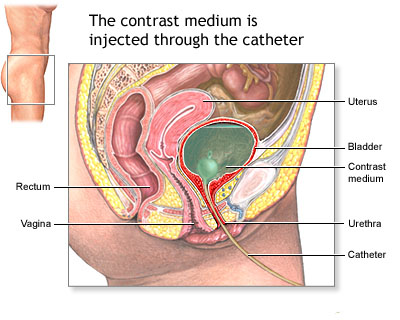
One method of examining bladder function is by injecting dye that is visible on X-rays through a tube (catheter) to fill the bladder. X-rays are taken while the bladder is full and while the patient is urinating (voiding) to determine if fluid is forced out of the bladder through the urethra (normal) or up through the ureters into the kidney (vesicoureteral reflux). This study is usually done with the patient lying on an X-ray table.
Medications may help manage your symptoms. Your doctor may recommend:
Medicines that relax the bladder (oxybutynin, tolterodine, or propantheline)
Medicines that make certain nerves more active (bethanechol)
Botulinum toxin (Botox)
GABA supplements
Antiepileptic drugs
Newer drugs are also being studied.
Your doctor may refer you someone who has been trained to help people manage bladder problems. Skills or techniques you may learn include:
Exercises to strengthen your pelvic floor muscles (Kegel exercises)
Keeping a diary of when you urinate, the amount you urinated, and if you leaked urine. This may help you learn when you should empty your bladder and when it may be best to be near a bathroom.
Learn to recognize the symptoms of urinary infections (UTIs), such as burning when you urinate, fever, low back pain on one side, and a more frequent need to urinate. Cranberry tablets are used to prevent UTIs.
Some people may need to use a urinary catheter. This is a thin tube that is inserted into your bladder:
You may need a catheter to be in place all the time (indwelling catheter)
You may need a catheter to be placed in your bladder 4 to 6 times a day to keep your bladder from becoming too full (intermittent catheterization)
Sometimes surgery is needed. Surgeries for neurogenic bladder include:
Artificial sphincter
Electrical device implanted near the bladder nerves, to stimulate the bladder muscles
Sling surgery
Creation of an opening (stoma) in which urine flows into a special pouch (this is called urinary diversion)
Constant urine leakage can cause skin to break down and lead to pressure sores
Kidney damage may occur if the bladder becomes too full, causing pressure to build up in the tubes leading to the kidneys and in the kidneys themselves