Hepatitis C infection is caused by the hepatitis C virus (HCV).
You can catch hepatitis C if the blood of someone who has hepatitis C enters your body. Exposure may occur:
· After a needle stick or sharps injury
· If blood from someone who has hepatitis C contacts a cut on your skin or contacts your eyes or mouth
People at risk of hepatitis C are those who:
· Inject street drugs or share a needle with someone who has hepatitis C
· Have been on long-term kidney dialysis
· Have regular contact with blood at work (such as a health care worker)
· Have unprotected sexual contact with a person who has hepatitis C
· Were born to a mother who had hepatitis C
· Received a tattoo or acupuncture with needles that were not disinfected properly after being used on another person (risk is very low with practitioners who have a tattoo license or permit or an acupuncture license)
· Received an organ transplant from a donor who has hepatitis C
· Share personal items, such as toothbrushes and razors, with someone who has hepatitis C (less common)
Most people who are recently infected with hepatitis C do not have symptoms in most cases. Some people have yellowing of the skin (jaundice) that goes away. Chronic infection often causes no symptoms. But tiredness, skin disorders and other problems can occur.
Persons who have long-term (chronic) infection often have no symptoms until their liver becomes scarred (cirrhosis). Most people with this condition are ill and have many health problems.
The following symptoms may occur with hepatitis C infection:
· Enzyme immunoassay (EIA) to detect hepatitis C antibody
· Hepatitis C RNA assays to measure virus levels (viral load)
Everyone born from 1945 to 1965 (the baby boomer generation) should get a one-time test for hepatitis C.
Genetic testing is done to check for the type of hepatitis C (genotype). There are six types of the virus (genotypes 1 through 6). Test results can help your health care provider choose treatment that is best for you.
The following tests are done to identify and monitor liver damage from hepatitis C:
Most people (75% to 85%) who are infected with the virus develop chronic hepatitis C. This condition poses a risk for cirrhosis, liver cancer, or both. The outlook for hepatitis C depends in part on the genotype.
A good response to treatment occurs when the virus can no longer be detected in the blood 12 weeks or more after treatment. This is called "sustained virologic response" (SVR). Up to 90% of those treated for some genotypes have this type of response.
Some people do not respond to initial treatment. They may need to be re-treated with a different drug regimen.
Also, some people can become re-infected or infected with a different genotype strain.
Steps that can be taken to help prevent the spread of hepatitis C from one person to another include:
· Health care workers should follow precautions when handling blood.
· Do not share needles with anyone.
· Do not get tattoos or body piercings or receive acupuncture from someone who does not have a permit or license.
· Do not share personal items, such as razors and toothbrushes.
· Practice safer sex.
If you or your partner is infected with hepatitis C and you have been in a stable and monogamous (no other partners) relationship, the risk of giving the virus to, or getting the virus from, the other person is low.
HCV cannot be spread by casual contact, such as holding hands, kissing, coughing or sneezing, breastfeeding, sharing eating utensils or drinking glasses.
Hepatitis B infection is caused by the HBV. You can catch hepatitis B through contact with the blood or body fluids (semen, vaginal fluids, and saliva) of a person who has the virus.
Exposure may occur:
· After a needlestick or sharps injury
· If any blood or other body fluid touches your skin, eyes or mouth, or open sores or cuts
People who may be at risk of hepatitis B are those who:
· Have unprotected sex with an infected partner
· Receive blood transfusions (not common in the United States)
· Have contact with blood at work (such as health care workers)
· Have been on long-term kidney dialysis
· Get a tattoo or acupuncture with unclean needles
· Share needles during drug use
· Share personal items (such as toothbrush, razor, and nail clippers) with a person who has the virus
· Were born to a hepatitis-B infected mother
All blood used for blood transfusions is screened, so the chance of getting the virus in this way is very small.
· You may feel sick for a period of days or weeks.
· You may become very ill very quickly (called fulminant hepatitis).
Symptoms of hepatitis B may not appear for up to 6 months after the time of infection. Early symptoms include:
· Appetite loss
· Fatigue
· Low fever
· Muscle and joint aches
· Nausea and vomiting
· Yellow skin and dark urine
Symptoms will go away in a few weeks to months if your body is able to fight off the infection. Some people never get rid of the HBV. This is called chronic hepatitis B.
People with chronic hepatitis may not have symptoms and not know they are infected. Over time, they may develop symptoms of liver damage and cirrhosis of the liver.
You can spread the HBV to other people even if you have no symptoms.
A series of blood tests called the hepatitis viral panel is done for suspected hepatitis. It can help detect:
· New infection
· Older infection that is still active
· Older infection that is no longer active
The following tests are done to look for liver damage if you have chronic hepatitis B:
· Albumin level
· Liver function tests
· Prothrombin time
You will also have a test to measure the level of HBV in your blood (viral load). This lets your health care provider know how your treatment is working.
People at higher risk for hepatitis should be screened with a blood test. This may be needed even when they have no symptoms. Factors that lead to increased risk include:
· The risk factors described above in the Causes section.
· People from countries where a higher number of people have hepatitis B. These countries or areas include Japan, some Mediterranean countries, parts of Asia and the Middle East, West Africa and South Sudan.
Acute hepatitis, unless severe, needs no treatment. Liver and other body functions are watched using blood tests. You should get plenty of bed rest, drink plenty of fluids, and eat healthy foods.
Some people with chronic hepatitis may be treated with antiviral drugs. These medicines can decrease or remove hepatitis B from the blood. One of the medicines is an injection called interferon. They also help to reduce the risk of cirrhosis and liver cancer.
It is not always clear which people with chronic hepatitis B should receive drug therapy and when it should be started. You are more likely to receive these medicines if:
· Your liver function is quickly becoming worse.
· You develop symptoms of long-term liver damage.
· You have high levels of the HBV in your blood.
For these medicines to work best, you need to take them as instructed by your provider. Ask what side effects you can expect and what to do if you have them. Not everybody who needs to take these medicines responds well.
If you develop liver failure, you may be considered for a liver transplant. A liver transplant is the only cure in some cases of liver failure.
Other steps you can take:
· Avoid alcohol.
· Check with your provider before taking any over-the-counter medicines or herbal supplements. This includes medicines such as acetaminophen, aspirin, or ibuprofen.
Severe liver damage, or cirrhosis, can be caused by hepatitis B.
The acute illness most often goes away after 2 to 3 weeks. The liver most often returns to normal within 4 to 6 months in most people.
Almost all newborns and about half of children who get hepatitis B develop the chronic condition. Very few adults who get the virus develop chronic hepatitis B.
About 1 in 100 people who get hepatitis B dies from the condition.
There is a much higher rate of liver cancer in people who have chronic hepatitis B.
Children and people at high risk for hepatitis B should get the hepatitis B vaccine.
· Babies should get a first dose of the hepatitis B vaccine at birth. They should have all 3 shots in the series by age 6 to 18 months.
· Children younger than age 19 who have not had the vaccine should get "catch-up" doses.
· Health care workers and those who live with someone who has hepatitis B should get the vaccine.
· Infants born to mothers who have acute hepatitis B or have had the infection in the past should get a special hepatitis B vaccine within 12 hours of birth.
The hepatitis B vaccine or a hepatitis B immune globulin (HBIG) shot may help prevent infection if you receive it within 24 hours of contact with the virus.
Measures to avoid contact with blood and body fluids can help prevent the spread of hepatitis B from person-to-person.
The hepatitis A virus is found mostly in the stools and blood of an infected person. The virus is present about 15 to 45 days before symptoms occur and during the first week of illness.
You can catch hepatitis A if:
· You eat or drink food or water that has been contaminated by stools (feces) containing the hepatitis A virus. Fruits, vegetables, shellfish, ice, and water are common sources of the disease.
· You come in contact with the stool or blood of a person who currently has the disease.
· A person with hepatitis A passes the virus to an object or food due to poor hand-washing after using the bathroom.
· You take part in sexual practices that involve oral-anal contact.
Not everyone has symptoms with hepatitis A infection. Therefore, many more people are infected than are diagnosed or reported.
Risk factors include:
· Overseas travel, especially to Asia or South or Central America
· IV drug use
· Living in a nursing home center
· Working in a health care, food, or sewage industry
Other common hepatitis virus infections include hepatitis B and hepatitis C. Hepatitis A is the least serious and mildest of these diseases.
Symptoms most often show up 2 to 6 weeks after being exposed to the hepatitis A virus. They are most often mild, but may last for up to several months, especially in adults.
The following tips can help reduce your risk of spreading or catching the virus:
· Always wash your hands well after using the restroom, and when you come in contact with an infected person's blood, stools, or other bodily fluid.
· Avoid unclean food and water.
The virus may spread more rapidly through day care centers and other places where people are in close contact. Thorough hand washing before and after each diaper change, before serving food, and after using the restroom may help prevent such outbreaks.
Ask your provider about getting either immune globulin or the hepatitis A vaccine if you are exposed to the disease and have not had hepatitis A or the hepatitis A vaccine.
Common reasons for getting one or both of these treatments include:
· You live with someone who has hepatitis A.
· You recently had sexual contact with someone who has hepatitis A.
· You recently shared illegal drugs, either injected or noninjected, with someone who has hepatitis A.
· You have had close personal contact over a period of time with someone who has hepatitis A.
· You have eaten in a restaurant where food or food handlers were found to be infected or contaminated with hepatitis.
Vaccines that protect against hepatitis A infection are available. The vaccine begins to protect 4 weeks after you get the first dose. You will need to get a booster shot 6 to 12 months later for long-term protection.
Travelers should take the following steps to protect against getting the disease:
· Avoid dairy products.
· Avoid raw or undercooked meat and fish.
· Beware of sliced fruit that may have been washed in unclean water. Travelers should peel all fresh fruits and vegetables themselves.
· DO NOT buy food from street vendors.
· Get vaccinated against hepatitis A (and possibly hepatitis B) if traveling to countries where outbreaks of the disease occur.
· Use only carbonated bottled water for brushing teeth and drinking. (Remember that ice cubes can carry infection.)
· If bottled water is not available, boiling water is the best way to get rid of hepatitis A. Bring the water to a full boil for at least 1 minute to make it safe to drink.
· Heated food should be hot to the touch and eaten right away.
Newborn jaundice is when a baby has high levels of bilirubin in the blood. Bilirubin is a yellow substance that the body creates when it replaces old red blood cells. The liver helps break down the substance so it can be removed from the body in the stool.
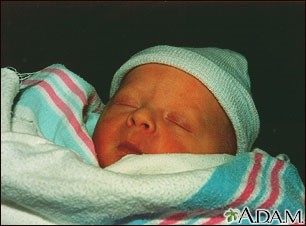
High levels of bilirubin makes your baby's skin and whites of the eyes look yellow. This is called jaundice.
Newborn jaundice (producing yellow skin) can have many causes, but the majority of these infants have a condition called physiological jaundice, a natural occurrence in the newborn due to the immature liver. This type of jaundice is short term, generally lasting only a few days. Jaundice should be evaluated by a physician until decreasing or normal levels of bilirubin are measured in the blood.
It is normal for a baby's bilirubin level to be a bit higher after birth.
When the baby is growing in the mother's womb, the placenta removes bilirubin from the baby's body. The placenta is the organ that grows during pregnancy to feed the baby. After birth, the baby's liver starts doing this job. This can take a while.
Most newborns have some yellowing of the skin, or jaundice. This is called "physiological jaundice." It is harmless, and usually is worst when the baby is 2 - 4 days old. It goes away within 2 weeks and doesn't usually cause a problem.
Two types of jaundice may occur in newborns who are breast fed. Both types are usually harmless.
Breastfeeding jaundice is seen in breastfed babies during the first week of life, especially in babies who do not nurse well or if the mother's milk is slow to come in.
Breast milk jaundice may appear in some healthy, breastfed babies after day 7 of life. It usually peaks during weeks 2 and 3. It may last at low levels for a month or more. It may be due to how substances in the breast milk affect how bilirubin breaks down in the liver. Breast milk jaundice is different than breastfeeding jaundice.
Severe newborn jaundice may occur if your baby has a condition that increases the number of red blood cells that need to be replaced in the body, such as:
Abnormal blood cell shapes
Blood type mismatch between the mother and the baby
Bleeding underneath the scalp (cephalohematoma) caused by a difficult delivery
Higher levels of red blood cells, which is more common in small-for-gestational-age babies and some twins
Infection
Lack (deficiency) of certain important proteins, called enzymes
Things that make it harder for the baby's body to remove bilirubin may also lead to more severe jaundice, including:
Certain medications
Congenital infections, such as rubella, syphilis, and others
Diseases that affect the liver or biliary tract, such as cystic fibrosis or hepatitis
Low oxygen level (hypoxia)
Infections (such as sepsis)
Many different genetic or inherited disorders
Babies who are born too early (premature) are more likely to develop jaundice than full-term babies.
Jaundice causes a yellow color of the skin. The color sometimes begins on the face and then moves down to the chest, belly area, legs, and soles of the feet.
Sometimes, infants with significant jaundice have extreme tiredness and poor feeding.
Doctors, nurses, and family members will watch for signs of jaundice at the hospital, and after the newborn goes home.
Any infant who appears jaundiced should have bilirubin levels measured right away. This can be done with a blood test.
Many hospitals check total bilirubin levels on all babies at about 24 hours of age. Hospitals use probes that can estimate the bilirubin level just by touching the skin. High readings need to be confirmed with blood tests.
Tests that will likely be done include:
Complete blood count
Coomb's test
Reticulocyte count
Further testing may be needed for babies who need treatment or whose total bilirubin levels are rising more quickly than expected.
When determining treatment, the doctor must consider:
The baby's bilirubin level
How fast the level has been rising
Whether the baby was born early (babies born early are more likely to be treated at lower bilirubin levels)
How old the baby is now
Your child will need treatment if the bilirubin level is too high or is rising too quickly.
Keep the baby well hydrated with breast milk or formula. Frequent feedings (up to 12 times a day) encourage frequent bowel movements, which help remove bilirubin through the stools. Ask your doctor before giving your newborn extra formula.
Some newborns need to be treated before they leave the hospital. Others may need to go back to the hospital when they are a few days old. Treatment in the hospital usually lasts 1 to 2 days.
Sometimes special blue lights are used on infants whose levels are very high. This is called phototherapy. These lights work by helping to break down bilirubin in the skin.
The infant is placed under artificial light in a warm, enclosed bed to maintain constant temperature. The baby will wear only a diaper and special eye shades to protect the eyes. The American Academy of Pediatrics recommends that breastfeeding be continued through phototherapy, if possible. Rarely, the baby may have an intravenous (IV) line to deliver fluids.
If the bilirubin level is not too high or is not rising quickly, you can do phototherapy at home with a fiberoptic blanket, which has tiny bright lights in it. You may also use a bed that shines light up from the mattress.
You must keep the light therapy on your child's skin and feed your child every 2 to 3 hours (10 to 12 times a day).
A nurse will come to your home to teach you how to use the blanket or bed, and to check on your child.
The nurse will return daily to check your child's weight, feedings, skin, and bilirubin levels.
You will be asked to count the number of wet and dirty diapers.
In the most severe cases of jaundice, an exchange transfusion is required. In this procedure, the baby's blood is replaced with fresh blood. Treating severely jaundiced babies with intravenous immunoglobulin may also be very effective at reducing bilirubin levels.
Usually newborn jaundice is not harmful. For most babies, jaundice usually gets better without treatment within 1 to 2 weeks.
Very high levels of bilirubin can damage the brain. This is called kernicterus. However, the condition is almost always diagnosed before levels become high enough to cause this damage.
For babies who need treatment, the treatment is usually effective.
In newborns, some degree of jaundice is normal and probably not preventable. The risk of significant jaundice can often be reduced by feeding babies at least 8 to 12 times a day for the first several days and by carefully identifying infants at highest risk.
All pregnant women should be tested for blood type and unusual antibodies. If the mother is Rh negative, follow-up testing on the infant's cord is recommended. This may also be done if the mother's blood type is O+, but it is not needed if careful monitoring takes place.
Careful monitoring of all babies during the first 5 days of life can prevent most complications of jaundice. Ideally, this includes:
Considering a baby's risk for jaundice
Checking bilirubin level in the first day or so
Scheduling at least one follow-up visit the first week of life for babies sent home from the hospital in 72 hours
Jaundice is a yellow color in the skin, mucus membranes, or eyes. The yellow color comes from bilirubin, a byproduct of old red blood cells. Jaundice is a sign of other diseases.
This article discusses the possible causes of jaundice in children and adults. Newborn jaundiceoccurs in very young infants.
Information
Jaundice is often a sign of a problem with the liver, gallbladder, or pancreas. Jaundice can occur when too much bilirubin builds up in the body. This may happen when:
· There are too many red blood cells dying or breaking down and going to the liver.
· The liver is overloaded or damaged.
· The bilirubin from the liver is unable to properly move into the digestive tract.
· Use of certain drugs (such as an overdose of acetaminophen) or exposure to poisons
· Birth defects or disorders present since birth that makes it hard for the body to breakdown bilirubin (such as Gilbert syndrome, Dubin-Johnson syndrome, Rotor syndrome, or Crigler-Najjar syndrome)
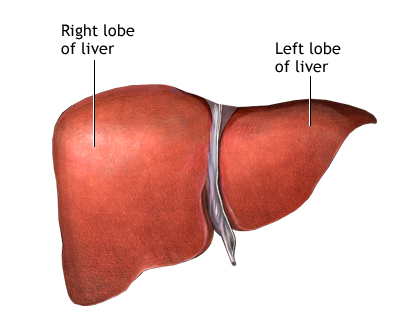
Your liver helps your body digest food, store energy and remove poisons. Hepatitis is a swelling of the liver that makes it stop working well. It can lead to scarring, called cirrhosis, or to cancer.
Viruses cause most cases of hepatitis. The type of hepatitis is named for the virus that causes it; for example, hepatitis A, hepatitis B or hepatitis C. Drug or alcohol use can also lead to hepatitis. In other cases, your body mistakenly attacks its own tissues. You can help prevent some viral forms by getting a vaccine. Sometimes hepatitis goes away by itself. If it does not, it can be treated with drugs. Sometimes hepatitis lasts a lifetime.
Some people who have hepatitis have no symptoms. Others may have
Желтуха новорожденных – это состояние, при котором у ребенка повышается уровень билирубина в крови. Билирубин – это желтое вещество, образующееся в организме при разрушении старых эритроцитов. Билирубин разрушается в печени и выводится из организма со стулом.
При высоком уровне билирубина в крови происходит окрашивание кожи и склер ребенка в желтый цвет. Это состояние и называется желтухой.
Желтуха новорожденных (желтушная окраска кожи) обусловлена многими причинами, но у большинства детей это состояние называется физиологической желтухой - естественное явление для новорожденного, развивающееся из-за незрелости печени. Этот тип желтухи, как правило, длится всего несколько дней. Ребенок с желтухой должен наблюдаться врачом до снижения или нормализации уровня билирубина в крови.
Незначительное повышение уровня билирубина у младенца сразу после рождения является нормальным явлением.
Когда ребенок растет в утробе матери, плацента удаляет билирубин из организма ребенка. Плацента является органом, который также растет во время беременности и защищает ребенка. После рождения ребенка эту функцию начинает выполнять печень. Для этого может потребоваться некоторое время.
Желтушное окрашивание кожи, или желтуха, появляется у большинства новорожденных. Она называется "физиологической желтухой". Это состояние не опасно, и обычно проявляется на 2-4 день жизни ребенка. Симптомы проходят в течение 2 недель и обычно не вызывают осложнений.
У новорожденных, которых кормят грудью, может возникнуть два типа желтухи. Оба типа, как правило, безопасны.
· Желтуха грудного вскармливания проявляется в течение первой недели жизни, особенно у детей, которые плохо сосут грудь или в тех случаях, когда молоко матери выделяется медленно.
· Желтуха грудного молока может появиться у некоторых здоровых детей, находящихся на грудном вскармливании, после 7-го дня жизни. Она, как правило, достигает максимума на 2-3 неделе жизни ребенка и может продлиться в течение месяца или более. Это состояние может быть связано с влиянием на распад билирубина в печени веществ, содержащихся в грудном молоке. Желтуха грудного молока отличается от желтухи грудного вскармливания.
Тяжелые формы желтухи новорожденных могут возникнуть в случаях, если у вашего ребенка повышается количество эритроцитов, которые должны быть заменены организмом. Это бывает при следующих состояниях:
· Появление аномальных клеток крови
· Несоответствие групп крови у матери и ребенка
· Кровоизлияние между надкостницей и наружной поверхностью черепа (кефалогематома), вызванное трудными родами
· Высокий уровень эритроцитов, что часто встречается у детей с низким гестационным возрастом (соответствует сроку беременности) и у некоторых близнецов
· Инфекции
· Отсутствие или недостаток определенных важных белков (ферментов)
При определенных условиях организму ребенка становится сложно выводить билирубин, что приводит к развитию более тяжелой желтухи. К этим условиям относятся:
· Прием некоторых лекарств
· Врожденные инфекции, такие как краснуха, сифилис и другие
· Болезни, поражающие печень или желчные пути, такие как муковисцидоз или гепатит
· Низкий уровень кислорода (гипоксия)
· Инфекции (например, сепсис)
· Множество различных генетических или наследственных заболеваний
У детей, родившихся преждевременно, желтуха развивается чаще, чем у доношенных.
При желтухе кожа окрашивается в желтый цвет. Желтушное окрашивание начинается с лица, а затем спускается вниз к груди, к области живота, ногам и стопам.
Иногда у детей с выраженной желтухой имеются повышенная утомляемость и плохой аппетит.
Врачи, медсестры и члены семьи наблюдают за признаками желтухи в роддоме и после выписки новорожденного домой.
Каждому ребенку с желтухой необходимо сразу измерить уровень билирубина. Для этого необходимо взять кровь на анализ.
Во многих больницах уровень общего билирубина определяется у всех детей в первые 24 часа жизни. Для этого используются специальные зонды, которыми можно определить уровень билирубина путем простого прикосновения к коже. Высокие значения необходимо подтвердить с помощью анализов крови.
К необходимым обследованиям относятся:
· Общий анализ крови
· Проба Кумбса
· Определение количества ретикулоцитов
Дальнейшие обследования могут потребоваться для детей, нуждающихся в лечении, или при резком повышении уровня общего билирубина.
· родился ли ребенок преждевременно (детей, рожденных раньше срока, необходимо лечить до снижения уровня билирубина)
· возраст ребенка на данный момент
Ребенок нуждается в лечении, если уровень билирубина слишком высок или быстро нарастает.
Часто кормите ребенка грудным молоком или молочными смесями. Частые кормления (до 12 раз в сутки) стимулируют работу кишечника, тем самым, помогая выведению билирубина со стулом. Проконсультируйтесь с врачом, прежде чем дополнительно ввести прикорм молочной смесью.
Некоторые новорожденные нуждаются в лечении еще до выписки из роддома. Другим может потребоваться возвращение в больницу на несколько дней. Обычно лечение длится от 1 до 2 дней.
Иногда у детей с высоким уровнем билирубина применяется лечение ультрафиолетом. Эта процедура называется фототерапией. Ультрафиолетовые лучи помогают разрушить билирубин в коже.
Младенец находится под лампами искусственного света в теплой, закрытой кровати для поддержания постоянной температуры. На ребенка надевается только подгузник и специальные очки для защиты глаз. Педиатры рекомендуют продолжать грудное вскармливание при фототерапии, если это возможно. В редких случаях ребенку может потребоваться внутривенное введение жидкостей.
Если уровень билирубина не слишком высок или он не нарастает, вы можете проводить фототерапию дома при помощи специального волоконно-оптического одеяла, в котором имеются крошечные, яркие лучи. Вы также можете использовать кровать, рассеивающую свет через матрац.
· При проведении фототерапии вам необходимо кормить ребенка каждые 2-3 часа (от 10 до 12 раз в день).
· Медработник будет приходить к вам домой, чтобы учить вас правильно пользоваться одеялом или кроватью и для того, чтобы контролировать состояние вашего ребенка.
· Медработник будет приходить ежедневно, чтобы измерить вес вашего ребенка, проверить правильность кормления, состояние кожи и уровень билирубина.
· Вам будет предложено подсчитать количество мокрых и грязных подгузников.
В самых тяжелых случаях желтухи может потребоваться обменное переливание крови. Суть процедуры заключается в замене крови ребенка на свежую плазму. У детей с тяжелым течением желтухи для снижения уровня билирубина может быть эффективным внутривенное введение иммуноглобулина.
Обычно желтуха новорожденных не опасна. У большинства детей желтуха обычно проходит без лечения в течение 1-2 недель.
Очень высокий уровень билирубина может повредить мозг. Это состояние называется ядерной желтухой. Однако это состояние почти всегда диагностируется до того, как уровень билирубина становятся настолько высокими, чтобы вызвать повреждение.
Все дети до 5 дня жизни должны быть осмотрены врачом для проверки на наличие желтухи.
Те дети, которые провели меньше 24 часов в роддоме, должны быть осмотрены врачом до возраста 72 часов.
Дети, отправленные домой в промежутке между 24 и 48 часами, осматриваются до возраста 96 часов.
Дети, отправленные домой в промежутке между 48 и 72 часами, осматриваются до возраста 120 часов.
Желтуха опасна, если у ребенка имеется лихорадка (повышенная температура), ребенок стал вялым или плохо ест. Течение желтухи может быть опасным у новорожденных из групп высокого риска.
Как правило, желтуха НЕ опасна для здоровых новорожденных. Обратитесь к педиатру, если:
Течение желтухи тяжелое (кожа ярко-желтой окраски)
Желтуха продолжает нарастать в течение 2-х недель и больше, или развиваются другие симптомы.
Желтуха новорожденных является нормальным явлением и ее невозможно предупредить. Риск развития тяжелой желтухи часто может быть снижен путем частого кормления младенцев, по крайней мере, по 8-12 раз в день в течение первых нескольких дней и путем тщательного выявления детей, подвергающихся наибольшему риску.
Всем беременным женщинам должна быть определена группа крови и выявлены аномальные антитела. Если мать резус - отрицательна, рекомендуется обследование младенца. Обследование также может понадобиться, если группа крови матери О (I)Rh+, но в этом нет необходимости, если ведется тщательный мониторинг.
Тщательный контроль всех младенцев первых 5-ти дней жизни может предотвратить развитие большинства осложнений желтухи. В идеале необходимо:
Помнить о риске развития желтухи у ребенка
Измерять уровень билирубина в первый день жизни ребенка
Запланировать, по крайней мере, одно посещение на дому для детей первой недели жизни, отправленных домой из роддома в течение 72 часов.
Печень помогает организму переварить пищу, преобразует и сохраняет энергию и обезвреживает (нейтрализует) вредные вещества. Гепатит - это заболевание, которое вызывает нарушения в работе печени. Заболевание приводит к образованию рубцовой ткани на печени, это называется циррозом. Иногда гепатиты и цирроз печени переходят в рак.
Обычно причиной возникновения гепатита являются вирусы. В зависимости от того какой тип вируса стал возбудителем заболевания различают несколько видов вирусных гепатитов: гепатит А, гепатит В и гепатит C. Злоупотребление наркотическими препаратами или алкоголем также может быть причиной возникновения гепатита. А иногда организм может ошибочно атаковать собственные здоровые клетки. С помощью вакцины (прививки), вы можете обезопасить себя от некоторых вирусных форм. Иногда, гепатит проходит сам по себе. Если этого не произошло, лечение проводят с помощью лекарственных препаратов. Иногда гепатит длится всю жизнь.
Желчныйконкремент – это отложения подобные маленьким камням, образующиеся в желчи. Желчь способствует пищеварению; она содержится в желчном пузыре, расположенном под печенью. Желчный конкремент может образоваться в желчном пузыре или в желчных протоках, через которые желчь поступает в тонкую кишку.
Желчный конкремент может быть меньше песчинки или быть размером с мяч для гольфа. Как правило, они не вызывают проблем, если только они не закупоривают проток, идущий от желчного пузыря к другим органам. Если это происходит внезапно, возникают боль в животе и другие симптомы.
Желчный конкремент – распространенное расстройство. Он образуется при избытке холестерина в желчи или когда желчный пузырь не опорожняется так быстро как надо. Желчный конкремент наиболее часто встречается у женщин, тучных людей, пожилых людей, людей, страдающих серповидно-клеточным заболеванием, людей, быстро сбросивших вес, а также у людей, принимающих определенные лекарства.
Большинство людей, у которых наличие желчных конкрементов, не проявляется никакими симптомами и не нуждаются в лечении. Если появляются симптомы, это обычно боль в верхней части живота. Симптомы редкобывают опасными для жизни. Однако боль от желчного конкремента может иметь разную интенсивность и может вызвать рвоту. Желчный конкремент, вызывающий симптомы, обычно лечат операцией по удалению желчного пузыря (холецистэктомия).