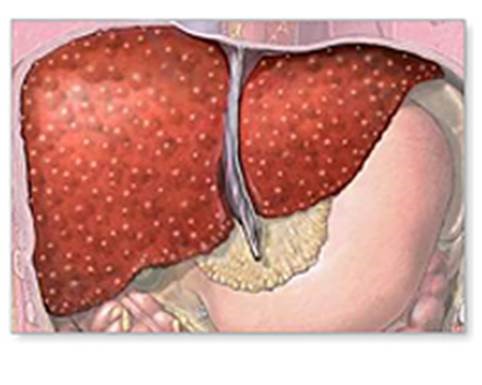
In people who have cirrhosis, the cells of the liver are damaged and can’t repair themselves. As liver cells die, scar tissue forms. When this scar tissue builds up, blood can’t flow through the liver properly.
Normally, poisons and wastes in the blood get filtered out as blood passes through the liver. If scar tissue keeps blood from flowing normally through the liver, the blood doesn’t get filtered. Poisons and wastes can build up in the body. In serious cases, cirrhosis can even lead to coma and death.
What is portal hypertension?
Normally, blood is carried to the liver by a major blood vessel called the portal vein. If blood can’t flow easily through the liver because of cirrhosis, the blood in this vein slows down and the pressure inside the vein increases. This higher blood pressure in the portal vein is called portal hypertension.
What are the symptoms of cirrhosis?
Your doctor will ask if you have any of the following symptoms:
Loss of appetite
Unintended weight loss
Weakness and fatigue
Nausea
Jaundice (which is the yellowing of the skin and eyes)
Dark brown urine
Red palms
Vomiting blood
Menstrual problems (in women)
Mental confusion (such as difficulty concentrating and forgetfulness)
Itchiness of the skin
Abdominal swelling (due to fluid that collects in the abdomen)
What causes cirrhosis?
Cirrhosis is sometimes caused by hepatitis (an infection of the liver) or by eating or drinking harmful chemicals. The most common cause of cirrhosis is drinking too much alcohol. This is called alcoholic cirrhosis.
Women who drink too much alcohol may be at greater risk of developing alcoholic cirrhosis than men who drink too much. If you drink alcohol, you need to tell your family doctor so he or she can check for signs of cirrhosis, especially if you have any of the symptoms of cirrhosis. Both regular, long-term alcohol use and binge drinking (drinking large amounts of alcohol in a short time period) can contribute to cirrhosis.
What causes portal hypertension?
If blood can’t flow normally through the portal vein, it must return to the heart using other blood vessels, most often those found in the stomach, esophagus and intestines. These vessels become swollen because of the increased amount of blood flowing through them. They are called varices. Varices have thin walls and can easily break open because they aren’t meant to handle such high-pressure blood flow. Bleeding from a broken blood vessel is serious and can even be fatal. Also, because the portal vein is blocked, toxins in the blood are not cleaned by the liver and therefore remain in the body.
How will my doctor know if I have cirrhosis?
Your doctor will examine you and may order tests to see how your liver is working. Your doctor may also arrange for a biopsy of your liver. In a biopsy, a very thin needle is put into your liver to take out a small bit of tissue for testing. Your doctor may also use an ultrasound (sound waves used to make a picture) to look at your liver.
What are the treatment options for cirrhosis and portal hypertension?
Once liver cells have been damaged, nothing can be done to repair the liver or cure cirrhosis. Treatment is aimed at avoiding further damage to the liver and preventing and treating complications (such as bleeding from broken blood vessels). Your doctor may prescribe a medicine to help prevent your blood vessels from breaking open. Drugs that prevent broken blood vessels have some side effects. Not everyone can take them. Your doctor may also prescribe medicine to lower blood pressure if you have portal hypertension.
If medicine isn’t enough, surgery may help stop bleeding from broken blood vessels. One option is to interrupt the flow of blood to swollen varices in the area where the esophagus (the tube leading to the stomach) attaches to the stomach. A long lighted tube is passed through the mouth to the stomach. Then, rubber bands or hardening chemicals are placed on the swollen blood vessels to block them off.
If this procedure isn’t successful, a person with portal hypertension may need to have a surgeon connect the blood vessels in such a way that the blood doesn’t flow through the liver. Another kind of procedure, called TIPS (transjugular intrahepatic portosystemic shunt), may be done in some cases.
Цирроз – потенциально опасное для жизни состояние, возникающее в результате воспалительного и рубцевого повреждения печени. Цирроз по-гречески означает "рыжий, лимонно-жёлтый". Именно такой оттенок приобретает у заболевших людей в норме красная печень. Цирроз печени - это изменение строения печени, при котором нормальные печеночные клетки замещаются на рубцовую ткань.
Изменение строения органа и утрата нормальных печеночных клеток приводит к тому, что печень не в состоянии синтезировать белки и другие вещества, необходимые организму, а также обезвреживать токсины. Разросшаяся рубцовая ткань сдавливает кровеносные сосуды, что приводит к нарушению кровообращения.
Злоупотребление алкоголем и хронический вирусный гепатит являются самыми частыми причинами цирроза, но он может быть также вызван воздействием медикаментов или – что случается реже – другим заболеванием (например, гемохроматозом).
Симптомы цирроза таковы: тошнота, отсутствие аппетита и похудание, утомляемость и отеки на ногах и в животе. Нелеченный тяжелый цирроз может привести к внутреннему кровотечению, пожелтению кожных покровов и глаз (желтуха), нечеткости мышления, тремору рук и коме.
Лечение цирроза направлено на устранение основной причины повреждения печени и лечение других осложнений, как-то внутреннее кровотечение, возникших в результате поврежедния печени. Вылечить цирроз невозможно, только на ранних стадиях заболевания есть шанс его притормозить. При запущенном циррозе врач-гепатолог поможет лишь снять неприятные симптомы и замедлить развитие осложнений.
Основа лечения цирроза печени - терапевтические мероприятия:
диета: исключение жирных, жареных блюд, алкоголя, ограничение соли и белка, отказ от алкоголя;
мочегонные средства;
противовирусная терапия - назначается редко, но иногда позволяет замедлить развитие заболевания;
плазмоферез - очищение крови от токсинов, если печень перестает сама справляться с этой задачей.
При обострении процесса или развитии осложнений пациента положат в больницу. Может потребоваться хирургическое лечение:
выполнение операции по созданию новых путей для тока крови (шунтирующие операции) довольно травматичная и сложная операция, требующая высокой квалификации сосудистого хирурга.


 What is cirrhosis?