Systemic lupus erythematosus (SLE) is a disease that leads to long-term (chronic) inflammation.
Causes
Systemic lupus erythematosus (SLE) is an autoimmune disease in which the body's immune system mistakenly attacks healthy tissue. It can affect the skin, joints, kidneys, brain, and other organs.
The underlying cause of autoimmune diseases is not fully known.
SLE is much more common in women than men. It may occur at any age, but appears most often in people between the ages of 10 and 50. African Americans and Asians are affected more often than people from other races.
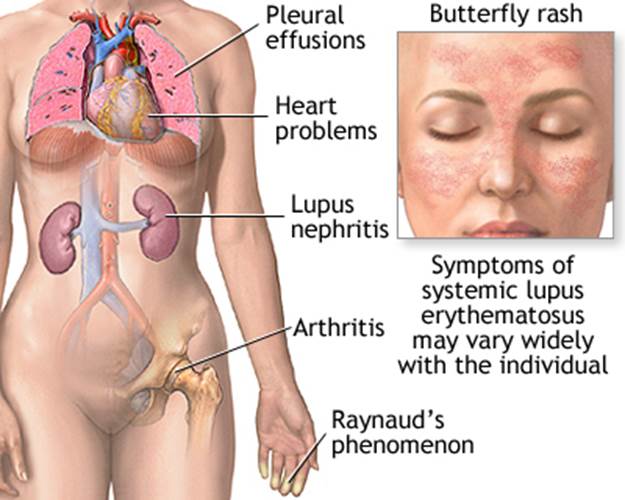
Symptoms vary from person to person, and may come and go. Almost everyone with SLE has joint pain and swelling. Some develop arthritis. The joints of the fingers, hands, wrists, and knees are often affected.
Other common symptoms include:
Chest pain when taking a deep breath
Fatigue
Fever with no other cause
General discomfort, uneasiness, or ill feeling (malaise)
Hair loss
Mouth sores
Sensitivity to sunlight
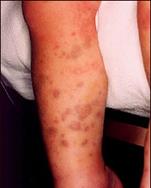
Skin rash -- a "butterfly" rash in about half people with SLE. The rash is most often seen over the cheeks and bridge of the nose, but can be widespread. It gets worse in sunlight.
Skin: patchy skin color, fingers that change color when cold (Raynaud's phenomenon)
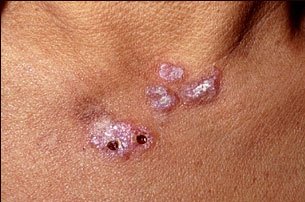
Some people have only skin symptoms. This is called discoid lupus.
Lupus, discoid - view of lesions on the chest: This close-up picture of the neck clearly shows the typical rounded appearance of discoid lupus. The whitish appearance is caused by scaling. The two dark spots are biopsy sites and are not part of the disease.
Exams and Tests
To be diagnosed with lupus, you must have 4 out of 11 common signs of the disease.
Systemic lupus erythematosus is a chronic inflammatory autoimmune disorder which may affect many organ systems including the skin, joints and internal organs. The disease may be mild or severe and life-threatening.
Your doctor will do a physical exam and listen to your chest. An abnormal sound called a heart friction rub or pleural friction rub may be heard. A nervous system exam will also be done.
There is no cure for SLE. The goal of treatment is to control symptoms. Severe symptoms that involve the heart, lungs, kidneys, and other organs often need treatment from specialists.
Mild forms of the disease may be treated with:
NSAIDs, such as ibuprofen, for joint symptoms and pleurisy
Corticosteroid creams for skin rashes
An antimalaria drug (hydroxychloroquine) and low-dose corticosteroids for skin and arthritis symptoms
Treatments for more severe lupus may include:
High-dose corticosteroids or medications to decrease the immune system response
Cytotoxic drugs (drugs that block cell growth). These medicines are used if you do not get better with corticosteroids, or if your symptoms get worse when the stop taking them. Side effects from these drugs can be severe, so you need to be monitored closely if you take them.
If you have lupus, it is also important to:
Wear protective clothing, sunglasses, and sunscreen when in the sun
Get preventive heart care
Stay up-to-date with immunizations
Have tests to screen for thinning of the bones (osteoporosis)
The outcome for people with SLE has improved in recent years. Many people with SLE have mild symptoms. How well you do depends on how severe the disease is.
The disease tends to be more active:
The first years after diagnosis
People under age 40
Many women with SLE can get pregnant and deliver a healthy baby. A good outcome is more likely for women who receive proper treatment and do not have serious heart or kidney problems. However, the presence of SLE antibodies raises the risk of miscarriage.
Possible Complications
Some people with SLE have abnormal deposits in the kidney cells. This leads to a condition called lupus nephritis. Patients with this problem may go on to develop kidney failure and need dialysis or a kidney transplant.
SLE can cause damage in many different parts of the body, including:
Call your health care provider if you have symptoms of SLE. Call your health care provider if you have this disease and your symptoms get worse or a new one occurs.
Henoch-Schonlein purpura is a disease that involves purple spots on the skin, joint pain, gastrointestinal problems, and glomerulonephritis (a type of kidney disorder).
CAUSES
Henoch-Schonlein is caused by an abnormal response of the immune system. It is unclear why this occurs.
The syndrome is usually seen in children, but it may affect people of any age. It is more common in boys than in girls. Many people with Henoch-Schonlein purpura had an upper respiratory illness in the weeks before.
SYMPTOMS
Abdominal pain
Joint pain
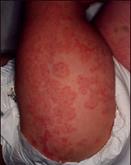
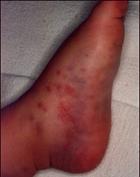
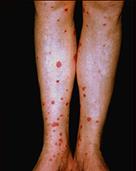
Purple spots on the skin (purpura), usually over the buttocks, lower legs, and elbows
Bloody stools
Hives or angioedema
Nausea
Diarrhea
Painful menstruation
Vomiting
EXAMS AND TESTS
The doctor will examine your body and look at your skin. The physical exam will reveal skin sores (lesions) and joint tenderness.
Tests may include:
Skin biopsy
Urinalysis
TREATMENT
There is no specific treatment. Most cases go away on their own without treatment. If symptoms persist, your doctor may recommend therapy with corticosteroids such as prednisone.
OUTLOOK (PROGNOSIS)
The disease usually gets better on its own without treatment.
POSSIBLE COMPLICATIONS
Bleeding inside the body
Kidney problems (in rare cases)
WHEN TO CONTACT A DOCTOR
Call for an appointment with your health care provider if:
You develop symptoms of Henoch-Schonlein purpura, particularly if they last for more than a few days
You have low urine output after an episode of Henoch-Schonlein purpura