A primary brain tumor is a group (mass) of abnormal cells that start in the brain.
Causes
Primary brain tumors include any tumor that starts in the brain. Primary brain tumors can start from brain cells, the membranes around the brain (meninges), nerves, or glands.
Tumors can directly destroy brain cells. They can also damage cells by producing inflammation, placing pressure on other parts of the brain, and increasing pressure within the skull.
The cause of primary brain tumors is unknown. There are many risk factors that could play a role:
Radiation therapy used to treat brain cancers increases the risk of brain tumors up to 20 or 30 years later.
Some inherited conditions increase the risk of brain tumors, including neurofibromatosis, Von Hippel-Lindau syndrome, Li-Fraumeni syndrome, and Turcot syndrome.
Lymphomas that begin in the brain in people with a weakened immune system are sometimes linked to infection by the Epstein-Barr virus.
Exposure to radiation at work or to power lines, as well as head injuries, smoking, and hormone therapy have not been proven to be risk factors.
Studies have found that cell phones, cordless phones, and wireless devices are safe and do not increase the risk.
Specific tumor types
Brain tumors are classified depending on:
Location of the tumor
Type of tissue involved
Whether they are noncancerous (benign) or cancerous (malignant)
Other factors
Sometimes, tumors that start out less aggressive can change their biologic behavior and become more aggressive.
Tumors can occur at any age, but many types are most common in a certain age group. In adults, gliomas and meningiomas are the most common.
Gliomas come from glial cells such as astrocytes, oligodendrocytes, and ependymal cells. Gliomas are divided into three types:
Astrocytic tumors include astrocytomas (can be noncancerous), anaplastic astrocytomas, and glioblastomas.
Oligodendroglial tumors. Some primary brain tumors are made up of both astrocytic and oligodendrocytic tumors. These are called mixed gliomas.
Glioblastomas are the most aggressive type of primary brain tumor.
Meningiomas and schwannomas are two other types of brain tumors. These tumors:
Occur most often between ages 40 and 70.
Are usually noncancerous, but can still cause serious complications and death from their size or location. Some are cancerous and aggressive.
Other primary brain tumors in adults are rare. These include:
Ependymomas
Craniopharyngiomas
Pituitary tumors
Primary (central nervous system - CNS) lymphoma
Pineal gland tumors
Primary germ cell tumors of the brain
Symptoms
Some tumors do not cause symptoms until they are very large. Other tumors have symptoms that develop slowly.
Symptoms depend on the tumor's size, location, how far it has spread, and whether there is brain swelling. The most common symptoms are:
Be worse when the person wakes up in the morning, and clear up in a few hours
Occur during sleep
Occur with vomiting, confusion, double vision, weakness, or numbness
Get worse with coughing or exercise, or with a change in body position
Other symptoms can include:
Change in alertness (including sleepiness, unconsciousness, and coma)
Changes in hearing, taste, or smell
Changes that affect touch and the ability to feel pain, pressure, different temperatures, or other stimuli
Confusion or memory loss
Difficulty swallowing
Difficulty writing or reading
Dizziness or abnormal sensation of movement (vertigo)
Eye problems such as eyelid drooping, pupils of different sizes, uncontrollable eye movement, vision difficulties (including decreased vision, double vision, or total loss of vision)
Hand tremor
Lack of control over the bladder or bowels
Loss of balance or coordination, clumsiness, trouble walking
Muscle weakness in the face, arm, or leg (usually on just one side)
Numbness or tingling on one side of the body
Personality, mood, behavior, or emotional changes
Trouble speaking or understanding others who are speaking
Other symptoms that may occur with a pituitary tumor:
Abnormal nipple discharge
Absent menstruation (periods)
Breast development in men
Enlarged hands, feet
Excessive body hair
Facial changes
Low blood pressure
Obesity
Sensitivity to heat or cold
Exams and Tests
The following tests may confirm the presence of a brain tumor and find its location:
CT scan of the head
EEG
Examination of tissue removed from the tumor during surgery or CT-guided biopsy (may confirm the type of tumor)
Examination of the cerebral spinal fluid (CSF) (may show cancerous cells)
MRI of the head
Treatment
Treatment can involve surgery, radiation therapy, and chemotherapy. Brain tumors are best treated by a team that includes:
Neuro-oncologist
Neurosurgeon
Medical oncologist
Radiation oncologist
Other health care providers, such as neurologists and social workers
Early treatment often improves the chance of a good outcome. Treatment depends on the size and type of tumor and your general health. Goals of treatment may be to cure the tumor, relieve symptoms, and improve brain function or comfort.
Surgery is often needed for most primary brain tumors. Some tumors may be completely removed. Those that are deep inside the brain or that enter brain tissue may be debulked instead of removed. Debulking is a procedure to reduce the tumor's size.
Tumors can be hard to remove completely by surgery alone. This is because the tumor invades surrounding brain tissue much like roots from a plant spread through soil. When the tumor cannot be removed, surgery may still help reduce pressure and relieve symptoms.
Radiation therapy is used for certain tumors.
Chemotherapy may be used with surgery or radiation treatment.
Other medicines used to treat primary brain tumors in children may include:
Medicines to reduce brain swelling and pressure
Anticonvulsants to reduce seizures
Pain medicines
Comfort measures, safety measures, physical therapy, and occupational therapy may be needed to improve quality of life. Counseling, support groups, and similar measures can help people cope with the disorder.
You may consider enrolling in a clinical trial after talking with your treatment team.
Legal advice may be helpful for creating advance directives such as a power of attorney.
Possible Complications
Brain herniation (often fatal)
Loss of ability to interact or function
Permanent, worsening, and severe loss of brain function
Return of tumor growth
Side effects of medications, including chemotherapy
Side effects of radiation treatments
When to Contact a Medical Professional
Call your health care provider if you develop any new, persistent headaches or other symptoms of a brain tumor.
Call your provider or go to the emergency room if you start having seizures, or suddenly develop stupor (reduced alertness), vision changes, or speech changes.
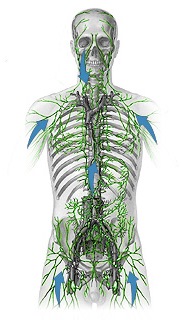
The lymph system is a network of lymph nodes, lymph ducts, lymph vessels, and organs that produce and move a fluid called lymph from tissues to the bloodstream.
The lymph glands, or nodes, are small structures that filter the lymph fluid. There are many white blood cells in the lymph nodes to help fight infection.
Lymphoma is a cancer of a part of the immune system called the lymphatic system. There are many types of lymphoma. One type is called Hodgkin disease. The rest are called non-Hodgkin lymphoma.
Non-Hodgkin lymphomas begin when a type of white blood cell, called a T cell or B cell, becomes abnormal. The cell divides again and again, making more and more abnormal cells. These abnormal cells can spread to almost any other part of the body. Most of the time, doctors can't determine why a person gets non-Hodgkin lymphoma.
Hodgkin disease
Hodgkin disease is a type of lymphoma. Lymphoma is cancer of lymph tissue found in the lymph nodes, spleen, liver, and bone marrow. The first sign of Hodgkin disease is often an enlarged lymph node. The disease can spread to nearby lymph nodes. Later it may spread to the lungs, liver or bone marrow. The cause is unknown.
Hodgkin disease is rare. Symptoms include
Painless swelling of the lymph nodes in the neck, armpits, or groin
Fever and chills
Night sweats
Weight loss
Loss of appetite
Itchy skin
Doctors can diagnose Hodgkin disease with a biopsy. This involves removing and examining a piece of tissue under a microscope. Treatment varies depending on how far the disease has spread and often includes radiation therapy or chemotherapy.
The earlier the disease is diagnosed, the more effective the treatment. In most cases, Hodgkin disease can be cured.
Non-Hodgkin's lymphoma
Non-Hodgkin's lymphoma is cancer of the lymphoid tissue, which includes the lymph nodes, spleen, and other organs of the immune system.
CAUSES
White blood cells called lymphocytes are found in lymph tissues. They help prevent infections. Most lymphomas start in a type of white blood cells called B lymphocytes, or B cells.
For most patients, the cause of this cancer is unknown. However, lymphomas may develop in people with weakened immune systems. For example, the risk of lymphoma increases after an organ transplant or in people with HIV infection.
There are many different types of non-Hodgkin's lymphoma (NHL). It is grouped according to how fast the cancer spreads.
The cancer may be low grade (slow growing), intermediate grade, or high grade (fast growing). Burkitt's lymphoma is an example of a high-grade lymphoma. Follicular lymphoma is a low-grade lymphoma
The cancer is further grouped by how the cells look under the microscope, for example, if there are certain proteins or genetic markers present.
A person has a 1 in 50 chance of developing non-Hodgkin's lymphoma. NHL most often affects adults. However, children can get some forms of lymphoma. You are more likely to get lymphoma if you have a weakened immune system or have had an organ transplant.
This type of cancer is slightly more common in men than in women.
SYMPTOMS
Symptoms depend on what area of the body is affected by the cancer and how fast the cancer is growing.
Symptoms may include:
Night sweats (soaking the bedsheets and pajamas even though the room temperature is not too hot)
Fever and chills that come and go
Itching
Swollen lymph nodes in the neck, underarms, groin, or other areas
Weight loss
Coughing or shortness of breath may occur if the cancer affects the thymus gland or lymph nodes in the chest, which may put pressure on the windpipe (trachea) or other airways.
Some patients may have abdominal pain or swelling, which may lead to a loss of appetite, constipation, nausea, and vomiting.
If the cancer affects cells in the brain, the person may have a headache, concentration problems, personality changes, or seizures.
EXAMS AND TESTS
The doctor will perform a physical exam and check body areas with lymph nodes to feel if they are swollen.
The disease may be diagnosed after:
Biopsy of suspected tissue, usually a lymph node biopsy
Bone marrow biopsy
Other tests that may be done include:
Blood test to check protein levels, liver function, kidney function, and uric acid level
Complete blood count (CBC)
CT scans of the chest, abdomen and pelvis
Gallium scan
PET (positron emission tomography) scan
If tests reveal you do have cancer, additional tests will be done to see if it has spread. This is called staging. Staging helps guide future treatment and follow-up and gives you some idea of what to expect in the future.
TREATMENT
Treatment depends on:
The type of lymphoma
The stage of the cancer when you are first diagnosed
Your age and overall health
Symptoms, including weight loss, fever, and night sweats
Common treatments:
Radiation therapy may be used for disease that is confined to one body area.
Chemotherapy is the main type of treatment. Most often, multiple different drugs are used in combination together.
Another drug, called rituximab (Rituxan), is often used to treat B-cell non-Hodgkin's lymphoma.
Radioimmunotherapy may be used in some cases. This involves linking a radioactive substance to an antibody that targets the cancerous cells and injecting the substance into the body.
People with lymphoma that returns after treatment or does not respond to treatment may receive high-dose chemotherapy followed by a bone marrow transplant (using stem cells from yourself).
Additional treatments depend on other symptoms. They may include:
Transfusion of blood products, such as platelets or red blood cells
Antibiotics to fight infection, especially if a fever occurs
During treatment, you and your health care team may need to manage other concerns.
OUTLOOK (PROGNOSIS)
Low-grade non-Hodgkin's lymphoma usually cannot be cured by chemotherapy alone. However, the low-grade form of this cancer progresses slowly, and it may take many years before the disease gets worse or even requires any treatment.
Chemotherapy can often cure many types of high-grade lymphoma. However, if the cancer does not respond to chemotherapy drugs, the disease can cause rapid death.
POSSIBLE COMPLICATIONS
Autoimmune hemolytic anemia
Infection
Side effects of chemotherapy drugs
WHEN TO CONTACT A MEDICAL PROFESSIONAL
Call your health care provider if you develop symptoms of this disorder.
If you have non-Hodgkin's lymphoma, call your health care provider if you experience persistent fever or other signs of infection.