Small, interesting, shiny objects are likely to attract children's attention and could easily become foreign bodies.
Young children commonly swallow food (meats, nuts, seeds, candy, fruit pits, and popcorn). Coins, marbles, safety pins, buttons, crayon pieces, erasers, paper wads, rocks, and beads are also risks.
Small batteries are easily swallowed. They are dangerous because they are toxic.
Toothpicks and razors are also dangerous.
Small toy parts, such as screws, eyes, noses, and other pieces that could be taken apart are dangerous.
If your child has swallowed a battery, call the doctor immediately.
If you know your child has swallowed something, look for signs of discomfort.
If your child has trouble breathing, speaking, swallowing, or crying, call the doctor immediately. Call the doctor if he is spitting up, drooling, vomiting, or if he has chest or stomach pain.
Take your child to the emergency room if the discomfort is severe.
If your child has discomfort after swallowing a coin, take him to the emergency room. If he seems to feel fine, watch him closely for a few days and check stools for the coin.
Usually when children swallow things (even sharp objects such as pins and glass), they pass through the body without any harm.
Check your child's stools to see if the object has passed.
Do not give him laxatives or extra fiber.
If the object hasn't passed in a few days, call the doctor.
If your child has tried to swallow something and it gets stuck in his throat, it could be blocking his airway.
If your child's airway is partially blocked, he will probably cough, wheeze, or have trouble breathing. Call emergency or go to the emergency room immediately.
If this passes, watch the child closely for a few days and look for signs of a respiratory infection (such as fever or occasional cough).
You may not know that your child has something stuck in his airway until an infection or inflammation develops later.
If the airway if completely blocked, your child will not be able to breathe.
Call the doctor if you think your child has something stuck in his throat.
Call emergency if the object is causing breathing difficulty. If the child is awake and breathing, watch closely until help arrives. If the child is unconscious or cannot breathe, try rescue breathing, the Heimlich maneuver, back blows, or abdominal thrusts if you know how to do them.
Do not force a food, drink, or your finger down your child's throat.
Do not blindly sweep a finger in the mouth as you can push the object back down.
An object stuck in the nose can cause irritation, infection, or difficulty breathing.
Do not try to remove an object that you can't see or easily grab. If you try this, it is likely you will push the object further into the nose.
Do not use tweezers, cotton swabs, or other small tools to remove the object.
Have the child breathe through his mouth, not nose. Have him breathe gently.
If you can do it easily and safely, find out which nostril the object is stuck in. Plug the other nostril and have the child gently blow through the nostril where the object is stuck. Do not let child blow too hard or too many times.
Call the doctor if this doesn't work or if the object is not easy to remove.
Call the doctor if you think your child's nose could be irritated or infected after the object is removed.
Keep small, interesting, shiny objects out of children's reach.
Do not give children peanuts, popcorn, or gum until age 7 as they are choking hazards until that time.
Cut food into small pieces that children can easily chew. Cut meat and whole grapes into small pieces, cut hot dogs into small sticks (not round pieces). Do not give gum or hard candy until about age 7 as they are choking hazards until that time.
Store batteries and throw out old ones in a place where children can't reach them.
Read labels on toys and follow the guidelines for how old a child should be to play with the toy. Children under 3 years old should not play with toys that have small parts.
Inspect your child's toys often. Look for loose and broken pieces. Throw the toys out if they are damaged.
Teach children not to put things into body openings.
Do not force children to eat if they are crying or breathing fast.
To prevent choking, do not let children play, laugh, or talk while they are eating.
Инородный предмет – предмет, попавший в ваш организм, включая пыль и паразитов. Если вы когда-либо сталкивались с занозами или вам в глаз попадал песок, это и есть яркий пример инородного тела.
Инородное тело может попасть внутрь организма во время дыхания, или во время получения травмы практически в любой части организма. С инородными телами чаще сталкиваются дети, которые частенько кладут в рот, уши и нос какие-либо предметы.
Большая часть мелких инородных тел, например занозы, не приносят большого вреда здоровью. Проглоченные инородные тела могут вызвать удушье, или непроходимость кишечника и могут потребовать врачебной помощи.


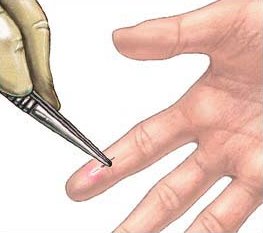 Инородный предмет – предмет, попавший в ваш организм, включая пыль и паразитов. Если вы когда-либо сталкивались с занозами или вам в глаз попадал песок, это и есть яркий пример инородного тела.