Morning sickness often begins 4 to 6 weeks after conception and may continue until the 4th month of pregnancy. Some women have morning sickness during their entire pregnancy. This happens most often for women who are carrying more than 1 baby.
It is called morning sickness because the symptoms are more likely to occur early in the day, but they can occur at any time. For some women, morning sickness lasts all day.
The exact cause of morning sickness is not known.
· Most experts think changes in the woman's hormone levels during pregnancy cause it.
· Other factors that can make the nausea worse include a pregnant woman's enhanced sense of smell and gastric reflux.
Morning sickness that is not severe does not hurt your baby in any way. In fact:
· It may even be a sign that all is well with you and your baby.
· Morning sickness may be associated with a lower risk of miscarriage.
· Your symptoms probably show that the placenta is making all the right hormones for your growing baby.
When nausea and vomiting are severe, a condition known as hyperemesis gravidarum may be diagnosed.
· Eat a lot of protein and carbohydrates. Try peanut butter on apple slices or celery; nuts; cheese and crackers; and low-fat dairy products like milk, cottage cheese, and yogurt.
· Bland foods, such as gelatin, frozen desserts, broth, ginger ale, and saltine crackers, also soothe the stomach.
· Avoid eating foods that are high in fat and salt.
· Try to eat before you get hungry and before nausea occurs.
· Eat a few soda crackers or dry toast when you get up at night to go to the bathroom or before you get out of bed in the morning.
· Avoid large meals. Instead, have a snack as often as every 1 to 2 hours during the day. DO NOT let yourself get too hungry or too full.
· Drink plenty of liquids.
· Try to drink between meals rather than with meals so that your stomach does not get too full.
· Seltzer, ginger ale, or other sparkling waters may help control symptoms.
Foods that contain ginger may also help. Some of these are ginger tea and ginger candy, along with ginger ale. Check to see that they have ginger in them rather than just ginger flavoring.
· Take them at night, since the iron they contain may irritate your stomach. At night, you might be able to sleep through this. Also take them with a little food, not on an empty stomach.
· You may have to try several different brands of prenatal vitamins before finding one you can tolerate.
· You can also try cutting your prenatal vitamins in half. Take half in the morning and the other half at night.
Some other tips are:
· Keep your morning activities slow and calm.
· Avoid poorly ventilated spaces that trap food odors or other smells.
· DO NOT smoke cigarettes or be in areas where people are smoking.
· Get extra sleep and try to lessen stress as much as possible.
Try acupressure wristbands that apply pressure to specific points on your wrist. Often these are used to ease motion sickness. You can find them at drug stores, health food stores, travel stores, and online.
Try acupuncture. Some acupuncturists are trained to work with pregnant women. Talk to your health care provider beforehand.
Vitamin B6 (100 mg or less daily) has been shown to ease symptoms of morning sickness. Many health care providers recommend trying it first before trying other medicines.
There are no drugs currently approved by the Food and Drug Administration to treat morning sickness. Your provider may not advise medicines to prevent nausea unless your vomiting is severe and will not stop.
· The drug doxylamine (brand name Unisom) may be taken along with vitamin B6 to treat nausea and vomiting. Ask your provider before taking it.
· In severe cases, you may be admitted to the hospital, where you will receive fluids through an IV (into your vein).
· Your provider might prescribe other medicines if your morning sickness is severe.
· Your morning sickness does not improve after trying home remedies.
· You are vomiting blood or something that looks like coffee grounds.
· You lose more than 2 pounds (1 kilogram) in a week.
· You have severe vomiting that will not stop. This can cause dehydration (not having enough fluid in your body) and malnutrition (not having enough nutrients in your body).
So you're going to have a baby! Whether you are pregnant or are planning to get pregnant, you will want to give your baby a healthy start.
You need to have regular visits with your healthcare provider. These prenatal care visits are very important for your baby and yourself. Some things you might do when you are pregnant could hurt your baby, such as smoking or drinking. Some medicines can also be a problem, even ones that a doctor prescribed. You will need to drink plenty of fluids and eat a healthy diet. You may also be tired and need more rest.
Your body will change as your baby grows during the nine months of your pregnancy. Don't hesitate to call your health care provider if you think you have a problem or something is bothering or worrying you.
Growing a baby is hard work. Your body will go through a lot of changes as your baby grows and your hormones change. Along with the aches and pains of pregnancy, you will feel other new or changing symptoms.
Even so, many pregnant women say that they feel healthier than ever.
Being tired is common during pregnancy. Most women feel tired the first few months, then again toward the end. Exercise, rest, and a proper diet can make you feel less tired. It may also help to take rest breaks or naps every day.
Early on in the pregnancy, you will likely be making more trips to the bathroom.
· As your uterus grows and rises higher in your abdomen (belly), the need to urinate often may lessen.
· Even so, you will continue to urinate more throughout pregnancy. That means that you also need to drink more water, and may be thirstier than before you were pregnant.
· As you get closer to delivery and your baby descends into your pelvis, you will need to pee much more, and the amount of urine passed at one time will be less (the bladder holds less due to pressure from the baby).
If you have pain when you urinate or a change in urine odor or color, call your health care provider. These could be signs of a bladder infection.
Some pregnant women also leak urine when they cough or sneeze. For most women, this goes away after the baby is born. If this happens to you, start doing Kegel exercises to strengthen the muscles of your pelvic floor.
While you are pregnant, food stays in your stomach and bowels longer. This may cause heartburn (stomach acid moving back up into the esophagus). You can reduce heartburn by:
· Eating small meals
· Avoiding spicy and greasy foods
· Not drinking large amounts of liquid before bedtime
· Not exercising for at least 2 hours after you eat
· Not lying down flat right after a meal
If you continue to have heartburn, talk to your health care provider about medicines that can help.
Some women have nose and gum bleeding while they are pregnant. This is because the tissues in their nose and gums get dry, and the blood vessels dilate and are closer to the surface. You can avoid or reduce this bleeding by:
· Drinking lots of fluids
· Getting lots of vitamin C, from orange juice or other fruits and juices
· Using a humidifier (a device that puts water in the air) to decrease dryness of the nose or sinuses
· Brushing your teeth with a soft toothbrush to decrease bleeding gums
· Maintaining good dental hygiene and using floss every day to keep your gums healthy
Swelling in your legs is common. You may see more swelling as you get closer to giving birth. The swelling is caused by your uterus pressing on the veins.
· You may also notice that the veins in your lower body are becoming larger.
· In the legs, these are called varicose veins.
· You may also have veins close to your vulva and vagina that swell.
· In your rectum, veins that swell are called hemorrhoids.
To reduce swelling:
· Raise your legs and rest your feet on a surface higher than your belly.
· Lay on your side in bed.
· Wear support pantyhose or compression stockings.
· Limit salty foods. Salt works like a sponge and makes your body hold more water.
· Try not to strain during bowel movements. This can worsen hemorrhoids.
Leg swelling that occurs with headaches or high blood pressure can be a sign of a serious medical complication of pregnancy called preeclampsia. It is important to discuss leg swelling with your provider.
Some women feel short of breath at times while they are pregnant. It happens more often in the early part of the pregnancy, and again toward the end. Mild shortness of breath from exercise that quickly gets better is not serious.
Severe chest pain or shortness of breath that does not go away can be a sign of a serious medical complication. Call 911 or go to an emergency room right away if you have these symptoms.
You may get short of breath again in the later weeks of pregnancy. This is because the uterus takes up so much room that your lungs do not have as much space to expand.
Doing these things might help with shortness of breath:
· Sitting up straight
· Sleeping propped up on a pillow
· Resting when you feel short of breath
· Moving at a slower pace
If you suddenly have a hard time breathing that is unusual for you, see your doctor right away or go to the emergency room.
Morning sickness often begins 4 to 6 weeks after conception and may continue until the 4th month of pregnancy. Some women have morning sickness during their entire pregnancy. This happens most often for women who are carrying more than 1 baby.
It is called morning sickness because the symptoms are more likely to occur early in the day, but they can occur at any time. For some women, morning sickness lasts all day.
The exact cause of morning sickness is not known.
· Most experts think changes in the woman's hormone levels during pregnancy cause it.
· Other factors that can make the nausea worse include a pregnant woman's enhanced sense of smell and gastric reflux.
Morning sickness that is not severe does not hurt your baby in any way. In fact:
· It may even be a sign that all is well with you and your baby.
· Morning sickness may be associated with a lower risk of miscarriage.
· Your symptoms probably show that the placenta is making all the right hormones for your growing baby.
When nausea and vomiting are severe, a condition known as hyperemesis gravidarum may be diagnosed.
· Eat a lot of protein and carbohydrates. Try peanut butter on apple slices or celery; nuts; cheese and crackers; and low-fat dairy products like milk, cottage cheese, and yogurt.
· Bland foods, such as gelatin, frozen desserts, broth, ginger ale, and saltine crackers, also soothe the stomach.
· Avoid eating foods that are high in fat and salt.
· Try to eat before you get hungry and before nausea occurs.
· Eat a few soda crackers or dry toast when you get up at night to go to the bathroom or before you get out of bed in the morning.
· Avoid large meals. Instead, have a snack as often as every 1 to 2 hours during the day. DO NOT let yourself get too hungry or too full.
· Drink plenty of liquids.
· Try to drink between meals rather than with meals so that your stomach does not get too full.
· Seltzer, ginger ale, or other sparkling waters may help control symptoms.
Foods that contain ginger may also help. Some of these are ginger tea and ginger candy, along with ginger ale. Check to see that they have ginger in them rather than just ginger flavoring.
· Take them at night, since the iron they contain may irritate your stomach. At night, you might be able to sleep through this. Also take them with a little food, not on an empty stomach.
· You may have to try several different brands of prenatal vitamins before finding one you can tolerate.
· You can also try cutting your prenatal vitamins in half. Take half in the morning and the other half at night.
Some other tips are:
· Keep your morning activities slow and calm.
· Avoid poorly ventilated spaces that trap food odors or other smells.
· DO NOT smoke cigarettes or be in areas where people are smoking.
· Get extra sleep and try to lessen stress as much as possible.
Try acupressure wristbands that apply pressure to specific points on your wrist. Often these are used to ease motion sickness. You can find them at drug stores, health food stores, travel stores, and online.
Try acupuncture. Some acupuncturists are trained to work with pregnant women. Talk to your health care provider beforehand.
Vitamin B6 (100 mg or less daily) has been shown to ease symptoms of morning sickness. Many health care providers recommend trying it first before trying other medicines.
There are no drugs currently approved by the Food and Drug Administration to treat morning sickness. Your provider may not advise medicines to prevent nausea unless your vomiting is severe and will not stop.
· The drug doxylamine (brand name Unisom) may be taken along with vitamin B6 to treat nausea and vomiting. Ask your provider before taking it.
· In severe cases, you may be admitted to the hospital, where you will receive fluids through an IV (into your vein).
· Your provider might prescribe other medicines if your morning sickness is severe.
· Your morning sickness does not improve after trying home remedies.
· You are vomiting blood or something that looks like coffee grounds.
· You lose more than 2 pounds (1 kilogram) in a week.
· You have severe vomiting that will not stop. This can cause dehydration (not having enough fluid in your body) and malnutrition (not having enough nutrients in your body).
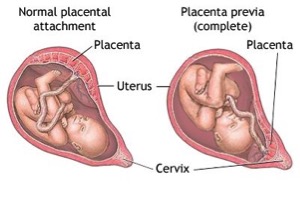
Placenta previa is a problem of pregnancy in which the placenta grows in the lowest part of the womb (uterus) and covers all or part of the opening to the cervix.
The placenta grows during pregnancy and feeds the developing baby. The cervix is the opening to the birth canal.
During pregnancy, the placenta moves as the womb stretches and grows. It is very common for the placenta to be low in the womb in early pregnancy. But as the pregnancy continues, the placenta moves to the top of the womb. By the third trimester, the placenta should be near the top of the womb, so the cervix is open for delivery.
Sometimes, the placenta partly or completely covers the cervix. This is called a previa.
There are different forms of placenta previa:
Marginal: The placenta is next to the cervix but does not cover the opening.
Partial: The placenta covers part of the cervical opening.
Complete: The placenta covers all of the cervical opening.
Placenta previa occurs in 1 out of 200 pregnancies. It is more common in women who have:
An abnormally shaped uterus
Had many pregnancies in the past
Had multiple pregnancies, such as twins or triplets
Scarring on the lining of the uterus due to a history of surgery, C-section, or abortion
In vitro fertilization
Women who smoke, use cocaine, or have their children at an older age may also have an increased risk.
The main symptom of placenta previa is sudden bleeding from the vagina. Some women also have cramps. The bleeding often starts near the end of the second trimester or beginning of the third trimester.
Bleeding may be severe and life threatening. It may stop on its own, but can start again days or weeks later.
Labor sometimes starts within several days of the heavy bleeding. Sometimes, bleeding may not occur until after labor starts.
Your provider will carefully consider the risk of bleeding against early delivery of your baby. After 36 weeks, delivery of the baby may be the best treatment.
Nearly all women with placenta previa need a C-section. If the placenta covers all or part of the cervix, a vaginal delivery can cause severe bleeding. This can be deadly to both the mother and baby.
If the placenta is near or covering part of the cervix, your provider may recommend:
Reducing your activities
Bed rest
Pelvic rest, which means no sex, no tampons, and no douching
Nothing should be placed in the vagina.
You may need to stay in the hospital so your health care team can closely monitor you and your baby.
Other treatments you may receive:
Blood transfusions
Medicines to prevent early labor
Medicines to help pregnancy continue to at least 36 weeks
Shot of special medicine called Rhogam if your blood type is Rh-negative
Steroid shots to help the baby's lungs mature
An emergency C-section may be done if the bleeding is heavy and cannot be controlled.
The biggest risk is severe bleeding that can be life threatening to the mother and baby. If you have severe bleeding, your baby may need to be delivered early, before major organs, such as the lungs, have developed.