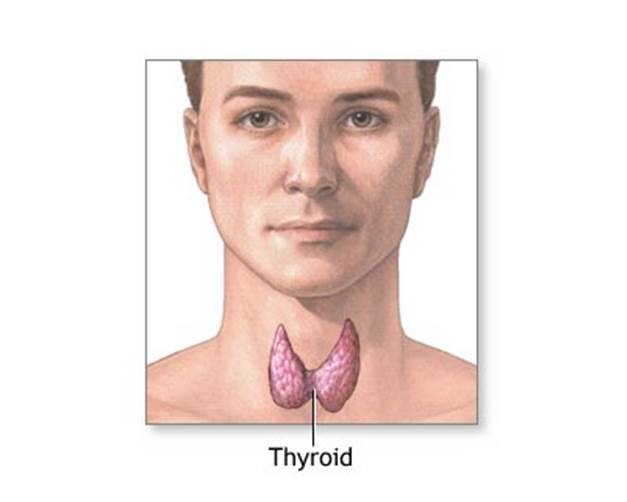
Toxic nodular goiter involves an enlarged thyroid gland. The gland contains areas that have increased in size and formed nodules. One or more of these nodules produce too much thyroid hormone.
Toxic nodular goiter starts from an existing simple goiter. It occurs most often in older adults. Risk factors include being female and over 55 years old. This disorder is rare in children. Most people who devaelop it have had a goiter with nodules for many years.
Sometimes, people with toxic multinodular goiter will develop high thyroid levels for the first time. This mostly occurs after they take in a large amount of iodine through a vein (intravenously) or by mouth. The iodine may be used as contrast for a CT scan or heart catheterization. Taking medicines that contain iodine, such as amiodarone, may also lead to the disorder.
Beta-blockers (propranolol) can control some of the symptoms of hyperthyroidism until thyroid hormone levels in the body are under control.
Certain drugs can block or change how the thyroid gland uses iodine. These drugs may be used to control the overactive thyroid gland in any of the following cases:
· Before surgery or radioiodine therapy occurs
· As a long term treatment
Radioiodine therapy may be used. Radioactive iodine is given by mouth. It then concentrates in the overactive thyroid tissue and causes damage. Some people, but not all, may need to take thyroid replacement afterwards.
Surgery to remove the thyroid may be done when:
· Very large goiter or a goiter is causing symptoms by blocking the airway
Toxic nodular goiter is mainly a disease of older adults, so other chronic health problems may affect the outcome of this condition. An older adult may be less able to tolerate the effect of the disease on the heart. However, the condition is often treatable with medicines.
Thyroid crisis or storm is an acute worsening of hyperthyroidism symptoms. It may occur with infection or stress. Thyroid crisis may cause:
· Abdominal pain
· Decreased mental alertness
· Fever
People with this condition need to go to the hospital right away.
Complications of having a very large goiter may include difficulty breathing or swallowing. These complications are due to pressure on the airway passage (trachea) or esophagus, which lies behind the thyroid.
Dialysis treats end-stage kidney failure. It removes waste from your blood when your kidneys can no longer do their job.
There are different types of kidney dialysis. This article focuses on hemodialysis.
What is Hemodialysis?
Your kidneys' main job is to remove toxins and extra fluid from your blood. If waste products build up in your body, it can be dangerous and even cause death.
Hemodialysis (and other types of dialysis) does some of the job of the kidneys when they stop working well.
Hemodialysis can:
· Remove extra salt, water, and waste products so they don't build up in your body
· Keep safe levels of minerals and vitamins in your body
· Help control blood pressure
· Help produce red blood cells
During hemodialysis, your blood passes through a tube into an artificial kidney, or filter.
· The filter, called a dialyzer, is divided into 2 parts separated by a thin wall.
· As your blood passes through one part of the filter, special fluid in the other part draws out waste from your blood.
· Your blood then goes back into your body through a tube.
Your doctor will create an access where the tube attaches. Usually an access will be in a blood vessel in your arm.
When to Start Dialysis
Kidney failure is the last stage of chronic kidney disease. This is when your kidneys can no longer support your body's needs. Your doctor will discuss dialysis with you before you need it. Usually you will go on dialysis when you have only 10 to 15% of your kidney function left.
You also may need dialysis if your kidneys suddenly stop working due to acute renal failure.
Dialysis at a Treatment Center
Hemodialysis is most often done at a special dialysis center.
· You will have about 3 treatments a week.
· Treatment takes about 3 to 4 hours each time.
· You may feel tired for several hours after the dialysis.
At a treatment center, your health care providers will handle all your care. However, you do need to schedule your appointments and follow a strict dialysis diet.
Dialysis at Home
You may be able to have hemodialysis at home. You do not have to buy a machine. Medicare or your health insurance will pay for most or all of your treatment costs at home or in a center.
If you have dialysis at home, you can use one of two schedules:
· Shorter (2 to 3 hours) treatments done at least 5 to 7 days per week
· Longer, nightly treatments done 3 to 6 nights per week while you sleep
You also may be able to do a combination of daily and nighttime treatments.
Because you have treatment more often and it happens more slowly, home hemodialysis has some benefits:
· It helps keep your blood pressure lower. Many people no longer need blood pressure medicines.
· It does a better job of removing waste products.
· It's easier on your heart.
· You may have fewer symptoms from dialysis such as nausea, headaches, cramps, and tiredness.
· You can more easily fit treatments into your schedule.
You can do the treatment yourself, or you can have someone help you. A dialysis nurse can train you and a caregiver on how to do home dialysis. Training can take a few weeks to a few months. Both you and your caregivers must learn to:
· Handle the equipment
· Place the needle into the access site
· Monitor the machine and your blood pressure during treatment
· Keep records
· Clean the machine
· Order supplies, which can be delivered to your home
Home dialysis is not for everyone. You will have a lot to learn and need to be responsible for your care. Some people feel more comfortable having a provider handle their treatment. Plus, not all centers offer home dialysis.
Home dialysis may be a good option if you want more independence and are able to learn to treat yourself. Talk with your doctor. Together, you can decide what type of hemodialysis is right for you.
When to Call Your Doctor
Call your doctor if you notice:
· Bleeding from your vascular access site
· Signs of infection, such as redness, swelling, soreness, pain, warmth, or pus around the site
· A fever over 100.5°F (38.0°C)
· The arm where your catheter is placed swells and the hand on that side feels cold
· Your hand gets cold, numb, or weak
Also call your doctor if any of the following symptoms are severe or last more than 2 days:
· Itching
· Trouble sleeping
· Diarrhea or constipation
· Nausea and vomiting
· Drowsiness, confusion, or problems concentrating
Osteoporosis is the most common type of bone disease.
Osteoporosis increases the risk of breaking a bone. About half of all women over the age of 50 will have a fracture of the hip, wrist, or vertebra (bones of the spine) during their lifetime. Spine fractures are the most common.
Your body needs the minerals calcium and phosphate to make and keep healthy bones.
· During your life, your body continues to both reabsorb old bone and create new bone.
· As long as your body has a good balance of new and old bone, your bones stay healthy and strong.
· Bone loss occurs when more old bone is reabsorbed than new bone is created.
Sometimes, bone loss occurs without any known cause. Other times, bone loss and thin bones run in families. In general, white, elderly women are the most likely to have bone loss.
Brittle, fragile bones can be caused by anything that makes your body destroy too much bone, or keeps your body from making enough new bone. As you age, your body may reabsorb calcium and phosphate from your bones instead of keeping these minerals in your bones. This makes your bones weaker.
A major risk is not having enough calcium to build new bone tissue. It is important to eat enough high-calcium foods. You also need vitamin D, because it helps your body absorb calcium. Your bones may become brittle and more likely to fracture if:
· If you do not eat enough food with calcium and vitamin D
· Your body does not absorb enough calcium from your food, such as after gastric bypass surgery
· A decrease in estrogen in women at the time of menopause and a decrease in testosterone in men as they age
· Being confined to a bed due to a prolonged illness (mostly affects bone in children)
· Having certain medical conditions that cause increased inflammation in the body
· Taking certain medicines, such as certain seizure medicines, hormone treatments for prostate or breast cancer, and steroid medicines taken for more than 3 months
Other risk factors include:
· Absence of menstrual periods for long periods of time
· A family history of osteoporosis
· Drinking a large amount of alcohol
· Low body weight
· Smoking
· Having an eating disorder, such as anorexia nervosa
There are no symptoms in the early stages of osteoporosis. Many times, people will have a fracture before learning they have the disease.
Fractures of the bones of the spine can cause pain almost anywhere in the spine. These are called compression fractures. They often occur without an injury. The pain occurs suddenly or slowly over time.
There can be a loss of height (as much as 6 inches or 15 centimeters) over time. A stooped posture or a condition called a dowager's hump may develop.
A DEXA scan is a low-radiation x-ray that measures the density of the minerals in your bones. Usually, it measures density in the spine and hip bones. Your health care provider uses this test to:
· Diagnose bone loss and osteoporosis
· Predict your risk of future bone fractures
· See how well osteoporosis medicine is working
A simple spine or hip x-ray may show fracture or collapse of the spinal bones. However, simple x-rays of other bones are not very accurate in predicting whether you are likely to have osteoporosis. A new low-radiation spine x-ray called a vertebral fracture assessment (VFA) is now often done with a DEXA to better identify fractures that do not have any symptoms.
You may need blood and urine tests if your provider thinks the cause of your osteoporosis is a medical condition, rather than the slow bone loss that occurs with aging.
DEXA scan results compare your bone mineral density with both a young adult who has no bone loss and with people your age and gender. This means that at age 80, almost one third of women with normal age-related bone loss would have osteoporosis, based on their DEXA scan results.
· Making lifestyle changes, such as changing your diet and exercise routine
· Taking calcium and vitamin D supplements
· Using medicines
Medicines are used to strengthen bones when:
· Osteoporosis has been diagnosed by a bone density study, whether or not you have a fracture and your fracture risk is high.
· You have had a bone fracture and a bone density test shows that you have thin bones, but not osteoporosis.
Medicines used to treat osteoporosis include:
· Bisphosphonates (the main drugs used to prevent and treat osteoporosis in postmenopausal women)
· Estrogen and estrogen receptor modulators
· Teriparatide (a man-made form of a hormone your body makes that increases bone density)
· Calcitonin (a man-made form of a hormone your body makes that increases bone density, used mainly to treat the sudden pain from a spine fracture)
· Denusomab (lessens bone loss and increases bone density)
Exercise plays a key role in preserving bone density in older adults. Some of the exercises recommended to reduce your chance of a fracture include:
· Weight-bearing exercises such as walking, jogging, playing tennis, dancing
· Free weights, weight machines, stretch bands
· Balance exercises such as tai chi and yoga
· Rowing machines
Avoid any exercise that presents a risk of falling. Also, do not do high-impact exercises that can cause fractures in older adults.
Follow these guidelines for getting enough calcium and vitamin D:
· Adults under age 50 should have 1,000 mg of calcium and 400 to 800 International Units (IU) of vitamin D a day.
· Women ages 51 to 70 should have 1,200 mg of calcium and 400 to 800 IU of vitamin D a day.
· Men ages 51 to 70 should have 1,000 mg of calcium and 400 to 800 IU of vitamin D a day.
· Adults over age 70 should have 1,200 mg of calcium and 800 IU of vitamin D a day.
· Your provider may recommend a calcium supplement.
· Follow a diet that provides the proper amount of calcium and vitamin D.
· Your provider may recommend higher doses of vitamin D if you have risk factors for osteoporosis or a low level of this vitamin.
(Note: Some expert groups are not sure the benefits and safety of these amounts of vitamin D and calcium outweigh their risks. Be sure to discuss with your provider whether supplements are a good choice for you.)
Stop unhealthy habits:
· Quit smoking, if you smoke.
· Limit your alcohol intake. Too much alcohol can damage your bones. This puts you at risk of falling and breaking a bone.
It is important to prevent falls. These suggestions can help:
· Do not take medicines that make you drowsy and unsteady. If you must take them, be extra careful when you are up and about. For example, hold on to countertops or sturdy furniture to avoid falling.
· Remove household hazards, such as throw rugs, to reduce the risk of falls.
· Leave lights on at night so you can see better when walking around your house.
· Install and use safety grab bars in the bathroom.
· Install antislip flooring in bathtubs and showers.
· Make sure your vision is good. Have your eyes checked once or twice a year by an eye doctor.
· Wear shoes that fit well and have low heels. This includes slippers. Slippers that do not have heels can cause you to trip and fall.
· Do not walk outdoors alone on icy days.
Surgery to treat severe, disabling pain from spinal fractures due to osteoporosis include:
· Kyphoplasty (a material is placed into a bone of your spine to restore the height of the vertebrae)
· Spinal fusion (bones of your spine are joined together so they do not move against each other)
Medicines to treat osteoporosis can help prevent future fractures. Spine bones that have already collapsed can't be made stronger.
Osteoporosis can cause a person to become disabled from weakened bones. Hip fractures are one of the main reasons people are admitted to nursing homes.
Be sure you get enough calcium and vitamin D to build and maintain healthy bone. Following a healthy, well-balanced diet can help you get these and other important nutrients.
Other tips for prevention:
· Do not drink large amounts of alcohol.
· Do not smoke.
· Get regular exercise.
Medicines can treat osteoporosis and prevent fractures. Your provider can tell you if any are right for you.
General discomfort, uneasiness, or ill feeling (malaise)
Sores on the inside of the cheeks or gums
Very sore mouth with no desire to eat
Exams and Tests
Your health care provider will check your mouth for small ulcers. These sores are similar to mouth ulcers caused by other conditions. Cough, fever, or muscle aches may indicate other conditions.
Most of the time, no special tests are needed to diagnose gingivostomatitis. However, the doctor may take a small piece of tissue from the sore to check for a viral or bacterial infection. This is called a culture. A biopsymay be done to rule out other types of mouth ulcers.
Treatment
The goal of treatment is to reduce symptoms.
Things you can do at home include:
Practice good oral hygiene. Brush your gums well to reduce the risk of getting another infection.
Use mouth rinses that reduce pain if your doctor recommends them.
Rinse your mouth with salt water (one-half teaspoon of salt in 1 cup of water) or mouthwashes with hydrogen peroxide to ease discomfort.
Eat a healthy diet. Soft, bland (non-spicy) foods may reduce discomfort during eating.
You may need to take antibiotics.
You may need to have the infected tissue removed by the dentist (called debridement).
Outlook (Prognosis)
Gingivostomatitis infections range from mild to severe and painful. The sores often get better in 2 or 3 weeks with or without treatment. Treatment may reduce discomfort and speed healing.
Possible Complications
Gingivostomatitis may disguise other, more serious mouth ulcers.
When to Contact a Medical Professional
Call your health care provider if:
You have mouth sores and fever or other signs of illness
Mouth sores get worse or do not respond to treatment within 3 weeks
Burning mouth syndrome (BMS) is a condition that causes pain and discomfort in the mouth, lips or tongue. If there is no clear cause for this pain, it is called primary BMS. When the pain is caused by an underlying problem, it is called secondary BMS.
Both men and women can get BMS, but it is more common in women than men. It is especially common in women during or after menopause.
Symptoms
What are the symptoms of BMS?
People who have BMS often feel like they burned their mouth with a hot liquid. They may also have a dry or sore mouth, or a bitter or metallic taste in their mouth. Some people who have BMS feel pain constantly. For other people, the pain comes and goes. The pain of BMS may be mild in the morning and get worse during the day.
Causes & Risk Factors
What causes BMS?
Researchers think one possible cause of BMS is a problem in the nerves that control taste and pain in the tongue. Other possible causes of burning mouth pain include the following:
Nutritional deficiencies
Contact allergies to foods, food flavorings or other food additives
Certain medicines
Hormonal changes during menopause
Dry mouth
Certain medical conditions, such as acid reflux, may also cause burning mouth pain.
Depression and anxiety are common in people who have BMS, but it is not known whether these problems cause BMS or if the ongoing pain of BMS leads to depression and anxiety.
Diagnosis & Tests
How can my doctor tell if I have BMS?
There is no simple way to test for BMS. Your doctor will examine your mouth and ask about your medical history to find out what might be causing a burning feeling. Your doctor may also need to do some tests to find out what is causing your symptoms. If no cause can be found, you may have primary BMS.
Treatment
How is BMS usually treated?
Treatment will depend on what is causing your mouth pain. If your doctor can identify a specific problem that is causing your symptoms, treating that problem may relieve your pain. For example, symptoms caused by an oral yeast infection called thrush can be treated with an oral antifungal medicine. Saliva replacement products can relieve dry mouth. If you have a nutritional deficiency, your doctor may recommend that you take B vitamins, iron, folate, or zinc supplements.
If your doctor can’t find a cause for your symptoms, he or she will focus on trying to relieve your pain and discomfort. Certain medicines, including some used to treat depression and anxiety, are also used to treat BMS. It is not clear why these medicines help. They may affect how the nerves in your mouth work. Fortunately, 30 percent to 50 percent of people with BMS improve on their own, so you may get better even without treatment.
What can I do to feel better?
The following are tips for relieving the symptoms of BMS:
Drink plenty of liquids.
Suck on ice chips.
Avoid hot, spicy foods.
Avoid mouthwashes that contain alcohol.
Switch to a different brand of toothpaste.
Avoid foods and drinks that are high in acid, like citrus fruits, soda and coffee.
Avoid alcohol and tobacco products.
Questions to Ask Your Doctor
Is there anything I can do to get rid of the taste in my mouth?
I’m having trouble sleeping because of the pain. What should I do?
Could a different toothpaste help me with the pain and taste in my mouth?
Should I take any vitamin supplements to help with the pain?
Is something I’m eating causing the problem?
What changes should I make to my diet?
I’ve had dry mouth for several years. Am I at higher risk of developing burning mouth syndrome?
When I’m past menopause, will the burning mouth syndrome go away on its own?
Синдром «горящего рта» (СГР) - заболевание, проявляющееся болью и дискомфортом во рту, на губах или языке. Если нет другой явной причины подобной боли, это называется первичным синдромом «горящего рта». Если боль вызвана другим заболеванием, то это - вторичный синдром «горящего рта».
Синдром «горящего рта» распространен как среди мужчин, так и среди женщин, но чаще встречается у женщин. В большинстве случаев это характерно для женщин во время наступления менопаузы или после нее.
У лиц с синдромом «горящего рта» часто возникает такое ощущение, как будто они обожгли полость рта горячей жидкостью. Также они могут испытывать сухость или боль во рту, ощущать горький или металлический привкус. У некоторых лиц с данным заболеванием боль постоянная. У других она может проходить, а затем повторяться снова. Интенсивность боли при синдроме «горящего рта» может быть умеренной в первой половине дня, а затем постепенно прогрессировать в течение всего дня.
Исследователи полагают, что одной из возможных причин возникновения синдрома «горящего рта» является проблема в нервах, контролирующих вкусовые и болевые ощущения на языке. К другим возможным причинам относятся следующие:
Дефицит питательных веществ
Контактная аллергия на продукты, пищевые ароматизаторы или другие пищевые добавки
Прием некоторых лекарственных препаратов
Гормональные перестройки в организме женщин во время менопаузы
Сухость во рту
Некоторые заболевания, такие как кислотный рефлюкс также могут быть причиной жжения в полости рта.
У лиц с синдромом «горящего рта» часто встречается депрессия и тревога, но до конца не известно, являются ли эти проблемы причиной заболевания, или же длительная боль при синдроме «горящего рта» приводит к развитию депрессии и тревоги.
Простого метода диагностики синдрома «горящего рта» не существует. Для того чтобы выяснить, что могло стать причиной возникновения жжения врач осмотрит полость рта и подробно расспросит об истории вашего заболевания. Также врач может провести несколько исследований, чтобы выяснить причину ваших симптомов. Если причина не будет установлена, то вполне вероятно, что у вас первичный синдром «горящего рта».
Тактика лечения будет зависеть от причины возникновения боли в полости рта. Если врач установит конкретную проблему, вызывающую симптомы, то лечение этой проблемы может облегчить боль. Например, симптомы, вызванные дрожжевой инфекцией, называющейся кандидозом, можно вылечить противогрибковыми лекарственными препаратами. Специальные заменители слюны помогут облегчить сухость во рту. При наличии дефицита питательных веществ врач может рекомендовать вам прием витаминов группы В, железа, фолиевой кислоты или цинка.
Если врачу не удается установить причину возникновения симптомов, он сосредоточит свою тактику лечения на том, чтобы облегчить боль и дискомфорт. Некоторые лекарственные препараты, в том числе для лечения депрессии и тревоги, также могут быть эффективны при синдроме «горящего рта». Причина того, что эти лекарственные препараты помогают остается невыясненной. Считается, что они могут влиять на работу нервов в полости рта. К счастью, у 30-50% лиц с данным заболеванием улучшение состояния наступает самостоятельно. Так что вылечиться можно и без лечения.
Гингивостоматит – это инфекционное заболевание полости рта и десен, характеризующееся отеком тканей и формированием язв. Возбудителями заболевания могут быть вирусы или бактерии.
Гингивостоматит часто встречается у детей. Он может возникнуть после заражения вирусом простого герпеса первого типа (ВПГ-1), который также вызывает герпетические язвы.
Также заболевание может развиться после инфицирования вирусом Коксаки.
Часто подобное состояние встречается у лиц, не следящих за гигиеной полости рта.
Врач осмотрит полость вашего рта для выявления небольших язв. По внешнему виду они могут напоминать язвы, возникающие при других заболеваниях. Кашель, лихорадка или мышечные боли могут свидетельствовать о других заболеваниях полости рта.
В большинстве случаев для диагностики гингивостоматита проведение других обследований не требуется. Тем не менее, для идентификации вирусной или бактериальной природы заболевания врач может взять небольшой кусочек ткани из язвы. Это называется выявлением культуры. Для исключения других язвенных поражений полости рта может быть проведена биопсия.
Цель лечения заключается в купировании симптомов заболевания.
К мероприятиям, которые вы сможете провести самостоятельно в домашних условиях, относятся:
Соблюдение правил гигиены полости рта. Тщательно чистите десны, так вы сможете снизить риск заражения другой инфекцией.
Если на это нет врачебных противопоказаний, вы можете пользоваться ополаскивателями для полости рта, они помогут облегчить боль.
Для облегчения дискомфорта можно полоскать полость рта соленой водой (половина чайной ложки соли на 1 стакан воды) или жидкостью для полоскания полости рта с перекисью водорода.
Соблюдайте здоровую диету. Мягкие, не пряные продукты могут уменьшить дискомфорт во время приема пищи.
Тяжесть гингивостоматита может варьировать от легкой до тяжелой, заболевание может протекать болезненно. Язвы, как правило, самостоятельно заживают в течение 2-3 недель. Лечение может помочь облегчить дискомфорт и ускорить заживление.