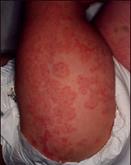
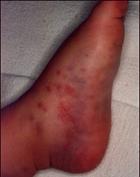
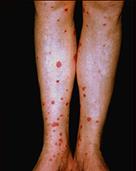
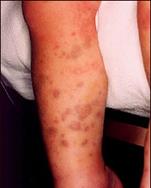
Henoch-Schonlein purpura is a disease that involves purple spots on the skin, joint pain, gastrointestinal problems, and glomerulonephritis (a type of kidney disorder).
CAUSES
Henoch-Schonlein is caused by an abnormal response of the immune system. It is unclear why this occurs.
The syndrome is usually seen in children, but it may affect people of any age. It is more common in boys than in girls. Many people with Henoch-Schonlein purpura had an upper respiratory illness in the weeks before.
SYMPTOMS
Abdominal pain
Joint pain
Purple spots on the skin (purpura), usually over the buttocks, lower legs, and elbows
Bloody stools
Hives or angioedema
Nausea
Diarrhea
Painful menstruation
Vomiting
EXAMS AND TESTS
The doctor will examine your body and look at your skin. The physical exam will reveal skin sores (lesions) and joint tenderness.
Tests may include:
Skin biopsy
Urinalysis
TREATMENT
There is no specific treatment. Most cases go away on their own without treatment. If symptoms persist, your doctor may recommend therapy with corticosteroids such as prednisone.
OUTLOOK (PROGNOSIS)
The disease usually gets better on its own without treatment.
POSSIBLE COMPLICATIONS
Bleeding inside the body
Kidney problems (in rare cases)
WHEN TO CONTACT A DOCTOR
Call for an appointment with your health care provider if:
You develop symptoms of Henoch-Schonlein purpura, particularly if they last for more than a few days
You have low urine output after an episode of Henoch-Schonlein purpura