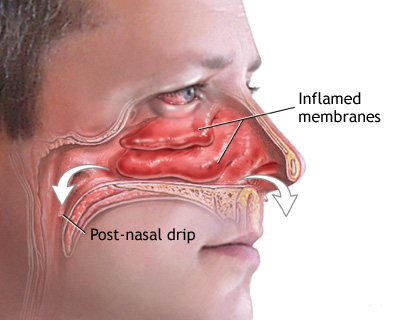
Sinusitis means your sinuses are infected or inflamed. Your sinuses are hollow air spaces within the bones surrounding the nose. They produce mucus, which drains into the nose. If your nose is swollen, this can block the sinuses and cause pain and infection.
A runny or stuffy nose can be due to colds, allergies, sinus infections or the flu. When there is an excess of mucus secretions the nose is runny. The additional secretions drain from the front of the nose, or down the back (post-nasal drip). The sensation of a stuffy nose occurs when the membranes that line the nose become swollen from inflamed blood vessels.
Sinusitis can be acute, lasting for less than four weeks, or chronic, lasting much longer. Acute sinusitis often starts as a cold, which then turns into a bacterial infection. Allergies, pollutants, nasal problems and certain diseases can also cause sinusitis.
Symptoms of sinusitis can include fever, weakness, fatigue, cough and congestion. There may also be mucus drainage in the back of the throat, called postnasal drip. Treatments include antibiotics, decongestants and pain relievers. Using heat pads on the inflamed area, saline nasal sprays and vaporizers can also help.
Breathing is a complex process. If injury, disease, or other factors affect any part of the process, you may have trouble breathing.
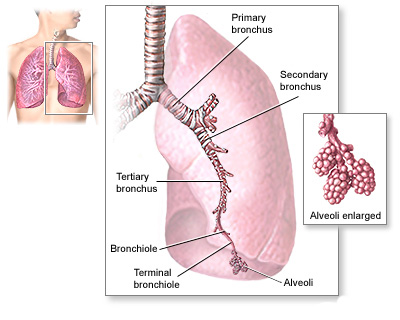
For example, the fine hairs (cilia) that line your upper airways may not trap all of the germs you breathe in. These germs can cause an infection in your bronchial tubes (bronchitis) or deep in your lungs (pneumonia). These infections cause a buildup of mucus or fluid that narrows the airways and limits airflow in and out of your lungs.
If you have asthma, breathing in certain substances that you're sensitive to can trigger your airways to narrow. This makes it hard for air to flow in and out of your lungs.
Over a long period, breathing in cigarette smoke or air pollutants can damage the airways and air sacs. This can lead to a disease called COPD (chronic obstructive pulmonary disease). COPD prevents proper airflow in and out of your lungs and can hinder gas exchange in the air sacs.
An important step to breathing is the movement of your diaphragm and other muscles in your chest, neck, and abdomen. This movement lets you inhale and exhale. Nerves that run from your brain to these muscles control their movement. Damage to these nerves in your upper spinal cord can cause breathing to stop, unless a machine is used to help you breathe. (This machine is called a ventilatoror a respirator.)
A steady flow of blood in the small blood vessels that surround your air sacs is vital for gas exchange. Long periods of inactivity or surgery can cause a blood clot called a pulmonary embolism (PE) to block a lung artery. A PE can reduce or block the flow of blood in the small blood vessels and hinder gas exchange.