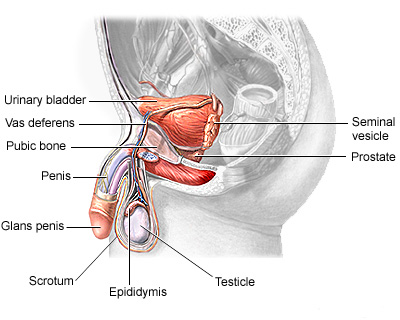
In an uncircumcised male, the head of the penis is covered by a sheath of skin known as the foreskin. Phimosis is a condition in which the foreskin is tightly stretched around the head of the penis and cannot be pulled back freely. Phimosis can occur naturally. For example, in boys younger than age 4, it is normally hard to pull back the foreskin. However, in older boys and men, phimosis often is triggered by an infection under the foreskin (balanitis) or by other medical conditions such as diabetes.
Paraphimosis occurs when a tight foreskin is pulled back behind the head of the penis and then becomes stuck. It cannot be placed forward again to its usual position covering the tip of the penis. This can cause swelling, pain and loss of blood flow to the tip of the penis. If the foreskin cannot be pushed back into its natural position, serious harm can occur.
Phimosis is usually painless. However, a very tight foreskin may interfere with urination or sexual function. In addition, phimosis may make it difficult for a man to clean under the foreskin, which can make infection of the skin more likely.
Paraphimosis usually results in painful swelling of the foreskin and head of the penis. Severe loss of blood flow to the head of the penis may be signaled by a deep purple color, which usually indicates a medical emergency.
Phimosis may be prevented by good hygiene. This includes fully pulling back the foreskin, so you can clean under it during bathing.
Paraphimosis can be prevented by carefully replacing the foreskin every time it is pulled back. If paraphimosis occurs, circumcision may be recommended to prevent it from happening again.
Phimosis without any symptoms does not require treatment. This is especially true in children. If a boy does not outgrow phimosis or there are problems with urination or hygiene, treatment with certain medicated creams, such as hydrocortisone, may be effective.
In some older boys and men with phimosis, good hygiene and prompt treatment of infections may be all that is needed to prevent problems. In other men, persistent symptoms occur, and corrective surgery (circumcision) needs to be done.
It is an emergency if paraphimosis occurs and the foreskin cannot be pushed back into its normal position. A physician may need to do an emergency procedure to create a slit in the foreskin, or do circumcision.
In most men, phimosis is not a serious problem and will not require treatment. However, it is not expected to improve on its own.
As noted above, paraphimosis is sometimes a medical emergency, and the penis may become permanently damaged if you do not seek immediate medical attention
Sinusitis means your sinuses are infected or inflamed. Your sinuses are hollow air spaces within the bones surrounding the nose. They produce mucus, which drains into the nose. If your nose is swollen, this can block the sinuses and cause pain and infection.
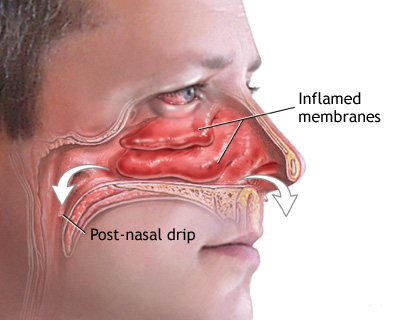
A runny or stuffy nose can be due to colds, allergies, sinus infections or the flu. When there is an excess of mucus secretions the nose is runny. The additional secretions drain from the front of the nose, or down the back (post-nasal drip). The sensation of a stuffy nose occurs when the membranes that line the nose become swollen from inflamed blood vessels.
Sinusitis can be acute, lasting for less than four weeks, or chronic, lasting much longer. Acute sinusitis often starts as a cold, which then turns into a bacterial infection. Allergies, pollutants, nasal problems and certain diseases can also cause sinusitis.
Symptoms of sinusitis can include fever, weakness, fatigue, cough and congestion. There may also be mucus drainage in the back of the throat, called postnasal drip. Treatments include antibiotics, decongestants and pain relievers. Using heat pads on the inflamed area, saline nasal sprays and vaporizers can also help.