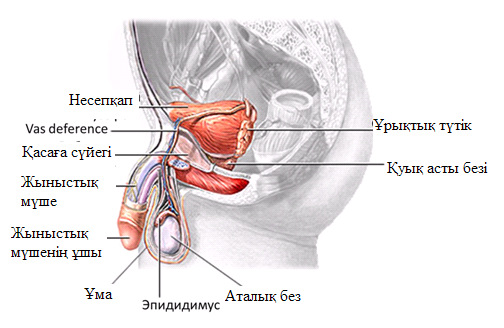
Шәуеттің жиналуы, жыныстық мүшенің күпегінің астында жағымсыз иісті қоймалжың заттектің жинақталуы жыныстық мүшенің қатерлі ісігінің даму қаупін арттырады.
Сүндетке отырғызылмаған, күпек аумағының тазалығын қадағаламайтын ерлер, сондай-ақ, үшкір кондилома немесе адам папиломасы вирусы (ВПЧ) бар ерлер осы сирек аурудың пайда болу қаупіне бейім келеді.
Дәрігер медициналық тексеруді өткізеді, оның барысында сыртқы пішіні безеу немесе сүйел секілді түзіліс анықталады. Бұл түзіліс, әдетте, пенистің ұшында орналасады.
Қатерлі ісік диагнозын қою үшін осы түзілістің биопсиясы жасалады.
Емдеу ісіктің өлшеміне және орналасуына, таралу ауданына байланысты.
Жалпы, қатерлі ісікті емдеуге кіретіндер:
Химиялық емдеу – қатерлі ісік жасушаларын жоятын дәрілік препараттарды қабылдау
Сәулелік емдеу – ісікті жою үшін күшті рентген сәулесі қолданылады.
Оперативтік емдеу – қатерлі ісікті хирургиялық жолмен алып тастау.
Егер ісік шағын болса, немесе жыныстық мүшенің ұшына жақын орналасса, пенистегі қатерлі ісік аумағын ғана алып тастау операциясы жасалады. Ісіктің нақты орналасуына сай операция глансэктомия немесе ішінара пенэктомия аталады. Кейбір ісіктерді емдеу үшін лазерлік операция қолданылуы мүмкін.
Күрделі ісіктер үшін жыныстық мүшені толық алып тастау қажет (жаппай пенэктомия). Бұл жағдайда организмнен несепті шығару үшін шаптың аумағында жаңа түтік жасалынады. Бұл шара уретростомия аталады.
Оперативтік араласумен қатар химиялық емдеу қолданылады. Әдетте, жыныстық мүшенің қатерлі ісігін емдеу үшін цисплатин, ифосфамид, паклитаксел тағайындалады.
Сәулелік емдеу, көбінесе, хирургиялық араласумен бірге ұсынылады. Мұндай жағдайда сыртқы сәулелік емдеу қолданылады. Бұл әдіс пенисті сыртынан сәулелендіруді қамтамасыз етеді. Сыртқы сәулелік емдеу аптасына 5 рет, 6-8 апта бойы жалғасады.
Ерте анықталып, емделсе, болжамы оң болуы мүмкін. Жыныстық мүшенің қатерлі ісігінде 5-жылдық тірі қалу 65% құрайды. Несеп шығару және жыныстық қызмет пенистің біршама бөлігін алып тастағанда да сақталуы мүмкін болады.
Сүндетке отырғызу қауіпті азайтады. Сүндетке отырғызылмаған ерлерге жасынан күпекті тазартуды түсіндіру қажет, бұл олардың жеке гигиенасының құраушысы.
Жеке гигенаны сақтау және қауіпсіз жыныстық қатынасты қолдау, жыныстық қатынаста серіктестердің санын шектеу, АИТВ инфекциясының алдын алу мақсатында презервативтер қолдану жыныстық мүшенің қатерлі ісігінің даму қаупін азайтады.
Аудармашы: Асель Стамбекова, HealthСity жобасының дербес үйлестірушісі
Редакциялық алқа:
Алмаз Шарман, медицина профессоры
Ләзат Ақтаева, м.ғ.д.
Сәлім Смайылов, б.ғ.к.
Priapism is a prolonged erection of the penis. The unwanted, persistent erection isn't caused by sexual stimulation or arousal, and priapism is usually painful.
Priapism is an uncommon condition that needs immediate medical attention. Prompt treatment for priapism is usually needed to prevent tissue damage that could result in the inability to get or maintain an erection (erectile dysfunction).
Priapism is most common between ages 5 and 10 in boys and ages 20 and 50 in men.
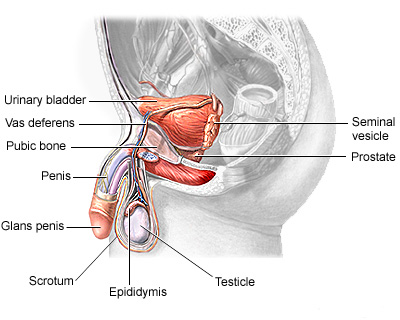
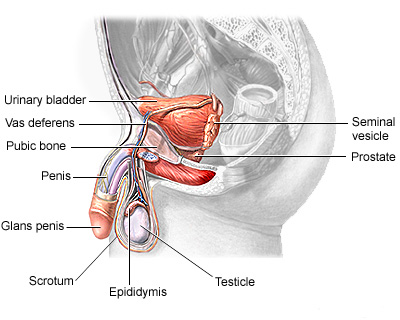
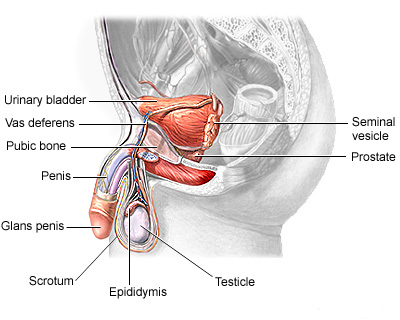
Male reproductive system
Priapism causes abnormally persistent erections not related to sexual stimulation. Priapism symptoms may vary depending on the type of priapism. There are two main types: ischemic and nonischemic priapism.
Ischemic priapism
Ischemic, also called low-flow, priapism is the result of blood not being able to leave the penis. It's the more common type of priapism. Signs and symptoms include:
Unwanted erection lasting more than four hours
Unwanted erection off and on for several hours (stuttering priapism)
Rigid penile shaft, but usually soft tip of penis (glans)
Usually painful or tender penis
Nonischemic priapism
Nonischemic, or high-flow, priapism occurs when too much blood flows into the penis. Nonischemic priapism is usually painless. Signs and symptoms include:
Unwanted erection lasting at least four hours
Erect but not rigid penile shaft
When to see a doctor
If you have an erection lasting longer than four hours, go to the emergency room. If you experience a painful, persistent erection that resolves on its own in less than four hours, see your doctor. You may need treatment to prevent further episodes.
An erection normally occurs in response to physical or psychological stimulation. This stimulation causes certain blood vessels to relax and expand, increasing blood flow to spongy tissues in the penis. Consequently, the blood-filled penis becomes erect. After stimulation ends, the blood flows out, and the penis returns to its nonrigid (flaccid) state.
Priapism occurs when some part of this system — the blood, blood vessels or nerves — changes normal blood flow. Subsequently, an unwanted erection persists. Factors that can contribute to priapism include the following.
Blood disorders, such as Leukemia
Prescription medications, such as antidepressants, blood thinners
Alcohol and drug use
Injury
Other factors, such as Blood clots, Spinal cord injury
In some cases, doctors are unable to identify the specific cause for priapism.
Ischemic priapism can cause serious complications. The blood trapped in the penis is deprived of oxygen. When an erection lasts for longer than four hours, this oxygen-poor blood can begin to damage or destroy tissues in the penis. As a result, untreated priapism may cause:
Erectile dysfunction, the inability of the penis to become or stay erect with sexual arousal
Disfigurement of the penis
If you or your child has experienced a painful, persistent erection that lasted less than four hours, or multiple unwanted, persistent erections (stuttering priapism), see your primary care doctor. If the erection has lasted more than four hours, go to the emergency room.
Your doctor or the emergency room doctor may suggest that you make a follow-up appointment with a specialist in reproductive and urinary organs (urologist).
If you have time before you see your doctor, it's a good idea to prepare for questions the doctor is likely to ask.
What you can do
Write down the symptoms, including any that may seem unrelated to the persistent erections.
Make a list of all medications, as well as any vitamins or supplements, that you're taking. And, let your doctor know if you've taken any nutritional supplements or illegal drugs.
You may also want to prepare a list of questions to ask the doctor:
What is likely causing the persistent erections?
What kind of tests might be needed?
What can be done to prevent this problem in the future?
If medication is necessary, is there a generic alternative?
Are there activities, such as exercise or sex, that should be avoided? If so, for how long?
Does priapism increase the risk of developing erectile dysfunction?
Do you have brochures or can you suggest websites that explain more about priapism?
If other questions occur to you or you don't understand something, don't hesitate to ask questions during your appointment.
What to expect from your doctor
Your doctor is likely to ask a number of questions regarding recurring episodes of persistent erections. Your doctor may ask:
When did your symptoms first start?
How long have the erections lasted?
Were the erections painful?
Have you had an injury to your genitals or groin?
Did the unwanted erections occur after using a particular substance, such as alcohol, marijuana, cocaine or other drugs?
Do you take any prescription medications, including drugs for treating erectile dysfunction? Do you take any herbal or dietary supplements?
Your doctor may also order laboratory tests to determine if a disease or condition is causing priapism.
What you can do in the meantime
Don't stop your prescription medications without consulting your doctor. Don't use any recreational substance that could cause persistent erections.
If you have an erection lasting more than four hours, you need emergency care. The emergency room doctor will determine first whether you have ischemic priapism or nonischemic priapism. This is necessary because the treatment for each is different, and treatment for ischemic priapism needs to be done as soon as possible.
Medical history and exam
To determine what type of priapism you have, your doctor will likely ask numerous questions and examine your genitals, abdomen, groin and perineum. He or she may be able to determine what type of priapism you have based on the rigidity and sensitivity of the penis. This exam may also reveal signs of injury or tumors that could be causing priapism. An injury, for example, would suggest that nonischemic priapism is more likely.
Diagnostic tests
Diagnostic tests may be necessary to determine what type of priapism you have. Additional tests may identify the cause of priapism. In an emergency room setting, your treatment may begin before all test results are received if the doctor is confident about what kind of priapism you have. Diagnostic tests include:
Blood gas measurement. In this test, a tiny needle is inserted into your penis to remove a sample of blood. If the blood is dark — deprived of oxygen — the condition is most likely ischemic priapism. If it's bright red, the priapism is most likely nonischemic. A laboratory test measuring the amounts of certain gases in the blood can confirm the type of priapism.
Blood tests. Your blood can be tested to measure the number of red blood cells and platelets present. Results may provide evidence of diseases, such as sickle cell anemia, other blood disorders or certain cancers.
Ultrasound. You may have color duplex ultrasonography, which uses sound waves to create an image of internal organs. This test can be used to measure blood flow within your penis that would suggest ischemic or nonischemic priapism. The exam may also reveal an injury, tumor or abnormality that may be an underlying cause.
Toxicology test. Your doctor may order a test to screen for illegal or prescription drugs that may be the cause of priapism. This test may be done with blood or urine samples.
Ischemic priapism
Ischemic priapism — the result of blood not being able to exit the penis — is an emergency situation that requires immediate treatment. This treatment usually begins with a combination of draining blood from the penis and using medications.
Aspiration. After your penis is numbed with local anesthetic, excess blood is drained from it, using a small needle and syringe. As part of this procedure, the penile veins may also be flushed with a saline solution. This treatment relieves pain, removes oxygen-poor blood and may stop the erection. This treatment may be repeated until the erection ends.
Medication. A medication called an alpha-adrenergic sympathomimetic, such as phenylephrine, may be injected into the spongy tissue of the penis. This drug constricts blood vessels that carry blood into the penis. This action allows blood vessels that carry blood out of the penis to open up and allow increased blood flow out. This treatment may be repeated over several hours if necessary. There is some risk of side effects, such as headache, dizziness and high blood pressure, particularly if you have high blood pressure or heart disease.
Surgery. If other treatments aren't successful, a surgeon may implant a device that reroutes blood flow (a shunt) so that blood can move through your penis normally.
Additional treatments. If you have sickle cell anemia, you may receive additional treatments that are used to treat disease-related episodes, such as supplemental oxygen or an intravenous solution to keep you hydrated.
Nonischemic priapism
Nonischemic priapism often goes away with no treatment. Because there isn't a risk of damage to the penis, your doctor may suggest a watch-and-wait approach. Putting ice and pressure on the perineum — the region between the base of the penis and the anus — may help end the erection.
Surgery may be necessary in some cases to insert material that temporarily blocks blood flow to the penis. The body eventually absorbs the material. Surgery may also be necessary to repair arteries or tissue damage resulting from an injury.
Depending on the probable cause of the priapism, steps to prevent recurrent priapism may include:
Treating the disease that may have caused priapism
Changing medications if a prescription medication was the probable cause
Avoiding triggers, such as alcohol or illegal drugs
Self-injection of phenylephrine to stop prolonged erections
In an uncircumcised male, the head of the penis is covered by a sheath of skin known as the foreskin. Phimosis is a condition in which the foreskin is tightly stretched around the head of the penis and cannot be pulled back freely. Phimosis can occur naturally. For example, in boys younger than age 4, it is normally hard to pull back the foreskin. However, in older boys and men, phimosis often is triggered by an infection under the foreskin (balanitis) or by other medical conditions such as diabetes.
Paraphimosis occurs when a tight foreskin is pulled back behind the head of the penis and then becomes stuck. It cannot be placed forward again to its usual position covering the tip of the penis. This can cause swelling, pain and loss of blood flow to the tip of the penis. If the foreskin cannot be pushed back into its natural position, serious harm can occur.
Phimosis is usually painless. However, a very tight foreskin may interfere with urination or sexual function. In addition, phimosis may make it difficult for a man to clean under the foreskin, which can make infection of the skin more likely.
Paraphimosis usually results in painful swelling of the foreskin and head of the penis. Severe loss of blood flow to the head of the penis may be signaled by a deep purple color, which usually indicates a medical emergency.
Phimosis may be prevented by good hygiene. This includes fully pulling back the foreskin, so you can clean under it during bathing.
Paraphimosis can be prevented by carefully replacing the foreskin every time it is pulled back. If paraphimosis occurs, circumcision may be recommended to prevent it from happening again.
Phimosis without any symptoms does not require treatment. This is especially true in children. If a boy does not outgrow phimosis or there are problems with urination or hygiene, treatment with certain medicated creams, such as hydrocortisone, may be effective.
In some older boys and men with phimosis, good hygiene and prompt treatment of infections may be all that is needed to prevent problems. In other men, persistent symptoms occur, and corrective surgery (circumcision) needs to be done.
It is an emergency if paraphimosis occurs and the foreskin cannot be pushed back into its normal position. A physician may need to do an emergency procedure to create a slit in the foreskin, or do circumcision.
In most men, phimosis is not a serious problem and will not require treatment. However, it is not expected to improve on its own.
As noted above, paraphimosis is sometimes a medical emergency, and the penis may become permanently damaged if you do not seek immediate medical attention
Smegma, a cheese-like, foul-smelling substance found under the foreskin of the penis may increase the risk of penis cancer.
Uncircumcised men who do not keep the area under the foreskin clean and men with a history of genital wartsor human papillomavirus (HPV) are at higher risk for this rare disorder.
The health care provider will perform a physical exam, which may reveal a non-tender lesion that looks like a pimple or wart. This growth is typically near the end of the penis.
A biopsy of the growth is needed to determine if it is cancer.
Treatment depends on the size and location of the tumor and how much it has spread.
In general, cancer treatment includes:
Chemotherapy -- uses medicines to kill cancer cells
Radiation -- using high powered x-rays to kill cancer cells
Surgery - cuts out and removes the cancer
If the tumor is small or near the tip of the penis, surgery may be done to remove only the cancerous part of the penis. Depending on the exact location, this is called a glansectomy or partial penectomy. Laser surgery may be used to treat some tumors.
For more severe tumors, total removal of the penis (total penectomy) is often necessary. A new opening will be created in the groin area to allow urine to exit the body. This procedure is called a urethrostomy.
Chemotherapy may be used along with surgery. Cisplatin, ifosfamide, and paclitaxel are usually used for treating penile cancer.
Radiation therapy is often recommended in combination with surgery. A type of radiation therapy called external beam therapy is often used. This method delivers radiation to the penis from outside the body. External beam radiation therapy is usually performed 5 days a week for 6 - 8 weeks.
The outcome can be good with early diagnosis and treatment. The 5-year survival rate for penile cancers is 65%. Urination and sexual function can often be maintained even when a significant portion of the penis is removed.
Circumcision may decrease the risk. Men who are not circumcised should be taught at an early age the importance of cleaning beneath the foreskin as part of their personal hygiene.
Good personal hygiene and safer sexual practices, such as abstinence, limiting the number of sexual partners, and use of condoms to prevent HPV infection, may decrease the risk of developing penile cancer.