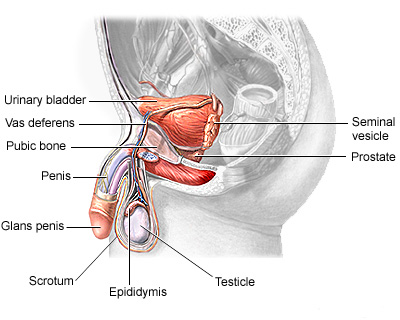
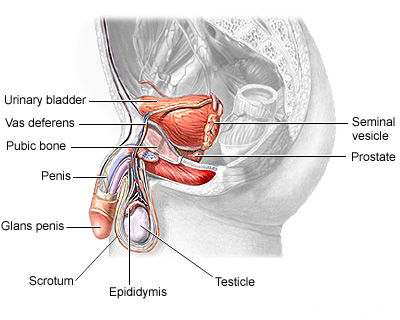
In an uncircumcised male, the head of the penis is covered by a sheath of skin known as the foreskin. Phimosis is a condition in which the foreskin is tightly stretched around the head of the penis and cannot be pulled back freely. Phimosis can occur naturally. For example, in boys younger than age 4, it is normally hard to pull back the foreskin. However, in older boys and men, phimosis often is triggered by an infection under the foreskin (balanitis) or by other medical conditions such as diabetes.
Paraphimosis occurs when a tight foreskin is pulled back behind the head of the penis and then becomes stuck. It cannot be placed forward again to its usual position covering the tip of the penis. This can cause swelling, pain and loss of blood flow to the tip of the penis. If the foreskin cannot be pushed back into its natural position, serious harm can occur.
Phimosis is usually painless. However, a very tight foreskin may interfere with urination or sexual function. In addition, phimosis may make it difficult for a man to clean under the foreskin, which can make infection of the skin more likely.
Paraphimosis usually results in painful swelling of the foreskin and head of the penis. Severe loss of blood flow to the head of the penis may be signaled by a deep purple color, which usually indicates a medical emergency.
Phimosis may be prevented by good hygiene. This includes fully pulling back the foreskin, so you can clean under it during bathing.
Paraphimosis can be prevented by carefully replacing the foreskin every time it is pulled back. If paraphimosis occurs, circumcision may be recommended to prevent it from happening again.
Phimosis without any symptoms does not require treatment. This is especially true in children. If a boy does not outgrow phimosis or there are problems with urination or hygiene, treatment with certain medicated creams, such as hydrocortisone, may be effective.
In some older boys and men with phimosis, good hygiene and prompt treatment of infections may be all that is needed to prevent problems. In other men, persistent symptoms occur, and corrective surgery (circumcision) needs to be done.
It is an emergency if paraphimosis occurs and the foreskin cannot be pushed back into its normal position. A physician may need to do an emergency procedure to create a slit in the foreskin, or do circumcision.
In most men, phimosis is not a serious problem and will not require treatment. However, it is not expected to improve on its own.
As noted above, paraphimosis is sometimes a medical emergency, and the penis may become permanently damaged if you do not seek immediate medical attention
An erection problem is when a man cannot get or keep an erection that is firm enough to have intercourse. You may be unable to get an erection at all. Or, you may lose the erection during intercourse before you are ready.
If the condition continues, it is called erectile dysfunction.
Erection problems are common in adult men. Almost all men sometimes have trouble getting or keeping an erection.
In many cases, the problem goes away with little or no treatment. In other cases, it can be an ongoing problem. If you have trouble getting or keeping an erection more than 25% of the time, it is a problem.
An erection problem that does not go away can damage your self-esteem and harm your relationship with your partner. It needs to be treated.
In the past, erection problems were thought to be "all in the man's mind." Men often were given unhelpful advice such as, "don't worry," or "just relax and it will take care of itself." Today, doctors believe that physical factors often cause erection problems.
One way to know if the cause is physical is whether you have nighttime erections. Normally, men have 3 to 5 erections per night. Each erection lasts for up to 30 minutes. Your doctor can tell you how to find out whether you are having the normal number of nighttime erections. If you have erections in the morning, this can also mean that there is not a physical cause.
Erection problems usually do not affect a man's sex drive.
Having an orgasm too quickly (premature ejaculation) is not the same as impotence. Get counseling with your partner for this problem.
Male infertility is also different from impotence. A man who cannot keep an erection may be able to produce sperm that can fertilize an egg. A man who is infertile can usually keep an erection, but he may not be able to father a child due to problems with sperm.
An erection involves your brain, nerves, hormones, and blood vessels. Anything that interferes with these normal functions can lead to problems getting an erection.
Common causes of erection problems include:
Diseases such as diabetes, high blood pressure, heart or thyroid conditions, poor blood flow, depression, or nervous system disorders (such as multiple sclerosis or Parkinson's disease)
Medicines, including blood pressure medications (especially beta-blockers), heart medications (such as digoxin), some peptic ulcer medications, sleeping pills, and antidepressants
Nerve damage from prostate surgery
Nicotine, alcohol, or cocaine use
Poor communication with your partner
Repeated feelings of doubt and failure
Spinal cord injury
Stress, fear, anxiety, or anger
Unrealistic sexual expectations, which make sex a task instead of a pleasure
Erection problems become more common with age. However, they can affect men at any age. Physical causes are more common in older men. Emotional causes are more common in younger men.
Low levels of testosterone can lead to erection problems. They may also reduce a man's sex drive.
Cut down on smoking, alcohol, and illegal drug use.
Get plenty of rest and take time to relax.
Exercise and eat a healthy diet to keep good blood circulation.
Use safe sex practices to prevent HIV and STDs.
Talk openly to your partner about sex and your relationship. If you cannot do this, counseling can help.
Couples who cannot talk to each other are likely to have problems with sexual intimacy. Men who have trouble talking about their feelings may find it hard to share their anxiety about sexual performance. Counseling can help both you and your partner.
The problem does not go away with lifestyle changes
The problem begins after an injury or prostate surgery
You have other symptoms, such as low back pain, abdominal pain, or a change in urination
If erection problems seem to be caused by a medication you are taking, talk to your health care provider. You may need to lower the dose or change to another drug. Do NOT change or stop taking any medications without first talking to your health care provider.
Talk to your health care provider if your erection problems have to do with a fear of heart problems. Sexual intercourse is usually safe for men with heart problems.
Call your doctor right away or go to an emergency room if the medication you are taking for erection problems gives you an erection that lasts for more than 4 hours.
Nocturnal penile tumescence (NPT) to check for normal nighttime erections
Penile ultrasound to check for blood vessel or blood flow problems
Psychometric testing
Rigidity monitoring
Urine analysis
TREATMENT
The treatment may depend on the cause of the problem. Talk to your health care provider about the best way to treat your erection problem.
There are many treatment options today, including:
Injections into the penis
Medicines inserted into the urethra
Medicines taken by mouth
Surgery
Vacuum devices
Ask your health care provider about the possible side effects and complications of each treatment.
Sildenafil (Viagra), vardenafil (Levitra), and tadalafil (Cialis) are medicines called phosphodiesterase-5 (PDE5) inhibitors. They work only when you are sexually aroused. They usually start to work in 15 to 45 minutes.
These drugs can have side effects, which can range from muscle pain and flushing to heart attack. Do not use these drugs with medications such as nitroglycerin. The combination can cause your blood pressure to drop. Some men have died after taking these drugs with nitroglycerin.
Use PDE5 inhibitors with caution if you have any of the following conditions:
If pills do not work, other treatment options include:
Testosterone replacement using skin patches, gel, or injections into the muscle -- if your testosterone level is low.
A medicine called alprostadil, injected into the penis or inserted into the urethra, improves blood flow to the penis. This usually works better than medications taken by mouth.
A vacuum device can be used to pull blood into the penis. A special rubber band is then used to keep the erection during intercourse.
Many herbs and dietary supplements are marketed to help sexual performance or desire. However, none of these supplements have been proven effective for treating erectile dysfunction, and they may not always be safe.