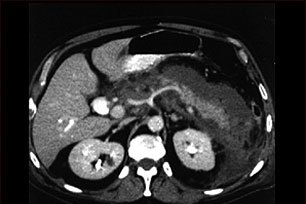
The pancreas is an organ located behind the stomach that produces chemicals called enzymes, as well as the hormones insulin and glucagon. Most of the time, the enzymes are only active after they reach the small intestine, where they are needed to digest food.
When these enzymes somehow become active inside the pancreas, they eat (and digest) the tissue of the pancreas. This causes swelling, bleeding (hemorrhage), and damage to the pancreas and its blood vessels.
Acute pancreatitis affects men more often than women. Certain diseases, surgeries, and habits make you more likely to develop this condition.
The condition is most often caused by alcoholism and alcohol abuse (70% of cases in the United States). Genetics may be a factor in some cases. Sometimes the cause is not known, however.
Other conditions that have been linked to pancreatitis are:
Autoimmune problems (when the immune system attacks the body)
Blockage of the pancreatic duct or common bile duct, the tubes that drain enzymes from the pancreas
Damage to the ducts or pancreas during surgery
High blood levels of a fat called triglycerides (hypertriglyceridemia)
Injury to the pancreas from an accident
Other causes include:
Complications of cystic fibrosis
Hemolytic uremic syndrome
Hyperparathyroidism
Kawasaki disease
Reye syndrome
Use of certain medications (especially estrogens, corticosteroids, thiazide diuretics, and azathioprine)
Viral infections, including mumps, coxsackie B, mycoplasma pneumonia, and campylobacter
Laboratory tests will be done. Tests that show the release of pancreatic enzymes include:
Increased blood amylase level
Increased serum blood lipase level
Increase urine amylase level
Other blood tests that can help diagnose pancreatitis or its complications include:
Complete blood count (CBC)
Comprehensive metabolic panel
Imaging tests that can show inflammation of the pancreas include:
Abdominal CT scan
Abdominal MRI
Abdominal ultrasound
Treatment
Treatment often requires a stay in the hospital and may involve:
Pain medicines
Fluids given through a vein (IV)
Stopping food or fluid by mouth to limit the activity of the pancreas
Occasionally a tube will be inserted through the nose or mouth to remove the contents of the stomach (nasogastric suctioning). This may be done if vomiting or severe pain do not improve, or if a paralyzed bowel (paralytic ileus) develops. The tube will stay in for 1 - 2 days to 1 - 2 weeks.
Treating the condition that caused the problem can prevent repeated attacks.
In some cases, therapy is needed to:
Drain fluid that has collected in or around the pancreas