.

хирургическое вмешательство | zdrav.kz
X

Электрондық поштаңызға соңғы жаңалықтарды алыңыз

X

Получайте самые последние новости на свой e-mail

хирургическое вмешательство

Бұл не? Паронихия - тырнақ айналасындағы тері инфекциясы (саңырауқұлақтық немесебактериальді). Бұл ауру дерматит, псориаз, қанайналу бұзылуы нәтижесінде болуы мүмкін. Ең жиі себебі Candida albicans туысындағы саңырауқұлақтар болып табылады.

Симптомдары қандай? Жедел түрінде қызару немесе ісіну симмтомдары кенеттен дамып, қысқа уақыт аралығына созылады.Созылмалы түрінде симптомдар үзіліссіз немесе кезеңді болуы мүмкін. Созылмалы паронихия – ыдыс жуушы, кір жуушы, бармен және шаштараздардың кәсіптік ауруы. Инфекцияны жұқтыру қолды ұзақ уақыт суда ұстау, жарақат, қырыну, заусеницны кесіп алуы нәтижесінде болуы мүмкін.

Нестеу керек? Аздаған қызару мен ісінуді үй жағдайында мұқият тазалау арқылы кетіруге болады. Кей жағдайда антибиотиктермен немесе саңырауқұлаққа қарсы заттармен емдеуді қажет етеді. Кейде кішігірім хирургиялық ем жасауға-зақымдалған аймақты дренаждау үшін дәрігер көмегі керек.

Тері күтімін дұрыс жүргізу үшін тұрғылықты жеріңіз бойынша тері ауруларының маманына жолығыңыз.

Аударған: Тилеубергенова Гулжазира Таңатарқызы

Contents

Introduction. 

Symptoms of pericarditis

Causes of pericarditis

Diagnosing pericarditis

Treating pericarditis

Complications of pericarditis


Introduction 

Pericarditis is swelling of the pericardium, which is the fluid-filled sac surrounding your heart.

The main symptom of pericarditis is chest pain. This can be a sudden, sharp and stabbing pain behind your breastbone or more of a dull ache. The pain is often worse when lying down or breathing in, and better when sitting up.

Pericarditis is not usually a serious condition and may be treated on an outpatient basis, so you don't have to be admitted to hospital.

Read more about the symptoms of pericarditis.

Types of pericarditis

There are three main types of pericarditis:

  • acute pericarditis – where the symptoms last less than three months (with treatment, symptoms normally resolve within a week) and often appear after flu-like symptoms
  • recurring pericarditis – where someone has repeated episodes of acute pericarditis
  • chronic pericarditis – a complication of pericarditis, where the symptoms last longer than three months

Why does pericarditis happen?

In most cases of pericarditis, no cause is identified. However, an infection is usually thought to be responsible.

Other things that may cause pericarditis include chest injury, some cancers and some treatments, such as radiotherapy or chemotherapy.

Problems with the body's immune system may also play a role in recurring and chronic pericarditis.

Read more about the causes of pericarditis.

How is pericarditis treated?

Acute pericarditis can usually be treated with medication to reduce swelling, such as non-steroidal anti-inflammatory drugs (NSAIDs), although antibiotics may be used if there is a bacterial infection.

A medication called colchicine is often used for recurring pericarditis, as it can prevent symptoms returning.

Treatment for chronic pericarditis will depend on the underlying cause. Some cases respond well to medication, while others may require surgery.

Read more about treating pericarditis.

Cardiac tamponade

In rare cases, pericarditis can trigger a serious complication known as cardiac tamponade. This is an excess build-up of fluid inside the pericardium. The extra fluid places too much pressure on the heart, so it is unable to beat properly.

Cardiac tamponade can cause symptoms such as:

  • light-headedness
  • blurred vision
  • palpitations
  • nausea

Cardiac tamponade also often occurs alongside inflammation of the heart muscle (myocarditis). This causes pain that feels like pressure on the chest, similar to a heart attack.

Cardiac tamponade is life-threatening and requires emergency treatment. If you have a history of pericarditis and develop the symptoms listed above, call 999 and ask for an ambulance.

Read more about the complications of pericarditis.

Who is affected?

Pericarditis is a relatively common heart condition. Around 5% of all admissions to accident and emergency (A&E) departments for severe chest pain are diagnosed as pericarditis.

Pericarditis tends to be more common in men than women. It can affect people of all ages, but mostly occurs in young adults.

Symptoms of pericarditis 

The most common symptom of all types of pericarditis is chest pain.

Most people who have had pericarditis describe experiencing a sudden sharp pain, usually behind their breastbone, on the left side of their body. Some people describe the pain as more like a dull ache or feeling of pressure.

The pain may also radiate up from your chest into your left shoulder and neck.

It's usually worse when breathing in, coughing, eating and lying down. Sitting up or leaning forward will usually help relieve the pain.

When to seek medical advice

Always seek immediate medical advice if you experience sudden chest pain chest pain. While most cases of pericarditis are not serious, it's important that other more serious conditions are ruled out, such as a heart attack or a blood clot.

Visit your local accident and emergency (A&E) department or telephone NHS 111 as soon as possible.

Additional symptoms

Depending on the underlying cause of your pericarditis, you may also experience:

  • a high temperature (fever) 
  • shortness of breath
  • fatigue
  • nausea
  • dry cough
  • swelling of the legs or abdomen

In some cases, pericarditis occurs along with myocarditis, which is inflammation of the heart muscle.

If these symptoms only occur for a short time or a one-off episode, it's called "acute pericarditis". However, if they last three months or more, it's known as "chronic pericarditis".

Read about the complications of pericarditis for more information.

Recurring pericarditis

Recurring pericarditis is when you experience frequent episodes of pericarditis.

There are two main types of recurring pericarditis:

  • Incessant pericarditis – symptoms develop once medications such as non-steroidal anti-inflammatory drugs (NSAIDs) are withdrawn. Symptoms usually begin within six weeks of the treatment being withdrawn.
  • Intermittent pericarditis – there are long periods without any symptoms (often many months or sometimes years) before symptoms return without warning.

It's estimated that one in four people with a history of acute pericarditis will develop recurring pericarditis.

Causes of pericarditis 

It's not always clear what causes pericarditis, although a viral infection is usually suspected.

In around 90% of acute pericarditis cases, no obvious cause can be found to explain why the pericardium has become inflamed. This is known as idiopathic pericarditis. 

Many cases are thought to be the result of viral infections, which can't be detected.

Viral infections

Viral infections associated with acute pericarditis include:

Other causes

Other less common causes of acute pericarditis include:

  • bacterial infection, particularly tuberculosis
  • autoimmune conditions such as rheumatoid arthritis or lupus, where the immune system attacks healthy tissues
  • radiotherapy – the radiation used in radiotherapy can damage the tissue of the pericardium, and breast cancer or lung cancer patients may be at particular risk
  • kidney failure – exactly why kidney failure causes acute pericarditis is unclear
  • underactive thyroid gland (hypothyroidism) – exactly why hypothyroidism causes acute pericarditis is unclear
  • cancer – cancer that spreads from other parts of the body to the pericardium can damage tissue
  • heart attacks – pericarditis can sometimes develop after a heart attack, as damaged heart muscles can irritate the pericardium
  • injury or irritation to the tissue of the pericardium that occurs during heart surgery
  • severe injury to the chest – for example, following a car accident
  • some medications, such as penicillin or some chemotherapy medicines, have been known to trigger acute pericarditis as a side effect in some people

Recurring pericarditis

The cause of recurring pericarditis is still unknown.

One theory suggests that your immune system may be responsible. Your immune system reacts months or even years after the initial infection that caused acute pericarditis and attacks the heart, leading to inflammation of the pericardium.

Another theory suggests that fragments of the virus may lay inactive in the tissue of the pericardium and suddenly reactivate, triggering the process of inflammation.

People treated with steroids during their first episode of acute pericarditis are six times more likely to develop recurring pericarditis than people who don't receive this treatment. Because of this, steroids are used as a last resort, if you fail to respond to other medications.

Diagnosing pericarditis 

Your doctor will ask about your symptoms and recent medical history, such as whether you've recently had a chest infection or been in an accident.

They will listen to your heart with a stethoscope, as pericarditis can change the sound of your heartbeat to a distinctive rasping or grating sound.

You may have blood tests to check for infections and how organs such as your liver and kidneys are functioning.

In some cases, a needle may be used to drain any fluid from around your heart, so it can be tested.

A diagnosis is usually confirmed by electrocardiogram (ECG). During an ECG, electrodes are placed on your skin to measure the electrical activity of your heart.

People with pericarditis usually experience a distinctive change in the electrical activity of the heart, which can be detected with an ECG.

Further testing

Further testing is usually only required if other tests prove negative or you have additional symptoms not normally associated with pericarditis, such as swelling of the arms and legs or extreme tiredness.

These tests may include:

Treating pericarditis 

Pericarditis is usually treated with medication, although surgery is used in rare cases.

You will be assessed to see whether it's safe for you to be treated at home.

You will usually be admitted to hospital if:

  • you have a high temperature (fever) of 38C (100.4F) or above
  • you have a high number of white blood cells – this could be the result of a serious infection
  • your symptoms develop after a sudden injury to your chest
  • you take blood-thinning medication (anticoagulants)
  • blood tests show you have high levels of a type of protein called troponin in your blood (this can be the result of damage to the heart muscle)
  • there is a risk of you developing cardiac tamponade, a serious complication of pericarditis caused by a build-up of fluid around the heart

You may also be admitted to hospital if treatment doesn't work.

Non-steroidal anti-inflammatory drugs (NSAIDs)

Most cases of pericarditis can be successfully treated with non-steroidal anti-inflammatory drugs (NSAIDs). NSAIDs work by reducing the inflammation of the pericardium, and also relieve the chest pain.

Ibuprofen is the preferred choice of NSAID. The exception is if you've recently had a heart attack, as ibuprofen can interfere with the healing of your heart. In such circumstances, high-dose aspirin will usually be recommended.

As NSAIDs can occasionally cause stomach ulcers, you will probably be prescribed an additional medication called a proton pump inhibitor that provides protection against stomach ulcers.

Colchicine

Colchicine is a medicine that can be used on its own or in combination with NSAIDs.

It's often used if your symptoms fail to respond to NSAIDs or you are unable to take NSAIDs because of a pre-existing medical condition. 

Colchicine is useful because it can reduce inflammation of the pericardium by killing certain cells.

Side effects of colchicine include:

  • abdominal pain
  • vomiting
  • diarrhoea

These side effects usually improve once your body gets used to the medication.

Colchicine does not currently have a licence to be used to treat pericarditis in the UK. However, studies have shown that colchicine can be effective in treating pericarditis, so you may still be prescribed it if the benefits outweigh any potential risks.

Corticosteroids

Corticosteroids are usually only given when the symptoms of pericarditis fail to respond to NSAIDs and colchicine, or there is a build-up of fluid inside the pericardium, which could put the heart at risk.

Corticosteroids block the effects of the immune system, leading to a reduction in inflammation.

Corticosteroids are powerful medicines and can have a range of side effects, especially if used for a long period of time.

Side effects of corticosteroids include:

  • weight gain
  • mood swings
  • increased sweating

Other treatments

Treatment for pericarditis is different if it's not caused by a viral infection. For example, if your pericarditis is caused by a bacterial infection, such as tuberculosisantibiotics are used.

In some cases, the fluid that builds up around the heart may be drained with a needle during a procedure called pericardiocentesis. However, this is usually only used if you develop complications of pericarditis.

Recurring pericarditis

NSAIDs can be used to relieve symptoms of an episode of pericarditis, while a long-term course of colchicine has proved effective in preventing symptoms returning.

If symptoms persist, then a short-course of steroid medication may be recommended.

If your symptoms are particularly severe and not responding to medication, a type of surgery known as pericardiectomy may be recommended.

This involves the surgeon making a large incision in your chest and removing some or all of your pericardium.

A pericardiectomy is usually regarded as a last resort, as the surgery is relatively risky – there is an estimated 1 in 20 chance of it causing death.

Complications of pericarditis 

In rare cases, pericarditis can develop into further problems, some of which can be life-threatening.

Chronic pericarditis

Chronic pericarditis is defined as pericarditis that persists for more than three months.

There are two main types of chronic pericarditis:

  • chronic effusive pericarditis – when an excess of fluid gathers in the space inside the pericardium
  • chronic constrictive pericarditis – the tissue of the pericardium becomes hardened through scarring

Chronic effusive pericarditis

It's hard to estimate exactly how widespread chronic effusive pericarditis is, as most cases do not cause any noticeable symptoms. One study estimated that 1 in 20 older adults have some degree of fluid build-up inside their pericardium.

It can cause the following symptoms:

  • chest pain
  • light-headedness
  • shortness of breath

Possible causes of chronic effusive pericarditis include:

  • infections – such as hepatitis or tuberculosis
  • cancers that spread from other parts of the body to the pericardium
  • damage or injury that occurs during surgery

However, no obvious cause can be found in many cases.

Medications such as non-steroidal anti-inflammatory drugs (NSAIDs) are the first treatment tried.

If medication doesn't work, surgery may be recommended. Chronic effusive pericarditis can be treated with a surgical technique called a pericardiocentesis.

During a pericardiocentesis, a thin plastic tube known as a catheter is passed through the chest and guided into the pericardium. The catheter then drains away the excess fluid.

local anaesthetic is used to numb the skin of your chest so you will not feel any pain during the procedure.

Chronic constrictive pericarditis

It is estimated that 1 in 10 people with a history of acute pericarditis will go on to develop chronic constrictive pericarditis.

The most common symptom of chronic constrictive pericarditis is shortness of breath.

Other symptoms include:

  • fatigue
  • abdominal pain and swelling
  • nausea and vomiting

Possible causes of chronic constrictive pericarditis include:

  • infections – most often bacterial infections, such as tuberculosis
  • complications of radiotherapy
  • damage or injury that occurs during surgery

However, no obvious cause can be found in most cases.

Chronic constrictive pericarditis tends not to respond well to medication, and surgery to remove the pericardium (pericardiectomy) is usually the only cure.

However, this type of surgery carries a 1 in 20 risk of causing death, so surgery would only usually be recommended if your symptoms were having a significant adverse effect on your quality of life.

Cardiac tamponade

In a very small number of cases, inflammation of the pericardium can lead to a large build-up of fluid inside the pericardium. The extra fluid puts the heart under pressure, which makes it unable to pump blood around the body effectively. This is known as cardiac tamponade.

Cardiac tamponade is a potential complication in all cases of pericarditis, but is more common in cases where pericarditis has been caused by tuberculosis or cancer.

If the heart cannot pump blood at the normal level, blood pressure can drop and cause:

  • light-headedness
  • blurred vision
  • palpitations
  • confusion
  • nausea
  • general weakness
  • a temporary loss of consciousness

These symptoms can develop very quickly, sometimes within minutes.

Cardiac tamponade is life-threatening and requires emergency treatment. If you have a history of pericarditis and develop the symptoms listed above, call Emergency and ask for an ambulance.

Cardiac tamponade is usually treated with a pericardiocentesis.


Source http://www.nhs.uk/Conditions/Pericarditis/Pages/Introduction.aspx

Contents

What Is Paronychia?

What Causes Paronychia?

What Are the Signs of Paronychia?

What Should You Do?

What Do Doctors Do?

Can Paronychia Be Prevented?


What Is Paronychia?

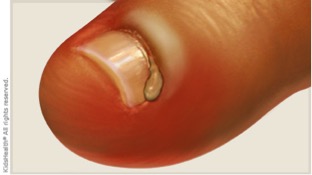
Paronychia (pronounced: pair-uh-NIK-ee-uh) is an infection of the skin around a fingernail or toenail. The infected area can get swollen, red, and painful. Sometimes a pus-filled blister may form.

Most of the time, paronychia is no big deal and can be treated at home. In rare cases, the infection can spread to the rest of the finger or toe. When that happens, it can lead to bigger problems that may need a doctor's help.

You're not likely to get paronychia in a toe (unless you have an ingrown toenail). But fingernail paronychia is one of the most common hand infections there is.

Description: illustration

What Causes Paronychia?

Paronychia usually happens when the skin around a person's nail is irritated or injured. When the skin around the nail is damaged, germs can get in and cause an infection. These germs can be bacteria (causing bacterial paronychia) or fungi (causing fungal paronychia).

Common paronychia causes include:

·       biting or pulling off a hangnail

·       frequent sucking on a finger

·       clipping a nail too short or trimming the cuticle (the skin around the sides and bottom of the nail)

·       getting manicures

·       having hands in water a lot (as from a job washing dishes in a restaurant)

Some people get paronychia infections after a manicure or using from chemicals in the glue used with artificial nails. Certain health conditions (like diabetes) also can make paronychia more likely. And if your hands are in water a lot (if you wash dishes at a restaurant, for example), that ups the chances of getting paronychia.

What Are the Signs of Paronychia?

Chances are, if you have paronychia, it will be easy to recognize. There will be an area of skin around a nail that is painful and tender when you touch it. The area probably will be red and swollen and feel warm. You may see a pus-filled blister.

If the paronychia has been there a long time, the nail may turn a different color. It might not be its usual shape or might look as if it's coming away from the nail bed.

What Should You Do?

If paronychia is mild and hasn't started to spread beyond the fingernail, you can probably treat it at home. Soak the infected nail in warm water for 20 minutes a few times a day. The infection will probably heal on its own in a few days.

If paronychia doesn't get better after a week or so, call your doctor. You'll want to call a doctor right away if you have an abscess (a pus-filled area in the skin or under the nail) or if it looks like the infection has spread beyond the area of the nail.

If paronychia becomes severe and you don't see a doctor, infection can spread through the finger or toe and move into the rest of the body. Luckily, this is very rare.

What Do Doctors Do?

Usually, a doctor or nurse practitioner will be able to diagnose paronychia just by examining the infected area. In some cases, a doctor may take a pus sample to be examined in a laboratory to determine what type of germ is causing the infection.

If you have diabetes, let your doctor know if you notice any signs of paronychia, even if it seems mild.

Don't try to puncture or cut into an abscess yourself. Doing that can lead to a more serious infection or other complications. The doctor may need to drain the abscess and possibly prescribe antibiotic medications to treat the infection. Once an abscess is treated, the finger or toe almost always heals very quickly.

If someone has fungal paronychia, a doctor may prescribe antifungal creams, lotions, or other medicines.

Can Paronychia Be Prevented?

Here are some things that can lessen your chances of developing paronychia:

·       Don't bite your nails or pick at the cuticle area around them.

·       Don't cut nails too short. Trim your fingernails and toenails with clippers or manicure scissors, and smooth the sharp corners with an emery board or nail file. The best time to do this is after a bath or shower, when your nails are softer.

·       Don't push your cuticles back, trim them, or use cuticle remover. Damaging your cuticles gives bacteria a way to get into your skin and cause an infection.

·       If you'll be washing a lot of dishes or if your hands might be coming into contact with chemicals, wear rubber gloves.

·       If you have diabetes, make sure it is under control.

·       Practice good hygiene: keep your hands and feet clean and dry.

·       If you get manicures or pedicures at a nail salon, consider bringing along your own clippers, nail files, and other tools.

As much as possible, try to avoid injuring your nails and the skin around them. Nails grow slowly. Any damage to them can last a long time.


Source http://kidshealth.org/en/teens/paronychia.html#

Курение перед операцией повышает риск смертельного исхода

Прекращение такой вредной привычки как курение может принести колоссальную пользу вашему организму и поспособствовать выздоровлению после перенесенной операции.

Что это такое? Перикардит – это воспаление перикарда - мешочка, окружающего и защищающего сердце. Перикардит может стать причиной аномального образования жидкости между перикардием и сердцем (перикардический выпот).

Причина перикардита. Наиболее распространенной причиной перикардита является заражение вирусом. Другой важной причиной является инфаркт миокарда, а также ревматическое поражение сердца. Перикардит может явиться результатом бактериальной инфекции – ревматического поражения сердца, сифилисатуберкулеза, а также заражение простейшими и грибками. Уремия, связанная с накоплением мочевины из-за почечной недостаточности также может вести к перикардиту. Радиотерапиярак и операции  на сердце также могут явиться причиной перикардита.

Симптомами перикардита являются: сильная внезапная боль в центре или с левой стороны груди, которая может распространиться на шею, спину, плечи и руки. Глубокое дыхание, движения или лежание часто усиливают боль. Сидячее положение и наклон вперед могут ослабить боль. 
Другие симптомы – незначительное повышение температуры, общее чувство слабости или усталости, депрессия и незначительное помутнение сознания.

Диагностика перикардита проводится при помощи электрокардиографии (ЭКГ). Рентгенологическое исследование позволяет установить жидкость в перикарде. Лечение перикардита может включать лекарственные препараты, уменьшающие воспаление и ослабляющие боль, а в случае бактериальной инфекции – антибиотики. Если имеет место скопление жидкости – то рекомендуется ее удалять (дренировать).

Последствия. Перикардит часто проходит, не нанося вреда  сердцу. Однако, если скопление жидкости при перикардите происходит быстро, то давление на сердце редко увеличиваться, вызывая так называемую тампонаду сердца, при которой сердце может отказать. Острый перикардит может оставлять после себя рубцы, которые мешают нормальной сердечной деятельности. Такое состояние называется хроническим констриктивным перикардитом, который часто требует хирургических вмешательств.


Что это такое? Паронихия – это инфекция (грибковая или бактериальная) кожи вокруг ногтя. Она может явиться следствием инфекции, нарушенной циркуляции кровипсориаза или дерматита. Частой причиной является грибок рода Candida albicans.

Каковы симптомы? В острых случаях симптомы покраснения или отека могут возникнуть внезапно и длиться короткий промежуток времени. В хронических случаях симптомы могут быть непрерывными, либо проявляться периодически. Хроническая паронихия является профессиональным заболеванием посудомоек, прачек, барменов и парикмахеров. Дело в том, что инфицирование может произойти при частом держании рук в воде, либо в результате травмы, например при бритье, порезе заусеницы и т.д.

Что необходимо предпринять? Незначительные покраснения или опухания могут исчезнуть благодаря осторожной очистке зоны поражения, что можно сделать в домашних условиях. В некоторых случаях требуется лечение местными антибиотиками или противогрибковыми средствами. Иногда может потребоваться, чтобы врач произвел небольшое хирургическое вмешательство  - дренирование пораженной области.

Обратитесь к специалисту по кожным заболеваниям по месту жительства для того, чтобы узнать как правильно обработать кожу или обсудить необходимы ли более серьезные вмешательства.


В национальном центре кардиохирургии было имплантировано вспомогательное устройство левого желудочка сердца - искусственное сердце.

Пациентом стал 42-летний Марат Шымбалов, простой строитель, который в последнее время из-за недомогания работал сторожем. Мы ожидаем, что Марат, если все пройдет без осложнений, будет вести обычный образ жизни, свободно общаться, ездить на природу и заниматься любимым трудом.