Fevers are a sign that the body is fighting germs that cause infection. If your child is between 3 months of age and 3 years of age and has a low-grade fever (up 38.8°C), you may want to avoid giving him or her medicine. If your child is achy and fussy, and his or her temperature is above 38.8°C, you may want to give him or her some medicine.
If your baby is younger than 3 months of age and has a temperature of 38°C or higher, call the doctor or go to the emergency room right away. A fever can be a sign of a serious infection in young babies.
What kind of medicine should I give my child, and how much?
Do not give any medicine to babies who are younger than 2 months of age without talking to your doctor first.
Acetaminophen relieves pain and lowers fever. Check the package label or ask your doctor about the correct dosage for your child. The correct dosage depends on your child’s weight and age.
Ibuprofen is another medicine that can be used to lower a fever in children older than 6 months of age. Talk to your doctor before giving ibuprofe to your child. Your doctor will tell you the correct dose for your child.
Tips on giving medicine
Don't give more than 5 doses in 1 day.
Don't give a baby younger than 2 months of age any medicine unless your doctor tells you to.
Read package labels carefully. Make sure you are giving your child the right amount of medicine.
For liquid medicines, use a special liquid measuring device to be sure you give the right dose. Get one at your drug store or ask your pharmacist. An ordinary kitchen teaspoon may not hold the right amount of medicine.
Can I give my child aspirin to lower his or her fever?
No. In rare cases, aspirin can cause Reye's syndrome in children. Reye's syndrome is a serious illness that can lead to death. Doctors recommend that parents should not give aspirin to children younger than 18 years of age.
What else can I do to help my child feel better?
Give your child plenty of fluids to drink to prevent dehydration (not enough fluid in the body) and help the body cool itself. Water, clear soups, popsicles and flavored gelatin are good choices.
If your child is getting enough fluids, don’t force him or her to eat if he or she doesn’t feel like it.
Make sure your child gets plenty of rest.
Keep the room temperature at about 21 – 230C
Dress your child in light cotton pajamas. Overdressing can trap body heat and cause your child's temperature to rise.
If your child has chills, give him or her an extra blanket. Remove it when the chills stop.
Will a bath help lower my child's fever?
Giving your child acetaminophen and a lukewarm bath may help lower his or her fever. Give the acetaminophen before the bath. If the bath is given without medicine, your child may start shivering as his or her body tries to raise its temperature again. This may make your child feel worse. Never use rubbing alcohol or cold water for baths.
Scarlet fever results from group A strep infection. If your child has a sore throat and rash, their doctor can test for strep. Quick treatment with antibiotics can protect your child from possible long-term health problems.
Scarlet fever – or scarlatina – is a bacterial infection caused by group AStreptococcus or "group A strep." This illness affects a small percentage of people who have strep throat or, less commonly, streptococcal skin infections. Scarlet fever is treatable with antibiotics and usually is a mild illness, but it needs to be treated to prevent rare but serious long-term health problems. Treatment with antibiotics also helps clear up symptoms faster and reduces spread to other people.
Although anyone can get scarlet fever, it usually affects children between 5 and 12 years of age. The classic symptom of the disease is a certain type of red rash that feels rough, like sandpaper.
How Do You Get Scarlet Fever?
Group A strep bacteria can live in a person's nose and throat. The bacteria are spread through contact with droplets from an infected person's cough or sneeze. If you touch your mouth, nose, or eyes after touching something that has these droplets on it, you may become ill. If you drink from the same glass or eat from the same plate as the sick person, you could also become ill. It is possible to get scarlet fever from contact with sores from group A strep skin infections.
Illness usually begins with a fever and sore throat. There also may be chills, vomiting, and abdominal pain. The tongue may have a whitish coating and appear swollen. It may also have a "strawberry"-like (red and bumpy) appearance. The throat and tonsils may be very red and sore, and swallowing may be painful.
One or two days after the illness begins, the characteristic red rash appears (although the rash can appear before illness or up to 7 days later). Certain strep bacteria produce a toxin (poison) which causes some people to break out in the rash—the "scarlet" of scarlet fever. The rash may first appear on the neck, underarm, and groin, then spread over the body. Typically, the rash begins as small, flat red blotches which gradually become fine bumps and feel like sandpaper.
Although the cheeks might have a flushed appearance, there may be a pale area around the mouth. Underarm, elbow and groin skin creases may become brighter red than the rest of the rash. These are called Pastia's lines. The scarlet fever rash generally fades in about 7 days. As the rash fades, the skin may peel around the finger tips, toes, and groin area. This peeling can last up to several weeks.
Scarlet fever is treatable with antibiotics. Since either viruses or other bacteria can also cause sore throats, it's important to ask the doctor about a strep test (a simple swab of the throat) if your child complains of havin g a sore throat. If the test is positive, meaning your child is infected with group A strep bacteria, your child's doctor will prescribe antibiotics to avoid possible, although rare, long-term health problems, reduce symptoms, and prevent further spread of the disease.
It is important for anyone with a sore throat to wash his or her hands often.
Long-term Health Problems from Scarlet Fever
Long-term health problems from scarlet fever may include:
Rheumatic fever (an inflammatory disease that can affect the heart, joints, skin, and brain)
Kidney disease (inflammation of the kidneys, called poststreptococcal glomerulonephritis)
The best way to keep from getting infected is to wash your hands often and avoid sharing eating utensils, linens, towels or other personal items. It is especially important for anyone with a sore throat to wash his or her hands often. There is no vaccine to prevent strep throat or scarlet fever. Children with scarlet fever or strep throat should stay home from school or daycare for at least 24 hours after starting antibiotics
People get traveler's diarrhea by eating food and drinking water that contain germs. People can get this illness in areas of the world where the drinking water is not clean.
People who live these areas often drink tap water that contains these germs, but they do not get diarrhea. This is because their bodies are used to the germs. In the same way, cooks and food handlers may have the germs that cause traveler's diarrhea on their hands, but they may not get sick themselves. When people travel to a new place, they are more likely to become sick, because they lack protective antibodies (infection-fighting agents in the blood) that attack these germs.
How can I tell if I have traveler's diarrhea?
You may have traveler's diarrhea if you have at least 3 loose stools in 24 hours. You may also have one or more of the following symptoms:
Even if you don't treat traveler's diarrhea, it will usually go away in 4 to 5 days. You should drink plenty of clear liquids to replace lost fluids due to the diarrhea. Taking medicine to treat traveler's diarrhea may make you feel better more quickly. It often is treated with antibiotics (medicines that kill bacteria). To get antibiotics, you need a prescription from your doctor.
You also can take a medicine called loperamide (brand name: Imodium). However, if you have bloody diarrhea, you should not take this medicine without also taking an antibiotic.
Children, pregnant women, older adults and other people who get dehydrated easily should drink rehydration solutions. Rehydration solutions help replace the fluid you lose while you are sick. You can buy packets of rehydration salts (to be mixed with safe water) at camping/outdoor stores or drug stores.
When should I contact my doctor?
If your child has a fever higher than 102°F, is dehydrated, has blood in the stool or vomits several times, he or she should see a doctor right away.
If treating your traveler's diarrhea isn't helping you to feel better, talk to your doctor.
How can I avoid traveler's diarrhea?
When you will be traveling to an area where the water may not be clean, see your doctor 4 to 6 weeks before your trip. Your doctor may want to give you some medicines, such as antibiotics or shots, to protect you from illness while you are away. During your trip, be careful about the following things:
Do not drink tap water and do not use it to brush your teeth.
Do not drink bottled water if the seal on the bottle has been broken.
Do not use ice unless you're sure it's made from purified water.
Do not drink milk or eat dairy products that have not been pasteurized (heated to a temperature that kills all germs).
Do not eat raw fruits or vegetables unless they can be peeled and you are the one who peels them.
Do not eat cut-up fruit salad.
Do not eat lettuce or other leafy raw vegetables (such as spinach).
Do not eat raw or rare (slightly cooked) meat or fish.
Do not eat food from people who sell it on the street.
Boiling water will kill the germs that cause diarrhea, making the water safe to drink. Boil water vigorously for 1 minute and allow it to cool to room temperature (do not add ice). When traveling in high altitudes (6,562 feet or higher), boil water for 3 minutes.
What is safe to eat or drink?
When you are in a place where you could get traveler's diarrhea, it is probably safe to eat or drink the following:
Soft drinks that are carbonated (such as cola).
Hot drinks, such as tea or coffee.
Carbonated or noncarbonated bottled water, as long as you are the one who breaks the seal on the bottle.
Raw fruits or vegetables that can be peeled, as long as you are the one who peels them.
Food that is served hot.
Meat that is well cooked.
Questions to Ask Your Doctor
Is there medicine I can take to prevent traveler’s diarrhea?
Is traveler’s diarrhea common in the country I’m traveling to?
If I get traveler’s diarrhea, who should I contact and when?
The human immunodeficiency virus (HIV) attacks the body's immune system. A healthy immune system is what keeps you from getting sick.
Because HIV damages your immune system, you are more likely to get sick from bacteria and viruses. It is also harder for your body to fight off these infections when you do get them, so you may have trouble getting better. HIV is the condition that leads to acquired immunodeficiency syndrome (AIDS).
What is AIDS?
AIDS is a progression of HIV. When HIV moves into its final stages, it is considered to be AIDS. People who have AIDS are at an even higher risk of getting sick, and their bodies are even less able to fight off infections than people who have HIV. They usually die of an infection or cancer.
What is HIV syndrome?
HIV syndrome is a name for the early stage of HIV infection, when a person is first infected with HIV.
What happens after a person gets HIV?
After being infected with HIV, your body works hard to attack the virus. With your body fighting, the virus can't make as many copies of itself. Even though you still have HIV, you'll begin to look well and feel well again. The usual blood tests will be normal.
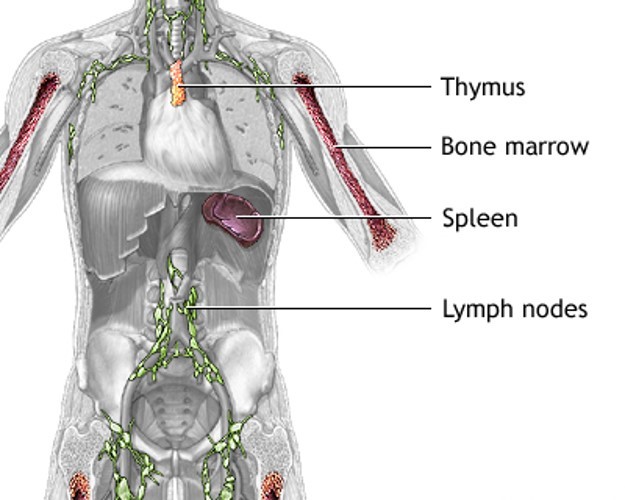
However, during this time, the virus is still attacking your lymph nodes. Lymph nodes are the centers of your body's immune system. The virus may also attack your brain tissue and slowly cause damage there.
Over 10 to 15 years, HIV kills so many CD4 cells that your body can no longer fight off infections. When your CD4 cell count is 200 or less per mL, you have AIDS (a normal count is 600 to 1000). Once you have AIDS, you can easily catch many serious infections.
Symptoms
What are the symptoms of HIV syndrome?
When first infected with HIV, a person may not experience any symptoms. However, often a person will develop flu-like symptoms that last several weeks. These include:
Fever
Headache
Fatigue
Swollen lymph nodes (lymph glands)
Sore throat
Rash
If you have recently been infected with HIV, you might not realize it. The person you caught HIV from may not look or feel sick. And the signs and symptoms of HIV infection are similar to other illnesses, such as mononucleosis (mono), tonsillitis or the flu.
What are the symptoms of HIV?
As the disease progresses, symptoms may appear and/or get worse. This may take time. Some people who have HIV do not begin experiencing symptoms for up to 10 years. When symptoms do appear, they can include:
Swollen lymph nodes (lymph glands)
Diarrhea
Fever
Cough
Shortness of breath
Unintended weight loss
Is HIV infection different in women and men?
HIV infection is mostly the same for men and women. For a long time after becoming infected, the person seems healthy. Over many years, the person's immune system gradually becomes weaker until it is unable to fight off other infections.
The difference between men and women is that HIV-infected women often have additional problems such as repeated vaginal yeast infections, especially as the immune system becomes weaker. More serious infections, such as pelvic inflammatory disease (an infection of a woman's internal reproductive organs), can be harder to treat. Diseases of the cervix, such as precancer (dysplasia) and cancer, progress faster. They can be harder to treat if a woman has HIV.
Causes & Risk Factors
How can I get HIV?
HIV can only be passed from person to person through body fluids, such as blood, semen and vaginal fluid. Children born to infected mothers can also become infected during pregnancy. The most common ways HIV is passed are:
By having unprotected anal, vaginal or oral sex with an infected person.
By sharing needles and syringes for injecting drugs with an infected person.
More than half of women who have HIV got the infection from sexual partners. A woman can be infected by contact with a man or contact with another woman. When a woman has sex with an infected man, she has a high risk of getting HIV if a condom is not used properly.
Who is at risk for HIV infection?
In the early days of the AIDS epidemic, HIV infection appeared to be confined to certain groups, including intravenous drug users, men who have sex with other men and persons who have hemophilia (a blood-clotting disease that requires treatment with frequent blood transfusions). People who have hemophilia got HIV from receiving blood transfusions with donated blood that contained HIV. Blood donations are now tested for HIV, and HIV-infected blood donations are destroyed.
These days, HIV infection is much more widespread. Here is a list of people who are at high risk of HIV infection:
Men who have sex with other men.
Anyone who has multiple sex partners.
Anyone who has sex with a prostitute.
Anyone who shares needles using illegal injected drugs.
Anyone who exchanges sex for drugs or money.
Anyone who has a sexually transmitted disease.
Anyone who has had or currently has a sexual partner with any of the above risk factors.
How do babies get HIV from their mothers?
Babies can get HIV infection from their mothers during pregnancy, during the birth process and during breastfeeding.
It is now possible to prevent many cases of HIV in children by giving medicines to the pregnant mother and to her newborn baby. This protection cannot be offered if a pregnant woman does not know she is infected. Many people who have HIV infection feel perfectly healthy at first. The only way to know if you are infected is to have an HIV test. If you are pregnant, ask your doctor for an HIV test as part of your prenatal care. Better yet, if you are thinking about getting pregnant, talk to your doctor about HIV tests for you and your partner.
What contact is safe?
HIV can't live very long outside the body, so you can't get it through casual contact. You can't get the virus by touching, shaking hands, hugging, swimming in a public pool, giving blood, or using hot tubs, public toilets, telephones, doorknobs or water fountains. You also can't get it from food, mosquitoes or other insects.
Diagnosis & Tests
What should I do if I think I may be infected?
If you think you may be infected with HIV, contact your doctor immediately. Even though there is no cure for the disease, early diagnosis and treatment with medicines can be started to slow the progression of the disease. Your doctor will be able to give you more advice about how to take care of yourself if tests show that you have HIV.
Since most people who are infected with HIV appear healthy, a blood test for the virus is necessary to see who has the infection. People who have a positive blood test for HIV are called HIV-positive. Ask your doctor how to obtain confidential testing for HIV. Your doctor can help you understand what the test results mean.
Should I be tested for HIV?
The American Academy of Family Physicians (AAFP) encourages all sexually active people between 18 years and 65 years of age to get tested. Children younger than 18 and adults older than 65 should be tested if they are at an increased risk of getting the virus. The AAFP also recommends that pregnant women be tested for HIV. Most HIV antibody tests done by your doctor are accurate if they are done 2 to 3 months or longer after you think you may have been infected. It takes this long for the antibodies to show up in the blood.
How can my doctor tell that I have HIV?
When HIV enters your body, it moves inside white blood cells called "CD4 lymphocytes." HIV takes over the CD4 cells and makes billions of copies of itself each day. The new cells spread through your body.
Your body tries to defend itself against HIV by making the following:
Antibodies (these attach to the virus and keep it from making new virus).
Special cells called macrophages and natural killer T-cells. These cells help you to get rid of some of the new virus. If antibodies against HIV show up in your blood, you know your body is trying to protect you from the HIV infection you have picked up. However, it's usually several months before your body makes enough antibodies to measure.
So at the time you are infected with HIV, you won't have enough HIV antibodies in your blood to measure, so this test can't give you a diagnosis.
However, when you are experiencing symptoms of HIV, you do have a high level of HIV RNA in your blood (RNA is the short name for "ribonucleic acid." RNA is made when the virus is active). A test of your "viral load" can measure this. This test tells your doctor the reason that you're feeling sick is because you have HIV.
First your doctor tests to see if you have HIV infection. Your blood is tested with an ELISA (enzyme-linked immunosorbent assay) test. If this test is positive for HIV, your blood is tested again with the Western blot test. If both tests are positive, you are diagnosed with HIV infection.
Three things show that a person who has HIV infection has developed AIDS. If any one or more of the following are present, the person has AIDS:
A CD4 cell count (discussed below) of less than 200
A CD4 cell percentage of less than 14%
An AIDS-indicator illness
An AIDS-indicator illness is a physician-diagnosed medical problem that occurs in people who have advanced HIV infection. About 25 medical problems are considered AIDS-indicator illnesses. They include conditions like Pneumocystis pneumonia, Kaposi's sarcoma and wasting syndrome. If a person who is infected with HIV gets an AIDS-indicator illness, that person has AIDS.
Does it help me to find out I have HIV at an early stage?
Yes. Right now, there is no cure for HIV. Your body can make antibodies and CD4 cells to slow down the progress of HIV, but they can't totally get rid of the virus. In fact, the very act of attacking the HIV infection may wear out your immune system in a short time.
However, treatment with HIV medicines (usually a combination of medicines called anti-retroviral drugs) can hold down the virus and keep your body's immune system strong for a longer time. That's why the U.S. Centers for Disease Control and Prevention (CDC) recommends early treatment of people who have HIV.
Are there HIV tests I can do at home?
Yes. The Home Access HIV-1 Test System is a collection kit that is used to collect a blood sample that is then mailed to a laboratory for testing. This test offers the advantage of privacy and anonymity. Another option is the OraQuick In-Home HIV test. This test involves swabbing the inside of your mouth. You do not have to collect your blood. Your results are ready within 20 minutes.
Should I use the home test or see my doctor?
Your doctor is concerned about you, your health and your privacy. If you want to be tested for HIV, you should see your doctor. He or she will help you decide whether you should be tested and will give you the support you need before and after the test. You don't get this type of support with home tests.
However, if you are afraid to talk with your doctor about HIV or to be tested, then the home collection test may be a good idea. If the test result is positive, you should see your doctor right away.
Remember, one negative test is not a guarantee that you don't have HIV or won't get it in the future. You should talk with your doctor and learn about ways to protect yourself from getting infected.
Treatment
What medicines are used for HIV infection?
Several kinds of medicines are used to fight HIV infection. The medicines are often used together (in combination) to reduce the amount of HIV in the body. When different drugs are combined with the purpose of reducing the amount of HIV in your blood to very low levels, the resulting treatment regimen is called highly active antiretroviral therapy (HAART). Your doctor must watch you closely when you are being treated with these drugs to see how well they lower the amount of virus in your body. Your doctor also wants to make sure you aren't having side effects like nausea, vomiting, fatigue, anemia or peripheral neuropathy (a numb feeling in your hands or feet). Medicines typically used during HAART include the following:
Nucleoside reverse transcriptase inhibitors (also called "nukes"): When HIV infects a healthy cell, it needs the cell's DNA, or genetic instructions, to build copies of itself. These drugs act by blocking the HIV's ability to copy a cell's DNA. Without complete DNA, HIV can't make new virus copies.
Non-nucleoside reverse transcriptase inhibitor: These drugs also prevent HIV from using a healthy cell's DNA to make copies of itself, but in a slightly different way.
Protease (say pro-tee-ase) inhibitors: These medicines work by preventing infected cells from releasing HIV into the body.
Fusion inhibitor: This medicine works by preventing the entry of the HIV virus into your body's healthy cells. This medicine is injected by a doctor.
Integrase inhibitor: This medicine works by disabling integrase. Integrase is a protein that
What is the best time to start taking these medicines?
Almost all experts agree that medicines for HIV should be started before the person's CD4 cell count falls under 200. Most doctors want their patients to start taking medicines even earlier, when the CD4 cell count is between 200 and 500. You and your doctor should talk about which medicines to take and when to start taking them.
How does the doctor tell if the medicines are working?
Three tests can measure the amount of the virus in your blood. Your doctor can use this information to find out how your body is responding to the medicine.
The CD4 cell count: CD4 cells are a kind of white blood cell (sometimes called T-lymphocytes, or T-cells) in your blood. CD4 cells are important because they help your body fight infections. Unfortunately, these cells are also the main target of the virus that causes HIV infection. This virus cripples the CD4 cells. In people who don't have HIV, the CD4 level is between 500 and 1,200 cells per mm3 (cubic millimeter). Your doctor will probably give you medicine to fight HIV when your CD4 cell count drops below a certain level. One goal of treatment for HIV infection is to keep your CD4 cell count as high as possible.
Viral load: The viral load is the number of copies of HIV in your blood. A person who doesn't have HIV infection has a viral load of 0. Medicine that lowers the amount of HIV in the body is usually given when your viral load measures more than 10,000 to 30,000 viral copies per mL (milliliter) of blood. A second goal of treatment is to make the viral load as low as possible.
CBC: The complete blood count (also called the CBC) measures the number of red and white cells in your blood. Red blood cells carry oxygen from your lungs to all the tissues of your body. White blood cells fight infections. They keep your body's immune system strong. A large drop in red blood cells and a large drop in white blood cells can occur when HIV infection is getting worse. This drop can also be caused by the same medicines that you take to fight HIV. Your doctor uses the CBC to help decide when to change your medicines. Your doctor wants to keep your red and white blood cell counts high enough to keep you healthy.
What happens during a routine office visit?
Your doctor will check several things to find out how strong your HIV infection has become. Your doctor will ask you about your symptoms. He or she will look for any signs that the HIV infection is getting worse. Your doctor will also do a blood test to check your CD4 cell count and your viral load. Some of the things that might tell your doctor that your HIV infection has gotten worse since your last visit are the following:
New symptoms of nausea, vomiting, fatigue, fever, headache, chills, night sweats, cough, shortness of breath or diarrhea.
Signs of weight loss, mouth sores (such as thrush, which is a yeast infection) or bigger lymph nodes (glands located in your neck, armpits and hip area).
A drop in the CD4 cell count in your blood.
A rise in the viral load in your blood.
How often will my doctor want to see me?
Your doctor will probably want to see you every 6 months as long as your CD4 cell count is higher than 500. Your doctor will probably want to see you every 3 months if your CD4 cell counts are below 500. However, if you take a new medicine, your doctor will want to see you more often, to check your response to the medicine or to see if your HIV infection is getting worse.
What else can help me?
Some medicines can help prevent the other infections and complications that come when HIV lowers your body's resistance (makes your immune system weak). Here are some things that can help people with HIV:
A shot every 5 to 7 years can prevent pneumonia caused by the bacteria called Streptococcus pneumoniae. It's easier for people who have HIV to get this kind of pneumonia.
A tuberculosis (TB) skin test every year can tell if you have TB. TB is a very serious illness, especially in people who have HIV.
A Pap test for women to check for dysplasia (a pre-cancer condition) and for cancer of the cervix. Both of these conditions occur more often in women who have HIV infection. At first, Pap tests are done every 6 months. After 2 Pap tests in a row are normal, you might only have to get them once a year.
A hepatitis B test for people who are at risk for hepatitis B infection. You're at risk for this infection if you inject drugs. If the test shows you don't have hepatitis B infection, your doctor might want you to have the hepatitis B vaccine to protect you from getting the infection.
A medicine called TMP-SMZ can help. This antibiotic would be given to you if your CD4 cell count was less than 200. It helps prevent pneumonia caused by the fungusPneumocystis jiroveci (previously called Pneumocystis carinii). This antibiotic also helps prevent another infection, called toxoplasmosis.
Azithromycin, clarithromycin and rifabutin can help when your CD4 cell count is lower than 50 to 75. They keep you from getting an infection caused by a bacteria calledMycobacterium avium.
A note about vaccines
Sometimes the amount of a certain vaccine cannot keep up with the number of people who need it.
What's in the future?
Combination drug therapy has changed HIV disease from the leading killer of young adults to a chronic disease that can be controlled for decades. However, even though you can take HIV medicines and feel okay, you could still give the virus to others through unsafe sex or blood exchanges. The medicines don't kill the virus -- they just keep your immune system strong enough to prevent AIDS or slow it down.
New medicines are being developed and tested that can be taken less often and that are more powerful in holding back the virus. However, it may be a few years before these new drugs become available.
Complications
How can I avoid complications from HIV?
If you are HIV positive, you need to take very good care of yourself. Be sure to eat a balanced diet, exercise regularly and get plenty of rest. Make sure you follow your doctor's instructions and take all of your medicines exactly as directed. You can also take steps to keep yourself from getting infections or diseases that are more common in people who have HIV.
How do I practice “safe sex”?
Use a condom every time you have sex. A latex condom will help reduce the risk of you and your partner getting a sexually transmitted infection (STI), such as herpes, human papillomavirus (HPV) or a new strain of HIV that might be resistant to antiretroviral drugs. To reduce your risk of getting intestinal infections, avoid sex that results in oral exposure to feces (oral-anal contact).
What about my job and leisure time activities?
Certain activities or jobs (such as working in homeless shelters, hospitals, clinics, nursing homes or prisons) can increase your risk of exposure to tuberculosis (TB) and other infectious diseases. Talk with your doctor about where you work. Your doctor can decide if you should be tested for TB and how often.
Parents of children in day care and people who provide child care are at increased risk of catching cytomegalovirus (CMV) infection, cryptosporidiosis, hepatitis A and giardiasis from the children. The risk can be reduced through good hygiene practices, such as always washing your hands after changing diapers, after touching urine or saliva, after going to the bathroom and before a meal. If your child has HIV, inform the people who help care for your child.
If you work with animals (for example, veterinary work or at a pet store, farm or slaughterhouse), you may be at higher risk for infections such as cryptosporidiosis, toxoplasmosis, salmonellosis, campylobacteriosis or Bartonella infection. The risk of catching these infections probably is not high enough for you to give up your job, but you should take the following special precautions:
Avoid contact with young farm animals, especially those that have diarrhea.
Wash your hands after gardening or other contact with soil.
If you live where histoplasmosis is common, avoid activities such as cleaning chicken coops, exploring caves or disturbing the soil.
If you live where coccidioidomycosis is common, avoid exposure to disturbed soil, such as excavation sites or dust storms.
Is it safe for me to have a pet?
Although owning a pet may have risks for people who have HIV, many of the risks can be avoided. Pets provide emotional benefits, so don't be hasty about deciding to give up your pet. The following are some steps to keep you and your pet healthy:
Keep your pet up to date on all its vaccinations (shots) to prevent disease.
Take your pet to the vet right away if it gets diarrhea. Your vet will want to find out if the diarrhea is caused by a germ that might be harmful to you. If possible, have a friend take care of your pet when it has diarrhea.
Always wash your hands after handling your pet, especially before you eat. Avoid contact with your pet's feces. If your child has HIV, make sure your child washes his or her hands after playing with the pet.
If you want to get a new dog or cat, the animal should be at least 6 months old and it shouldn't have diarrhea. This reduces your risk of cryptosporidiosis.
Be careful about where you get your pet. Some pet-breeding facilities, animal shelters or pet stores have better hygiene than others.
Avoid stray animals. If you decide to adopt a puppy or kitten, your vet should check the pet to be sure it doesn't have a germ that could give you an infection.
If you have a cat, the litter box should be cleaned every day, preferably by someone who does not have HIV and is not pregnant. This helps prevent toxoplasmosis. Keep your cat inside, and don't let it hunt other animals (such as mice or rats). Do not feed it raw or undercooked meat. Avoid the kind of play that may result in cat scratches or bites. If you do get bitten or scratched, wash the wound site right away. Never let your cat lick an open scratch or wound on your body.
Flea control is an effective way to help keep you and your cat or dog healthy.
Limit your contact with reptiles (such as snakes, lizards, iguanas and turtles) to reduce your risk of salmonellosis. Wear rubber gloves if you must clean an aquarium or a birdcage. Avoid contact with exotic pets such as monkeys.
How can I avoid diseases from food and water?
The following are some things that you can do to avoid getting sick from food or drinking water:
Avoid eating raw or undercooked eggs (including foods that may contain raw eggs, such as cookie dough, some preparations of hollandaise sauce, Caesar salad dressing and mayonnaise).
Avoid raw or undercooked poultry, meat and seafood. Also avoid dairy products that haven't been pasteurized. Cook poultry and meat until it is well-done or has no trace of pink in the middle. The internal temperature of cooked beef should be at least 170°F. For poultry, the internal temperature should be at least 180°F.
Wash fruits and vegetables carefully before you eat them.
Wash your hands, cutting boards, counters and knives with soap and water after they come in contact with uncooked foods, especially uncooked meat.
If you are severely immunosuppressed and want to reduce your risk of listeriosis (an uncommon disease transmitted through food contaminated with the Listeria monocytogene bacteria), be careful about soft cheeses and ready-to-eat foods, such as hot dogs and cold cuts from the deli. Before you eat hot dogs and cold cuts, reheat them until they are steaming to kill any germs.
Never drink water directly from lakes and rivers. Avoid swimming in water that might have human or animal feces in it. Avoid swallowing water while swimming or during other recreational water activities.
If your city has an outbreak of waterborne disease or issues a "boil water" advisory, boil your water for 1 minute before you use it for drinking or brushing your teeth. Or use personal-use water filters or bottled water.
Although it isn't necessary to boil tap water if there is no "boil water" advisory in effect, you may want to in order to further reduce your risk of infection. Talk with your doctor about this, since avoiding tap water completely can be inconvenient and expensive.
If you choose to avoid tap water completely, remember that ice made from contaminated water may also cause infection, as can fountain beverages served in public places.
Bottled or canned carbonated soft drinks are safe to drink. Noncarbonated soft drinks and fruit juices that do not require refrigeration until after they are opened also are safe. Frozen fruit juice concentrate is safe if you prepare the juice with water from a safe source.
If you drink fruit juice that is sold refrigerated (not frozen) drink only juices that are labeled "pasteurized." Make sure you keep them refrigerated, also. Other pasteurized beverages and beer are also considered safe to drink, although no data are available about the safety of wine.
How can I be safe while I travel?
Travel may be riskier for HIV-infected people, especially if their immunosuppression is severe. Travel to developing countries may put you at higher risk of food-borne and water-borne illnesses than traveling in the United States. Talk with your doctor before you travel.
Remember to be very careful with food and drinks. Avoid ice, raw vegetables and fruits, tap water, raw or undercooked seafood or meat, milk and dairy products and food bought from street vendors.
Items that are generally safe include steaming-hot foods, fruits that you peel yourself, bottled (especially carbonated) beverages, hot coffee or tea, beer and water that has been boiled for 1 minute.
Although some studies have shown that medicine to prevent traveler's diarrhea may reduce the risk, none of the studies have specifically included HIV-positive patients.
It isn't generally recommended that you take medicine to prevent an upset stomach or diarrhea before traveling, but you may want to talk with your doctor about this. You should bring an antibiotic with you in case you do get diarrhea. See a doctor right away if your diarrhea is severe and doesn't get better with medicine, if you have blood in your stool, if you get dehydrated or if you have a fever (with or without chills).
Avoid direct skin contact with soil or sand, especially if it's likely the soil may be contaminated with animal feces. Wear shoes and protective clothing. Sit on a towel if you go to a beach.
Talk with your doctor about the vaccinations you need before your trip. Many vaccinations are okay for people who have HIV, but some common vaccinations shouldn't be given to people who have HIV. If you can't have certain vaccinations, your doctor may need to give you special instructions. Your doctor will also want to talk with you about avoiding exposure to fungal infections and protozoal infections, depending on where you will be traveling.
Prevention
How can I avoid getting HIV?
The best ways to protect yourself from getting infected with HIV are to:
Not have sex with a person who is infected or is having sex with others.
Practice “safer” sex if you do have sex.
Not share needles and syringes.
You can’t tell who’s infected with HIV by how they look. It takes an average of 8 years for symptoms of AIDS to develop after a person is infected with HIV. So even people who don’t look or feel sick can give you AIDS.
The only 100% sure way to keep from getting the AIDS virus is to not have sex at all or to have sex only with a partner who does not have HIV infection. It is also important to avoid contact with human blood and other body.
What is “safer” sex?
The “safest” sex is no sex. If you are having sex, “safer” sex is sex between 2 people who don’t have HIV infection, only have sex with each other and don’t abuse injectable drugs.
Safer sex also means using condoms if you have any doubts about whether your partner is infected or whether he or she is having sex with someone else. Use male latex condoms every time you have sex.
If a man doesn’t want to use a male condom, use a female condom. Female condoms may not be as effective as male condoms, but they offer some protection.
Never let someone else’s blood, semen, urine, vaginal fluid or feces get into your anus, vagina or mouth.
What’s the right way to use condoms?
Using condoms the right way is important to make sure you are protected. Latex condoms should be used during all sex acts, including anal, vaginal and oral sex. If you are allergic to latex, use a polyurethane condom. For oral sex on a woman, she can use a condom split lengthwise to place between her body and her partner’s mouth.
If you are thinking about using a spermicide, be aware that research has shown that spermicides containing nonoxynol-9 can cause genital irritation and increase your risk of catching an STI. However, using a condom with nonoxynol-9 is better than not using a condom at all.
Use only water-based lubricants (such as K-Y jelly) with condoms. Oil-based lubricants, such as petroleum jelly (such as Vaseline), baby oil or lotions, cause the rubber in condoms to break.
How to use male condoms
Use a latex or polyurethane condom. Condoms made from natural membranes, such as sheep gut, aren’t as good because the virus that causes AIDS is small enough to get through the tiny pores in these condoms.
Put the condom on before any contact is made.
Unroll the condom over an erect penis. The unrolled ring should be on the outside. Unroll the condom to the base of the penis. Leave about a half-inch of space in the tip so semen can collect there.
Squeeze the tip of the condom to get the air out.
Pull out after ejaculating ("coming") and before the penis gets soft. Hold the condom against the base of the penis so it doesn't slip off.
Throw away the condom. Don't reuse condoms.
What if I share needles?
The best decision for your health is to get help for your drug abuse. If you do share needles and syringes, clean them twice with bleach and water to help kill HIV. Draw bleach into the syringe and needle then squirt it out. Do the same with water. Do both steps again.
Questions to Ask Your Doctor
Is there any sure way to avoid getting HIV infection?
What is the best treatment for me?
How can I avoid getting any infections that will make me very sick?
How can I find support groups in my community?
What diagnostic tests will you run?
How often will I need to see my doctor?
Will there be any side effects to my treatment?
Is it safe for me to breastfeed my baby?
Will using a condom keep my girlfriend/boyfriend from getting infected with HIV?
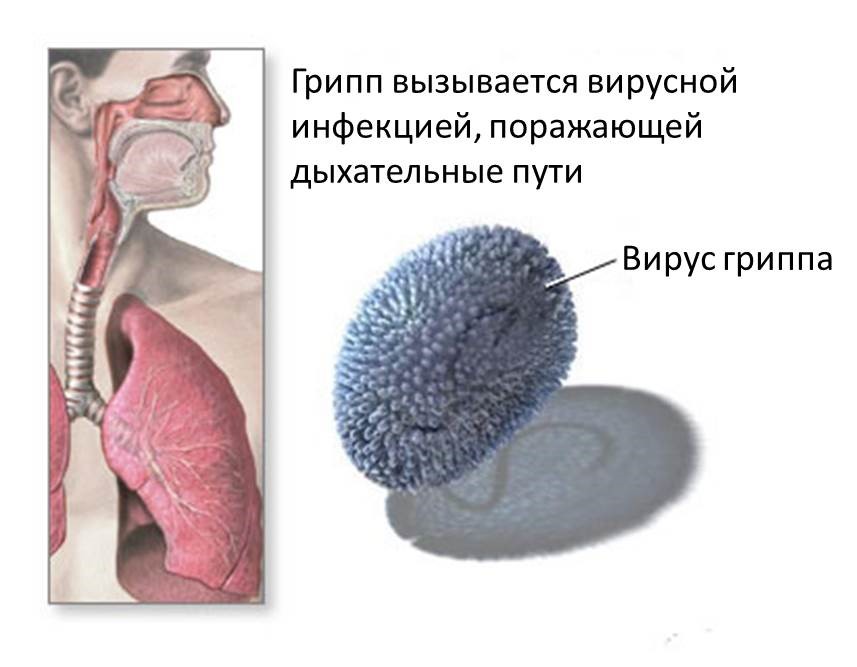
Грипп H1N1 (свиной грипп) – это инфекционное заболевание носа, горла и легких, вызванное вирусом гриппа H1N1.
Грипп является вирусной инфекцией дыхательных путей, которая вызывает кашель, затрудненное дыхание, лихорадку, головную боль, боль в мышцах и слабость. Вирус распространяется от человека к человеку воздушно-капельным путем при вдыхании инфицированных капель из воздуха.
Ранние формы вируса H1N1 были обнаружены у свиней. Со временем вирус изменился (мутировал) и стал инфицировать людей. H1N1 является новым вирусом, впервые обнаруженным у людей в 2009 году. Он быстро распространился по всему миру.
Во время сезона гриппа в 2010 году вирус H1N1 не вызывал массовых инфекций. Применения специфической вакцины не понадобилось, хотя вирус H1N1 по-прежнему является одним из трех вирусов, включенных в программу регулярной (сезонной) вакцинации.
Вирус гриппа H1N1 не передается при употреблении в пищу свинины или любой другой пищи, питье воды, купании в бассейнах, горячих ваннах или саунах.
Любой вирус гриппа может передаться от человека к человеку в следующих случаях:
Кто-либо с гриппом кашляет или чихает, а окружающие вдыхают этот воздух
Кто-либо трогает ручки дверей, письменный стол или компьютер с вирусом гриппа на них, а затем касается рта, глаз или носа.
Кто-то дотрагивается до слизистого секрета во время ухода за ребенком или взрослым, который болен гриппом.
Вирусные геморрагические лихорадки (ВГЛ) представляют собой группу заболеваний, вызванных четырьмя семействами вирусов. К ВГЛ относятся лихорадки Эбола, Марбург, Ласса и Желтая лихорадка. ВГЛ имеют общие черты: они влияют на многие органы, повреждая при этом кровеносные сосуды, также они нарушают способность организма к саморегулированию. Некоторые ВГЛ протекают легко, но некоторые из них, такие как лихорадка Эбола или Марбург, протекают тяжело и могут привести к смерти.
ВГЛ распространены по всему миру. Конкретные заболевания, как правило, ограничиваются районами обитания определенных животных. Например, лихорадки Ласса ограничивается сельскими районами Западной Африки, где обитают крысы и мыши, являющиеся носителями вируса.
Риск для путешественников низкий, но вы должны избегать посещения районов, известных своими вспышками данных заболеваний. Так как не существует эффективных методов лечения некоторых из этих вирусных инфекций, существует настороженность по поводу их возможного использования в биотерроризме.
Лихорадка - признак того, что организм борется с микробами, вызывающими инфекцию. Если у вашего ребенка в возрасте от 3 месяцев до 3 лет субфебрильная температура тела (до 38,8 ° C), вы можете не давать ему лекарства. Назначение лекарственных препаратов рекомендовано при повышении температуры тела выше 38,8 ° С.
Если у ребенка младше 3-месячного возраста отмечается повышение температуры тела выше 38°С, незамедлительно обратитесь к врачу или в службу оказания неотложной медицинской помощи. У маленьких детей лихорадка может быть признаком тяжелой инфекции.
Не давайте никаких лекарств детям младше 2-месячного возраста, предварительно не посоветовавшись с врачом.
Ацетаминофен снимает боль и снижает жар. Проконсультируйтесь с врачом о дозировке препарата, подходящей для вашего ребенка. Дозировка рассчитывается соответственно весу и возрасту вашего ребенка.
Другим препаратом для снижения температуры у детей старше 6 месяцев является ибупрофен. Проконсультируйтесь с врачом, прежде чем давать ибупрофен вашему ребенку. Врач подскажет вам правильную дозу препарата, необходимую вашему ребенку.
Не давайте детям младше 2 месяцев никаких лекарств, не назначенных врачом.
Внимательно изучайте инструкцию к препарату. Убедитесь, что вы даете вашему ребенку правильное количество препарата.
Для правильного измерения дозировки жидких лекарственных средств используйте специальный мерный стаканчик или ложку. Их можно приобрести в аптеке. При использовании обычной чайной ложки можно ошибиться с количеством препарата.
Нет. В редких случаях аспирин может привести к развитию у детей синдрома Рейе. Это серьезное заболевание, которое может привести к смерти. Врачи рекомендуют не давать аспирин детям младше 18 лет.
Для предотвращения обезвоживания организма давайте ребенку больше жидкости. Хорошим выбором является вода, бульоны, фруктовое мороженое и ароматизированный желатин.
Если ребенок получает достаточное количество жидкости, не заставляйте его есть, если он этого не хочет.
Убедитесь, что ребенок достаточно отдыхает.
Поддерживайте температуру в комнате на уровне 21 – 230C
Оденьте ребенка в легкую хлопковую пижаму. Из-за чрезмерного укутывания организм перегревается, и это может привести к повышению температуры тела
Если у ребенка есть озноб, дайте ему дополнительное одеяло. Снимите одеяло при прекращении озноба.
Прием ацетаминофена и теплой ванны может помочь снизить у ребенка жар. Дайте ацетаминофен перед ванной. Если ребенок начнет принимать ванну без предварительного приема препарата, он может начать дрожать, и его организм снова пытается повысить температуру. Это может ухудшить состояние вашего ребенка. Следует помнить, что прием ванны с холодной водой и обтирание ребенка спиртом запрещены.
Сифилис - инфекционное заболевание, передающееся половым путем и вызываемое спирохетой Treponemapallidum. Заражение данной бактерией происходит через поврежденную кожу или слизистые оболочки, как правило, в области гениталий. Сифилис чаще всего передается половым путем, хотя существуют и другие пути его передачи.
Сифилис встречается во всем мире. Он более распространен в городах, число случаев заболевания растет среди мужчин, имеющих половые контакты с мужчинами. У людей нет естественной невосприимчивости к сифилису. Молодые лица в возрасте от 15 до 25 лет являются группой высокого риска.
Так как люди могут не знать, что могли бы заразиться, во многих государствах до регистрации брака проходят обследование на сифилис. Все беременные женщины, обращающиеся за дородовой помощью, должны быть обследованы на сифилис, чтобы предотвратить распространение инфекции от матери к ребенку (врожденный сифилис).
Имеется три стадии заболевания:
Первичный сифилис
Вторичный сифилис
Третичный сифилис (поздняя стадия заболевания)
Вторичный, третичный и врожденный сифилис сейчас встречаются не так часто, как в прошлом. Это связано с наличием:
Бесплатных государственных клиник/диспансеров, занимающихся лечением инфекций, передающихся половым путем (ИППП)
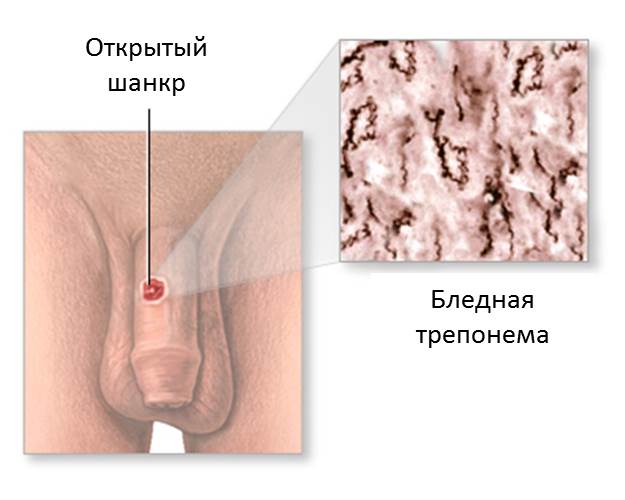
Появление маленьких, безболезненных открытых ран или язв (шанкр) на половых органах, во рту, на коже или в прямой кишке; они самостоятельно проходят через 3 - 6 недель
Бактерии продолжают расти в организме, но до второй стадии заболевание протекает малосимптомно.
К симптомам вторичного сифилиса относятся:
Сыпь, как правило, локализующаяся на ладонях и стопах
Язвы вокруг рта или во рту, во влагалище или на половом члене
Влажные, бородавчатые образования (называемые кондиломами) в области гениталий или складок кожи
Лихорадка
Общее недомогание
Потеря аппетита
Боль в мышцах
Боль в суставах
Увеличение лимфатических узлов
Нарушение зрения
Выпадение волос
Симптомы третичного сифилиса зависят от того, какой орган был затронут. Они отличаются друг от друга и их трудно диагностировать. К симптомам третичного сифилиса относятся:
Повреждение сердца (формирование аневризм или поражение клапанов)
Расстройства центральной нервной системы (нейросифилис)
Исследование крупных кровеносных сосудов и сердца при помощи ЭхоКГ, аортальной ангиографии и катетеризации сердца
Анализы крови для выявления бактерии, вызывающей сифилис (антикардиолипиновый тест RPR или VDRL) – если эти анализы будут положительными, для подтверждения диагноза необходимо провести одно из следующих обследований:
РИФ-АБС (реакция иммунофлуоресценции бледных трепонем с абсорбцией)
МГА-TP (метод микрогемагглютинации T. Pallidum)
Люмбальная пункция и исследование спинномозговой жидкости
Сифилис можно лечить с помощью антибиотиков, таких как пенициллин, бензатин, доксициклин, тетрациклин (для пациентов, страдающих аллергией на пенициллин). Продолжительность лечения зависит от тяжести сифилиса, а также от общего состояния здоровья пациента.
Пенициллин является препаратом выбора для лечения сифилиса во время беременности. Тетрациклин нельзя применять в период беременности, так как он может нанести вред здоровью будущего ребенка. Эритромицин не может предотвратить возникновение врожденного сифилиса у ребенка. В идеале люди с аллергией на пенициллин должны быть десенсибилиированы к нему, а затем пролечены пенициллином.
Через несколько часов после начала лечения ранней стадии сифилиса у пациентов может возникнуть аллергическая реакция Яриша - Герксгеймера. Она вызвана иммунной реакцией организма в ответ на продукты распада инфекции.
К симптомам данной аллергической реакции относятся:
Последующие анализы крови должны быть сделаны в течение 3, 6, 12 и 24 месяцев для того, чтобы убедиться, что инфекция излечена. При наличии шанкра избегайте половых контактов, используйте презервативы до получения двух отрицательных анализов, свидетельствующих о том, что инфекция вылечена.
Все половые партнеры пациента с сифилисом также должны лечиться. Сифилис очень заразен на первой и второй стадиях.
Сифилис излечим, при условии ранней диагностики и лечения заболевания.
Вторичный сифилис можно вылечить, если он рано диагностирован и эффективно пролечен. Как правило, заболевание проходит в течение нескольких недель, но в некоторых случаях может длиться до 1 года. При отсутствии должного лечения у 1/3 пациентов могут развиться поздние осложнения сифилиса.
Поздний сифилис может привести к инвалидности и смерти.
Кроме того, при отсутствии лечения вторичного сифилиса во время беременности заболевание может перейти к развивающемуся ребенку. Это называется врожденным сифилисом.
Обратитесь за консультацией к врачу при наличии у вас симптомов сифилиса.
Если у вас был половой контакт с человеком больным сифилисом или другой ИППП, или у вас был контакт с несколькими или незнакомыми партнерами, если вы принимали внутривенные наркотики, обратитесь к врачу или пройдите скрининговое обследование в клинике, занимающейся лечением ИППП.
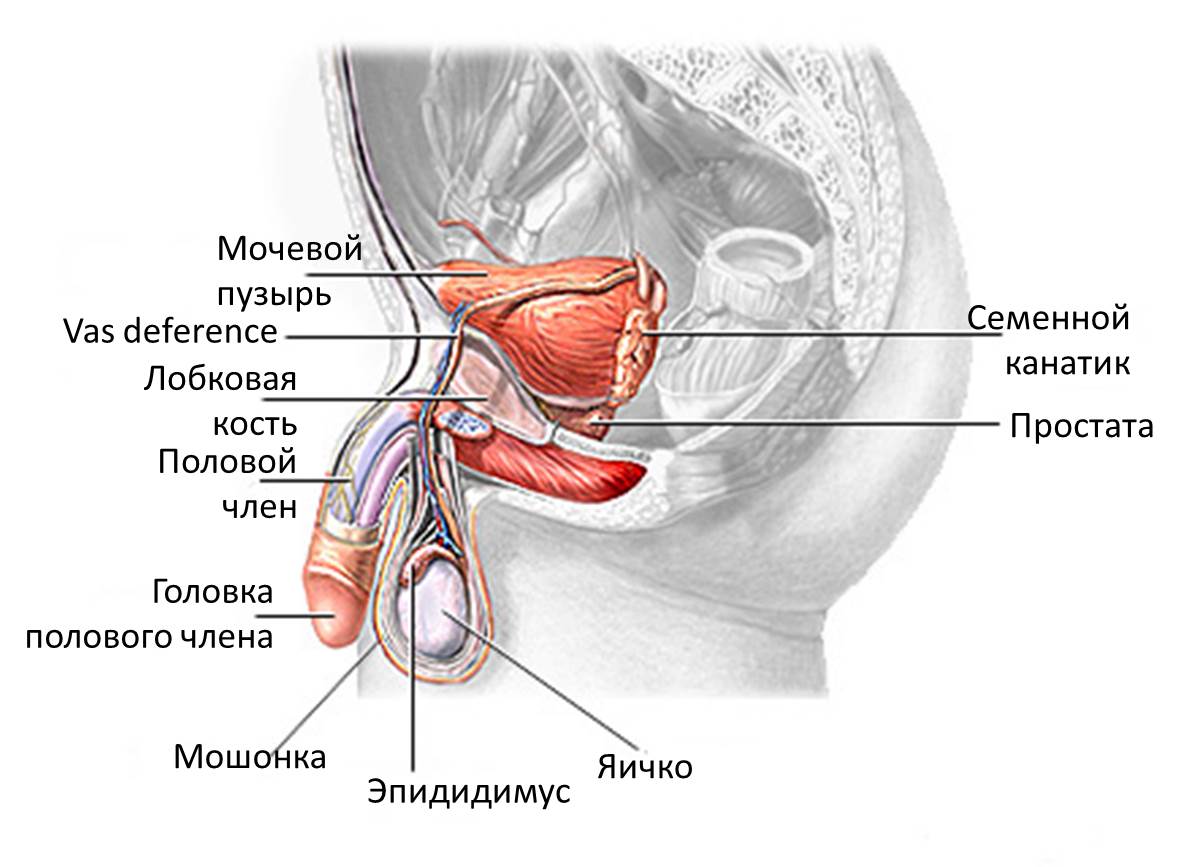
Эпидидимит – это отек (воспаление) придатка яичка, трубки, соединяющей яичко с семявыносящим протоком.
В яичках, или семенниках, вырабатываются мужские гормоны и сперма. Это два яйцевидных органа внутри мошонки (кожно-мышечное мешковидное образование, расположенное за пенисом).
Эпидидимит наиболее распространен среди молодых мужчин в возрасте 19 – 35 лет. Это распространенная причина обращения в больницу среди военнослужащих.
Эпидидимит обычно возникает при проникновении бактериальной инфекции из мочеиспускательного канала, предстательной железы или мочевого пузыря. Наиболее распространенные инфекции, которые вызывают это заболевание среди молодых гетеросексуальных мужчин, гонорея и хламидиоз. У детей, пожилых мужчин, а также гомосексуальных мужчин частым возбудителем является кишечная палочка.
Микобактерия туберкулеза может вызывать эпидидимит. Другая бактерия, такая как уреаплазма, также может быть причиной данного заболевания.
Другой причиной эпидидимита может быть прием лекарственного препарата под названием амиодарон, который назначается для лечения нарушений сердечного ритма.
Риск возникновения эпидидимита повышается:
Среди необрезанных мужчин
После недавнего хирургического вмешательства или при наличии проблем в мочевых путях
При регулярном использовании уретрального катетера
При половом акте с более чем одним партнером без использования презервативов
Эпидидимит может начаться с небольшого повышения температуры, озноба и ощущения тяжести в области яичка. Постепенно эта область становится все более чувствительной к давлению.
Другие симптомы эпидидимита:
Кровь в сперме
Выделения из мочеиспускательного канала (на кончике пениса)
Дискомфорт в нижней части живота или в области таза
Во время обследования на стороне поражения выявляется покраснение, напряжение, а иногда и припухлость мошонки. Напряжение, как правило, возникает на небольшом участке яичка, в области расположения придатка.
Также может быть выявлено увеличение лимфатических узлов в области паха и выделения из пениса. При ректальном исследовании может быть выявлено увеличение простаты.
Общий анализ мочи и посев мочи на выявление культуры возбудителя (возможно, потребуется сдать несколько образцов мочи: начальную порцию, среднюю порцию и после массажа простаты)
Врач назначит вам лекарства для лечения инфекции. Инфекции, передаваемые половым путем, требуют назначения антибиотиков. Ваши половые партнеры также должны пролечиться. Возможно, вам потребуются обезболивающие и противовоспалительные препараты.
Лечение эпидидимита, обусловленного приемом амиодарона, заключается в снижении дозировки или в замене препарата.
Пациентам рекомендуется соблюдение постельного режима с приданием возвышенного положения мошонке, при этом необходимо прикладывать к ней мешочки со льдом. После завершения курса лечения необходимо снова посетить врача, чтобы удостовериться в том, что инфекция полностью излечена.
Эпидидимит обычно излечивается после курса антибиотикотерапии. Снижения сексуальных или репродуктивных возможностей при этом, как правило, не происходит. Тем не менее, заболевание может повториться.
При отсутствии лечения или в некоторых других случаях заболевание может перейти в хроническую форму. В случае хронического течения отек отсутствует, но пациент все время ощущает боль.
Обратитесь к врачу при наличии у вас симптомов эпидидимита. Обратитесь в службу оказания экстренной медицинской помощи, если у вас имеется сильная боль в яичках, возникшая внезапно или после травмы.
Вы можете предотвратить осложнения эпидидимита путем ранней диагностики заболевания и лечения любых инфекций.
Врач может назначить вам антибиотики перед операцией, при которой имеется риск возникновения эпидидимита. Практика безопасного секса (половой акт только с одним партнером, использование презервативов) может помочь предотвратить эпидидимит, вызванный заболеваниями, передающимися половым путем.
Дегидратацией (обезвоживанием) называется состояние, при котором в организме содержится недостаточное количество воды и жидкостей.
Дегидратация может быть легкой, средней или тяжелой в зависимости от того, сколько жидкости организма потеряно или не восполнено. Тяжелая дегидратация является чрезвычайно опасным для жизни состоянием.
Дегидратация может возникнуть из-за потери большого количества жидкости, отсутствия поступления достаточного количества воды в организм или вследствие обеих причин.
Организм может терять большое количество жидкости при:
Чрезмерной потливости (например, от физических упражнений)
Чрезмерном выделении мочи, например, при неконтролируемом диабете или при приеме диуретиков (лекарственных препаратов, выводящих жидкость из организма)
Обезвоживание у больных детей часто является результатом сочетания отказа от приема пищи или жидкости и потери жидкости при рвоте, диарее или лихорадке.
Младенцы и дети более подвержены дегидратации, чем взрослые, потому что они весят меньше, и их организм теряет жидкость и электролиты быстрее. Пожилые люди и люди с различными заболеваниями также подвержены более высокому риску.
Снижено выделение мочи, либо она отсутствует; моча темно-желтого цвета
Отсутствие слез
Запавшие глаза
Запавшие роднички (мягкий участок на макушке) у ребенка
У вас также могут быть рвота, диарея, или ощущение, что вы ничего не хотите делать. Все это может быть обусловлено дегидратацией.
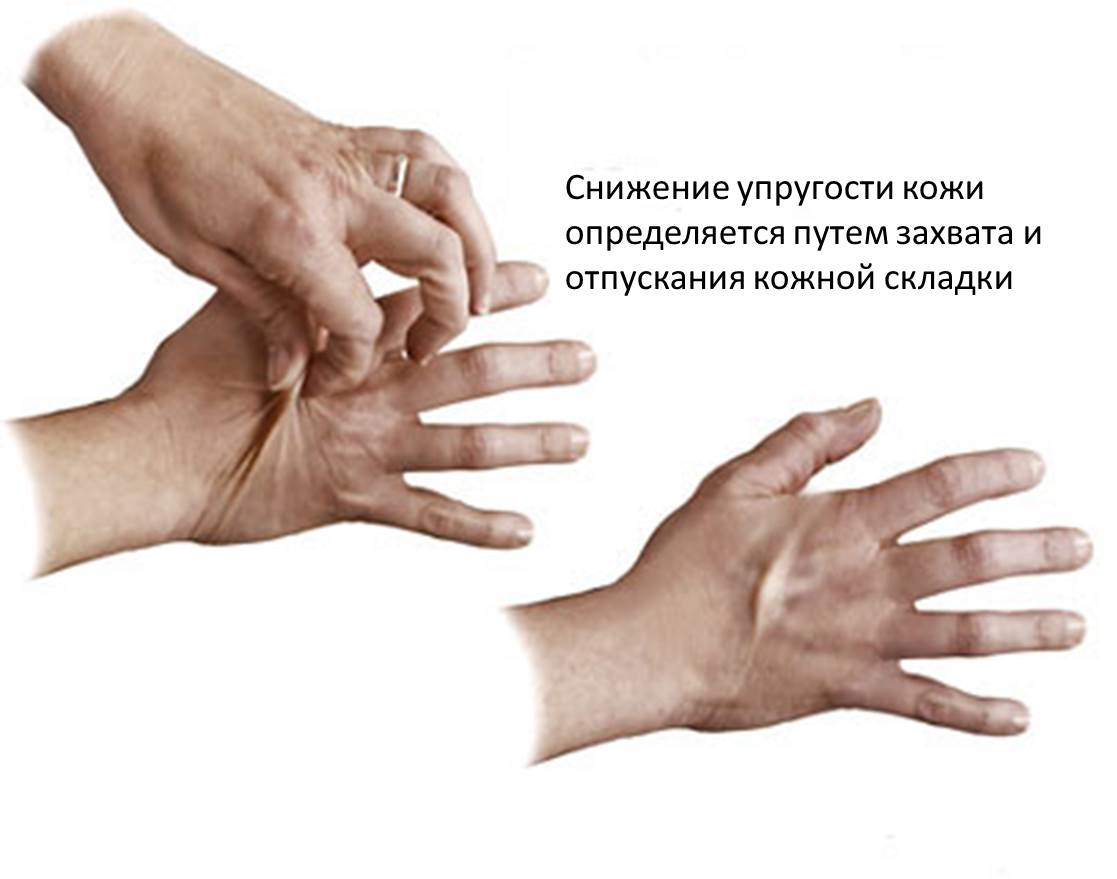
Снижение упругости (тургора) кожи наблюдается, когда кожа (на тыльной поверхности кисти у взрослого или на животе у ребенка) приподнимается в складку на несколько секунд и не возвращается в исходное состояние. Снижение тургора кожи является поздним признаком дегидратации.
Сниженный тургор кожи - кожа может быть не столь эластичной как обычно, и возвращается в исходное положение медленно, после того как врач собирает ее в складку (обычно, кожа сразу возвращается в исходное положение)
Употребления жидкости обычно является достаточным для лечения умеренной дегидратации. Лучше часто пить небольшое количество жидкости (используя чайную ложку или шприц для младенца или ребенка) вместо того, чтобы пытаться принять много жидкости за один раз. Употребление большого количества жидкости за один раз может вызвать рвоту.
Растворы электролитов или холодных шипучих напитков также очень эффективны. Они доступны в аптеках. Спортивные напитки содержат много сахара и могут вызвать или усугубить диарею. У младенцев и детей необходимо избегать использования воды в качестве первичной замещающей жидкости.
При умеренной и тяжелой дегидратации может потребоваться внутривенное введение жидкости и лечение в условиях стационара. Здесь врач попытается определить, а затем и лечить причину дегидратации.
В большинстве случаев вирусные заболевания кишечника (называемые также вирусным гастроэнтеритом), как правило, проходят самостоятельно через несколько дней.
Позвоните в службу оказания экстренной медицинской помощи (например, 103), если у вашего ребенка наблюдаются следующие симптомы:
Спутанность сознания
Головокружение
Вялость
Бред
Позвоните вашему врачу незамедлительно, если у вас или вашего ребенка наблюдаются следующие симптомы:
Кровь в стуле или рвотных массах
Диарея или рвота (у младенцев младше 2 месяцев)
Сухость во рту или глаз
Сухая кожа, которая медленно возвращается в исходное положение при сборе ее в складку
Учащенное сердцебиение
Вялость и апатичность
Мало мочи или ее отсутствие в течение 8 часов
Отсутствие слез
Запавшие глаза
У вашего ребенка запавший родничок
Позвоните врачу, если вы не уверены в том, что вы даете ребенку достаточное количество жидкости.
Также вы можете обратиться к врачу, если:
Вы или ваш ребенок не можете удерживать жидкость во время болезни
Рвота продолжается уже более 24 часов у взрослого или более 12 часов у ребенка
Диарея продолжается более 5 дней у взрослого или ребенка
Ваш ребенок гораздо менее активен, чем обычно или раздражителен
Вы мочитесь или ваш ребенок мочится гораздо больше, чем обычно, особенно, если у вас в семье имеются случаи заболевания сахарным диабетом, или вы принимаете мочегонные препараты.
Даже тогда, когда вы здоровы, каждый день пейте много жидкости. Пейте больше, когда жарко или когда вы занимаетесь физическими упражнениями.
Тщательно следите за тем, кто болен, особенно за детьми и лицами пожилого возраста. Если вы считаете, что обнаружили у кого-либо симптомы дегидратации, позвоните вашему врачу, прежде чем она разовьется. Начинайте замещение жидкости сразу же, как только появились рвота и диарея – НЕ ЖДИТЕ признаков обезвоживания.
Всегда поощряйте человека, который болен, к употреблению жидкости. Помните, что потребность в жидкости выше при лихорадке, рвоте или диарее. Самыми легкими признаками для мониторинга являются диурез – наблюдение за частотой и объемом выделяемой мочи (не должно быть частых походов в туалет или частых влажных пеленок).