.

мужское здоровье | zdrav.kz
X

Электрондық поштаңызға соңғы жаңалықтарды алыңыз

X

Получайте самые последние новости на свой e-mail

мужское здоровье

Болезни, которых больше всего боятся мужчины

переживающий мужчина

Если вы мужчина, то, вероятно, чувствовали себя суперменом, пока вам не исполнилось 30. Именно тогда вас впервые стали волновать проблемы со здоровьем, или ваш друг стал жаловаться на больное колено или спину.

All living things reproduce. Reproduction — the process by which organisms make more organisms like themselves — is one of the things that sets living things apart from nonliving things. But even though the reproductive system is essential to keeping a species alive, unlike other body systems it's not essential to keeping an individual alive.

In the human reproductive process, two kinds of sex cells, or gametes, are involved. The male gamete, or sperm, and the female gamete, the egg or ovum, meet in the female's reproductive system to create a baby. Both the male and female reproductive systems are essential for reproduction.

Humans pass certain characteristics of themselves to the next generation through their genes, the special carriers of human traits. The genes parents pass along to their offspring are what make kids similar to others in their family, but they're also what make each child unique. These genes come from the father's sperm and the mother's egg, which are produced by the male and female reproductive systems.

Understanding the male reproductive system, what it does, and the problems that can affect it can help you better understand your son's reproductive health.

About the Male Reproductive System

Most species have two sexes: male and female. Each sex has its own unique reproductive system. They are different in shape and structure, but both are specifically designed to produce, nourish, and transport either the egg or sperm.

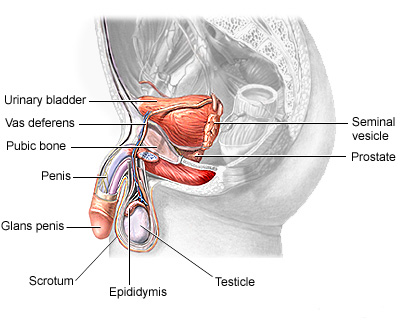
Unlike the female, whose sex organs are located entirely within the pelvis, the male has reproductive organs, or genitals, that are both inside and outside the pelvis. The male genitals include:

·       the testicles

·       the duct system, which is made up of the epididymis and the vas deferens

·       the accessory glands, which include the seminal vesicles and prostate gland

·       the penis

In a guy who has reached sexual maturity, the two testicles (or testes) produce and store millions of tiny sperm cells. The testicles are oval-shaped and grow to be about 2 inches (5 centimeters) in length and 1 inch (3 centimeters) in diameter. The testicles are also part of the endocrine system because they produce hormones, including testosterone. Testosterone is a major part of puberty in boys, and as a guy makes his way through puberty, his testicles produce more and more of it. Testosterone is the hormone that causes boys to develop deeper voices, bigger muscles, and body and facial hair, and it also stimulates the production of sperm.

Alongside the testicles are the epididymis and the vas deferens, which make up the duct system of the male reproductive organs. The vas deferens is a muscular tube that passes upward alongside the testicles and transports the sperm-containing fluid called semen. The epididymis is a set of coiled tubes (one for each testicle) that connects to the vas deferens.

The epididymis and the testicles hang in a pouch-like structure outside the pelvis called the scrotum. This bag of skin helps to regulate the temperature of testicles, which need to be kept cooler than body temperature to produce sperm. The scrotum changes size to maintain the right temperature. When the body is cold, the scrotum shrinks and becomes tighter to hold in body heat. When it's warm, the scrotum becomes larger and more floppy to get rid of extra heat. This happens without a guy ever having to think about it. The brain and the nervous system give the scrotum the cue to change size.

The accessory glands, including the seminal vesicles and the prostate gland, provide fluids that lubricate the duct system and nourish the sperm. The seminal vesicles are sac-like structures attached to the vas deferens to the side of the bladder. The prostate gland, which produces some of the parts of semen, surrounds the ejaculatory ducts at the base of the urethra, just below the bladder. The urethra is the channel that carries the semen to the outside of the body through the penis. The urethra is also part of the urinary system because it is also the channel through which urine passes as it leaves the bladder and exits the body.

The penis is actually made up of two parts: the shaft and the glans. The shaft is the main part of the penis and the glans is the tip (sometimes called the head). At the end of the glans is a small slit or opening, which is where semen and urine exit the body through the urethra. The inside of the penis is made of a spongy tissue that can expand and contract.

All boys are born with a foreskin, a fold of skin at the end of the penis covering the glans. Some boys are circumcised, which means that a doctor or clergy member cuts away the foreskin. Circumcisionis usually done during a baby boy's first few days of life. Although circumcision is not medically necessary, parents who choose to have their sons circumcised often do so based on religious beliefs, concerns about hygiene, or cultural or social reasons. Boys who have circumcised penises and those who don't are no different: All penises work and feel the same, regardless of whether the foreskin has been removed.


What the Male Reproductive System Does

The male sex organs work together to produce and release semen into the reproductive system of the female during sexual intercourse. The male reproductive system also produces sex hormones, which help a boy develop into a sexually mature man during puberty.

When a baby boy is born, he has all the parts of his reproductive system in place, but it isn't until puberty that he is able to reproduce. When puberty begins, usually between the ages of 9 and 15, the pituitary gland — which is located near the brain — secretes hormones that stimulate the testicles to produce testosterone. The production of testosterone brings about many physical changes. Although the timing of these changes is different for every guy, the stages of puberty generally follow a set sequence:

·       During the first stage of male puberty, the scrotum and testes grow larger.

·       Next, the penis becomes longer and the seminal vesicles and prostate gland grow.

·       Hair begins to grow in the pubic area and later on the face and underarms. During this time, a boy's voice also deepens.

·       Boys also have a growth spurt during puberty as they reach their adult height and weight.

Sperm

A male who has reached puberty will produce millions of sperm cells every day. Each sperm is extremely small: only 1/600 of an inch (0.05 millimeters long). Sperm develop in the testicles within a system of tiny tubes called the seminiferous tubules. At birth, these tubules contain simple round cells, but during puberty, testosterone and other hormones cause these cells to transform into sperm cells. The cells divide and change until they have a head and short tail, like tadpoles. The head contains genetic material (genes). The sperm use their tails to push themselves into the epididymis, where they complete their development. It takes sperm about 4 to 6 weeks to travel through the epididymis.

The sperm then move to the vas deferens, or sperm duct. The seminal vesicles and prostate gland produce a whitish fluid called seminal fluid, which mixes with sperm to form semen when a male is sexually stimulated. The penis, which usually hangs limp, becomes hard when a male is sexually excited. Tissues in the penis fill with blood and it becomes stiff and erect (an erection). The rigidity of the erect penis makes it easier to insert into the female's vagina during sexual intercourse. When the erect penis is stimulated, muscles around the reproductive organs contract and force the semen through the duct system and urethra. Semen is pushed out of the male's body through his urethra — this process is called ejaculation. Each time a guy ejaculates, it can contain up to 500 million sperm.

When the male ejaculates during intercourse, semen is deposited into the female's vagina. From the vagina, the sperm make their way up through the cervix and move through the uterus with help from uterine contractions. If a mature egg is in one of the female's fallopian tubes, a single sperm may penetrate it, and fertilization, or conception, occurs.

This fertilized egg is now called a zygote and contains 46 chromosomes — half from the egg and half from the sperm. The genetic material from the male and female has combined so that a new individual can be created. The zygote divides again and again as it grows in the female's uterus, maturing over the course of the pregnancy into an embryo, a fetus, and finally a newborn baby.

Things That Can Go Wrong With the Male Reproductive System

Boys may sometimes experience reproductive system problems, including:

Disorders of the Scrotum, Testicles, or Epididymis
Conditions affecting the scrotal contents may involve the testicles, epididymis, or the scrotum itself.

·       Testicular trauma. Even a mild injury to the testicles can cause severe pain, bruising, or swelling. Most testicular injuries happen when the testicles are struck, hit, kicked, or crushed, usually during sports or other trauma. Testicular torsion, when one of the testicles twists around, cutting off its blood supply, is also a medical emergency that, thankfully, is not common. Surgery is needed to untwist the cord and save the testicle.

·       Varicocele. This is a varicose vein (an abnormally swollen vein) in the network of veins that run from the testicles. Varicoceles often develop while a boy is going through puberty. A varicocele is usually not harmful, but can damage the testicle or decrease sperm production. Take your son to see his doctor if he is concerned about changes in his testicles.

·       Testicular cancer. This is one of the most common cancers in men younger than 40. It occurs when cells in the testicle divide abnormally and form a tumor. Testicular cancer can spread to other parts of the body, but if it's detected early, the cure rate is excellent. Teen boys should be encouraged to learn to perform testicular self-examinations.

·       Epididymitis is inflammation of the epididymis, the coiled tubes that connect the testes with the vas deferens. It is usually caused by an infection, such as the sexually transmitted disease chlamydia, and results in pain and swelling next to one of the testicles.

·       Hydrocele. A hydrocele is when fluid collects in the membranes surrounding the testes. Hydroceles may cause swelling in the scrotum around the testicle but are usually painless. In some cases, surgery may be needed to correct the condition.

·       Inguinal hernia. When a portion of the intestines pushes through an abnormal opening or weakening of the abdominal wall and into the groin or scrotum, it is known as an inguinal hernia. The hernia may look like a bulge or swelling in the groin area. It is treated with surgery.

Disorders of the Penis

Disorders affecting the penis include:

·       Inflammation of the penis. Symptoms of penile inflammation include redness, itching, swelling, and pain. Balanitis is when the glans (the head of the penis) becomes inflamed. Posthitis is foreskin inflammation, usually due to a yeast or bacterial infection.

·       Hypospadias. In this disorder, the urethra opens on the underside of the penis, not at the tip.

·       Phimosis. This is a tightness of the foreskin of the penis and is common in newborns and young boys. It usually eases without treatment. If it interferes with urination, circumcision (removal of the foreskin) might be recommended.

·       Paraphimosis. This may develop when the foreskin of a boy's uncircumcised penis is retracted (pulled down to expose the glans) and becomes trapped so it can't be returned to the unretracted position. As a result, blood flow to the head of the penis can be affected, and a boy may have pain and swelling. A doctor may use lubricant to make a small incision so the foreskin can be pulled forward. If that doesn't work, circumcision might be recommended.

·       Ambiguous genitalia. This is when a child is born with genitals that aren't clearly male or female. In most boys born with this disorder, the penis may be very small or nonexistent, but testicular tissue is present. In a small number of cases, the child may have both testicular and ovarian tissue.

·       Micropenis. This is a disorder in which the penis, although normally formed, is well below the average size, as determined by standard measurements.

If your son has symptoms of a problem with his reproductive system, talk with your doctor — many problems with the male reproductive system can be treated. The doctor is also a good resource for your son if he has questions about growth and sexual development.


Sourcehttp://kidshealth.org/en/parents/male-reproductive.html

All living things reproduce. Reproduction — the process by which organisms make more organisms like themselves — is one of the things that sets living things apart from nonliving things. But even though the reproductive system is essential to keeping a species alive, unlike other body systems it's not essential to keeping an individual alive.

In the human reproductive process, two kinds of sex cells, or gametes, are involved. The male gamete, or sperm, and the female gamete, the egg or ovum, meet in the female's reproductive system to create a baby. Both the male and female reproductive systems are essential for reproduction.

Humans pass certain characteristics of themselves to the next generation through their genes, the special carriers of human traits. The genes parents pass along to their offspring are what make kids similar to others in their family, but they're also what make each child unique. These genes come from the father's sperm and the mother's egg, which are produced by the male and female reproductive systems.

Understanding the male reproductive system, what it does, and the problems that can affect it can help you better understand your son's reproductive health.

About the Male Reproductive System

Most species have two sexes: male and female. Each sex has its own unique reproductive system. They are different in shape and structure, but both are specifically designed to produce, nourish, and transport either the egg or sperm.

Unlike the female, whose sex organs are located entirely within the pelvis, the male has reproductive organs, or genitals, that are both inside and outside the pelvis. The male genitals include:

·       the testicles

·       the duct system, which is made up of the epididymis and the vas deferens

·       the accessory glands, which include the seminal vesicles and prostate gland

·       the penis

In a guy who has reached sexual maturity, the two testicles (or testes) produce and store millions of tiny sperm cells. The testicles are oval-shaped and grow to be about 2 inches (5 centimeters) in length and 1 inch (3 centimeters) in diameter. The testicles are also part of the endocrine system because they produce hormones, including testosterone. Testosterone is a major part of puberty in boys, and as a guy makes his way through puberty, his testicles produce more and more of it. Testosterone is the hormone that causes boys to develop deeper voices, bigger muscles, and body and facial hair, and it also stimulates the production of sperm.

Alongside the testicles are the epididymis and the vas deferens, which make up the duct system of the male reproductive organs. The vas deferens is a muscular tube that passes upward alongside the testicles and transports the sperm-containing fluid called semen. The epididymis is a set of coiled tubes (one for each testicle) that connects to the vas deferens.

The epididymis and the testicles hang in a pouch-like structure outside the pelvis called the scrotum. This bag of skin helps to regulate the temperature of testicles, which need to be kept cooler than body temperature to produce sperm. The scrotum changes size to maintain the right temperature. When the body is cold, the scrotum shrinks and becomes tighter to hold in body heat. When it's warm, the scrotum becomes larger and more floppy to get rid of extra heat. This happens without a guy ever having to think about it. The brain and the nervous system give the scrotum the cue to change size.

The accessory glands, including the seminal vesicles and the prostate gland, provide fluids that lubricate the duct system and nourish the sperm. The seminal vesicles are sac-like structures attached to the vas deferens to the side of the bladder. The prostate gland, which produces some of the parts of semen, surrounds the ejaculatory ducts at the base of the urethra, just below the bladder. The urethra is the channel that carries the semen to the outside of the body through the penis. The urethra is also part of the urinary system because it is also the channel through which urine passes as it leaves the bladder and exits the body.

The penis is actually made up of two parts: the shaft and the glans. The shaft is the main part of the penis and the glans is the tip (sometimes called the head). At the end of the glans is a small slit or opening, which is where semen and urine exit the body through the urethra. The inside of the penis is made of a spongy tissue that can expand and contract.

All boys are born with a foreskin, a fold of skin at the end of the penis covering the glans. Some boys are circumcised, which means that a doctor or clergy member cuts away the foreskin. Circumcisionis usually done during a baby boy's first few days of life. Although circumcision is not medically necessary, parents who choose to have their sons circumcised often do so based on religious beliefs, concerns about hygiene, or cultural or social reasons. Boys who have circumcised penises and those who don't are no different: All penises work and feel the same, regardless of whether the foreskin has been removed.


What the Male Reproductive System Does

The male sex organs work together to produce and release semen into the reproductive system of the female during sexual intercourse. The male reproductive system also produces sex hormones, which help a boy develop into a sexually mature man during puberty.

When a baby boy is born, he has all the parts of his reproductive system in place, but it isn't until puberty that he is able to reproduce. When puberty begins, usually between the ages of 9 and 15, the pituitary gland — which is located near the brain — secretes hormones that stimulate the testicles to produce testosterone. The production of testosterone brings about many physical changes. Although the timing of these changes is different for every guy, the stages of puberty generally follow a set sequence:

·       During the first stage of male puberty, the scrotum and testes grow larger.

·       Next, the penis becomes longer and the seminal vesicles and prostate gland grow.

·       Hair begins to grow in the pubic area and later on the face and underarms. During this time, a boy's voice also deepens.

·       Boys also have a growth spurt during puberty as they reach their adult height and weight.

Sperm

A male who has reached puberty will produce millions of sperm cells every day. Each sperm is extremely small: only 1/600 of an inch (0.05 millimeters long). Sperm develop in the testicles within a system of tiny tubes called the seminiferous tubules. At birth, these tubules contain simple round cells, but during puberty, testosterone and other hormones cause these cells to transform into sperm cells. The cells divide and change until they have a head and short tail, like tadpoles. The head contains genetic material (genes). The sperm use their tails to push themselves into the epididymis, where they complete their development. It takes sperm about 4 to 6 weeks to travel through the epididymis.

The sperm then move to the vas deferens, or sperm duct. The seminal vesicles and prostate gland produce a whitish fluid called seminal fluid, which mixes with sperm to form semen when a male is sexually stimulated. The penis, which usually hangs limp, becomes hard when a male is sexually excited. Tissues in the penis fill with blood and it becomes stiff and erect (an erection). The rigidity of the erect penis makes it easier to insert into the female's vagina during sexual intercourse. When the erect penis is stimulated, muscles around the reproductive organs contract and force the semen through the duct system and urethra. Semen is pushed out of the male's body through his urethra — this process is called ejaculation. Each time a guy ejaculates, it can contain up to 500 million sperm.

When the male ejaculates during intercourse, semen is deposited into the female's vagina. From the vagina, the sperm make their way up through the cervix and move through the uterus with help from uterine contractions. If a mature egg is in one of the female's fallopian tubes, a single sperm may penetrate it, and fertilization, or conception, occurs.

This fertilized egg is now called a zygote and contains 46 chromosomes — half from the egg and half from the sperm. The genetic material from the male and female has combined so that a new individual can be created. The zygote divides again and again as it grows in the female's uterus, maturing over the course of the pregnancy into an embryo, a fetus, and finally a newborn baby.

Things That Can Go Wrong With the Male Reproductive System

Boys may sometimes experience reproductive system problems, including:

Disorders of the Scrotum, Testicles, or Epididymis
Conditions affecting the scrotal contents may involve the testicles, epididymis, or the scrotum itself.

·       Testicular trauma. Even a mild injury to the testicles can cause severe pain, bruising, or swelling. Most testicular injuries happen when the testicles are struck, hit, kicked, or crushed, usually during sports or other trauma. Testicular torsion, when one of the testicles twists around, cutting off its blood supply, is also a medical emergency that, thankfully, is not common. Surgery is needed to untwist the cord and save the testicle.

·       Varicocele. This is a varicose vein (an abnormally swollen vein) in the network of veins that run from the testicles. Varicoceles often develop while a boy is going through puberty. A varicocele is usually not harmful, but can damage the testicle or decrease sperm production. Take your son to see his doctor if he is concerned about changes in his testicles.

·       Testicular cancer. This is one of the most common cancers in men younger than 40. It occurs when cells in the testicle divide abnormally and form a tumor. Testicular cancer can spread to other parts of the body, but if it's detected early, the cure rate is excellent. Teen boys should be encouraged to learn to perform testicular self-examinations.

·       Epididymitis is inflammation of the epididymis, the coiled tubes that connect the testes with the vas deferens. It is usually caused by an infection, such as the sexually transmitted disease chlamydia, and results in pain and swelling next to one of the testicles.

·       Hydrocele. A hydrocele is when fluid collects in the membranes surrounding the testes. Hydroceles may cause swelling in the scrotum around the testicle but are usually painless. In some cases, surgery may be needed to correct the condition.

·       Inguinal hernia. When a portion of the intestines pushes through an abnormal opening or weakening of the abdominal wall and into the groin or scrotum, it is known as an inguinal hernia. The hernia may look like a bulge or swelling in the groin area. It is treated with surgery.

Disorders of the Penis

Disorders affecting the penis include:

·       Inflammation of the penis. Symptoms of penile inflammation include redness, itching, swelling, and pain. Balanitis is when the glans (the head of the penis) becomes inflamed. Posthitis is foreskin inflammation, usually due to a yeast or bacterial infection.

·       Hypospadias. In this disorder, the urethra opens on the underside of the penis, not at the tip.

·       Phimosis. This is a tightness of the foreskin of the penis and is common in newborns and young boys. It usually eases without treatment. If it interferes with urination, circumcision (removal of the foreskin) might be recommended.

·       Paraphimosis. This may develop when the foreskin of a boy's uncircumcised penis is retracted (pulled down to expose the glans) and becomes trapped so it can't be returned to the unretracted position. As a result, blood flow to the head of the penis can be affected, and a boy may have pain and swelling. A doctor may use lubricant to make a small incision so the foreskin can be pulled forward. If that doesn't work, circumcision might be recommended.

·       Ambiguous genitalia. This is when a child is born with genitals that aren't clearly male or female. In most boys born with this disorder, the penis may be very small or nonexistent, but testicular tissue is present. In a small number of cases, the child may have both testicular and ovarian tissue.

·       Micropenis. This is a disorder in which the penis, although normally formed, is well below the average size, as determined by standard measurements.

If your son has symptoms of a problem with his reproductive system, talk with your doctor — many problems with the male reproductive system can be treated. The doctor is also a good resource for your son if he has questions about growth and sexual development.


Source: http://kidshealth.org/en/parents/male-reproductive.html

Contents

General Information

GENITAL WARTS

Causes

Symptoms

Exams and Tests

Treatment

Outlook (Prognosis)

Possible Complications

When to Contact a Medical Professional

Prevention


General Information

Human papillomaviruses (HPV) are common viruses that can cause warts. There are more than 100 types of HPV. Most are harmless, but about 30 types put you at risk for cancer. These types affect the genitals and you get them through sexual contact with an infected partner. They can be either low-risk or high-risk. Low-risk HPV can cause genital warts. High-risk HPV can lead to cancers of the cervix, vulva, vagina, and anus in women. In men, it can lead to cancers of the anus and penis.

Although some people develop genital warts from HPV infection, others have no symptoms. Your health care provider can treat or remove the warts. In women, Pap smears can detect changes in the cervix that might lead to cancer.

Correct usage of latex condoms greatly reduces, but does not eliminate, the risk of catching or spreading HPV. Vaccines can protect against several types of HPV, including some that can cause cancer.

GENITAL WARTS

Genital warts are soft growths on the skin and mucus membranes of the genitals. They may be found on thepenisvulva, urethra, vaginacervix, and around and in the anus.

Genital warts are a sexually transmitted infection (STI).

Causes

The virus that causes genital warts is called human papilloma virus (HPV). More than 70 different types of HPV exist. Certain types of HPV can lead to precancerous changes in the cervixcervical cancer, or anal cancer. These are called high-risk types of HPV.

Not all types of HPV cause genital warts. Other types of HPV cause warts on other parts of the skin, such as the hands. This article focuses on warts on the genitals.

HPV infection around the genitals is common. Most people have no symptoms. In women, HPV can spread to areas inside, on the walls of the vagina and cervix. They are not easy to see without special procedures.

Important facts about HPV:

  • HPV infection spreads from one person to another through sexual contact involving the anus, mouth, or vagina. You can spread the warts even if you do not see them.
  • You may not see warts for 6 weeks to 6 months after becoming infected. You may not notice them for years.
  • Not everyone who has come into contact with the HPV virus and genital warts will develop them.

You are more likely to get genital warts and spread them more quickly if you:

  • Have multiple sexual partners
  • Do not know if you had sex with someone who had STIs
  • Are sexually active at an early age
  • Use tobacco and alcohol
  • Have a viral infection such as herpes and are stressed at the same time
  • Are pregnant
  • Have a weakened immune system due to an illness or medication

If a child has genital warts, you should suspect sexual abuse as a possible cause.

Symptoms

Genital warts can be so tiny, you cannot see them.

The warts can look like:

  • Flesh-colored spots that are raised or flat
  • Growths that look like the top of a cauliflower

In females, genital warts can be found:

  • Inside the vagina or anus
  • Outside the vagina or anus, or on nearby skin
  • On the cervix inside the body

In males, genital warts can be found on the:

  • Penis
  • Scrotum
  • Groin area
  • Thighs
  • Inside or around the anus

Genital warts can also occur on the

  • Lips
  • Mouth
  • Tongue
  • Throat

Other symptoms are rare, but can include:

Exams and Tests

The health care provider will perform a physical exam.

In women, this will include a pelvic examination. Magnification (colposcopy) is used to spot warts that cannot be seen with the naked eye. Your doctor may place watered-down vinegar (acetic acid) on the area. This helps better see any warts.

The virus that causes genital warts can cause abnormal results on a Pap smear. If you have these types of changes, you will probably need more frequent Pap smears for a while.

An HPV DNA test can tell if you have a high-risk type of HPV known to cause cervical cancer. This test may be done:

  • As a screening test for women over age 30
  • In women of any age who have a slightly abnormal Pap test result

Treatment

Genital warts must be treated by a doctor. Do NOT use over-the-counter medicines meant for other kinds of warts.

Treatment may include:

  • A skin treatment done in the doctor's office
  • Prescription medicine that you apply at home several times per week

Prescription medicines include:

  • Imiquimod (Aldara)
  • Podophyllin and podofilox (Condylox)
  • Trichloroacetic acid (TCA)

The warts may be removed with surgery, including:

If you have genital warts, all of your sexual partners must be examined by a health care provider and treated if warts are found. Even if you do NOT have symptoms, you must be treated to prevent complications and spreading the condition to others.

You will need to return to your health care provider after treatment to make sure all the warts are gone.

Regular Pap smears are recommended if you are a woman who has had genital warts, or if you partner had them. If you had warts on your cervix, you may need to have Pap smears every 3 to 6 months after the first treatment.

Women with precancerous changes caused by HPV infection may need further treatment.

Outlook (Prognosis)

Many sexually active young women become infected with HPV. In many cases, HPV goes away on its own.

Most men who become infected with HPV never develop any symptoms or problems from the infection. However, they can pass it on to current and sometimes future sexual partners.

Even after you have been treated for genital warts, you may still infect others.

Possible Complications

Some types of HPV have been found to cause cancer of the cervix and vulva. They are the main cause of cervical cancer.

The types of HPV that can cause genital warts are not the same as the types that can cause penile or anal cancer.

The warts may become numerous and quite large, requiring more extensive treatment and follow-up procedures.

When to Contact a Medical Professional

Call your doctor if:

  • A current or past sexual partner has genital warts
  • You have visible warts on your external genitals, itching, discharge, or abnormal vaginal bleeding. Keep in mind that genital warts may not appear for months to years after having sexual contact with an infected person.
  • You think a young child might have genital warts

Women should begin having Pap smears at age 21.

Prevention

Not having sexual contact is the only way to avoid genital warts and other STIs. You can also decrease your chance of getting an STI by having a sexual relationship with only one partner who you know is disease-free.

Male and female condoms cannot fully protect you. This is because the virus or warts can be on nearby skin. Condoms reduce your risk and you should still use them at all times. HPV can be passed from person to person even when there are no visible warts or other symptoms. Practicing safer sex can help prevent you from getting HPV.

Two vaccines are available that protect against four of the HPV types that cause most cervical cancers in women. The vaccine is given as a series of three shots. It is recommended for girls and women ages 9 to 26.

One of the two vaccines protects against genital and anal warts in boys and men. The vaccine is given as a series of three shots. It is recommended for boys and men ages 9 to 26.

Ask your health care provider whether the HPV vaccine is right for you.


Sourceshttp://www.nlm.nih.gov/medlineplus/hpv.html

http://www.nlm.nih.gov/medlineplus/ency/article/000886.htm

Бесплодие у мужчин может быть связано со стрессом и длительным просмотром телевизора

бесплодие у мужчинИтальянские ученые установили, что мужчины, подвергающиеся высокому уровню стресса (кратковременного и продолжительного), извергают меньшее количество спермы, которая к тому же характеризуется низкой концентрацией сперматозоидов. Также отмечалось, что сперматозоиды у таких мужчин отличатся меньшей мобильностью и нередко выглядят деформированными.

Содержание

Общая информация

Остроконечные кондиломы

Причины

Симптомы

Диагностика

Лечение

Прогноз заболевания

Осложнения

Профилактика

Когда необходимо обратиться к врачу

Синонимы


Общая информация

Вирус папилломы человека (ВПЧ) является распространенным вирусом, характеризующимся образование кондилом. Существует более 100 типов ВПЧ. Многие из них безвредны, но приблизительно 30 видов предрасполагают к развитию рака. ВПЧ поражает половые органы, и передаются при половом контакте с инфицированным партнером. Вирусы могут быть с низким или высоким риском развития рака. ВПЧ с низким риском может вызвать образование остроконечных кондилом. ВПЧ с высоким риском может привести к раковым образованиям шейки матки, вульвы, влагалища и заднего прохода у женщин. У мужчин он может привести к раковым образованиям в заднем проходе и на половом члене.

Не у всех людей ВПЧ протекает с образованием остроконечных кондилом, иногда пациенты не отмечают никаких симптомов заболевания. Врач может лечить или удалить остроконечные кондиломы. У женщин с ВПЧ при исследовании мазков по Папаниколау можно обнаружить изменения в шейке матки, которые могут привести к раку.

Правильное применение презервативов значительно уменьшает, но не устраняет риск заражения или распространения ВПЧ. Вакцины могут защитить от нескольких видов ВПЧ, включая те, которые могут вызвать рак.


Остроконечные кондиломы

Остроконечные кондиломы – мягкие образования, возникающие на коже и слизистых оболочках половых органах. Они могут располагаться на половом члене, вульве, уретре, влагалище, шейке матки и вокруг заднего прохода.

Остроконечные кондиломы – инфекция, передающаяся половым путем.


Причины

Вирус, вызывающий формирование остроконечных кондилом, называется вирусом папилломы человека (ВПЧ). Существуют более 70 различных видов ВПЧ. Определенные виды ВПЧ могут привести к предраковым изменениям шейки матки, раку шейки матки или раку прямой кишки. Эти виды ВПЧ являются вирусами с высоким риском развития рака.

Не все виды ВПЧ вызывают образование остроконечных кондилом. Некоторые виды ВПЧ способствуют возникновению папиллом на других участках тела, например, на руках. В данной статье мы расскажем о кондиломах на половых органах.

Инфекция ВПЧ распространена в области половых органов. У большинства людей протекает бессимптомно. У женщин ВПЧ может распространиться внутрь на стенки влагалища и шейку матки. Без специальных методов исследования невозможно увидеть изменения, вызванные им.

  • Инфекция ВПЧ распространяется половым путем, поражая задний проход, рот или влагалище. Вы можете распространять кондиломы, даже если вы не обнаруживаете их у себя.
  • Кондиломы не видны невооруженным глазом в течение 6 недель - 6 месяцев после заражения. Вы можете не замечать их в течение многих лет.
  • Не у всех, кто контактировал с вирусом ВПЧ и остроконечными кондиломами, они могут развиться.

Вы склонны к развитию остроконечных кондилом и их быстрому распространению, если Вы:

  • Имеете большое количество половых партнеров
  • Не знаете, был ли у вас половой акт с кем-либо, имеющим инфекции, передающиеся половым путем
  • Сексуально активны с раннего возраста
  • Употребляете алкоголь и курите
  • Имеете вирусную инфекцию, такую как герпес
  • Беременны
  • Имейте ослабленную иммунную систему из-за болезни или лечения

Если остроконечные кондиломы обнаружены у ребенка, необходимо исключить сексуальное насилие.


Симптомы

Остроконечные кондиломы могут быть настолько крошечными, что вы можете их не увидеть.

Кондиломы могут выглядеть, как:

  • Пятна телесного цвета, которые возвышаются или не возвышаются над кожей
  • Верхняя часть новообразования выглядит как цветная капуста

У женщин остроконечные кондиломы могут располагаться:

  • Во влагалище или заднем проходе
  • Вне влагалища или заднего прохода, но на соседних с ними участках тела
  • На шейке матки

У мужчин остроконечные кондиломы могут располагаться на:

  • Половом члене
  • Мошонке
  • В области паха
  • Бедрах
  • Внутри или вокруг заднего прохода

Остроконечные кондиломы также могут появиться на:

  • Губах
  • В области рта
  • Языке
  • В горле

В редких случаях могут возникнуть следующие симптомы:

  • Мацерация кожи в области половых органов вокруг кондилом
  • Увеличение количества выделений из влагалища
  • Генитальный зуд
  • Вагинальное кровотечение во время или после полового акта


Диагностика

Для диагностики заболевания доктор должен провести осмотр.

У женщин проводится обследование органов малого таза. Кольпоскопия проводится с целью поиска кондилом, которые не могут быть обнаружены невооруженным глазом. Доктор может нанести уксусную кислоту на пораженный участок. Это помогает обнаружить невидимые кондиломы.

Вирус, который вызывает остроконечные кондиломы, может повлиять на результаты мазка по Папаниколау. Если у вас имеются кондиломы, то вам в течение некоторого времени будет необходимо часто сдавать мазки по Папаниколау.

Исследование ДНК ВПЧ помогает определить, опасен ли данный вид вируса в плане прогноза возникновения рака шейки матки. Этот тест может быть проведен:

  • Как скрининг-тест у женщин старше 30 лет
  • У женщин любого возраста с изменениями в мазке по Папаниколау.


Лечение

Остроконечные кондиломы должен лечить врач. Не пытайтесь лечить их самостоятельно и не принимайте какие-либо препараты без назначения врача.

Лечение может включать лекарственные препараты, назначенные лечащим врачом, которые вы будете принимать дома несколько раз в неделю

Кандиломы могут быть удалены хирургическим путем. Для этого существует несколько приемов:

  • Криохирургия
  • Электрокаутеризация
  • Лазерная терапия
  • Хирургическое иссечение

Если у вас имеются остроконечные кондиломы, все ваши половые партнеры должны пройти обследование у врача и при необходимости пролечиться. Даже если заболевание протекает бессимптомно, вы должны пройти курс лечения для предупреждения возникновения осложнений и распространения инфекции. 

После окончания курса лечения вам необходимо пройти повторное обследование, чтобы удостовериться в отсутствии кондилом.

Женщинам, у которых были остроконечные кондиломы, рекомендуется регулярно сдавать мазки по Папаниколау. Если кондиломы были на шейке матки, мазки по Папаниколау необходимо сдавать каждые 3 - 6 месяцев после первого курса лечения.

Женщинам с предраковыми изменениями на шейке матки, вызванными ВПЧ, может понадобиться дальнейшее лечение.


Прогноз заболевания

Многие сексуально активные молодые женщины заражаются ВПЧ. Во многих случаях заболевание проходит самостоятельно.

У большинства мужчин с ВПЧ заболевание протекает бессимптомно. Однако они могут передать вирус своим половым партнерам.

Даже после завершения курса лечения, Вы все еще можете заразить других.


Осложнения

Некоторые виды ВПЧ вызывают рак шейки матки и вульвы. Это главная причина возникновения рака шейки матки.

ВПЧ, вызывающий остроконечные кондиломы, не является причиной заболеваний мужского полового члена или рака прямой кишки.

Кондиломы могут быть многочисленными и довольно большими, в этом случае может потребоваться более обширное лечение.


Когда необходимо обратиться к врачу

Обратитесь к врачу в следующих случаях:

  • У вашего нынешнего или бывшего сексуального партнера имеются остроконечные кондиломы
  • У вас имеются видимые кондиломы на наружных половых органах, зуд, выделения или аномальное вагинальное кровотечение. Следует иметь в виду, что остроконечные кондиломы могут не проявиться в течение многих месяцев и даже лет после полового контакта с инфицированным партнером.
  • Вы считаете, что у ребенка могут быть остроконечные кондиломы

Женщинам после 21 года рекомендуется регулярно сдавать мазки по Папаниколау.


Профилактика

Отказ от половых контактов  является не единственным способом, чтобы избежать заражения ВПЧ и другими инфекциями, передаваемыми половым путем. Вы можете снизить риск заражения инфекциями, передаваемыми половым путем за счет ограничения сексуальных отношений только с одним здоровым партнером.

Мужские и женские презервативы не могут полностью защитить вас от инфекции. Это вызвано тем, что вирус или кондиломы могут располагаться на соседних участках кожи. Тем не менее, презервативы снижают риск заражения, но в любом случае вы должны их использовать. Заражение ВПЧ может возникнуть даже при отсутствии видимых кондилом или других признаков заболевания. Обезопасив половой акт, вы препятствуете заражению ВПЧ.

Доступны две вакцины, защищающие от четырех видов ВПЧ, наиболее часто являющихся причиной рака шейки матки у женщин. Прививка делается трехкратно. Она рекомендуется девочкам и женщинам в возрасте от 9 до 26 лет.


Когда необходимо обратиться к врачу

Одна из этих двух вакцин защищает мальчиков и мужчин от генитальных и анальных кондилом. Прививка делается трехкратно. Она рекомендуется мальчикам и мужчинам в возрасте от 9 до 26 лет.

Проконсультируйтесь с врачом, подходит ли вам вакцина против ВПЧ.


Синонимы

Остроконечные кондиломы; Кондиломы мужского полового члена; вирус папилломы человека (ВПЧ ); Венерические бородавки; Кондилома; тест ДНК на ВПЧ; низкодифференцированная дисплазия ВПЧ