Gonorrhea is caused by the bacteria Neisseria gonorrhoeae. Any type of sex can spread gonorrhea. You can get it through contact with the mouth, vagina, penis, or anus.
The bacteria grow in warm, moist areas of the body. This can include the tube that carries urine out of the body (urethra). In women, the bacteria may be found in the reproductive tract (which includes the fallopian tubes, uterus, and cervix). The bacteria can also grow in the eyes.
Health care providers are required by law to tell the State Board of Health about all cases of gonorrhea. The goal of this law is make sure the patient gets proper follow-up care. Sexual partners also need to be found and tested.
You are more likely to develop this infection if:
You have many sex partners.
You have a partner with a past history of any STI.
You do not use a condom during sex.
You abuse alcohol or illegal substances.
Symptoms
Symptoms of gonorrhea usually appear 2 - 5 days after infection. However, it may take up to a month for symptoms to appear in men.
Some people do not have symptoms. They may not know that they have caught the infection, so do not seek treatment. This increases the risk of complications and the chances of passing the infection on to another person.
Symptoms in men include:
Burning and pain while urinating
Need to urinate urgently or more often
Discharge from the penis (white, yellow, or green in color)
Gonorrhea can be quickly detected by looked at a sample of discharge or tissue under the microscope. This is called a gram stain. This method is fast, but it is not the most certain.
Cultures (cells that grow in a lab dish) provide proof of gonorrhea.
Samples for a culture are most often taken from the cervix, vagina, urethra, anus, or throat.
Rarely they taken from joint fluid or blood
Cultures can often provide an early diagnosis within 24 hours. A confirmed diagnosis is available within 72 hours.
DNA tests are useful for screening. The ligase chain reaction (LCR) testis one of the tests. DNA tests are quicker than cultures. These tests can be performed on urine samples, which are easier to collect than samples from the genital area.
If you have gonorrhea, you should ask to be tested for other sexually transmitted infections, including chlamydia, syphilis, and HIV. If you are a woman age 21 or older, you should be sure you have had a recent Pap smear.
Treatment
A number of different antibiotics may be used for treating this type of infection.
You may receive one large dose of oral antibiotics or take a smaller dose for seven days.
You may be given an antibiotic injection or shot, and then perhaps be sent home with antibiotic pills.
More severe cases of PID may require you to stay in the hospital. Antibiotics are first given by IV.
Never treat yourself without being seen by your doctor first. Your health care provider will determine the best treatment.
About half of the women with gonorrhea are also infected with chlamydia. Chlamydia is treated at the same time as a gonorrhea infection.
You will need a follow-up visit 7 days after if your symptoms included joint pain, skin rash, or more severe pelvic or belly pain is present. Tests will be done to make sure the infection is gone.
Sexual partners must be tested and treated to prevent passing the infection back and forth. You and your partner must finish all of the antibiotics. Use condoms until you both have finished taking your antibiotics.
All sexual contacts of the person with gonorrhea should be contacted and tested. This helps prevent further spread of the infection.
In some places you may be able to take information and medicines to your sexual partner yourself.
In other places, the health department will contact your partner.
Outlook (Prognosis)
A gonorrhea infection that has not spread can almost always be cured with antibiotics. Gonorrhea that has spread is a more serious infection. Most of the time, it gets better with treatment.
Possible Complications
Complications in women may include:
Infections that spread to the fallopian tubes can cause scarring. This can cause problems getting pregnant at a later time.
Pregnant women with severe gonorrhea may pass the disease to their baby while in the womb or during delivery.
Call your health care provider right away if you have symptoms of gonorrhea. Most state-sponsored clinics will diagnose and treat STIs without charge.
Prevention
Avoiding sexual contact is the only sure way to prevent gonorrhea. If you and your partner do not have sex with any other persons, this can greatly reduce your chance also.
Safe sex means taking steps before and during sex that can prevent you from getting an infection, or from giving one to your partner.
Ash your healthcare provider if you should receive the hepatitis B vaccine-link and the HPV vaccine-link.
Vulvovaginitis can affect women of all ages and is extremely common. It can be caused by bacteria, yeasts, viruses, and other parasites. Some sexually transmitted infections (STIs) can also cause vulvovaginitis, as can various chemicals found in bubble baths, soaps, and perfumes. Environmental factors such as poor hygiene and allergens may also cause this condition.
Candida albicans, which causes yeast infections, is one of the most common causes of vulvovaginitis in women of all ages. Antibiotic use can lead to yeast infections by killing the normal antifungal bacteria that live in the vagina. Yeast infections typically cause genital itching and a thick, white vaginal discharge, and other symptoms.
Another cause of vulvovaginitis is bacterial vaginosis, an overgrowth of certain types of bacteria in the vagina. Bacterial vaginosis may cause a thin, grey vaginal discharge and a fishy odor.
An STI called trichomonas vaginitis infection is another common cause. This infection leads to genital itching, a vaginal odor, and a heavy vaginal discharge, which may be yellow-grey or green in color.
Bubble baths, soaps, vaginal contraceptives, feminine sprays, and perfumes can cause irritating itchy rashes in the genital area, while tight-fitting or nonabsorbent clothing sometimes cause heat rashes.
Irritated tissue is more susceptible to infection than normal tissue, and many infection-causing organisms thrive in environments that are warm, damp, and dark. Not only can these factors contribute to the cause of vulvovaginitis, they frequently prolong the recovery period.
A lack of estrogen in postmenopausal women can result in vaginal dryness and thinning of vaginal and vulvar skin, which may also lead to or worsen genital itching and burning.
Some skin conditions can cause itching and chronic irritation of the vulvar area. Foreign bodies, such as lost tampons, can also cause vulvar irritation and itching and strong smelling discharge.
Nonspecific vulvovaginitis (where specific cause cannot be identified) can be seen in all age groups, but it occurs most commonly in young girls before puberty. Once puberty begins, the vagina becomes more acidic, which tends to help prevent infections.
Nonspecific vulvovaginitis can occur in girls with poor genital hygiene and is characterized by a foul-smelling, brownish-green discharge and irritation of the labia and vaginal opening. This condition is often associated with an overgrowth of a type of bacteria that is typically found in the stool. These bacteria are sometimes spread from the rectum to the vaginal area by wiping from back to front after using the bathroom.
Sexual abuse should be considered in girls with unusual infections and recurrent episodes of unexplained vulvovaginitis. Neisseria gonorrhoeae, the organism that causes gonorrhea, produces gonococcal vulvovaginitis in young girls who have sexual exposure. Gonorrhea-related vaginitis is considered a sexually transmitted illness. If lab tests confirm this diagnosis, young girls should be evaluated for sexual abuse.
If you have been diagnosed with a yeast infection in the past, you can try treatment with over-the-counter products. However, if your symptoms do not completely disappear in about a week, contact your health care provider. Many other infections have similar symptoms.
The health care provider will perform a pelvic examination. This may show red, tender areas on the vulva or vagina.
A wet prep (microscopic evaluation of vaginal discharge) is usually done to identify a vaginal infection or overgrowth of yeast or bacteria. In some cases, a culture of the vaginal discharge may identify the organism causing the infection.
A biopsy of the irritated area on the vulva may be recommended if there are no signs of infection.
Antihistamine, if the irritation is due to an allergic reaction
Estrogen cream, if the irritation and inflammation is due to low levels of estrogen
Proper cleansing is important and may help prevent irritation, particularly in those with infections caused by bacteria normally found in stool. Sitz baths may be recommended.
It is often helpful to allow more air to reach the genital area. Here are some tips:
Wear cotton underwear (rather than nylon) or underwear that has a cotton lining in the crotch area. This increases air flow and decreases moisture.
Do not wear pantyhose.
Wear loose-fitting clothing.
Remove underwear at bedtime.
Note: If a sexually transmitted infection is diagnosed, it is very important that any other sexual partners receive treatment, even if they do not have symptoms. If your sexual partner is infected but not treated, you risk becoming infected over and over again.
Use of a condom during sexual intercourse can prevent most sexually transmitted vaginal infections. Proper fitting and adequately absorbent clothing, combined with good hygiene of the genital area, also prevents many cases of noninfectious vulvovaginitis.
Children should be taught how to properly clean the genital area while bathing or showering. Proper wiping after using the toilet will also help (girls should always wipe from the front to the back to avoid introducing bacteria from the rectum to the vaginal area).
Hands should be washed thoroughly before and after using the bathroom.
Syphilis is bacteria infection that is most often spread through sexual contact.
Causes
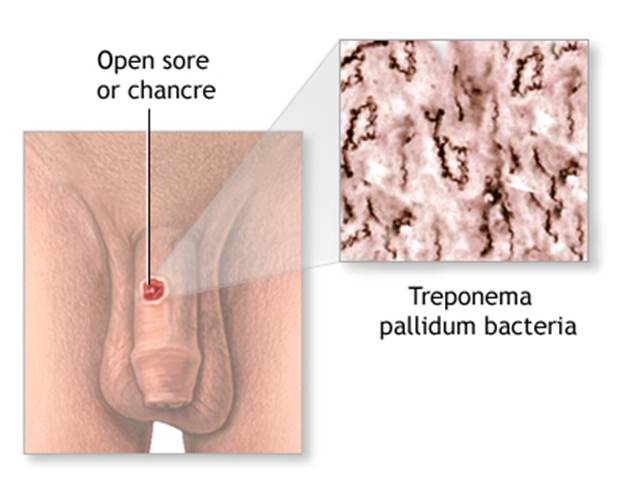
Syphilis is a sexually transmitted, infectious disease caused by the spirochete Treponema pallidum. This bacterium causes infection when it gets into broken skin or mucus membranes, usually of the genitals. Syphilis is most often transmitted through sexual contact, although it also can be transmitted in other ways.
Syphilis occurs worldwide. Syphilis is more common in urban areas, and the number of cases is rising fastest in men who have sex with men. Young adults ages 15 - 25 are the highest-risk population. People have no natural resistance to syphilis.
Because people may be unaware that they are infected with syphilis, many states require tests for syphilis before marriage. All pregnant women who receive prenatal care should be screened for syphilis to prevent the infection from passing to their newborn (congenital syphilis).
Syphilis has three stages:
Primary syphilis
Secondary syphilis
Tertiary syphilis (the late phase of the illness)
Secondary syphilis, tertiary syphilis, and congenital syphilis are not seen as often in the United States as they were in the past because of the availability of:
Blood tests to screen for syphillis bacteria (RPR or VDRL)-- if positive, one of the following tests will be needed to confirm the diagnosis:
FTA-ABS (fluorescent treponemal antibody test)
MHA-TP
Spinal tap, and examination of spinal fluid
Treatment
Syphilis can be treated with antibiotics, such as penicillin G benzathine, doxycycline, or tetracycline (for patients who are allergic to penicillin). Length of treatment depends on how severe the syphilis is, and factors such as the patient's overall health.
For treating syphilis during pregnancy, penicillin is the drug of choice. Tetracycline cannot be used because it is dangerous to the unborn baby. Erythromycin may not prevent congenital syphilis in the baby. People who are allergic to penicillin should ideally be desensitized to it, and then treated with penicillin.
Several hours after getting treatment for the early stages of syphilis, people may experience Jarish-Herxheimer reaction. This is caused by an immune reaction to the breakdown products of the infection.
Follow-up blood tests must be done at 3, 6, 12, and 24 months to ensure that the infection is gone. Avoid sexual contact when the chancre is present, and use condoms until two follow-up tests have indicated that the infection has been cured.
All sexual partners of the person with syphilis should also be treated. Syphilis is extremely contagious in the primary and secondary stages.
Outlook (Prognosis)
Syphilis can be cured if it is diagnosed early and completely treated.
Secondary syphilis can be cured if it is diagnosed early and treated effectively. Although it usually goes away within weeks, in some cases it may last for up to 1 year. Without treatment, up to one-third of patients will have late complications of syphilis.
Late syphilis may be permanently disabling, and it may lead to death.
In addition, untreated secondary syphilis during pregnancy may spread the disease to the developing baby. This is called congenital syphilis.
When to Contact a Medical Professional
Call for an appointment with your health care provider if you have symptoms of syphilis.
If you have had intimate contact with a person who has syphilis or any other STI, or have engaged in any high-risk sexual practices, including having multiple or unknown partners or using intravenous drugs, contact your doctor or nurse, or get screened in an STI clinic.
Prevention
If you are sexually active, practice safe sex and always use a condom.
All pregnant women should be screened for syphilis.
Alternative Names
Primary syphilis; Secondary syphilis; Late syphilis; Tertiary syphilis