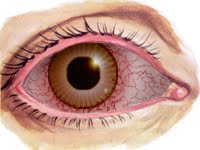
The most common form of uveitis is anterior uveitis, which involves inflammation in the front part of the eye. It is often called iritis because it usually only affects the iris, the colored part of the eye. The inflammation may be associated with autoimmune diseases, but most cases occur in healthy people. The disorder may affect only one eye. It is most common in young and middle-aged people.
Posterior uveitis affects the back part of the uvea, and involves primarily the choroid, a layer of blood vessels and connective tissue in the middle part of the eye. This type of uveitis is called choroiditis. If the retina is also involved, it is called chorioretinitis. You may develop this condition if you have had a body-wide (systemic) infection or if you have an autoimmune disease.
Another form of uveitis is pars planitis. This inflammation affects the narrowed area (pars plana) between the colored part of the eye (iris) and the choroid. Pars planitis usually occurs in young men and is generally not associated with any other disease. However, some evidence suggests it may be linked to Crohn's disease and possibly multiple sclerosis.
Uveitis can be associated with any of the following:
Pars planitis is often treated with steroid eye drops. Other medicines, including steroids taken by mouth, may be prescribed to help suppress the immune system.
Posterior uveitis treatment depends on the underlying cause but almost always includes steroids taken by mouth. Additional specialists in infectious disease or autoimmunity may be needed for such diseases as syphilis, tuberculosis, AIDS, sarcoidosis, or Behcet syndrome.
If the uveitis is caused by a body-wide infection, treatment may involve antibiotics and powerful anti-inflammatory medicines called corticosteroids. See autoimmune disorders for information on treating such diseases.
Call for an appointment with your health care provider if you have symptoms of uveitis. Eye pain or reduced vision are urgent symptoms that require prompt medical attention.