Painless swelling may affect both legs and may include the calves or even the thighs. The effect of gravity makes the swelling most noticeable in the lower part of the body.
Injury or surgery involving the leg, ankle, or foot can also cause swelling. Swelling may also occur after pelvic surgery, especially for cancer.
Long airplane flights or car rides, as well as standing for long periods of time, often lead to some swelling in the feet and ankles.
Swelling may occur in women who take estrogen, or during parts of the menstrual cycle. Most women have some swelling during pregnancy. More severe swelling during pregnancy may be a sign of preeclampsia, a serious condition that includes high blood pressure and swelling.
Your provider will take a medical history and do a thorough physical examination, paying special attention to your heart, lungs, abdomen, lymph nodes, legs, and feet.
Your provider will ask questions like the following:
· What body parts swell? Your ankles, feet, legs? Above the knee or below?
· Do you have swelling at all times or is it worse in the morning or evening?
· What makes your swelling better?
· What makes your swelling worse?
· Does the swelling get better when you raise your legs?
Your treatment will focus on the cause of the swelling. Your provider may prescribe diuretics to reduce the swelling, but these can have side effects. Home treatment for leg swelling that is not related to a serious medical condition should be tried before drug therapy.
Angioedema may be caused by an allergic reaction. During the reaction, histamine and other chemicals are released into the bloodstream. The body releases histamine when the immune system detects a foreign substance called an allergen.
In most cases, the cause of angioedema is never found.
· Medicines (drug allergy) such as antibiotics (penicillin and sulfa drugs), nonsteroidal anti-inflammatory drugs (NSAIDs), and blood pressure medicines (ACE inhibitors)
· Pollen
Hives and angioedema may also occur after infections or with other illnesses (including autoimmune disorders such as lupus, and leukemia and lymphoma).
A form of angioedema runs in families and has different triggers, complications, and treatments. This is called hereditary angioedema.
The main symptom is sudden swelling below the skin surface. Welts or swelling on the surface of the skin can also develop.
The swelling usually occurs around the eyes and lips. It may also be found on the hands, feet, and throat. The swelling may form a line or be more spread out.
The welts are painful and may be itchy. This is known as hives (urticaria). They turn pale and swell if irritated. The deeper swelling of angioedema may also be painful.
The health care provider will look at your skin and ask if you have been exposed to any irritating substances. If your throat is affected, a physical exam might reveal abnormal sounds (stridor) when you breathe in.
Latex allergy is a reaction to certain proteins found in natural rubber latex, a product made from a milky fluid from rubber trees. If you have a latex allergy, your body mistakes latex for a harmful substance.
Latex allergy may cause allergic reactions ranging from skin irritation to anaphylaxis, a potentially life-threatening condition. Your doctor can determine if you have a latex allergy or if you're at risk of developing a latex allergy.
Understanding latex allergy and knowing common sources of latex can help you prevent allergic reactions.
If you're allergic to latex, you're likely to react after being in contact with the latex in rubber gloves or by inhaling airborne latex particles released when someone removes latex gloves. Latex allergy symptoms range from mild to severe, depending on your sensitivity and the degree of latex allergen exposure. Your reaction can worsen with repeated latex exposure.
The most serious allergic reaction to latex is an anaphylactic (an-uh-fuh-LAK-tik) response, which can be deadly. Anaphylactic reactions develop immediately after latex exposure in highly sensitive people, but anaphylaxis rarely happens the first time you're exposed.
Seek emergency medical care if you think you're having an anaphylactic reaction.
If you have less severe reactions after exposure to latex, talk to your doctor. If possible, see your doctor when you're reacting, which will aid in diagnosis.
In a latex allergy, your immune system identifies latex as a harmful substance and triggers certain antibodies to fight the allergen. The next time you're exposed to latex, the antibodies signal your immune system to release histamine and other chemicals into your bloodstream, producing a range of signs and symptoms. The more exposure you have to latex, the more strongly your immune system is likely to respond (sensitization).
Latex allergy can occur in these ways:
Direct contact. The most common cause of latex allergy involves touching latex-containing products, including latex gloves, condoms and balloons.
Inhalation. Latex products, especially gloves, shed latex particles, which you can breathe in when they become airborne. The amount of airborne latex from gloves differs greatly depending on the brand of glove used.
It's possible to have other reactions to latex that aren't allergies to the latex itself. They include:
Allergic contact dermatitis. This reaction to the chemical additives used during manufacturing produces signs and symptoms — usually a skin rash similar to that of poison ivy, including blisters — 24 to 48 hours after contact.
Irritant contact dermatitis. Not an allergy, this form of dermatitis most likely is an irritation caused by wearing rubber gloves or exposure to the powder inside them. Signs and symptoms include dry, itchy, irritated areas, usually on the hands.
Not all latex products are made from natural sources. Products containing man-made (synthetic) latex, such as latex paint, are unlikely to cause a reaction.
Certain people are at greater risk of developing a latex allergy:
People with spina bifida. The risk of latex allergy is highest in people with spina bifida — a birth defect that affects the development of the spine. People with this disorder often are exposed to latex products through early and frequent health care.
People who undergo multiple surgeries or medical procedures. Repeated exposure to latex gloves increases your risk of developing latex allergy.
Health care workers. If you work in health care, you're at increased risk of developing an allergy.
Rubber industry workers. Repeated exposure to latex may increase sensitivity.
People with a personal or family history of allergies. You're at increased risk of latex allergy if you have other allergies — such as hay fever or a food allergy — or they're common in your family.
Latex allergy also is related to certain foods, such as avocados, bananas, chestnuts, kiwis and passion fruits. These foods contain some of the same allergens found in latex. If you're allergic to latex, you have a greater chance of also being allergic to these foods.
You're likely to start by seeing your family doctor or a general practitioner. However, you may be referred to a doctor who specializes in allergies (allergist).
Here's some information to help you get ready for your appointment.
Write down your symptoms, including any that may seem unrelated to the reason for which you scheduled the appointment.
Document any exposure to latex, when it occurred and what type of reaction you had.
Write down key personal information, including major stresses or recent life changes.
Make a list of all medications you're taking, including vitamins and supplements.
Take a family member or friend, if possible. Someone who accompanies you may remember something that you missed or forgot.
Write down questions to ask your doctor.
Preparing a list of questions before your appointment will help you make the most of your time with your doctor. For latex allergy, some basic questions to ask your doctor include:
What is likely causing my symptoms or condition?
What are other possible causes for my symptoms or condition?
What tests do I need?
What's the best treatment?
What are the alternatives to the primary approach that you're suggesting?
I have these other health conditions. How can I best manage them together?
How can I avoid contact with latex?
Are there brochures or other printed material that I can have? What websites do you recommend?
If you suspect you have a latex allergy, try to avoid contact with anything that contains latex.
Your doctor will want to know your history of reacting to latex, as well as other allergy signs and symptoms you've experienced. Your doctor may conduct a physical examination to identify or exclude other medical problems.
He or she may also recommend one or both of the following tests:
Skin test. In this test, small amounts of latex are placed on the skin of your forearm or back. Your skin is then pricked with a needle to allow a tiny amount of the applied latex beneath your skin surface. If you're allergic to latex or another substance being tested, you develop a raised bump. Allergists or other doctors experienced in skin testing should perform this test.
Blood test. Your blood sample is sent to a medical laboratory, where it can be tested for sensitivity to latex.
Although medications are available to reduce the symptoms of latex allergy, there is no cure. The only way to prevent an allergic reaction is to avoid products that contain latex.
However, despite your best efforts to avoid latex, you may come into contact with it. If you've had a severe allergic reaction to latex, you may need to carry injectable epinephrine with you at all times. If you go into anaphylactic shock, you may need:
An emergency injection of adrenaline (epinephrine)
A trip to the emergency room
Oxygen
Corticosteroids
For less severe reactions, your doctor may prescribe antihistamines, which you can take after exposure to latex to control your reaction and help relieve discomfort.
Many common products contain latex, but most have suitable alternatives. Prevent an allergic reaction to latex by avoiding these products:
Dishwashing gloves
Some types of carpeting
Clothing waistbands
Balloons
Rubber toys
Hot water bottles
Baby bottle nipples
Some disposable diapers
Rubber bands
Erasers
Condoms
Diaphragms
Swim goggles
Racket handles
Motorcycle and bicycle handgrips
Blood pressure cuffs
Stethoscopes
Intravenous tubing
Syringes
Respirators
Electrode pads
Surgical masks
Dental dams
Many health care facilities use nonlatex gloves. However, because other medical products may contain latex or rubber, be sure to tell doctors, nurses, dentists and other health care workers about your allergy before any exams or procedures. Wearing a medical alert bracelet can inform others of your latex allergy.
Allergic reactions are sensitivities to substances called allergens that come into contact with the skin, nose, eyes, respiratory tract, and gastrointestinal tract. They can be breathed into the lungs, swallowed, or injected.
Considerations
Allergic reactions are common. The immune response that causes an allergic reaction is similar to the response that causes hay fever. Most reactions happen soon after contact with an allergen.
Many allergic reactions are mild, while others can be severe and life threatening. They can be confined to a small area of the body, or they may affect the entire body. The most severe form is called anaphylaxis or anaphylactic shock. Allergic reactions occur more often in people who have a family history of allergies.
Substances that don't bother most people (such as venom from bee stings and certain foods, medicines, and pollens) can trigger allergic reactions in certain people.
First-time exposure may produce only a mild reaction. Repeated exposures may lead to more serious reactions. Once a person has had an exposure or an allergic reaction (is sensitized), even a very limited exposure to a very small amount of allergen can trigger a severe reaction.
Most severe allergic reactions occur within seconds or minutes after exposure to the allergen. Some reactions can occur after several hours, particularly if the allergen causes a reaction after it has been eaten. In very rare cases, reactions develop after 24 hours.
Anaphylaxis is a sudden and severe allergic reaction that occurs within minutes of exposure. Immediate medical attention is needed for this condition. Without treatment, anaphylaxis can get worse very quickly and lead to death within 15 minutes.
Causes
Common allergens include:
Animal dander
Bee stings or stings from other insects
Foods, especially nuts, fish, and shellfish
Insect bites
Medicines
Plants
Pollens
Symptoms
Common symptoms of a mild allergic reaction include:
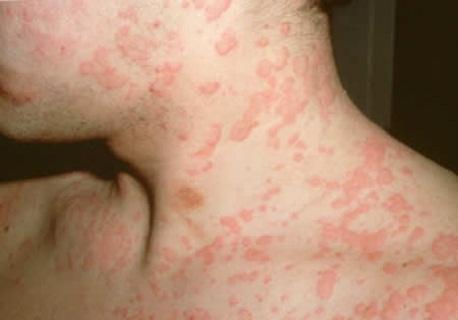
Hives (especially over the neck and face)
Itching
Nasal congestion
Rashes
Watery, red eyes
Dermographism close up
Dermographism on arm
Hives urticaria body
Hives urticaria close up
Hives urticaria
Symptoms of a moderate or severe reaction include:
Abdominal pain
Abnormal (high-pitched) breathing sounds
Anxiety
Chest discomfort or tightness
Cough
Diarrhea
Difficulty breathing, wheezing
Difficulty swallowing
Dizziness or lightheadedness
Flushing or redness of the face
Nausea or vomiting
Palpitations
Swelling of the face, eyes, or tongue
Unconsciousness
First Aid
For a mild to moderate reaction:
Calm and reassure the person having the reaction. Anxiety can make symptoms worse.
Try to identify the allergen and have the person avoid further contact with it.
1. If the person develops an itchy rash, apply cool compresses and an over-the-counter hydrocortisone cream.
2. Watch the person for signs of increasing distress.
3. Get medical help. For a mild reaction, a health care provider may recommend over-the-counter medications, such as antihistamines.
For a severe allergic reaction (anaphylaxis):
Check the person's airway, breathing, and circulation (the ABC's of Basic Life Support). A warning sign of dangerous throat swelling is a very hoarse or whispered voice, or coarse sounds when the person is breathing in air. If necessary, begin rescue breathing and CPR.
1. Call Emergency.
2. Calm and reassure the person.
3. If the allergic reaction is from a bee sting, scrape the stinger off the skin with something firm (such as a fingernail or plastic credit card). Do not use tweezers -- squeezing the stinger will release more venom.
4. If the person has emergency allergy medicine on hand, help the person take or inject the medicine. Avoid oral medicine if the person is having difficulty breathing.
5. Take steps to prevent shock. Have the person lie flat, raise the person's feet about 12 inches (30 centimeters), and cover them with a coat or blanket. Do not place the person in this position if a head, neck, back, or leg injury is suspected or if it causes discomfort.
DO NOT
If a person is having an allergic reaction:
Do not assume that any allergy shots the person has already received will provide complete protection.
Do not place a pillow under the person's head if he or she is having trouble breathing. This can block the airways.
Do not give the person anything by mouth if the person is having trouble breathing.
When to Contact a Medical Professional
Call for emergency medical assistance right away if:
The person is having a severe allergic reaction. Do not wait to see if the reaction is getting worse.
The person has a history of severe allergic reactions.
Prevention
To prevent allergic reactions:
Avoid triggers such as foods and medicines that have caused an allergic reaction in the past. Ask detailed questions about ingredients when you are eating away from home. Carefully check ingredient labels.
If you have a child who is allergic to certain foods, introduce 1 new food at a time in small amounts so you can recognize an allergic reaction.
People who have had serious allergic reactions should wear a medical ID tag and carry emergency medicines according to your provider's instructions.
Do not use your injectable epinephrine on anyone else. They may have a condition (such as a heart problem) that could be made worse by this drug.
Below is information about first aid that is required if you noticed allergic reaction.
For a mild to moderate allergic reaction:
Calm and reassure the person having the reaction. Anxiety can make symptoms worse.
Try to identify the allergen and have the person avoid further contact with it. If the allergic reaction is from a bee sting, scrape the stinger off the skin with something firm, such as a fingernail or plastic credit card. Do not use tweezers. Squeezing the stinger will release more venom.
If the person develops an itchy rash, apply cool compresses and an over-the-counter hydrocortisone cream.
Watch the person for signs of increasing distress.
Get medical help. For a mild reaction, a health care provider may recommend over-the-counter medications, such as antihistamines.
For a severe allergic reaction (anaphylaxis), check the person's airway, breathing, and circulation (the ABC's of Basic Life Support). A warning sign of dangerous throat swelling is a very hoarse or whispered voice, or coarse sounds when the person is breathing in air. If necessary, begin rescue breathing and CPR.
Call emergency.
Calm and reassure the person.
If the allergic reaction is from a bee sting, scrape the stinger off the skin with something firm (such as a fingernail or plastic credit card). Do not use tweezers -- squeezing the stinger will release more venom.
If the person has emergency allergy medication on hand, help the person take or inject the medication. Avoid oral medication if the person is having difficulty breathing.
Take steps to prevent shock. Have the person lie flat, raise the person's feet about 12 inches, and cover him or her with a coat or blanket. Do not place the person in this position if a head, neck, back, or leg injury is suspected or if it causes discomfort.
DO NOT
Do not assume that any allergy shots the person has already received will provide complete protection.
Do not place a pillow under the person's head if he or she is having trouble breathing. This can block the airways.
Do not give the person anything by mouth if the person is having trouble breathing.
When to Contact a Medical Professional
Call emergency for medical assistance right away if:
The person is having a severe allergic reaction. Do not wait to see if the reaction is getting worse.
The person has a history of severe allergic reactions (check for a medical ID tag).
Ниже представлена информация об оказании первой помощи при аллергической реакции.
При аллергической реакции легкой и умеренной тяжести:
Успокойтесь и успокойте человека с данным состоянием. Тревога может ухудшить симптомы.
Попробуйте идентифицировать аллерген и постарайтесь прекратить с таким аллергеном дальнейший контакт. Если аллергическая реакция возникла от укуса пчелы, попытайтесь удалить жало при помощи какого-нибудь твердого предмета, например, при помощи ногтя или пластиковой кредитной карты. Не используйте пинцет. Выдавливание жала будет способствовать высвобождению большего количества яда.
1. Если у человека появились сыпь или зуд, нанесите холодный компресс и мазь с гидрокортизоном.
При тяжелой форме аллергической реакции (анафилаксии) проверьте у пациента проходимость дыхательных путей, наличие признаков дыхания и кровообращения. Грозным признаком отека гортани является хриплый голос, шепот или грубый звук, возникающий при дыхании. При необходимости начните проводить искусственное дыхание и сердечно-легочную реанимацию.
1. Незамедлительно позвоните в скорую помощь.
2. Сохраняйте спокойствие и успокойте пострадавшего человека.
3. Если аллергическая реакция возникла от укуса пчелы, попытайтесь удалить жало при помощи какого-нибудь твердого предмета (например, при помощи ногтя или пластиковой кредитной карты). Не используйте пинцет. Выдавливание жала будет способствовать высвобождению большего количества яда.
4. Если у пострадавшего человека под рукой имеется лекарственный препарат от аллергии, помогите ему принять его. Избегайте приема препаратов через рот, если у человека имеются проблемы с дыханием.
5. Примите меры для предотвращения шока. Есть человек лежит, приподнимите его ноги на 30 см и накройте его одеялом или пальто. Не следует оставлять человека в этом положении при подозрении на наличие травм головы, шеи, спины, ног или при наличии дискомфорта.
· Не думайте, что любые уколы от аллергии, которые человек уже получил обеспечат полную защиту.
· Не подкладывайте подушку под голову пострадавшего человека при наличии у него проблем с дыханием. Это может привести к возникновению непроходимости дыхательных путей.
· При наличии проблем с дыханием не давайте человеку ничего через рот.
Перевод: Асель Стамбекова, Персональный координатор проекта HealthСity
Под редакцией:
Алмаза Шармана, профессора медицины
Ангионевротический отек или отек Квинке весьма схож с крапивницей, однако отек Квинке отличается глубиной поражения. Ангионевротический отек иногда протекает без возникновения волдырей.
Причины появления
Отек Квинке может быть вызван аллергической реакцией. Во время подобной реакции, гистамин и другие химические соединения высвобождаются в кровоток. Организм выделяет гистамин, когда иммунная система определяет чужеродное вещество, которое называется аллерген.
В большинстве случаев, причина появления ангионевротического шока остается неопознанной.
Следующие причины могут вызвать ангионевротической отек:
Перхоть животных
Воздействие воды, солнечного света, холода или тепла
Медицинские препараты (при аллергии на лекарства), такие как антибиотики (пенициллин и сульфамидные препараты), нестероидные противовоспалительные препараты, лекарства для контроля артериального давления (ингибиторы АПФ)
Некоторые формы ангионевротического отека передаются по наследству, и имеют различные причины, осложнения и лечение.
Симптомы
Главный симптом данного заболевания – внезапный отек под поверхностью кожи. Также могут наблюдаться рубцы или опухоли на поверхности кожи.
В первую очередь обычно опухает область вокруг глаз и губ. Также отек может наблюдаться на руках, ногах и горле.
Рубцы и волдыри на поверхности кожи могут вызывать боль и чесаться. Это симптомы крапивницы. При раздражении волдыри принимают бледный цвет. Боль может варьироваться в зависимости от глубины ангионевротического отека.
Другие симптомы включают в себя:
Спазмы в животе
Затрудненное дыхание
Опухшие глаза и рот
Опухание слизистой оболочки глаза
Диагностика заболевания
При диагностике доктор осматривает кожный покров пациента и спрашивает, не подвергся ли пациент воздействию каких-либо раздражающих веществ. Во время медицинского осмотра также может быть выявлены необычные звуки во время дыхания пациента, если отеку подверглось горло пациента.
Врач также может взять кровь на анализ для проверки на аллергическую реакцию.
Лечение
Легкие симптомы заболевания не потребуют лечения. Тяжелые и средние симптомы, возможно, придется лечить.
Люди, страдающие от отека Квинке должны следовать следующим правилам:
Избегать любой из известных аллергенов или любого провоцирующего фактора, который вызывает симптомы болезни
Воздержатся от приема лекарств, трав, пищевых добавок, которые не были назначены лечащим врачом
Прикладывать к местам отека охлаждающие компрессы для их уменьшения снижения боли
Лекарства, используемые для лечения ангионевротического отека:
Антигистаминные препараты
Противовоспалительные лекарства (кортикостероиды)
Уколы эпинефрина (люди, у которых в прошлом наблюдались тяжелые формы отека Квинке, могут носить уколы с собой)
Ингаляционные лекарства, которые помогают открыть дыхательные пути
Ранитидин (Зентек)
Если у человека наблюдаются проблемы с дыханием во время отека Квинке, обязательно вызовите скорую помощь, так как при ангионевротическом отеке может возникнуть тяжелая, угрожающая жизни закупорка дыхательных путей.
Обычно ангионевротический отек, не блокирующий дыхательные пути, как правило, безвреден и симптомы проходят в течение нескольких дней.
Медленно развивающийся отек обычно не представляет опасности. Опухание (отек) ограничивает диапазон движения в суставе или появляется ощущение «твердости или тугости» при попытке полностью разогнуть или согнуть ногу. Если при домашнем лечении отек проходит и никаких других симптомов не возникает, то врачебного обследования вероятно не требуется.
Опухание (отек) в руках и ногах обычно появляется после продолжительного сидения или стояния. Оно также обычно во время жаркой погоды или при влажной погоде. В положении сидя или принятие горизонтального положения и подъем отекшей конечности могут уменьшить такой тип опухания.
Отек может быть более серьезным, если:
Похоже на аллергическую реакцию вследствие укуса насекомого или приема нового лекарственного препарата, которое стало причиной сильного опухания конечностей (лодыжка и колено, запястье и локоть).
Прекратилось или уменьшилось кровоснабжение опухшей области или ниже её.
Оно не проходит или становится хуже, при подъеме пораженной конечности.
Оно воздействует только на одну ногу. Это может быть признаком свертывания крови в глубокой вене (тромбоз глубоких вен).
Оно происходит после удаления лимфатических узлов, например, при удалении грудной железы вследствие рака груди. Этот тип отека конечности может быть вызван лимфедемой.
У вас есть болезнь сердца или сердечная недостаточность и произошел внезапный приступ или увеличение отека нижних конечностей.
Имеются признаки инфекции, например, лихорадка.
Что такое аллергическая реакция на латекс?
Латекс – это природный каучук, продукт, получаемый главным образом из каучкового дерева (гевея - Hevea brasiliensis). У некоторых людей развиваются аллергические реакции после повторного контакта с латексом, особенно латексными перчатками. Аллергия на латекс становится актуальной медицинской проблемой.
Какие симптомы?
Реакции на латекс очень разнообразны – от незначительных до опасных для жизни, либо менее серьезная реакция может перерасти в более сереьзную. Вот некоторые примеры:
Реакции со стороны дыхательной системы. У человека с легкой реакцией со стороны дыхательной системы, может отмечаться чихание, кашель или обильное отделяемое из носа. У человека с тяжелой реакцией со стороны дыхательной системы, может развиться одышка в результате отека горла (ангионевротический отек) или сильное свистящее дыхание (аллергическая астма).
Опасные для жизни аллергические реакции (анафилаксия).
У кого возникает аллергия на латекс?
Аллергия на латекс обычно возникает у людей, по роду занятий контактирующих с резиновыми изделиями, например, медработники и работники резиновой промышленности, а также лица, подвергшиеся нескольким операциям или нескольким медицинским процедурам, при которых использовались оборудование и инструменты из латекса.
Что повышает риск развития аллергии на латекс?
Лица, страдающие аллергией на пищевые продукты, например, бананы, каштаны, киви, авокадо и помидоры, подвержены большему риску развития аллергии на латекс. У лиц с аллергией на латекс может развиться аллергия на эти пищевые продукты, потому что белок, содержащийся в этих продуктах, аналогичен протеину в каучуке. Аллергия на латекс также чаще встречается у лиц, у которых в анамнезе отмечается атопический дерматит – заболевание кожи, сопровождающееся интенсивным зудом и появлением красной, возвышающейся над кожей сыпи.
Где можно столкнуться с латексом?
К медицинским изделиям, содержащим латекс, относятся:
Перчатки, особенно припудренные латексные перчатки.
Дренажи, жгуты, мочевые катетеры и бинты.
Клейкие ленты, применяемые для фиксации повязок.
Личные или домашние предметы, в которых может содержаться латекс:
Контрацептивы, например, презервативы или диафрагмы.
Прокладки и гигиенические подушечки.
Детские соски-пустышки и резиновые соски для бутылок.
Шарики и резиновые игрушки.
Резиновые кольца для скрепления бумаг.
Коврики для компьютерной мыши.
Как диагностировать аллергию на латекс?
Диагноз аллергии на латекс ставится на оснвоании тщательного изучения анамнеза заболевания, объективного обследования больного и лабораторного исследования. Среди анализов могут быть анализ крови на обнаружение антител к латексу, тесты на ношение перчаток, а также накожные пробы для выявления извращенной реакции на контакт с латексом. Тесты на ношение перчаток и накожные пробы должен всегда делать врачи-специалисты, имеющие соответствующий опыт и оборудование для того, чтобы справиться в случае необходимости с серьезной аллергической реакцией.
Как ее лечить?
Некоторые медикаменты могут помочь уменьшить симптомы аллергии, но самое эффективное лечение – это полное исключение контакта с латексом, как бы трудно это ни было. Серьезные реакции возможно потребуется лечить в реанимационном отделении больницы. Если у Вас уже была серьезная реакция на латекс, Вы должны всегда носить с собой и уметь пользоваться противоаллергической аптечкой, в которой есть шприц с адреналином.
Как мне избежать изделий, содержащих латекс, если у меня точно установленная аллергия на латекс?
Избегайте любого контакта латексных изделий с вашей кожей. Медработники должны пользоваться гипоаллергенными нелатексными перчатками.
Избегайте вдыхания воздуха, в котором используются припудренные латексные перчатки. Частицы латекса перчаток пристают к кукурузному крахмалу, применяемому для припудривания перчаток. Вы можете вдохнуть попавший в воздух кукурузный крахмал, что вызовет легочную реакцию.
Что такое аллергическая реакция? Аллергическая реакция – это гиперреакция иммунной системы на вещество, которое называется аллерген. Аллергенами могут быть химические вещества, пищевые продукты, лекарственные средства, плесневые грибки, растения и пыльца.
Каковы механизмы развития аллергических реакций? Аллергические реакции колеблются от легких и вызывающих неудобство до очень серьезных и угрожающих жизни. Иммунная система реагирует на попадание аллергена с помощью нескольких механизмов. Основные из них происходят с участием лимфоцитов – белых клеток крови. Существует два типа лимфоцитов – В-лимфоциты и Т-лимфоциты. В-лимфоциты вырабатывают антитела, которые связываются с чужеродными веществами и бактериями с целью их уничтожения и нейтрализации. Антитела могут связываться с аллергенами, которые вызывают аллергические реакции. В таких случаях антитела относятся к категории так называемых иммуноглобулинов Е. Т-лимфоциты не вырабатывают антитела – они напрямую атакуют чужеродные вещества. В зависимости от того какая из клеток вовлечена аллергические реакции подразделяются на реакции немедленного типа (с вовлечением В-лимфоцитов и выработкой иммуноглобулинов Е) и замедленного типа (с вовлечением Т-лимфоцитов).
Симптомы аллергической реакции колеблются от легких и вызывающих неудобство до очень серьезных и угрожающих жизни. Аллергены могут попадать на различные ткани организма: например, воздухоносные пути, глаза, желудочно-кишечный тракт, нос, легкие и кожу. Некоторые аллергические реакции (например, крапивница или зуд вокруг места укуса насекомого или прикосновения к коже растения или химического вещества) поражают только один участок тела. Другие аллергические реакции могут поражать весь организм, вызывая зуд, отек и даже затрудненное дыхание. Тяжелая аллергическая реакция (называемая анафилаксией) может вызвать шок и даже смерть.
Аллергические реакции не всегда развиваются при первом контакте человека с аллергеном. С каждым последующим контактом человек становится все более чувствительным к аллергену.


.png) Dermographism close up
Dermographism close up.png) Dermographism on arm
Dermographism on arm.png) Hives urticaria body
Hives urticaria body.png) Hives urticaria close up
Hives urticaria close up.png) Hives urticaria
Hives urticaria
.png) Выраженный дермографизм
Выраженный дермографизм.png) Дермографизм на руке
Дермографизм на руке .png) Крапивница на теле
Крапивница на теле.png) Крапивница на коже
Крапивница на коже.png) Крапивница
Крапивница