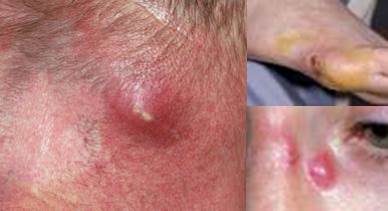
An abscess is an infection characterized by a collection of pus underneath a portion of the skin. Bacteria commonly causing abscesses are Staphylococcus aureus and Streptococcus. These bacteria enter the skin through any cracks or injury to the skin. That area of skin then becomes red, tender, warm, and swollen over days to 1–2 weeks and a fever may develop. Abscesses can sometimes form if minor superficial skin infections are not treated appropriately and in a timely fashion. Most abscesses resolve quickly once appropriately treated.
Community-associated methicillin-resistant Staphylococcus aureus (CA-MRSA) is a strain of "staph" bacteria resistant to antibiotics in the penicillin family, which have been the cornerstone of antibiotic therapy for staph and skin infections for decades. CA-MRSA previously infected only small segments of the population, such as health care workers and persons using injection drugs. However, CA-MRSA is now a common cause of skin infections in the general population. While CA-MRSA bacteria are resistant to penicillin and penicillin-related antibiotics, most staph infections with CA-MRSA can be easily treated by health care practitioners using local skin care and commonly available non-penicillin-family antibiotics. Rarely, CA-MRSA can cause serious skin and soft tissue (deeper) infections. Staph infections typically start as small red bumps or pus-filled bumps, which can rapidly turn into deep, painful sores. If you see a red bump or pus-filled bump on the skin that is worsening or showing any signs of infection (ie, the area becomes increasingly painful, red, or swollen), see your doctor right away. Many patients believe incorrectly that these bumps are the result of a spider bite when they arrive at the doctor's office. Your doctor may need to test (culture) infected skin for MRSA before starting antibiotics. If you have a skin problem that resembles a CA-MRSA infection or a culture that is positive for MRSA, your doctor may need to provide local skin care and prescribe oral antibiotics. To prevent spread of infection to others, infected wounds, hands, and other exposed body areas should be kept clean and wounds should be covered during therapy.
Factors that predispose individuals to developing an abscess include:
Any skin infection, especially those that are untreated
Abscesses can occur in anyone and occur anywhere on the body. You might be able to sense fluid in an abscess when you press on the abscess with a finger.
A worsening red, tender swelling that arises over a period of 1–2 weeks. The pus underneath the skin is usually not visible. You may have a fever or a general sense of not feeling well.
There are no self-care options for abscesses. While waiting to see your doctor, you can try applying a warm compress to the affected area and take ibuprofen to help with the swelling and pain.
A worsening red, tender swelling should prompt you to make an appointment with your physician as soon as possible. If the area involves your face, is spreading rapidly, or is in an area that severely limits your functionality, you should seek emergency care.
Your doctor may drain the pus and fluid collection by making a small incision in the skin after it has been numbed. This will drain a majority of the bacteria, helping the body fight the small amount that remains. This fluid may then be sent to a laboratory for testing (culture), but not necessarily. The culture can tell the doctor not only what type of bacterium is causing the infection but also what antibiotics will work best to treat it. This may take as little as 2–3 days. Your doctor may choose to have you start oral antibiotics aimed at treating the most common bacteria that cause abscesses while awaiting these results. However, if the infection is small and it has been drained, your doctor may decide to not treat you with oral antibiotics.
If your symptoms are not improving or it is determined that the bacterium is not one of the common types, your doctor may prescribe different antibiotics. If your doctor prescribes antibiotics, it is important to take the entire course as prescribed, even if you are feeling better or the infection appears to be gone after just a few days. If you have been taking antibiotics and the infection itself or the way you are generally feeling have not improved in about 2–3 days, return to see your doctor.
Pilonidal dimple is a condition that can occur anywhere along the crease between the buttocks, which runs from the bone at the bottom of the spine (sacrum) to the anus.
Pilonidal dimple may appear as:
A pilonidal abscess, in which the hair follicle becomes infected and pus collects in the fat tissue
A pilonidal cyst, in which a cyst or hole forms if there has been an abscess for a long time
A pilonidal sinus, in which a tract grows under the skin or deeper from the hair follicle
A small pit or pore in the skin that contains dark spots or hair
SYMPTOMS
Pus may drain to a small pit in the skin
Tenderness over the area after you are active or sit for a period of time
Warm, tender, swollen area near the tailbone
Fever (rare)
There may be no symptoms other than a small dent (pit) in the skin in the crease between the buttocks.
CAUSES
The cause of pilonidal disease is not clear. It is thought to be caused by hair growing into the skin in the crease between the buttocks.
This problem is more likely to occur in people who:
Are obese
Experienced trauma or irritation in the area
Have excess body hair
Sit for long periods of time
Wear tight clothing
HOME CARE
It may help to keep the area clean and dry and remove hair regularly to prevent infection.
WHEN TO CONTACT A DOCTOR
Call your health care provider if you notice any of the following around the pilonidal cyst:
Pilonidal disease that causes no symptoms does not need to be treated.
A pilonidal abscess may be opened, drained, and packed with gauze. Antibiotics may be used if there is an infection spreading in the skin or you also have another, more severe illness.