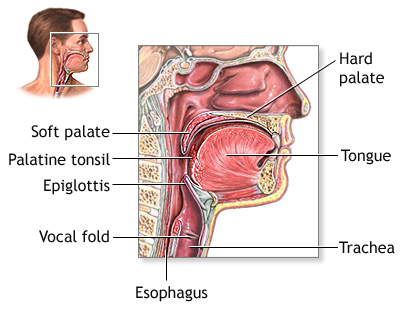
Structures of the throat include the esophagus, trachea, epiglottis and tonsils.
The voice box (larynx) is located at the top of the airway to the lungs (trachea). The larynx contains the vocal cords. When the vocal cords become inflamed or infected, they swell. This can cause hoarseness. Sometimes the airway can get blocked.
The most common form of laryngitis is an infection caused by a virus, such as cold or flu viruses. It may also be caused by:
A physical exam can find whether hoarseness is caused by a respiratory tract infection.
Patients with hoarseness that lasts more than a month (especially smokers) will need to see an ear, nose, and throat doctor (otolaryngologist) for tests of the throat and upper airway.
Common laryngitis is often caused by a virus, therefore antibiotics likely will not help. Your health care provider will make this decision.
Resting your voice helps to reduce inflammation of the vocal cords. A humidifier may soothe the scratchy feeling that comes with laryngitis. Decongestants and pain medicines may relieve the symptoms of an upper respiratory infection.