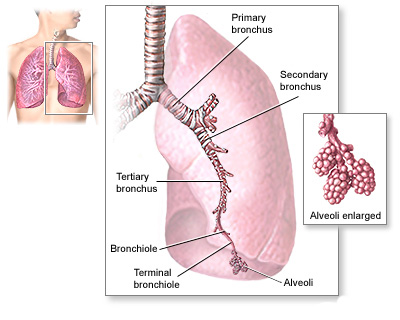
Acute bronchitis is swelling and inflammation of the main air passages to the lungs. This swelling narrows the airways, making it harder to breathe and causing other symptoms, such as a cough. Acute means the symptoms have only been present for a short time.
Acute bronchitis almost always follows a cold or flu-like infection. The infection is caused by a virus. At first, it affects your nose, sinuses, and throat. Then it spreads to the airways leading to your lungs.
Sometimes, bacteria also infect the airways. This is called a secondary infection.
Chronic bronchitis is a long-term condition. To be diagnosed with chronic bronchitis, you must have a cough with mucus most days of the month for at least 3 months.
Even after acute bronchitis has cleared, you may have a dry, nagging cough that lingers for 1 to 4 weeks.
At times, it may be hard to know whether you have pneumonia or only bronchitis. If you have pneumonia, you are more likely to have a high fever and chills, feel sicker, or feel short of breath.
Most people DO NOT need antibiotics for acute bronchitis. The infection will almost always go away on its own within 1 week. Take the following steps to get relief:
Drink plenty of fluids.
If you have asthma or another chronic lung condition, use your inhaler (such as albuterol).
Rest.
Take aspirin or acetaminophen (Tylenol) if you have a fever. DO NOT give aspirin to children
Use a humidifier or steam in the bathroom.
Certain medicines that you can buy without a prescription can help break up or loosen mucus. Look for the word "guaifenesin" on the label.
If your symptoms do not improve, your doctor may prescribe an inhaler to open your airways if you are wheezing.
Sometimes, bacteria may also infect the airways along with the virus. If your doctor thinks this has happened, you may be prescribed antibiotics.
Other tips include:
DO NOT smoke.
Avoid secondhand smoke and air pollution.
Wash your hands (and your children's hands) often to avoid spreading viruses and other infections.
You have a cough on most days, or you have a cough that often returns
You are coughing up blood
You have a high fever or shaking chills
You have a low-grade fever for 3 or more days
You have thick, greenish mucus, especially if it has a bad smell
You feel short of breath or have chest pain
You have a chronic illness, like heart or lung disease
Breathing is a complex process. If injury, disease, or other factors affect any part of the process, you may have trouble breathing.
For example, the fine hairs (cilia) that line your upper airways may not trap all of the germs you breathe in. These germs can cause an infection in your bronchial tubes (bronchitis) or deep in your lungs (pneumonia). These infections cause a buildup of mucus or fluid that narrows the airways and limits airflow in and out of your lungs.
If you have asthma, breathing in certain substances that you're sensitive to can trigger your airways to narrow. This makes it hard for air to flow in and out of your lungs.
Over a long period, breathing in cigarette smoke or air pollutants can damage the airways and air sacs. This can lead to a disease called COPD (chronic obstructive pulmonary disease). COPD prevents proper airflow in and out of your lungs and can hinder gas exchange in the air sacs.
An important step to breathing is the movement of your diaphragm and other muscles in your chest, neck, and abdomen. This movement lets you inhale and exhale. Nerves that run from your brain to these muscles control their movement. Damage to these nerves in your upper spinal cord can cause breathing to stop, unless a machine is used to help you breathe. (This machine is called a ventilatoror a respirator.)
A steady flow of blood in the small blood vessels that surround your air sacs is vital for gas exchange. Long periods of inactivity or surgery can cause a blood clot called a pulmonary embolism (PE) to block a lung artery. A PE can reduce or block the flow of blood in the small blood vessels and hinder gas exchange.
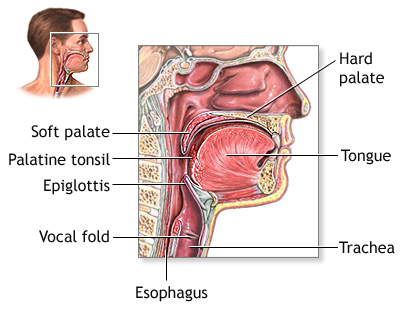
Structures of the throat include the esophagus, trachea, epiglottis and tonsils.
The voice box (larynx) is located at the top of the airway to the lungs (trachea). The larynx contains the vocal cords. When the vocal cords become inflamed or infected, they swell. This can cause hoarseness. Sometimes the airway can get blocked.
The most common form of laryngitis is an infection caused by a virus, such as cold or flu viruses. It may also be caused by:
A physical exam can find whether hoarseness is caused by a respiratory tract infection.
Patients with hoarseness that lasts more than a month (especially smokers) will need to see an ear, nose, and throat doctor (otolaryngologist) for tests of the throat and upper airway.
Common laryngitis is often caused by a virus, therefore antibiotics likely will not help. Your health care provider will make this decision.
Resting your voice helps to reduce inflammation of the vocal cords. A humidifier may soothe the scratchy feeling that comes with laryngitis. Decongestants and pain medicines may relieve the symptoms of an upper respiratory infection.