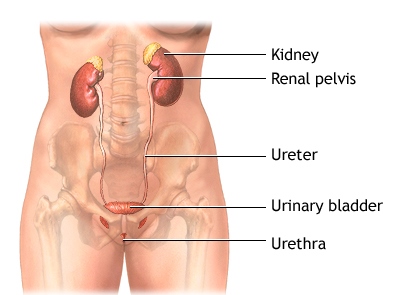
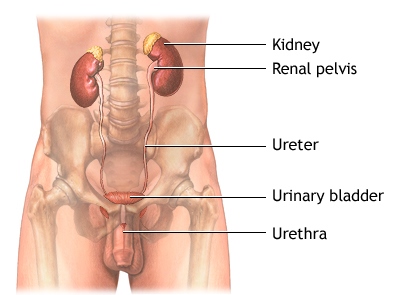
The urinary system is the body's drainage system for removing wastes and extra water. It includes two kidneys, two ureters, a bladder, and a urethra. Urinary tract infections (UTIs) such as cystitis and urethritis are the second most common type of infection in the body.
Female urinary tract Male urinary tract
You may have a UTI if you notice
Pain or burning when you urinate
Fever, tiredness or shakiness
An urge to urinate often
Pressure in your lower belly
Urine that smells bad or looks cloudy or reddish
Pain in your back or side below the ribs
People of any age or sex can get UTIs. But about four times as many women get UTIs as men. You're also at higher risk if you have diabetes, need a tube to drain your bladder, or have a spinal cord injury.
If you think you have a UTI it is important to see your doctor. Your doctor can tell if you have a UTI with a urine test. Treatment is with antibiotics.
Breathing is a complex process. If injury, disease, or other factors affect any part of the process, you may have trouble breathing.
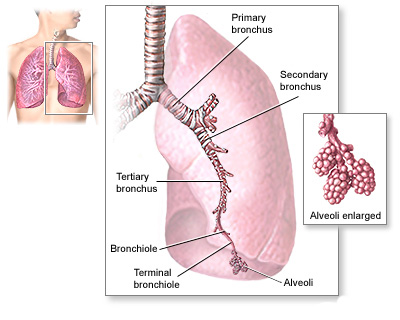
For example, the fine hairs (cilia) that line your upper airways may not trap all of the germs you breathe in. These germs can cause an infection in your bronchial tubes (bronchitis) or deep in your lungs (pneumonia). These infections cause a buildup of mucus or fluid that narrows the airways and limits airflow in and out of your lungs.
If you have asthma, breathing in certain substances that you're sensitive to can trigger your airways to narrow. This makes it hard for air to flow in and out of your lungs.
Over a long period, breathing in cigarette smoke or air pollutants can damage the airways and air sacs. This can lead to a disease called COPD (chronic obstructive pulmonary disease). COPD prevents proper airflow in and out of your lungs and can hinder gas exchange in the air sacs.
An important step to breathing is the movement of your diaphragm and other muscles in your chest, neck, and abdomen. This movement lets you inhale and exhale. Nerves that run from your brain to these muscles control their movement. Damage to these nerves in your upper spinal cord can cause breathing to stop, unless a machine is used to help you breathe. (This machine is called a ventilatoror a respirator.)
A steady flow of blood in the small blood vessels that surround your air sacs is vital for gas exchange. Long periods of inactivity or surgery can cause a blood clot called a pulmonary embolism (PE) to block a lung artery. A PE can reduce or block the flow of blood in the small blood vessels and hinder gas exchange.