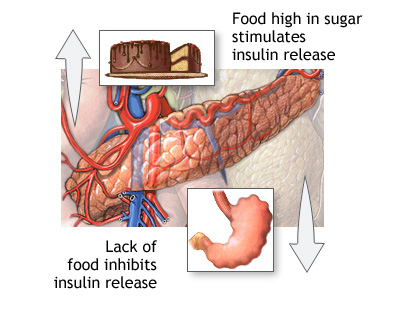
Insulin is a hormone produced by the pancreas to control blood sugar. Diabetes can be caused by too little insulin, resistance to insulin, or both.
To understand diabetes, it is important to first understand the normal process by which food is broken down and used by the body for energy. Several things happen when food is digested:
A sugar called glucose enters the bloodstream. Glucose is a source of fuel for the body.
An organ called the pancreas makes insulin. The role of insulin is to move glucose from the bloodstream into muscle, fat, and liver cells, where it can be used as fuel.
People with diabetes have high blood sugar because their body cannot move sugar into fat, liver, and muscle cells to be stored for energy. This is because either:
Their pancreas does not make enough insulin
Their cells do not respond to insulin normally
Both of the above
There are two major types of diabetes. The causes and risk factors are different for each type:
Type 1 diabetes can occur at any age, but it is most often diagnosed in children, teens, or young adults. In this disease, the body makes little or no insulin. Daily injections of insulin are needed. The exact cause is unknown.
Type 2 diabetes makes up most diabetes cases. It most often occurs in adulthood. But because of high obesity rates, teens and young adults are now being diagnosed with it. Many people with type 2 diabetes do not know they have it.
There are other causes of diabetes, and some patients cannot be classified as type 1 or type 2.
Gestational diabetes is high blood sugar that develops at any time during pregnancy in a woman who does not have diabetes.
A urine analysis may show high blood sugar. But a urine test alone does not diagnose diabetes.
Your health care provider may suspect that you have diabetes if your blood sugar level is higher than 200 mg/dL. To confirm the diagnosis, one or more of the following tests must be done.
Blood tests:
Fasting blood glucose level -- diabetes is diagnosed if it is higher than 126 mg/dL twice. Levels between 100 and 126 mg/dL are called impaired fasting glucose or pre-diabetes. These levels are risk factors for type 2 diabetes.
Oral glucose tolerance test -- diabetes is diagnosed if glucose level is higher than 200 mg/dL 2 hours after drinking a glucose drink. (This test is used more often for type 2 diabetes.)
Screening for type 2 diabetes in people who have no symptoms is recommended for:
Overweight children who have other risk factors for diabetes, starting at age 10 and repeated every 2 years
Overweight adults (BMI greater than 25) who have other risk factors
With type 2 diabetes, the disease may be reversed with lifestyle changes, especially losing weight through exercising and eating healthier foods. Also, some cases of type 2 diabetes can be improved with weight-loss surgery.
There is no cure for type 1 diabetes.
Treating both type 1 diabetes and type 2 diabetes involves medicines, diet, and exercise to control blood sugar level.
Getting better control over your blood sugar, cholesterol, and blood pressure levels helps reduce the risk of kidney disease, eye disease, nervous system disease, heart attack, and stroke.
To prevent diabetes complications, visit your health care provider at least two to four times a year. Talk about any problems you are having. Follow your health care provider's instructions on managing your diabetes.