Холестерин – майдың түі. Ол организмде көптеген маңызды функция атқарады, мысалы, жаңа жасушалардың түзілуіне қатысады. Холестириннің жоғарлауы жүрек ауруларына және инсультке әкелуі мүмкін.
Холестериннің жоғарлауы – майлы тағам жегеннен, тұқым қуалайтын жоғарғы холестеринді аурумен ауыратындарда тіркеледі.
Еміне диета, физикалық жүктемені күшейту, холестерин деңгейін төмендететін преператтар қолданылады.
Жалпы қан анализі арқылы сіз холестерин деңгейіңізді біле аласыз. Холестериннің өлшем бірлігі миллиграм/децилитр немесе миллимоль/литр.
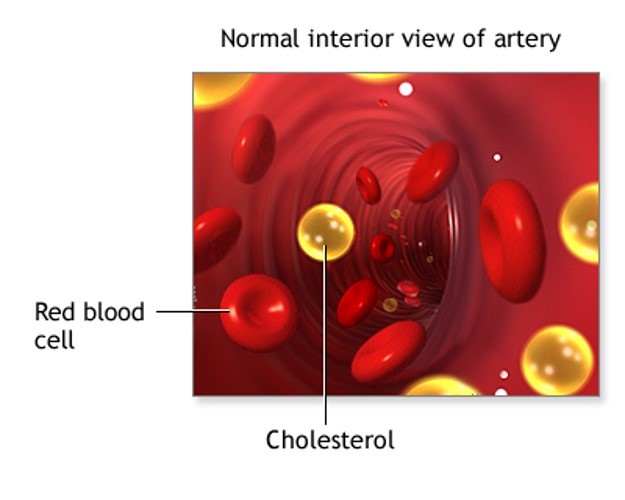
Cholesterol is a soft, wax-like substance found in all parts of the body. Your body needs a little bit of cholesterol to work properly. But too much cholesterol can clog your arteries and lead to heart disease.
Cholesterol blood tests are done to help you and your health care provider better understand your risk for heart disease, stroke, and other problems caused by narrowed or blocked arteries.
The ideal values for all cholesterol results depend on whether you have heart disease, diabetes, or other risk factors. Your provider can tell you what your goal should be.
Cholesterol Tests
Some cholesterol is considered good and some is considered bad. Different blood tests can be done to measure each type of cholesterol.
Your provider may order only a total cholesterol level as the first test. It measures all types of cholesterol in your blood.
You may also have a lipid (or coronary risk) profile, which includes:
Lipoproteins are made of fat and protein. They carry cholesterol, triglycerides, and other fats, called lipids, in the blood to various parts of the body.
When Should You Be Tested?
Everyone should have their first screening test by age 35 for men, and age 45 for women. Some guidelines recommend starting at age 20.
You should have a cholesterol test done at an earlier age if you have:
· Diabetes
· Heart disease
· Stroke
· High blood pressure
· A strong family history of heart disease
Follow-up testing should be done:
· Every 5 years if your results were normal
· More often for people with diabetes, high blood pressure, heart disease, stroke, or blood flow problems to the legs or feet
· Every year or so if you are taking medicines to control high cholesterol
Total Cholesterol
A total cholesterol of 180 to 200 mg/dL or less is considered best.
You may not need more cholesterol tests if your cholesterol is in this normal range.
LDL (Bad) Cholesterol
LDL cholesterol is sometimes called "bad" cholesterol. LDL can clog your arteries.
You want your LDL to be low. Too much LDL is linked to heart disease and stroke.
Your LDL is most often considered to be too high if it is 190 mg/dL or higher.
Levels between 70 and 189 mg/dL are most often considered too high if:
· You have diabetes and are between ages 40 and 75
· You have diabetes and a high risk of heart disease
· Some newer guidelines now suggest that providers no longer need to target a specific number for your LDL cholesterol. Higher strength medicines are used for the highest risk patients.
· However, some guidelines still recommend using specific targets.
HDL (Good) Cholesterol
You want your HDL cholesterol to be high. Studies of both men and women have shown that the higher your HDL, the lower your risk of coronary artery disease. This is why HDL is sometimes referred to as "good" cholesterol.
HDL cholesterol levels greater than 40 to 60 mg/dL are desired.
VLDL (Bad) Cholesterol
VLDL contains the highest amount of triglycerides. VLDL is considered a type of bad cholesterol, because it helps cholesterol build up on the walls of arteries.
Normal VLDL levels are from 2 to 30 mg/dL.
Considerations
Sometimes, your cholesterol levels may be low enough that your provider will not ask you to change your diet or take any medicines.
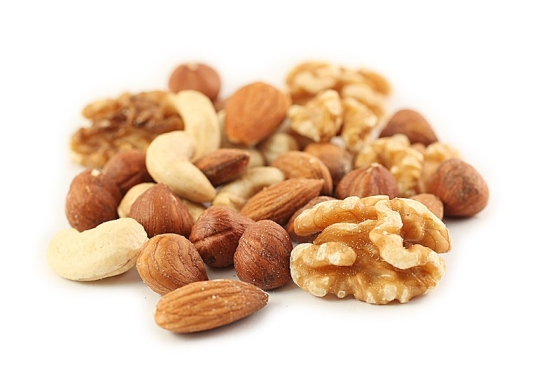
Чтобы контролировать собственный аппетит, постарайтесь перекусить орехами в промежуток между приемами пищи. Орехи обладают полезными свойствами для сердечно-сосудистой системы и не вредят вашей фигуре.
Холестерин – это тип жира (липида), необходимый организму для многих важных функций, например, для образования новых клеток. Высокий уровень холестерина повышает риск развития сердечного заболевания и инсульта.
Высокий уровень холестерина вызван приемом пищи с высоким содержанием холестерина и насыщенного жира, либо наследственным заболеванием, способствующим повышению уровня холестерина.
Лечение включает соблюдение диеты более полезного для здоровья, увеличение физической активности и возможно прием препаратов, снижающих уровень холестерина.
Анализ крови может определить, повышен ли у вас уровень холестерина. Холестерин измеряется в миллиграммах на децилитр (мг/дл) или миллимолях на литр (ммоль/л).
Рекомендуемый общий уровень холестерина – менее 200 мг/дл (5,17 ммоль/л).
От 200 до 239 (от 5,17 до 6,18) – считается уровнем холестерина, приближенным к высокому.
240 (6,21) или выше считается высоким уровнем холестерина.



 Многие когда-то слышали пословицу: «Одно яблоко в ночь гонит доктора прочь». Оказывается, эта поговорка имеет вполне реальную основу.