Результаты исследования, проведенного американским Национальным фондом сна, свидетельствуют о том, что лучше всего мы засыпаем на постельном белье белого цвета.
Наверняка каждый из нас хотя бы однажды в своей жизни страдал бессонницей (инсомнией). Возможно, это происходило в ночь перед экзаменом или перед важной встречей, когда вы старались лечь пораньше и хорошенько выспаться. А вместо этого, часами лежали без сна, мучительно прокручивая варианты предстоящих событий. Или придя после напряженного рабочего дня, буквально "засыпая на ходу", вы ложились в постель в мечтах о желанном отдыхе, но, увы, то постель неудобна, то мешают какие-то еле различимые звуки, - и желание спать безвозвратно улетучивается. Подобные проблемы регулярно возникают у 30-45% людей, причем у половины из них приобретают хронический характер.
В самом течении бессонницы выделяют три этапа:
Первый - это трудности начала сна (пресомнические расстройства), т.е. проблемы с засыпанием. Причем постепенно у человека формируются целые ритуалы "отхода ко сну", может появиться "боязнь постели" или страх "ненаступления сна".
Расстройствами второго этапа (интрасомническими) являются частые ночные пробуждения от звуков или от тяжелого сна, кошмара, ощущения болей, нарушения дыхания, резких движений, после которых человеку долго не удается уснуть.
И, наконец, на третьем этапе (постсомническом) возникает проблема тяжелого утреннего подъема, пониженной работоспособности, ощущения разбитости, сонливости.
Встречаются также случаи, когда человек жалуется, что "не сомкнул глаз в течение ночи", а при обследовании у врача выявляется, что он спит, и не менее 5 часов в сутки. Такая ситуация носит название искаженного восприятия сна (агнозии сна).
Лечение. Итак, если у вас бессонница, то вполне может быть, что проблема решается просто - научитесь спать правильно! Попробуйте упорядочить свой график работы и отдыха, возьмите за правило принимать перед сном теплую, расслабляющую ванну, возможно, вам следует пройти курс аутотреннинга.
В тех случаях, когда бессонница вызвана сильной усталостью, стрессом, вы можете принять снотворное, однако следует помнить, что, во-первых, необходимо строго следовать правилам приема данного препарата, а во-вторых, что длительность применения любых снотворных средств не должна превышать 10-14 дней. За этот срок, как правило, не формируются привыкание и зависимость, а также не возникает проблемы отмены препарата. Соблюдать этот принцип достаточно сложно, так как большинство людей предпочитает использовать препараты, нежели мучительно переносить нарушения сна.
Если же после всех принятых вами мер вы по-прежнему страдаете приступами бессонницы, то необходимо обратиться к сомнологу. Возможно, вам также потребуется дополнительное обследование у невропатолога. Для лечения бессоницы вам могут назначить физиотерапевтические процедуры, фототерапию, курс иглорефлексотерапии, курс психотерапии.
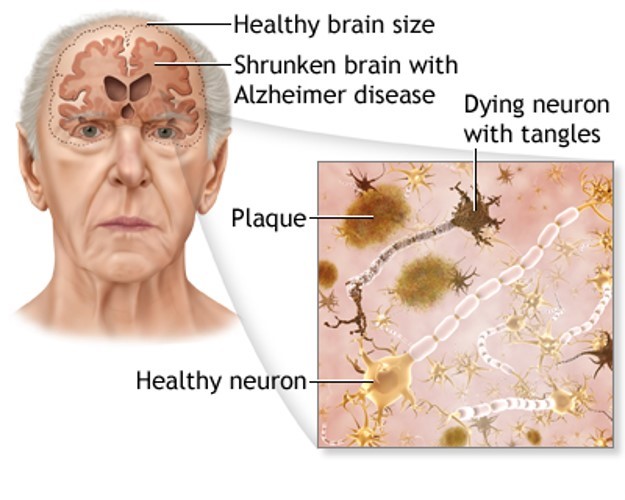
Dementia is a loss of brain function that occurs with certain diseases. Alzheimer disease is one form of dementia. It affects memory, thinking, and behavior.
The exact cause of Alzheimer disease (AD) is not known. Research shows that certain changes in the brain lead to AD.
You are more likely to develop AD if you:
Are older. Developing AD is not a part of normal aging.
Have a close relative, such as a brother, sister, or parent with AD.
Have certain genes linked to AD.
The following may also increase the risk:
Being female
Having heart and blood vessel problems due to high cholesterol
History of head trauma
There are two types of AD:
Early onset AD. Symptoms appear before age 60. This type is much less common than late onset. It tends to get worse quickly. Early onset disease can run in families. Several genes have been identified.
Late onset AD. This is the most common type. It occurs in people age 60 and older. It may run in some families, but the role of genes is less clear.
AD symptoms include difficulty with many areas of mental function, including:
Emotional behavior or personality
Language
Memory
Perception
Thinking and judgment (cognitive skills)
AD usually first appears as forgetfulness.
Mild cognitive impairment (MCI) is the stage between normal forgetfulness due to aging, and the development of AD. People with MCI have mild problems with thinking and memory that do not interfere with daily activities. They are often aware of the forgetfulness. Not everyone with MCI develops AD.
Symptoms of MCI include:
Difficulty performing more than one task at a time
Difficulty solving problems
Forgetting recent events or conversations
Taking longer to perform more difficult activities
Early symptoms of AD can include:
Difficulty performing tasks that take some thought, but used to come easily, such as balancing a checkbook, playing complex games (bridge), and learning new information or routines
Getting lost on familiar routes
Language problems, such as trouble remembering the names of familiar objects
Losing interest in things previously enjoyed and being in a flat mood
Misplacing items
Personality changes and loss of social skills
As AD becomes worse, symptoms are more obvious and interfere with the ability to take care of oneself. Symptoms may include:
Change in sleep patterns, often waking up at night
Delusions, depression, and agitation
Difficulty doing basic tasks, such as preparing meals, choosing proper clothing, and driving
Difficulty reading or writing
Forgetting details about current events
Forgetting events in one's life history and losing self-awareness
Hallucinations, arguments, striking out, and violent behavior
Poor judgment and loss of ability to recognize danger
Using the wrong word, mispronouncing words, or speaking in confusing sentences
Withdrawing from social contact
People with severe AD can no longer:
Recognize family members
Perform basic activities of daily living, such as eating, dressing, and bathing
A skilled health care provider can often diagnose AD with the following steps:
Performing a complete physical exam, including a nervous system exam
Asking about the person's medical history and symptoms
Mental function tests (mental status examination)
A diagnosis of AD is made when certain symptoms are present, and by making sure other causes of dementia are not present.
Tests may be done to rule out other possible causes of dementia, including:
Anemia
Brain tumor
Chronic infection
Intoxication from medicines
Severe depression
Increased fluid on the brain (normal pressure hydrocephalus)
Stroke
Thyroid disease
Vitamin deficiency
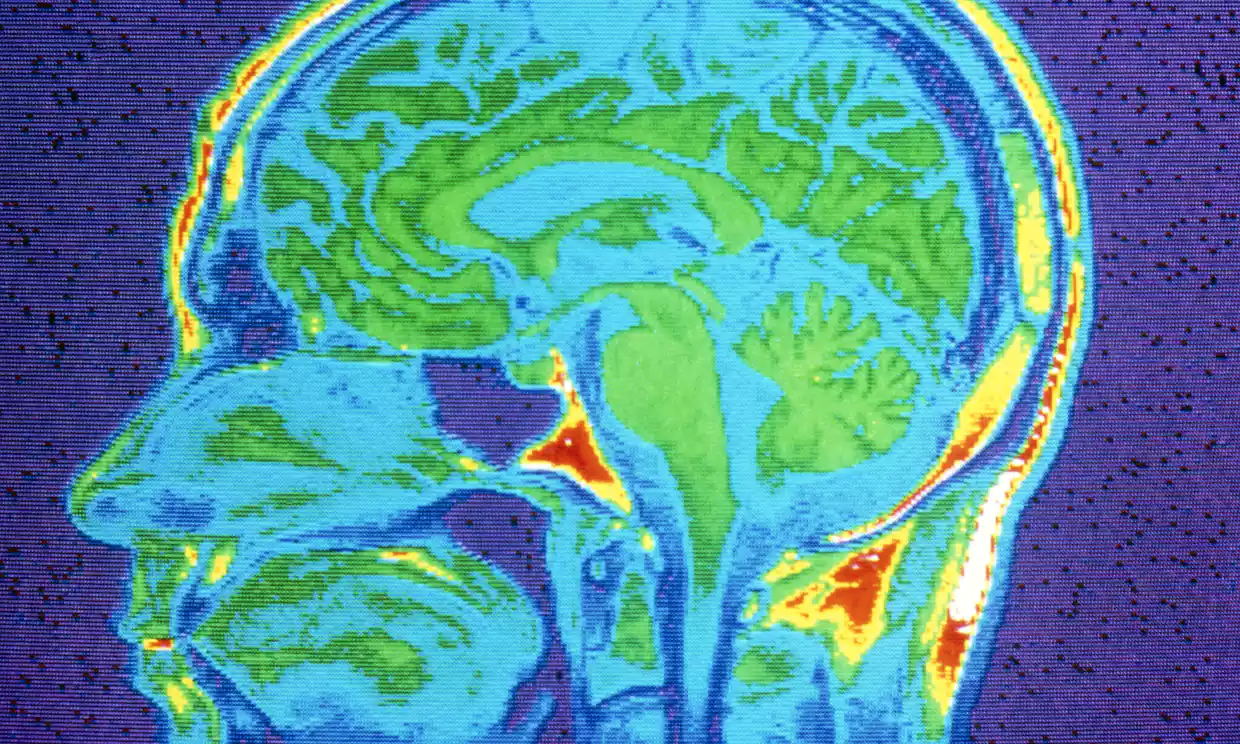
CT or MRI of the brain may be done to look for other causes of dementia, such as a brain tumor or stroke. Sometimes, a PET scan can be used to rule out AD.
The only way to know for certain that someone has AD is to examine a sample of their brain tissue after death.
There is no cure for AD. The goals of treatment are:
Slow the progression of the disease (although this is difficult to do)
Manage symptoms, such as behavior problems, confusion, and sleep problems
Change the home environment to make daily activities easier
Support family members and other caregivers
Medicines are used to:
Slow the rate at which symptoms worsen, though the benefit from using these drugs may be small
Control problems with behavior, such as loss of judgment or confusion
Before using these medicines, ask the provider:
What are the side effects? Is the medicine worth the risk?
When is the best time, if any, to use these medicines?
Do medicines for other health problems need to be changed or stopped?
Someone with AD will need support in the home as the disease gets worse. Family members or other caregivers can help by helping the person cope with memory loss and behavior and sleep problems. It is important to make sure the home of a person who has AD is safe for them.
Having AD or caring for a person with the condition may be a challenge. You can ease the stress of illness by seeking support through AD resources. Sharing with others who have common experiences and problems can help you not feel alone.
How quickly AD gets worse is different for each person. If AD develops quickly, it is more likely to worsen quickly.
People with AD often die earlier than normal, although a person may live anywhere from 3 to 20 years after diagnosis.
Families will likely need to plan for their loved one's future care.
The final phase of the disease may last from a few months to several years. During that time, the person becomes totally disabled. Death usually occurs from an infection or organ failure.
Sleep habits we learned as children may affect our sleep behaviors as adults. Poor sleep or lifestyle habits that may cause insomnia or make it worse include:
Going to bed at a different time each night
Daytime napping
Poor sleeping environment, such as too much noise or light
Spending too much time in bed while awake
Working evenings or night shifts
Not getting enough exercise
Using the television, computer, or a mobile device in bed
The use of some medicines and drugs may also affect sleep, including:
Alcohol or other drugs
Heavy smoking
Too much caffeine throughout the day or drinking caffeine late in the day
Getting used to certain types of sleep medicines
Some cold medicines and diet pills
Other medicines, herbs, or supplements
Physical, social, and mental health issues can affect sleep patterns, including:
With age, sleep patterns tend to change. Many people find that aging causes them to have a harder time falling asleep, and that they wake up more often.
The most common complaints or symptoms in people with insomnia are:
Trouble falling asleep on most nights
Feeling tired during the day or falling asleep during the day
Not feeling refreshed when you wake up
Waking up several times during sleep
People who have insomnia are sometimes consumed by the thought of getting enough sleep. But the more they try to sleep, the more frustrated and upset they get, and the harder sleep becomes.
Lack of restful sleep can:
Make you tired and unfocused, so it is hard to do daily activities.
Put you at risk for auto accidents. If you are driving and feel sleepy, pull over and take a break.
Your health care provider will do a physical exam and ask about your current medications, drug use, and medical history. Usually, these are the only methods needed to diagnose insomnia.
Not getting 8 hours of sleep every night does not mean your health is at risk. Different people have different sleep needs. Some people do fine on 6 hours of sleep a night. Others only do well if they get 10 to 11 hours of sleep a night.
Treatment often begins by reviewing any drugs or health problems that may be causing or worsen insomnia, such as:
Enlarged prostate gland, causing men to wake up at night
Pain or discomfort from muscle, joint, or nerve disorders
You should also think about lifestyle and sleep habits that may affect your sleep. This is called sleep hygiene. Making some changes in your sleep habits may improve or solve your insomnia.
Some people may need medicines to help with sleep for a short period of time. But in the long run, making changes in your lifestyle and sleep habits is the best treatment for problems with falling and staying asleep.
Most over-the-counter (OTC) sleeping pills contain antihistamines. These medicines are commonly used to treat allergies. Your body quickly becomes used to them.
Sleep medicines called hypnotics can be prescribed by your provider to help reduce the time it takes you to fall asleep. Most of these can become habit-forming.
Medicines used to treat anxiety or depression can also help with sleep
Different methods of talk therapy may help you gain control over anxiety or depression.