.

грыжа | zdrav.kz
X

Электрондық поштаңызға соңғы жаңалықтарды алыңыз

X

Получайте самые последние новости на свой e-mail

грыжа

Омыртқалардың арасында шағын, дөңгелек жалпақ дискілер болады. Осы дискілердің жарақаттан, қалыпты тозудан, немесе аурудан зақымдануында олар шығыңқы күйге түседі. Бұл жағдай омыртқа аралық дискінің жарығы аталады.    

Омыртқа дискілері жас ұлғайған сайын – құрғақ, иілгіш және әлжуаз бола түседі. Жарақат пен ұзақ уақыт бойғы жүктеме дискінің сыртқы жабындысында кішкентай саңылау болуын үдетеді.

Әлсіреген дискіге шамадан тыс қысым түскенде дискінің ортасындағы қоймалжың материалдың бөлігі капсуладағы саңылау арқылы ағып кетуі мүмкін, нәтижесінде, диск нерв түбірін немесе омыртқа каналын  қоршайтын кеңістікке шығып кетеді. омыртқа аралық дискінің жарығы нервтің қызметіне кедергі келтіреді, әлсіздікке, ұйып қалуға, немесе аяқтағы ауырсынуға апаруы мүмкін.

Көпшілік жағдайда омыртқа аралық дискі жарығының симптомдарын консервативтік әдіспен емдеуге болады. уақыт  өте симптомдары жойылады. Кейбір сирек жағдайда операция қажет болуы ықтимал.

Contents

Causes

Symptoms

Exams and Tests

Treatment

Outlook (Prognosis)

Possible Complications

When to Contact a Medical Professional

Prevention


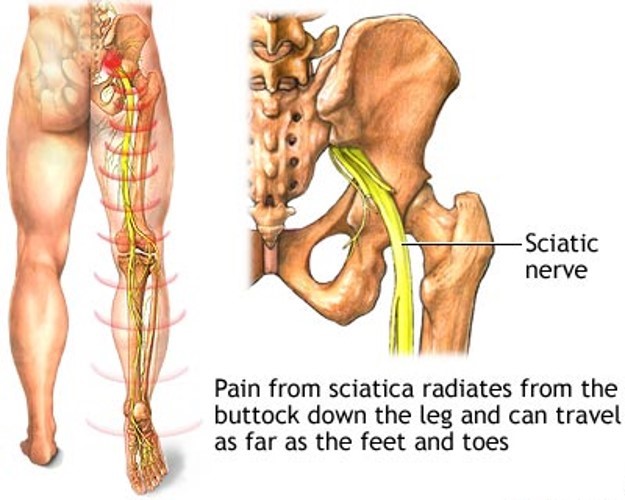
Sciatica refers to pain, weakness, numbness, or tingling in the leg. It is caused by injury to or pressure on the sciatic nerve. Sciatica is a symptom of another medical problem. It is not a medical condition on its own.

Causes

Sciatica occurs when there is pressure or damage to the sciatic nerve. This nerve starts in the lower back and runs down the back of each leg. This nerve controls the muscles of the back of the knee and lower leg. It also provides sensation to the back of the thigh, part of the lower leg, and the sole of the foot.

Common causes of sciatica include:

·         Slipped disk

·         Spinal stenosis

·         Piriformis syndrome (a pain disorder involving the narrow muscle in the buttocks)

·         Pelvic injury or fracture

·         Tumors

Symptoms

Sciatica pain can vary widely. It may feel like a mild tingling, dull ache, or burning sensation. In some cases, the pain is severe enough to make a person unable to move.

The pain most often occurs on one side. Some people have sharp pain in one part of the leg or hip and numbness in other parts. The pain or numbness may also be felt on the back of the calf or on the sole of the foot. The affected leg may feel weak. Sometimes, your foot gets caught on the ground when walking.

The pain often starts slowly. It may get worse:

·         After standing or sitting

·         At night

·         When sneezing, coughing, or laughing

·         When bending backward or walking more than a few yards, especially if caused by spinal stenosis

Exams and Tests

The health care provider will perform a physical exam. This may show:

·         Weakness when bending the knee

·         Difficulty bending the foot inward or down

·         Difficulty bending forward or backward

·         Abnormal or weak reflexes

·         Loss of sensation or numbness

·         Pain when lifting the leg straight up off the examining table

Tests are often not needed unless pain is severe or long-lasting. If tests are ordered, they may include:

·         Blood tests

·         X-rays

·         MRIs or other imaging tests

Treatment

Because sciatica is a symptom of another medical condition, the underlying cause should be identified and treated.

In some cases, no treatment is required and recovery occurs on its own.

Conservative (non-surgical) treatment is best in many cases. Your doctor may recommend the following steps to calm your symptoms and reduce inflammation:

·         Apply heat or ice to the painful area. Try ice for the first 48 to 72 hours, then use heat.

·         Take over-the-counter pain relievers such as ibuprofen (Advil, Motrin IB) or acetaminophen (Tylenol).

Measures to take care of your back at home:

·         Bed rest is not recommended.

·         Reduce your activity for the first couple of days. Then, slowly start your usual activities.

·         Do not do heavy lifting or twisting of your back for the first 6 weeks after the pain begins.

·         Start exercising again after 2 to 3 weeks. Include exercises to strengthen your abdomen and improve flexibility of your spine.

Physical therapy may also be recommended. Additional treatments depend on the condition that is causing the sciatica.

If these measures do not help, your doctor may recommend injections of certain medicines to reduce swelling around the nerve. Other medicines may be prescribed to help reduce the stabbing pains due to nerve irritation.

Nerve pain is very difficult to treat. If you have ongoing problems with pain, you may want to see a neurologist or a pain specialist to ensure that you have access to the widest range of treatment options.

Outlook (Prognosis)

Often, sciatica gets better on its own. But it is common for it to return.

Possible Complications

More serious complications depend on the cause of sciatica, such as slipped disc or spinal stenosis. Sciatica can lead to permanent numbness or weakness of your leg.

When to Contact a Medical Professional

Call your doctor right away if you have:

·         Unexplained fever with back pain

·         Back pain after a severe blow or fall

·         Redness or swelling on the back or spine

·         Pain traveling down your legs below the knee

·         Weakness or numbness in your buttocks, thigh, leg, or pelvis

·         Burning with urination or blood in your urine

·         Pain that is worse when you lie down, or awakens you at night

·         Severe pain and you cannot get comfortable

·         Loss of control of urine or stool (incontinence)

Also call if:

·         You have been losing weight unintentionally (not on purpose)

·         You use steroids or intravenous drugs

·         You have had back pain before, but this episode is different and feels worse

·         This episode of back pain has lasted longer than 4 weeks

Prevention

Prevention varies, depending on the cause of the nerve damage. Avoid prolonged sitting or lying with pressure on the buttocks.


Source: https://medlineplus.gov/ency/article/000686.htm

What is a herniated disc?
The spine is made up of a series of connected bones called "vertebrae." The disc is a combination of strong connective tissues which hold one vertebra to the next and acts as a cushion between the vertebrae. The disc is made of a tough outer layer called the "annulus fibrosus" and a gel-like center called the "nucleus pulposus." As you get older, the center of the disc may start to lose water content, making the disc less effective as a cushion. This may cause a displacement of the disc’s center (called a herniated or ruptured disc) through a crack in the outer layer. Most disc herniations occur in the bottom two discs of the lumbar spine, at and just below the waist. 

A herniated lumbar disc can press on the nerves in the spine and may cause pain, numbness, tingling or weakness of the leg called "sciatica." Sciatica affects about 1-2% of all people, usually between the ages of 30 and 50.

A herniated lumbar disc may also cause back pain, although back pain alone (without leg pain) can have many causes other than a herniated disc. 
What treatments are available?

Most (80-90%) patients with a new or recent acute disc herniation will improve without surgery. The doctor will usually try using nonsurgical treatments for the first few weeks. If the pain still keeps you from your normal lifestyle after completing treatment, your doctor might recommend surgery. Although surgery may not return leg strength to normal, it can stop your leg from getting weaker, and relieve leg pain. Surgery is usually recommended for relief of leg pain (>90% success); surgery is less effective in relieving back pain.

Nonsurgical treatment
Your doctor may prescribe nonsurgical treatments including a short period of rest, anti-inflammatory medications to reduce the swelling, analgesic drugs to control the pain, physical therapy, exercise or epidural steroid injection therapy. If you are told to rest, follow your doctor's directions on how long to stay in bed. Too much bed rest may give you stiff joints and weak muscles, which will make it harder to do activities that could help reduce the pain. Ask your doctor whether you should continue to work while you are being treated.

Your doctor may start treatment and, with the help of a nurse or physical therapist, begin education and training about performing the activities of daily living without placing added stress on your lower back.

The goals of nonsurgical treatment are to reduce the irritation of the nerve and disc and to improve the physical condition of the patient to protect the spine and increase overall function. This can be accomplished in the majority of herniated disc patients with an organized care program that combines a number of treatment methods.

Some of the first treatments your doctor may prescribe include therapies such as ultrasound, electric stimulation, hot packs, cold packs and manual ("hands on") therapy to reduce your pain and muscle spasm, which will make it easier to start an exercise program. Traction may also provide limited pain relief for some patients. Occasionally, your doctor may ask you to wear a lumbar corset (soft, flexible back brace) at the start of treatment to relieve your back pain, although it doesn’t help heal the herniated disc. Manipulation may provide short-term relief from nonspecific low back pain, but should be avoided in most cases of herniated disc.

At first, the exercises you learn may be gentle stretches or posture changes to reduce the back pain or leg symptoms. When you have less pain, more vigorous exercises will likely be used to improve flexibility, strength, endurance and the ability to return to a more normal lifestyle. Exercise instruction should start right away and be modified as recovery progresses. Learning and continuing a home exercise and stretching program are important parts of treatment.

Medication and pain management
Medications used to control pain are called analgesics. Most pain can be treated with nonprescription medications such as aspirin, ibuprofen, naproxen or acetaminophen. If you have severe persistent pain, your doctor might prescribe narcotics for a short time. Sometimes, but not often, a doctor will prescribe muscle relaxants. However, you want to take only the medication you need because taking more doesn't help you recover faster, might cause unwanted side effects (such as constipation and drowsiness) and can result in dependency. All medication should be taken only as directed. Make sure you tell your doctor about any kind of medication you are taking, even over-the-counter drugs and supplements, and if he/she prescribes pain medication, let him/her know how it is working for you.

Nonsteroidal anti-inflammatory medications (NSAIDs) are analgesics and are also used to reduce swelling and inflammation that occur as a result of disc herniation. These include asprin, ibuprofen, naproxen and a variety of prescription drugs. If your doctor gives you anti-inflammatory medications, you should watch for side effects like stomach upset or bleeding. Chronic use of prescription or over-the-counter NSAIDs should be monitored by your physician for the development of any potential problems.

Other medications are available that also have an anti-inflammatory effect. Corticosteroid medications --- either orally or by injection --- are sometimes prescribed for more severe back and leg pain because of their very powerful anti-inflammatory effect. Corticosteroids, like NSAIDs, can have side effects. Risks and benefits of this medication should be discussed with your physician. Epidural injections or "blocks" may be recommended if you have severe leg pain. These are injections of corticosteroid into the epidural space (the area around the spinal nerves), performed by a doctor with special training in this technique. The initial injection may be followed by one or two more injections at a later date, and should be done as part of a comprehensive rehabilitation and treatment program.

Trigger point injections are injections of local anesthetics (sometimes combined with corticosteroids) directly into painful soft tissue or muscles along the spine or over the back of the pelvis. While occasionally useful for pain control, trigger point injections do not help heal a herniated lumbar disc.

Surgery
The goal of surgery is to make the herniated disc stop pressing on and irritating the nerves, causing symptoms of pain and weakness. The most common procedure is called a "discectomy" or "partial discectomy," in which part of the herniated disc is removed. In order to see the disc clearly, sometimes it is necessary to remove a small portion of the lamina, the bone behind the disc. Bone removal may be minimal (hemi-laminotomy) or more extensive (hemi-laminectomy). Some surgeons use an endoscope or microscope in some cases.

Discectomy can be done under either local, spinal or general anesthesia. The patient lies face down on the operating table, generally in a kneeling position. A small incision is made in the skin over the herniated disc and the muscles over the spine are pulled back from the bone. A small amount of bone may be removed so the surgeon can see the compressed nerve. The herniated disc and any loose pieces are removed until they are no longer pressing on the nerve. Any bone spurs (osteophytes) are also taken out to make sure that the nerve is free of pressure. Usually, there is very little bleeding.

What can I expect after surgery?
If your main symptom is leg pain (rather than low back pain), you can expect good results from surgery. Before surgery, your doctor will do an examination and tests to make sure that the herniated disc is pressing on a nerve and causing your pain. Physical examination should show a positive straight leg raise test demonstrating sciatica and possibly muscle weakness numbness or reflex changes. Additional tests can include an imaging test (magnetic resonance image [MRI], computed tomography [CT] or myelography) that clearly shows nerve compression. If these tests are all positive for you, and your doctor is sure that you have nerve compression, your chance of significant relief from leg pain after surgery is approximately 90%. Although you should not expect to be pain-free every day, you should be able to keep the pain under control and resume a fairly normal lifestyle.

Most patients will not have complications after discectomy, but it is possible you may have some bleeding, infection, tears of the protective lining of the spinal nerve roots (dura mater) or injury to the nerve. It is also possible that the disc will rupture again and cause symptoms. This occurs in about 5% of patients.

Ask your doctor for recommendations on postsurgical activity restrictions. It is usually a good idea to get out of bed and walk around immediately after recovering from anesthesia. Most patients go home within 24 hours after surgery, often later the same day. Once home, you should avoid driving, prolonged sitting, excessive lifting and bending forward for the first four weeks. Some patients will benefit from a supervised rehabilitation program after surgery. You should ask your doctor if you can use exercise to strengthen your back to prevent recurrence.

How do I know if I need emergency surgery?
Very rarely, a large disc herniation may press on the nerves which control the bladder and bowel, causing loss of bladder or bowel control. This is usually accompanied by numbness and tingling in the groin or genital area and is one of the few indications that you need surgery immediately for a herniated lumbar disc. Call your doctor at once if this happens.


Sourcehttp://www.knowyourback.org/Pages/SpinalConditions/DegenerativeConditions/HerniatedLumbarDisc.aspx

Грыжа межпозвоночного диска

УВАЖАЕМЫЙ ЧИТАТЕЛЬ: Ваш позвоночник состоит из костей, называемых позвонками. Между каждыми двумя позвонками находится межпозвоночный диск, выполняющий функцию амортизатора. Каждый диск состоит из мягкого геля в центре и прочной фиброзной ткани вокруг него. Эта ткань может порваться, и если гель в центре диска выпирает из разрыва, то это и называется грыжей межпозвоночного диска.

Оглавление

Причины

Симптомы

Диагностика

Лечение

Прогноз

Возможные осложнения

Когда необходимо обратиться к врачу

Профилактика


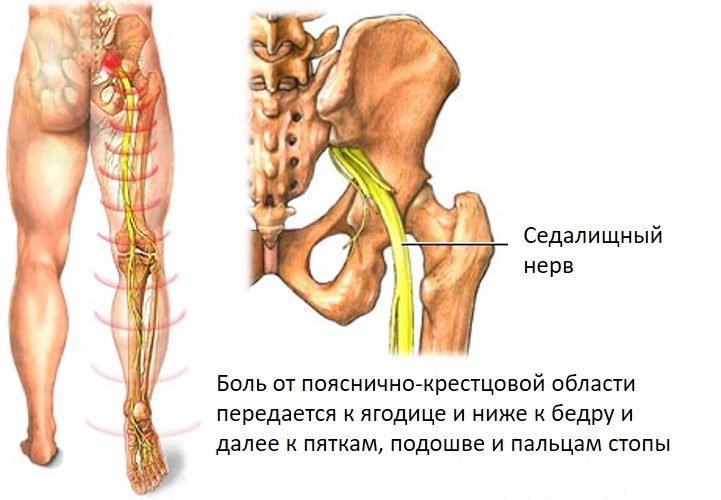
Ишиаз проявляется болью, слабостью, чувством онемения и покалывания в ноге. Данное состояние обусловлено травмой или сдавливанием седалищного нерва. Ишиаз не является самостоятельным заболеванием, это лишь симптом какого-либо другого заболевания.

Причины

Ишиаз возникает при травме или сдавлении седалищного нерва. Этот нерв берет начало в области поясницы и спускается вниз по задней поверхности каждой ноги. Этот нерв управляет работой мышц задней поверхности колена и голени. Он также обеспечивает чувствительность в области задней поверхности бедра, части голени и подошвенной поверхности стопы.

К наиболее распространенным причинам ишиаза относятся:

·    Грыжа межпозвоночного диска

·    Стеноз позвоночного канала

·    Синдром грушевидной мышцы (болевое ощущение в области ягодицы)

·    Травмы или переломы таза

·    Опухоли

Симптомы

Седалищная боль может варьировать. Она может ощущаться как легкое покалывание, тупая боль или чувство жжения. В некоторых случаях боль настолько сильная, что способна ограничить подвижность.

В большинстве случаев боль односторонняя. Некоторые лица могут испытывать острую боль в одной части ноги или бедра и чувство онемения на других участках. Боль и онемения также могут ощущаться в области задней поверхности голени и подошвенной поверхности стопы. В пораженной конечности может ощущаться слабость. Иногда при ходьбе вам может быть сложно оторвать стопу от земли. 

Обычно боль начинается медленно. Она может прогрессировать:

·    После того, как вы встали или сели

·    По ночам

·    После чихания, кашля или смеха

·    При наклоне назад или длительной ходьбе пешком, особенно если это обусловлено стенозом позвоночного канала

Диагностика

Врач проведет медицинский осмотр, в ходе которого могут быть выявлены:

·    Слабость при сгибании колена

·    Трудности при сгибании стопы по направлению внутрь или вниз

·    Трудности при наклонах вперед и назад

·    Нарушение или ослабление рефлексов

·    Потеря чувствительности или чувство онемения

·    Боль при поднимании ноги вверх

При сильной или длительной боли обследования обычно не нужны. Если диагностические процедуры и назначаются, то они включают:

·    Анализы крови

·    Рентген

·    МРТ или другие визуальные диагностические процедуры

Лечение

Так как ишиаз является симптомом других заболеваний, необходимо выявить основное заболевание.

В некоторых случаях лечение не требуется, выздоровление наступает само по себе.

Во многих случаях хороши консервативные (не хирургические) методы лечения. Врач может дать вам следующие советы, чтобы облегчить ваши симптомы и уменьшить воспаление:

·     Приложите тепло или лед на пораженную область. В течение первых 48-72 часов предпочтителен лед, позднее – тепло.

·     Примите обезболивающий препарат, такой как ибупрофен или ацетаминофен

Мероприятия по уходу за своей спиной в домашних условиях:

·     Постельный режим не рекомендуется

·     В течение первых двух дней следует ограничить свою двигательную активность. Затем, постепенно возвращайтесь к своей повседневной активности.

·     Не следует поднимать тяжести или делать упражнения по скручиванию спины в течение первых 6 недель после начала болей.

·     Начинать физические упражнения следует через 2-3 недели. Включите упражнения для укрепления брюшной стенки и улучшения гибкости позвоночника

Также может быть рекомендована физиотерапия. Дополнительные методы лечения могут быть назначены в зависимости от причины, вызвавшей ишиаз.

Если данные меры не эффективны, врач может назначить вам инъекции препаратов для уменьшения воспаления вокруг нерва. Другие лекарственные препараты могут быть назначены для облегчения колющей боли, вызванной раздражением нерва.

Боль при поражении нервов очень сложно лечить. Если вас беспокоят постоянные боли, вы можете обратиться к невропатологу или специалисту по боли, чтобы быть уверенным в том, что у вас есть доступ к самым разнообразным методам лечения.

Прогноз

Обычно ишиаз проходит самостоятельно. Но зачастую приступы боли могут повторяться.

Возможные осложнения

Более серьезные осложнения зависят от причины развития ишиаза, таких как, грыжа межпозвоночного диска или стеноз позвоночного канала. Ишиаз может привести к постоянному чувству онемения или слабости в ноге.

Когда необходимо обратиться к врачу

Незамедлительно обратитесь к врачу в следующих случаях:

·    Необъяснимая лихорадка и боль в спине

·    Боль в спине после сильного удара или падения

·    Покраснение или отечность в области спины или позвоночника

·    Боль, распространяющаяся вниз по ноге ниже колена

·    Слабость и чувство онемения в области ягодиц, бедра, ноги или таза

·    Жжение при мочеиспускании или наличие крови в моче

·    Боль, усиливающаяся в горизонтальном положении или заставляющая просыпаться по ночам

·    Сильная боль и дискомфорт

·    Потеря контроля над мочеиспусканием или актом дефекации

Также обратитесь к врачу в следующих случаях:

·     Внезапная потеря веса

·     Вы принимаете стероиды или внутривенные наркотические препараты

·     До этого у вас были сильные боли в спине, но в этот раз боль носит другой характер

·     Данный эпизод боли в спине длится более 4 недель

Профилактика

Меры профилактики варьируют в зависимости от причины, вызвавшей поражение нерва. Старайтесь избегать длительного нахождения в положении сидя и лежа со сдавливанием нервов в области ягодиц


Источник: https://medlineplus.gov/ency/article/000686.htm

Синонимы: 

Нейропатия – седалищный нерв; Дисфункция седалищного нерва; Боль в области поясницы - ишиаз


Материал подготовлен Алмазом Шарманом, профессором медицины.

Перевод Асель Стамбековой.

Редакция Александра Королькова.


Между позвонками находятся небольшие, круглые плоские диски. При повреждении этих дисков от травмы, нормального износа или заболевания они могут выпятиться. Такое состояние называется грыжа межпозвоночного диска.

Позвоночные диски с возрастом разрушаются – становятся суше, гибче и уязвимее. Травма и длительная перегрузка может ускорить образование крошечных щелей в наружном покрове диска.

При чрезмерном давлении на ослабленный диск некоторая часть желеобразного материала в центре диска может протечь сквозь щели в капсуле, в результате чего диск прорывается в пространство, окружающее нервный корешок или позвоночный канал. Грыжа межпозвоночного диска может препятствовать функции нерва и привести к слабости, онемению или боли в конечностях.

В большинстве случаев симптомы грыжи межпозвоночного диска можно лечить консервативным методом. Современем симптомы проходят. В немногих случаях требуется операция.