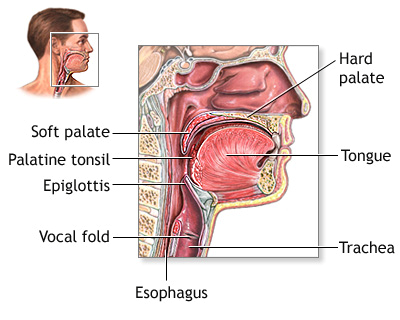
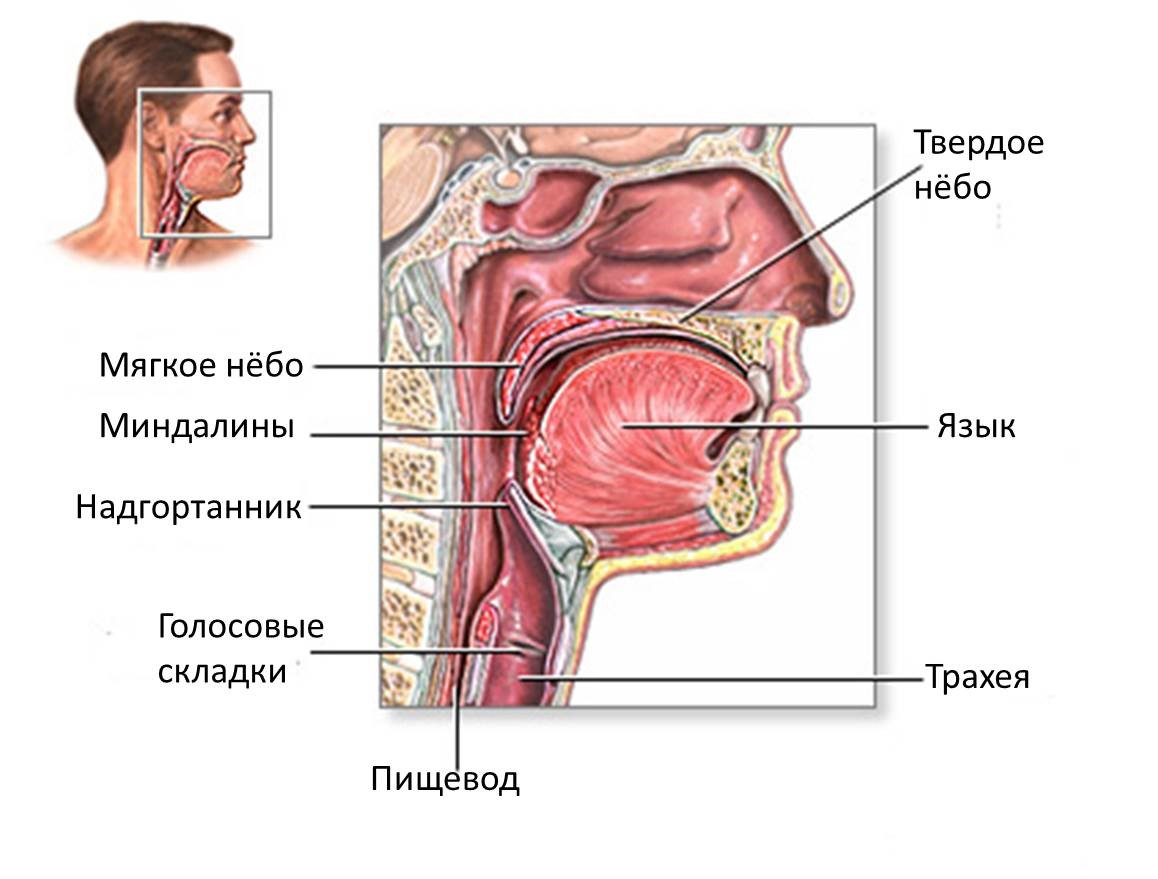
Көпшілік фарингиттердің себебі – вирус. Фарингит өздігінше, медициналық жәрдемсіз өтеді. Алайда, фарингит көмейдің стрептококктық қабынуының - бактериядан туындаған – бактериалдық жұқпаланудың симптомы болуы мүмкін.
Фарингит 3-15 жас аралығындағы балаларда жиі кездеседі, дегенмен, кез келген жаста пайда болуы мүмкін. Көмейдің стрептококктық қабынуының симптомдары – фарингит, келесілердің қосарлануымен:
· Көмейдің артқы жағындағы және бадамшабездегі ақ немесе сары дақ немесе өзең.
· Мойынның лимфа түйіндерінің ісінуі.
Көмейдің стрептококктық қабынуының басқа симптомдары - әсіресе, балаларда, дененің жалпы ауырсынуы, бас ауыруы, асқазандағы ауырсыну, жүрек айнуы, құсу немесе енжарлық. Әдетте, көмейдің стрептококктық қабынуы суық тию симптомдарында пайда болмайды, мысалы, түшкіруде, мұрын ағуында немесе бітелуінде, немесе жөтелде. Жалпы, суық тию симптомдары көп болған сайын бұл фарингит көмейдің стрептококктық қабынуы екендігінің ықтималдығы азырақ. Көмейдің стрептококктық қабынуы экспресс-тестінің көмегімен немесе көмейден алынған жұғындының зерттеумен ғана сенімді анықталады.
Көпшілік жағдайларда көмейдің стрептококктық қабынуы онымен зақымданған адаммен қатынаста берілмейді. Алайда, оның симптомдарын бақылау маңызды. Фарингит пайда болса, оның стрептококктық ауруы бар адаммен қатынастан кейін көмейдің стрептококктық қабынуына өту ықтималдығы болады.
Стрептококктық қабыну бөріткенмен болғанда скарлатина (жәншау) аталады. Байқалатын симптомдары кедір-бұдырлы, қызыл бөріткен, қырғыш қағазға ұқсас келеді. бөріткен кеуде мен іште пайда болады, содан кейін 24 сағат ішінде дененің басқа бөлігіне таралады. Бөріткен және қызару тері қыртысында жақсы көрінеді, әсірес, шаптың аумағында, қолтық астында және шынтақ бүгілісінде. Қызба мен фарингит әдетте, бөріткеннің пайда болуының алдында пайда болады. Бөріткен біртіндеп аптаның ішінде жойылады, тері қабыршақтана бастайды.
Көмейдің стрептококктық қабынуын анықтағанда әдетте, ревматизмнің алдын алу мақсатында антибиотиктер тағайындалады, ол көмейдің стрептококктық қабынуының асқынуы болуы мүмкін. Ревматизм жүректің, буынның, ми мен терінің мәселелерінің себебі болуы мүмкін. Антибиотиктер ревматизмнің алдын алуы мүмкін, оларды көмейдің стрептококктық қабынуы басталғаннан 9 күн ішінде қолданған жағдайда.
The bacteria that cause diphtheria spread through respiratory droplets (such as from a cough or sneeze) of an infected person or someone who carries the bacteria but has no symptoms.
The bacteria most commonly infects your nose and throat. The throat infection causes a gray to black, tough, fiber-like covering, which can block your airways. In some cases, diphtheria infects your skin first and causes skin lesions.
Once you are infected, the bacteria make dangerous substances called toxins. The toxins spread through your bloodstream to other organs, such as the heart and brain, and cause damage.
Because of widespread vaccination (immunization) of children, diphtheria is now rare in many parts of the world.
Risk factors for diphtheria include crowded environments, poor hygiene, and lack of immunization.
The health care provider will perform a physical exam and look inside your mouth. This may reveal a gray to black covering (pseudomembrane) in the throat, enlarged lymph glands, and swelling of the neck or vocal cords.
Tests used may include:
· Gram stain or throat culture to identify the diphtheria bacteria
· Toxin assay (to detect the presence of the toxin made by the bacteria)
If the provider thinks you have diphtheria, treatment will likely be started right away, even before test results come back.
Diphtheria antitoxin is given as a shot into a muscle or through an IV (intravenous line). The infection is then treated with antibiotics, such as penicillin and erythromycin.
You may need to stay in the hospital while getting the antitoxin. Other treatments may include:
· Fluids by IV
· Oxygen
· Bed rest
· Heart monitoring
· Insertion of a breathing tube
· Correction of airway blockages
People without symptoms who carry diphtheria should be treated with antibiotics.
The most common complication is inflammation of the heart muscle (myocarditis). The nervous system is also frequently and severely affected, which may result in temporary paralysis.
The diphtheria toxin can also damage the kidneys.
There can also be an allergic response to the antitoxin.
Contact your provider right away if you have come in contact with a person who has diphtheria.
Diphtheria is a rare disease. It is also a reportable disease, and any cases are often publicized in the newspaper or on television. This helps you to know if diphtheria is present in your area.
Routine childhood immunizations and adult boosters prevent the disease.
Anyone who has come into contact with an infected person should get an immunization or booster shot against diphtheria, if they have not already received it. Protection from the vaccine lasts only 10 years. So it is important for adults to get a booster vaccine every 10 years. The booster is called tetanus-diphtheria (Td). (The shot also has vaccine medicine for an infection called tetanus.)
If you have been in close contact with a person who has diphtheria, contact your provider right away. Ask whether you need antibiotics to prevent getting diphtheria.
Retropharyngeal abscess generally affects children under age 5, but it can occur at any age.
Infected material (pus) builds up in the space around the tissues at the back of the throat. This can occur during or immediately after a throat infection.
The health care provider will perform a physical exam and look inside the throat. The doctor or nurse may gently rub the back of the throat with a cotton swab. This is to take a sample of tissue to check it more closely and is called a throat culture.
Surgery is needed to drain the infected area. Corticosteroids are sometimes given to reduce airway swelling. High-dose antibiotics are given through a vein (intravenous) to treat the infection.
The airway will be protected so that it does not become completely blocked by the swelling.
It is important to get immediate medical help. This condition can lead to blockage of the airway. This is life-threatening. With prompt treatment, a full recovery is expected.
The epiglottis is a stiff, yet flexible tissue (called cartilage) at the back of the tongue. It closes your windpipe (trachea) when you swallow so food does not enter your airway. This helps prevent coughing or choking after swallowing.
Swelling of the epiglottis is usually caused by the bacteria Haemophilus influenzae (H. influenzae). It may also be due to other bacteria or viruses that can cause upper respiratory infections.
Epiglottitis is now very uncommon because the H. influenzae type B (Hib) vaccine is a routine childhood immunization. The disease was once most often seen in children ages 2 through 6. In rare cases, epiglottitis can occur in adults.
Epiglottitis is a medical emergency. Seek immediate medical help. Do not use anything to press the tongue down to try to look at the throat at home. Doing so may make the condition worse.
The health care provider may examine the voice box (larynx) using a small mirror held against the back of the throat. Or a viewing tube called a laryngoscope may be used. This examination is best done in the operating room or a similar setting where sudden breathing problems can be more easily handled.
The Hib vaccine protects most children from epiglottitis.
The most common bacteria (H. influenzae) that causes epiglottitis is contagious. If someone in your family is sick from this bacteria, other family members need to be tested and treated.
Yes. You can pass the strep infection to other people until you have been treated with an antibiotic for 1 to 3 days. Children who have strep throat should not go back to school or day care until their fever has gone away and they have taken an antibiotic for at least 24 hours.
You can also prevent the spread of strep throat by frequently washing your hands, covering your mouth when you cough or sneeze and avoiding sharing food utensils (such as drinking glasses) while you are sick.
Your doctor may use a test called the rapid strep test. For this test, the doctor uses a long cotton swab to take some of the mucus from the back of your throat. The results of this test can be ready in about 15 minutes.
Your doctor may also do a culture of the mucus. A sample of the mucus is sent to a laboratory. This test is called a throat culture. It can take up to 2 days to learn the results of a strep culture.
The rapid strep test and the culture can tell your doctor if you have strep throat. If something else is causing your sore throat, these tests do not tell what it is.
Strep throat is treated with antibiotics. Antibiotics kill bacteria, which helps ease the symptoms of strep throat and helps it go away a little faster. It can also prevent a few rare but serious conditions that people who have strep throat might develop, such as rheumatic fever or kidney inflammation.
It is important to take all of the antibiotics your doctor prescribes. This reduces the risk that your symptoms will return and also helps prevent antibiotic resistance.
No. Not every sore throat is strep throat. Bacteria only cause a small portion of all sore throats. The rest are caused by viruses or other problems that antibiotics do not help. Your doctor can do a test to check for strep throat.
Here are some things that might help you feel better:
Take ibuprofen (some brand names: Advil, Motrin) or acetaminophen (one brand name: Tylenol) to relieve pain and reduce fever. Children should not take aspirin. Aspirin can cause a serious illness called Reye's syndrome when it is given to children younger than 18 years of age.
Gargle with warm salt water (1/4 teaspoon of salt in 1 cup [8 ounces] of warm water).
Adults and older children can suck on throat lozenges, hard candy, pieces of ice or popsicles.
Eat soft foods (such as yogurt and applesauce) and drink cool drinks or warm liquids (such as broths, soups and tea).
Get plenty of rest. Sleep helps your body fight infection.
Drink plenty of water. This helps keep your throat lubricated and helps prevent dehydration.
Avoid acidic or spicy foods and drinks (such as orange juice and peppers).
Наиболее часто заглоточный абсцесс развивается у детей в возрасте до 5 лет, но также может возникнуть в любом возрасте.
Инфицированный материал (гной) накапливается в пространстве вокруг тканей на задней стенке глотки. Заболевание может развиться во время или сразу после перенесенной инфекции горла.
Врачу будет необходимо провести осмотр и заглянуть внутрь горла. Врач или медсестра могут аккуратно протереть заднюю стенку глотки ватным тампоном. Процедура необходима для получения образца для детального лабораторного исследования, называемого исследованием культуры из горла.
Хирургическое лечение применяется для очищения зараженной области. Иногда для уменьшения отека дыхательных путей назначаются кортикостероиды. Высокие дозы антибиотиков вводятся внутривенно для лечения инфекции.
Таким образом, дыхательные пути будут защищены и не заблокируются полностью при отеке.
При данном заболевании необходимо обратиться за экстренной медицинской помощью. Это состояние может привести к закупорке дыхательных путей. Оно опасно для жизни. При своевременном лечении возможно полное восстановление.



 Полоскание горла соленой водой или раствором меда и лимона - отличный способ успокоить боль в горле и смягчить симптомы простуды.
 Полоскание горла соленой водой или раствором меда и лимона - отличный способ успокоить боль в горле и смягчить симптомы простуды.